
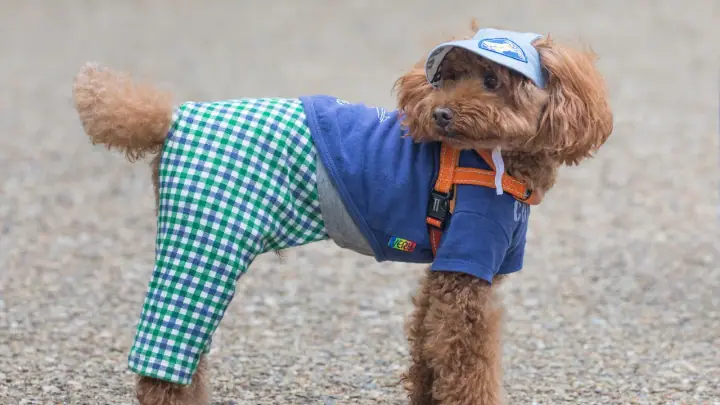
HDB-APPROVED · DOG BREED GUIDE
Last updated First published 31 May 2026
Try a little play, then save the moment →A small idea to try, with progress kept in your Pack.
Also known as Caniche Toy, Toy Pudel, Toy Poo.
Thinking about adopting a Toy Poodle?
The Toy Poodle's ancestors were water retrievers in Germany, a heritage that's not immediately obvious when they're prancing across a Singaporean living room but does explain their unexpected fondness for a good puddle.
Can a Toy Poodle live in an HDB flat?
YesOn the HDB approved-breed list
Named on HDB's approved small-breed list for flats. Check any listed variety restrictions and confirm the individual dog before committing.
HDB sets and maintains the approved-breed list. Check the current rules at HDB.gov.sg →
Full list of HDB-approved breeds on this site →At a glance
- Size category
- Small
- Weight
- 3 to 4 kg
- Height
- 24 to 28 cm
- Lifespan
- 14 to 18 years
- Energy level
- ●●●●○ 4/5 (editorial, unvalidated)
- Shedding
- ●○○○○ 1/5 (editorial, unvalidated)
- Heat tolerance
- ●●●○○ 3/5 (editorial, unvalidated)
- Barking
- ●●●○○ 3/5 (editorial, unvalidated)
- Trainability
- ●●●●● 5/5 (editorial, unvalidated)
- Grooming needs
- ●●●●○ 4/5 (editorial, unvalidated)
- Origin
- France (modern standard) / Germany (historical)
Editorial climate-care note
Small frame and a clippable coat make it moderately heat-tolerant, provided the coat is kept short in humid months.
This score is not a safe temperature or exercise limit. Any dog can develop heatstroke.
Plan activity around your dog, not a timer
A breed score cannot tell you how many minutes are safe today. Avoid hot conditions, watch your dog's breathing, and agree an activity plan with your vet.
Read PDSA's heatstroke guidance →Common health issues in Singapore's climate
Build a care budget
- Year 1
- S$3,757 to S$5,083
- Over 10 years
- S$34,771 to S$47,043
Illustrative planning assumptions for food, grooming and routine vet care, with inflation and a year-one setup uplift. These are not verified provider quotes or a lifespan prediction. Adjust the calculator to current quotes; add insurance, boarding and emergencies separately.
Run the full lifetime cost calculator →If you were designing a dog for a Singapore flat from first principles, you would arrive at something close to a Toy Poodle. It is three to four kilograms, it barely sheds, it is on HDB's approved list, it is one of the most trainable animals you will ever live with, and this page gives it a lifespan of 14 to 18 years, the longest of any breed on this site.
That last number is the one to sit with. You are not choosing a dog for a decade. You are quite possibly choosing a companion who will still be here when the child who begged for it has finished university.
Personality and temperament
Trainability is rated 5 out of 5, the top of the scale, and it is not an exaggeration. Poodles are working water retrievers who were miniaturised, not lapdogs who were educated, and the Toy retains the whole brain in a smaller box. It learns fast, it enjoys learning, and it will pick up things you did not intend to teach with the same enthusiasm.
It is rated good with children and good with other dogs, and beginner friendliness is high, which is a fair reflection: this is a forgiving dog to make mistakes with.
Two traits shape daily life. Energy is rated 4 out of 5, which surprises people who bought a small dog expecting a small engine. And barking is rated 3 out of 5, moderate, usually driven by alertness and by being left alone rather than by the breed being noisy for its own sake.
Toy Poodles bond intensely, often to one person. That closeness is much of the appeal and it is also the mechanism behind most of the behavioural problems this breed develops, which is worth knowing before rather than after.
Exercise in Singapore's climate
Heat tolerance is rated 3 out of 5, and the coat is genuinely useful here for a reason people miss: it is clippable. A Poodle's single curly coat can be taken short, and a short Poodle coat is one of the better small-dog options for this climate. The heat tolerance rating assumes you actually do that. A Toy Poodle carrying a long, dense show coat through Singapore's daily maximum of 31 to 33 degrees Celsius with average relative humidity around 82% year round (Meteorological Service Singapore) is a warmer dog than the rating suggests.
Two walks a day of twenty to thirty minutes in the cool hours covers the physical side comfortably. The mental side is where the 4 out of 5 energy actually lands.
This is the breed to teach tricks to. Not as an indulgence, but because a Poodle with 5 out of 5 trainability and nothing to do will invent work, and the work it invents usually involves barking at the corridor. Ten minutes of training split across the day, a puzzle feeder, and a rotating handful of toys will do more for this dog's behaviour than doubling the walk.
Coat and grooming in the humidity
Shedding is rated 1 out of 5 and grooming needs 4 out of 5, at about S$1,400 a year. The coat sheds almost nothing, which is why the breed is everywhere in flats, and the hair it does shed stays in the coat, which is why it mats.
That is the whole grooming story. A Poodle coat is not self-maintaining; it is self-collecting. Comb to the skin two or three times a week, particularly behind the ears, in the armpits and around the collar line, and book a groom every six to eight weeks.
Keep the clip short year round. There is no season in Singapore that rewards coat length, a short coat dries faster after rain, and a matted coat in this humidity holds moisture against skin. Ask your groomer for a practical length rather than a breed-standard silhouette, and accept that a heavily matted coat has one humane outcome at the salon, which is to start again.
Ears deserve their own habit. Poodle ears are drop ears with hair growing in the canal, which in this climate is a standing invitation to infection. Check them weekly, keep them dry after baths and swims, and ask your vet what they want you to do about the hair rather than following internet advice, since opinion has shifted on plucking.
Diet and feeding
Food runs about S$900 a year, and portion discipline matters more than product choice on a dog this size. A 3 to 4 kg animal has almost no margin: a few extra treats a day is a meaningful percentage of its intake, and joint mobility is on this page's health-issue list, where extra weight goes straight to the knees.
Weigh the food. Count treats inside the daily total rather than on top of it, and use the dog's own kibble as training currency, which on a breed you will be training this much is the difference between a lean Poodle and a round one.
Dental health leads this page's health issues, and feeding connects to it. Small mouths crowd teeth, soft food sticks, and a Toy Poodle that reaches ten with untreated dental disease is in chronic low-grade pain that its owner has usually mistaken for getting older. Brush daily.
Training
With a 5 out of 5 dog the question is not whether you can train it but what you choose to spend that on. For a Toy Poodle in Singapore, three things earn their keep:
- Being alone, practised deliberately and early. This is the highest-value training for this breed and the most neglected. A dog that bonds this hard and has never rehearsed solitude learns it the hard way on your first day back in the office. Build it in minutes, from week ten, long before you need it.
- Handling and grooming tolerance. Fifteen years of six-weekly appointments, plus combing at home and daily tooth brushing. Make it ordinary while the dog is small enough to hold comfortably.
- Four feet on the floor. A small clever dog quickly learns that jumping up produces attention, and joint mobility is on this page's list. Reward the sit, ignore the leap, and skip the furniture-jumping habit entirely.
Health
The UK Kennel Club recommends three screening measures for the Toy Poodle: a DNA test for progressive retinal atrophy (prcd-PRA), eye testing using the BVA/KC/ISDS Eye Scheme, and hip testing for hip dysplasia using the BVA/KC Hip Dysplasia Scheme. It places the breed in Breed Watch Category 1, and states that "currently no points of concern specific to this breed have been identified for special attention by judges, other than those covered routinely by The Kennel Club's breed standard".
The PRA test is the one to insist on and the easiest to check. Progressive retinal atrophy is an inherited degeneration of the retina that leads to blindness, it is not treatable, and it is entirely avoidable through testing because the inheritance is understood. Both parents should have a prcd-PRA result. Ask to see them.
Eye conditions are also on this page's own health-issue list, alongside dental health and joint mobility.
The joint entry on a Toy Poodle usually means the kneecap. Patellar luxation is common across toy breeds, ranging from an occasional skip in the step to a joint that needs surgery, and it is partly heritable. It is also strongly influenced by weight and by how much the dog is allowed to launch itself off furniture, both of which you control.
Routine veterinary care runs about S$1,100 a year here, which is modest, but read it against the lifespan. Fourteen to eighteen years of routine care is a long commitment, and the last few of those years are typically the expensive ones. Arrange insurance in the first weeks, and check what the policy does about older dogs before you choose it, because on this breed you will be relying on it for longer than most. None of this replaces your own vet's assessment of your own dog.
Housing and space in Singapore
HDB's published list of approved breeds names "Poodle (Toy or Miniature)", so the Toy Poodle is approved for a flat. Confirm the current position with HDB before you commit, since HDB maintains and updates the list. Note the wording carefully if you are choosing between Poodle sizes: the Standard is not on the list.
Ownership limits come from AVS rather than HDB. Under AVS's rules, an HDB flat may keep a maximum of one dog of an approved small breed plus up to two cats, and no dog on the Specified dogs list; private property may keep up to three cats or dogs in combination. Every dog needs an AVS licence. Licence fees depend on sterilisation status, age and the number of pets. One-time and three-year licences are different options. Check the current AVS fee table before paying.
Indoors, the useful adjustments are small. Put runners or rugs on slippery tile where the dog turns and stops, because a 3 kg dog skidding is how knees get worse. Discourage jumping down from sofas and beds by providing steps or lifting the dog. And give it somewhere to settle that is not the front door.
Care and cost in Singapore
On this page's figures: about S$900 a year for food, S$1,400 for grooming and S$1,100 for routine veterinary care. Grooming is the largest line and the least negotiable, since skipping it produces a matted coat and a skin problem that costs more. Multiply the total by a lifespan of 14 to 18 years rather than the ten most people assume. Run the ten-year picture with the cost calculator.
Getting a Toy Poodle: buying and adoption
Ask for the AVS dog farm licence number, the prcd-PRA DNA results for both parents, current eye certificates, and hip results. Ask about patellas too, since it is the joint most likely to affect your dog even though it is not on the Kennel Club's recommended list for this breed.
Be careful about size marketing. "Teacup" is not a recognised size and there is no Kennel Club category for it. Dogs bred deliberately smaller than the Toy standard tend to carry more fragility, more dental crowding and more anaesthetic risk, and the premium price is for the shortfall. If a seller is selling smallness as the feature, walk away.
Adoption is realistic. Poodles and Poodle crosses come through SOSD, Causes for Animals and Mercylight, and they turn up more often than people expect, frequently as older dogs whose owners could no longer manage. Given the lifespan, adopting an eight-year-old Toy Poodle can still mean the better part of a decade together.
What to skip: any "teacup" listing, and any breeder without PRA results for both parents.
Life stages: puppy to senior
Puppy, to about 12 months. Practise being alone from week ten, in minutes, before you ever need it. Start daily tooth brushing and weekly ear checks now, while the dog has no opinion. Get grooming handling established before the adult coat arrives at around nine months, because that transition is when matting starts in earnest. Insurance in force early.
Adolescent, roughly 9 to 18 months. The puppy coat gives way to the adult curly coat and grooming demand roughly doubles overnight. Watch for any skip or hop in the back legs, the usual first sign of a slipping kneecap, and mention it even if it resolves.
Adult, roughly 2 to 10 years. The long steady middle. Weight, teeth, ears, coat, on schedule. Keep teaching the dog things: a Poodle that stops learning at three is a Poodle that starts inventing.
Senior, from about 11 years, with several years still to come. Lifespan here is 14 to 18 years, so senior is a phase rather than an ending, and it may run a third of the dog's life. Move to twice-yearly vet visits. Watch for cloudiness or bumping into things in low light, which given the PRA picture deserves prompt attention. Expect dental work to matter more, not less. Keep the coat short for comfort, keep the walks short and frequent, and keep the flat cool.
See dog-friendly cafes and parks in your region → | Run the 10-year cost of a Toy Poodle in Singapore →
Three things to know
-
Plan for 14 to 18 years, not ten
This is the longest lifespan on the site. It changes the insurance decision, the cost arithmetic, and who in the household will still be around to look after the dog at the end of it.
-
Ask for prcd-PRA results on both parents
The Kennel Club recommends the DNA test alongside eye and hip testing. Progressive retinal atrophy causes untreatable blindness and is avoidable through testing, so there is no good reason for a breeder not to have the result.
-
Teach it to be alone before you need it
This breed bonds hard and is rated 3 out of 5 for barking, and most of the noise complaints come from separation rather than temperament. Practise in minutes from week ten.
Annual cost in Singapore
Editable planning estimates, not verified provider quotes or a prediction of your dog's bills. Boarding, one-off equipment and emergencies are additional.
- Food
- S$900
- Grooming
- S$1,400
- Routine vet
- S$1,100
- Sum of the three
- S$3,400/year
Run the lifetime cost calculator →
Get a current insurance quote for your dog's age and circumstances. Compare exclusions, waiting periods, excess and cover limits. Compare policy questions here →
Frequently asked questions
Is a Toy Poodle HDB-approved in Singapore?
Yes. The Toy Poodle is on the HDB list of breeds approved for flats. Confirm the current HDB and AVS rules before you commit, as the approved list can change.
Do Toy Poodles bark a lot?
Our current barking assessment is: has a moderate bark (editorial estimate). It has not been independently validated. Ask about this dog's observed behaviour, triggers and time alone; the breed label cannot predict your neighbour's experience.
How much grooming does a Toy Poodle need?
Our current grooming assessment is: is high-maintenance to groom (editorial estimate). Confirm the individual coat-care routine and any professional grooming with the rescue, groomer or vet. The score is not a measured frequency or price.
How does a Toy Poodle cope with Singapore's heat?
An editorial heat score cannot establish a safe temperature or walk duration for an individual dog. Activity, humidity, health, age and body shape matter. Avoid hot conditions, provide shade and water, and ask your vet about an appropriate activity plan.
Is a Toy Poodle a good breed for a first-time owner?
Our household-fit note is: Editorial: may suit. This is not a validated prediction. Assess the individual dog, your daily capacity, training support and known care needs before deciding.
How much does a Toy Poodle cost to keep in Singapore?
The stored planning assumption is S$3,400 a year for food, grooming and routine veterinary care. It is not a verified typical cost for this breed. Replace it with current quotes and your own usage; add setup, licensing, insurance if chosen, boarding and emergency savings separately.
Other small breeds to consider
A Toy Poodle in Singapore, the short version
A Toy Poodle is HDB-approved and one of the easier fits for flat life, small, adaptable, and comfortable indoors. Its clippable coat is genuinely useful in Singapore's climate, keeping it short in the warmer months helps it manage the humidity far better than letting it grow out. Walks are still worth timing for the cooler hours given its small size and correspondingly quick tolerance for the heat of midday pavement. HDB and condo living both suit it well. Dental care needs consistent attention, small breeds like this one are prone to crowding and decay, and joint issues around the kneecap are common enough to watch for as it ages.
Toy Poodle vs...
Deciding between two breeds? See them side by side.
Find Toy Poodle-friendly spots in Singapore
High-energy breed, so these outdoor venues give Toy Poodles the space they need.
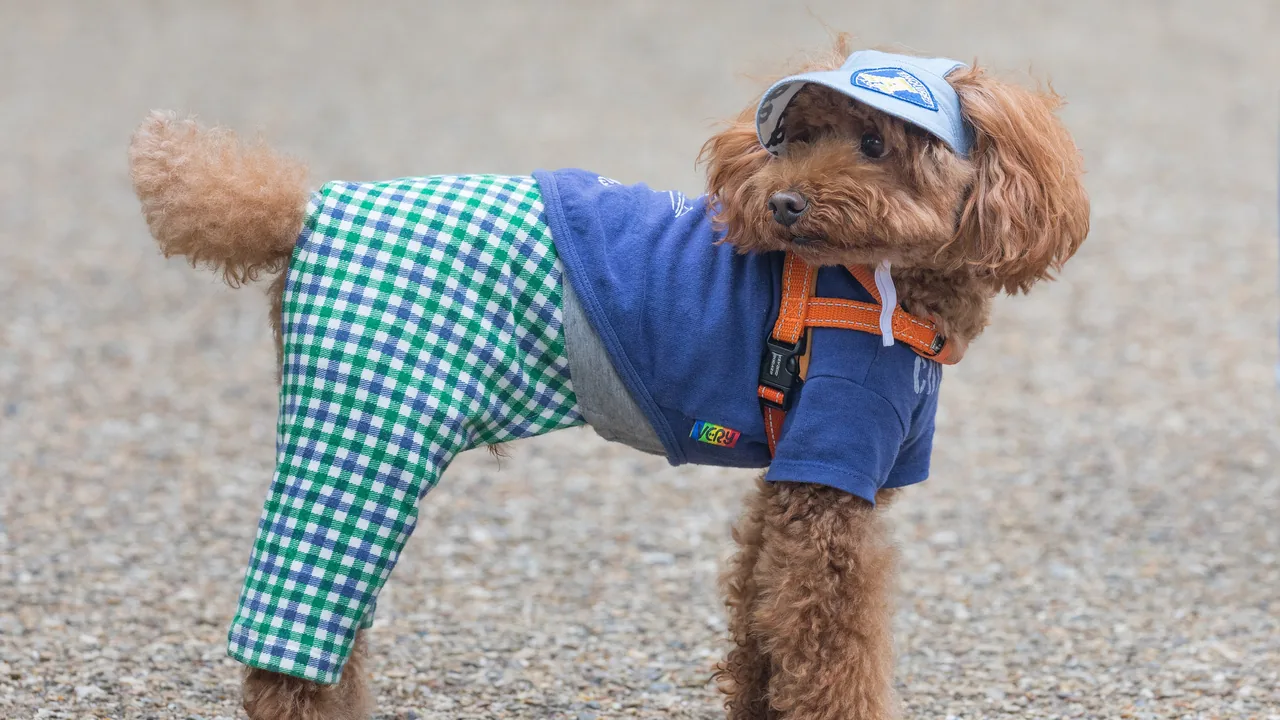 Find Your Match Meet Toy Poodle first “I'm smarter than most of your friends and deeply unbothered about hiding it” Swipe through a dating-profile-style card before you commit. Say hello →
 Breed fit quiz Does a Toy Poodle actually suit your life? Answer a few questions about your lifestyle and see how well this breed matches your real setup. Find out →