
HDB-APPROVED · DOG BREED GUIDE
Last updated First published 31 May 2026
Notice one little habit together →A small idea to try, with progress kept in your Pack.
Also known as Bichon, Bichon a poil frise, Tenerife Dog.
Thinking about adopting a Bichon Frise?
The Bichon Frise was once a sailor's dog, bouncing between ports and hearts, which explains why your flat's daily comings and goings will feel like a never-ending cruise to its sociable soul.
Can a Bichon Frise live in an HDB flat?
YesOn the HDB approved-breed list
Named on HDB's approved small-breed list for flats. Check any listed variety restrictions and confirm the individual dog before committing.
HDB sets and maintains the approved-breed list. Check the current rules at HDB.gov.sg →
Full list of HDB-approved breeds on this site →At a glance
- Size category
- Small
- Weight
- 5 to 8 kg
- Height
- 23 to 30 cm
- Lifespan
- 12 to 15 years
- Energy level
- ●●●○○ 3/5 (editorial, unvalidated)
- Shedding
- ●○○○○ 1/5 (editorial, unvalidated)
- Heat tolerance
- ●●○○○ 2/5 (editorial, unvalidated)
- Barking
- ●●●○○ 3/5 (editorial, unvalidated)
- Trainability
- ●●●●○ 4/5 (editorial, unvalidated)
- Grooming needs
- ●●●●● 5/5 (editorial, unvalidated)
- Origin
- Mediterranean / Canary Islands
Editorial climate-care note
Dense curly coat traps heat. Keeping the coat trimmed and walking in the cool hours both help it cope.
This score is not a safe temperature or exercise limit. Any dog can develop heatstroke.
Plan activity around your dog, not a timer
A breed score cannot tell you how many minutes are safe today. Avoid hot conditions, watch your dog's breathing, and agree an activity plan with your vet.
Read PDSA's heatstroke guidance →Common health issues in Singapore's climate
Build a care budget
- Year 1
- S$4,420 to S$5,980
- Over 10 years
- S$40,907 to S$55,344
Illustrative planning assumptions for food, grooming and routine vet care, with inflation and a year-one setup uplift. These are not verified provider quotes or a lifespan prediction. Adjust the calculator to current quotes; add insurance, boarding and emergencies separately.
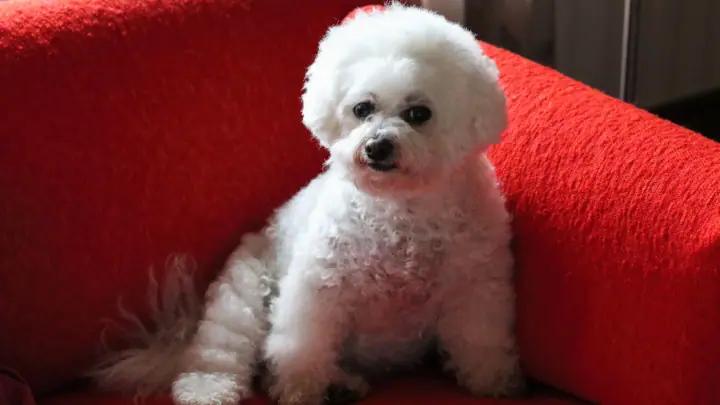
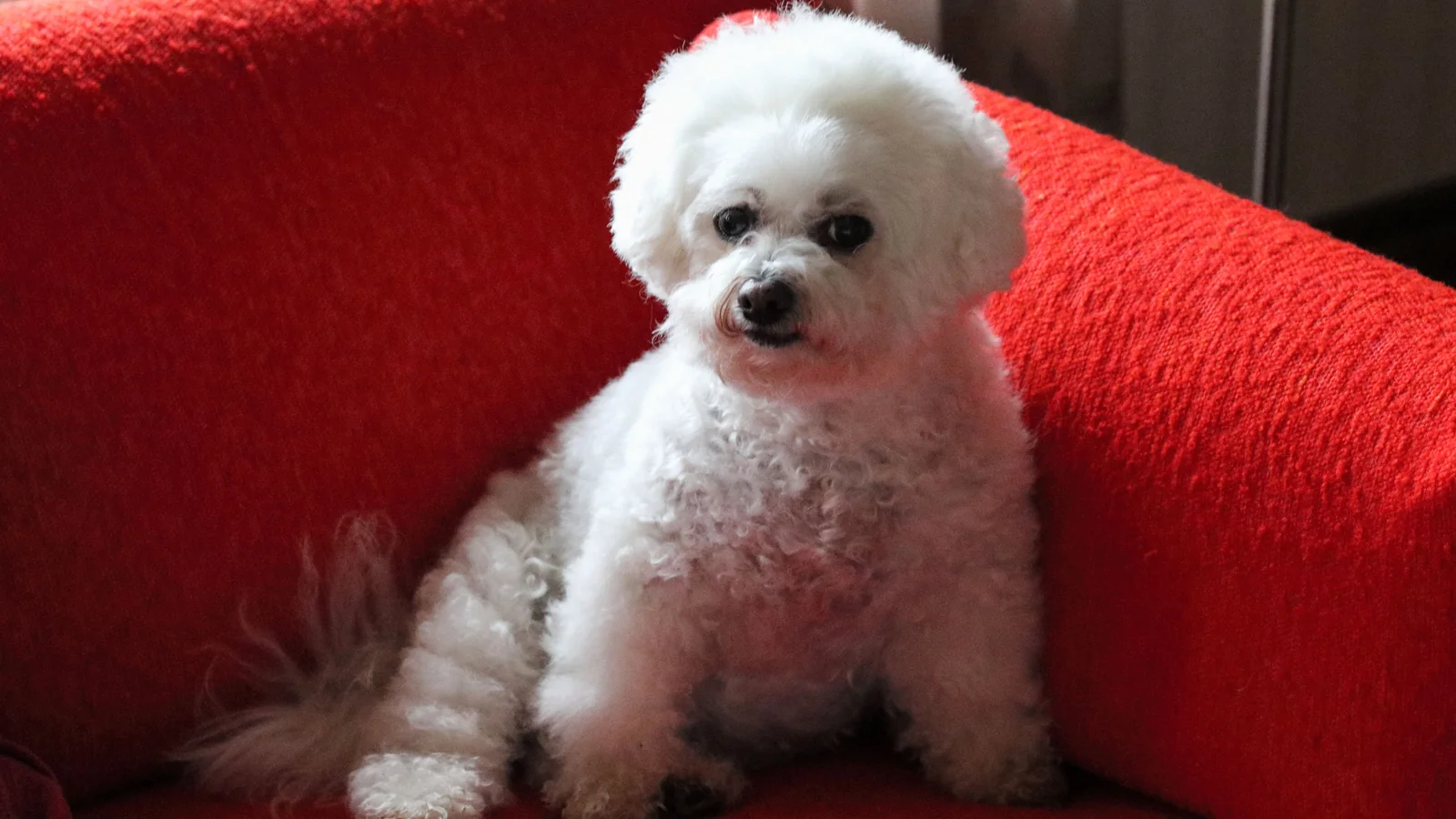
Run the full lifetime cost calculator →The Bichon Frise looks like a cumulus cloud was given legs and a charming social agenda. It is one of the most consistently cheerful breeds you can keep in a flat, low-shedding by design, and gentle in every household role it is asked to play.
The Singapore version comes with two operating notes that most new owners learn the slow way: the breed is genuinely sticky about being left alone, and it is allergy-prone in ways the humidity here amplifies. Both are manageable. Both deserve a budget line before, not after.
Personality and temperament
A Bichon is sociable in a way that is close to occupational. The breed was developed as a companion, and unlike a terrier or a herder there is no working instinct running in the background that needs an outlet. What it wants is company, and it is unusually good at getting it: soft with children, easy with other dogs, gentle in lifts, and one of the more reliable small dogs to take to the dog-friendly cafe corners of Tanjong Pagar or Joo Chiat without surprises.
Trainability is rated 4 out of 5 and barking 3 out of 5, both comfortable middles. A Bichon will reliably let you know when it is bored by inventing a small project, usually involving a sock.
The counterweight is separation, and it is the first-tier problem with this breed rather than a footnote. A flat empty from nine to seven is not what a companion breed signed up for, and the distress shows as nuisance barking, destructive chewing and, over time, skin problems driven by stress. Plan for a midday walker, a day or two of daycare, or a household where someone is reliably home for most of the day.
This is the breed where the lifestyle audit matters more than the puppy choice. Get that honest before you look at litters.
Exercise in Singapore's climate
Heat tolerance is rated 2 out of 5. The white curly coat is dense and the dog runs slightly warm, and Singapore's daily maximum of 31 to 33 degrees Celsius with average relative humidity around 82% year-round (Meteorological Service Singapore) leaves little margin.
Walk before 7am and after 7.30pm, on grass and shaded paths. The park connector sections through Punggol Waterway, the inner shade at West Coast Park and the early-morning loop at the Botanic Gardens all work. Skip midday, and skip exercise entirely on hazy days.
Energy is rated 3 out of 5 and two walks plus indoor play handles the budget, which suits the narrow window. Keeping the coat trimmed shorter genuinely helps ventilation on a curly coat, in a way that clipping a double-coated breed does not.
Coat and grooming in the humidity
Grooming needs are rated 5 out of 5, the top of our scale, and the annual grooming line on this page is S$1,700, the highest of any breed we cover. Shedding is rated 1 out of 5. That is the trade the Bichon makes, and it is worth being clear-eyed about: this is not a low-maintenance dog, it is a dog whose maintenance happens at a salon rather than on your sofa.
The signature powder-puff coat needs a full groom every 4 to 6 weeks at S$100 to S$160, plus home brushing two to three times a week with a comb that reaches the skin. Skip the brushing and the next appointment becomes a regretful shave-down, which on this breed also means losing the only thing keeping the coat off the skin in a humid climate.
Tear staining around the eyes is a daily wipe job on a white-coated dog. Dry the coat thoroughly after any bath or rain rather than letting it air-dry in humid air: a curly coat that holds moisture near the skin is a direct contributor to the skin problems covered below.
Diet and feeding
Food on a small-breed premium kibble runs S$60 to S$95 a month, with allergy-friendly formulations adding S$20 to S$40 on top. That premium is common enough in this breed to be worth budgeting rather than hoping to avoid.
Allergies and itchy skin sit at the top of this page's health-issue list, and diet is one of several possible contributors. The discipline that helps is not switching brands hopefully whenever the dog scratches, which makes the picture harder for a vet to read, but running a proper elimination trial under veterinary guidance if food is genuinely suspected. Most allergic skin disease in dogs is environmental rather than dietary, and in Singapore the environmental load runs all year.
Dental health is also flagged on this page. A small crowded jaw accumulates plaque quickly, so daily brushing or vet-appropriate dental chews plus professional cleaning on schedule is the cheapest high-return care available.
Keep kibble sealed and out of direct heat, and keep water available and refreshed often.
Training
Bichons are willing, food-motivated and quick, and short cheerful sessions work well. The training that actually changes this dog's life is not obedience, though:
- Time alone, built deliberately from the first week. Minutes, then longer, on a predictable schedule, with a bed or crate the dog genuinely likes. This is the single most valuable thing you can teach a Bichon and the hardest to retrofit.
- Grooming tolerance. A full groom every four to six weeks for fifteen years is a lot of table time. Handle paws, ears, face and tail daily from puppyhood and take the puppy to the salon before the coat needs real work.
- Settle on a mat. Useful in any breed, essential in one that spends the hot part of every day indoors.
Health
The UK Kennel Club recommends eye testing under the BVA/KC/ISDS Eye Scheme before breeding Bichons, noting that "evidence indicates these conditions are a significant concern in the breed". It places the Bichon Frise in Breed Watch Category 1, meaning no points of concern specific to the breed have been identified for special attention by judges beyond what the breed standard already covers.
Category 1 is good news on conformation and worth saying. The screening list is short, so ask for the eye certificate on both parents and treat its absence as meaningful.
In practice the vet line for a Bichon in Singapore is dominated by skin. This page flags allergies, itchy skin and dental health as the breed's health issues, and the annual routine vet estimate is S$1,300. Bichons are prone to atopic dermatitis, and the local environment gives it no seasonal break: year-round humidity, dust mites and mould, plus a dense coat that holds moisture near the skin if it is not dried properly. What that looks like is itching, paw licking, recurrent ear infections and skin redness, and what it costs is medicated shampoos, and in persistent cases longer-term medication, on top of routine care.
Two practical consequences. First, arrange pet insurance in the first weeks, before any skin problem has presented and been written in as a pre-existing exclusion; on an allergy-prone breed the timing is most of the policy's value. Second, the grooming routine is not vanity here, it is skin management: a properly dried, properly brushed, appropriately clipped coat is doing preventive work.
None of this replaces your vet's assessment of your own dog.
Housing and space in Singapore
A Bichon fits comfortably in any HDB flat, and this page records the breed as HDB-approved. Confirm the current position with HDB before you commit, since HDB maintains and updates the approved list.
Ownership limits come from AVS rather than HDB. Under AVS's rules, an HDB flat may keep a maximum of one dog of an approved small breed plus up to two cats, and no dog on the Specified dogs list; private property may keep up to three cats or dogs in combination. Every dog needs an AVS licence. Licence fees depend on sterilisation status, age and the number of pets. One-time and three-year licences are different options. Check the current AVS fee table before paying.
Inside the flat, what matters is company, a cool place to rest, and washable bedding laundered often to keep the dust-mite load down. None of that is about floor area.
Care and cost in Singapore
Plan for S$4,800 to S$6,800 in year one and S$3,800 to S$4,800 a year ongoing. Puppies from licensed local breeders run S$3,500 to S$6,000. Grooming is the biggest line at S$100 to S$160 every 4 to 6 weeks, food is S$60 to S$95 a month before any allergy formulation, and routine veterinary care is around S$1,300 a year before dermatology. Run the ten-year picture with the cost calculator.
Getting a Bichon Frise: buying and adoption
Ask for the AVS dog farm licence number, the eye certificate on both parents under a recognised scheme, patella assessment, and a written 24-month health guarantee. Then ask about skin and about allergies in the line, in both parents and previous litters, and treat a vague answer as an answer.
Meet the mother and look at her coat and skin rather than only her temperament. A well-kept Bichon in a breeder's home tells you what the breed takes; a matted one tells you something else.
Adoption is worth checking properly. Bichons and Bichon crosses come through SOSD, Causes for Animals and Mercylight, most often surrendered because the grooming bill or the separation distress exceeded what a first home expected. An adult also arrives with its skin history and its tolerance for being alone already visible, which on this breed are exactly the two unknowns.
Life stages: puppy to senior
Puppy, to about 12 months. Time alone and grooming tolerance are the jobs, in that order. Get insurance in force early, before any skin issue appears. Establish a drying routine after every bath and every rain from the first week, so it is normal rather than a fight. Start on the teeth.
Adolescent, roughly 9 to 18 months. The adult coat comes in and matting gets abruptly harder; this is where owners fall behind and end up with a shave-down. Allergic skin disease also commonly first appears in young adulthood, so paw licking, head shaking or a first ear infection deserve a vet visit rather than a wait.
Adult, roughly 2 to 8 years. If skin disease has appeared, treat it as a long management project where consistency beats intensity. Hold the grooming rhythm, keep bedding clean, keep the weight steady, keep the teeth brushed.
Senior, from about 9 years. Lifespan on this page is 12 to 15 years. Move to twice-yearly vet visits. Have the eyes checked properly, given that eye screening is the one thing the Kennel Club singles out for this breed. Expect older skin to be thinner and less tolerant, and review any long-running medication rather than repeating it indefinitely. Keep the clip short and comfortable rather than show-shaped, keep grooming sessions shorter and more frequent, and keep the flat cool.
See dog-friendly cafes and parks in your region → | Run the 10-year cost of a Bichon Frise in Singapore →
Three things to know
-
The lifestyle audit comes before the puppy choice
This is a companion breed with no working instinct to occupy it, and a flat empty from nine to seven produces barking, chewing and stress-driven skin problems. Sort the daytime cover first.
-
Grooming is the highest cost line on this page, at S$1,700 a year
Rated 5 out of 5, a full groom every four to six weeks plus brushing two or three times a week. Skip the home brushing and you lose the coat, which in this climate is also losing skin protection.
-
Insure before the skin talks
The breed is allergy-prone and Singapore removes the seasonal break. A policy arranged in the first weeks, before anything has presented, is worth far more than one bought after the first flare.
Annual cost in Singapore
Editable planning estimates, not verified provider quotes or a prediction of your dog's bills. Boarding, one-off equipment and emergencies are additional.
- Food
- S$1,000
- Grooming
- S$1,700
- Routine vet
- S$1,300
- Sum of the three
- S$4,000/year
Run the lifetime cost calculator →
Get a current insurance quote for your dog's age and circumstances. Compare exclusions, waiting periods, excess and cover limits. Compare policy questions here →
Frequently asked questions
Is a Bichon Frise HDB-approved in Singapore?
Yes. The Bichon Frise is on the HDB list of breeds approved for flats. Confirm the current HDB and AVS rules before you commit, as the approved list can change.
Do Bichon Frises bark a lot?
Our current barking assessment is: has a moderate bark (editorial estimate). It has not been independently validated. Ask about this dog's observed behaviour, triggers and time alone; the breed label cannot predict your neighbour's experience.
How much grooming does a Bichon Frise need?
Our current grooming assessment is: needs a lot of grooming, including regular professional trims (editorial estimate). Confirm the individual coat-care routine and any professional grooming with the rescue, groomer or vet. The score is not a measured frequency or price.
How does a Bichon Frise cope with Singapore's heat?
An editorial heat score cannot establish a safe temperature or walk duration for an individual dog. Activity, humidity, health, age and body shape matter. Avoid hot conditions, provide shade and water, and ask your vet about an appropriate activity plan.
Is a Bichon Frise a good breed for a first-time owner?
Our household-fit note is: Editorial: may suit. This is not a validated prediction. Assess the individual dog, your daily capacity, training support and known care needs before deciding.
How much does a Bichon Frise cost to keep in Singapore?
The stored planning assumption is S$4,000 a year for food, grooming and routine veterinary care. It is not a verified typical cost for this breed. Replace it with current quotes and your own usage; add setup, licensing, insurance if chosen, boarding and emergency savings separately.
Other small breeds to consider
A Bichon Frise in Singapore, the short version
A Bichon Frise is HDB-approved and a good fit for flat life, small, cheerful, and content with moderate exercise. Its dense curly coat traps heat, so keeping it trimmed shorter and walking in the cooler hours both genuinely help it manage Singapore's humidity. HDB flats and condos both suit it well given its size and temperament. Like several small, curly-coated breeds, it's prone to skin allergies and itching, so a consistent grooming and diet routine matters more here than in a cooler, drier climate. Dental care also needs regular attention, a pattern common across most small breeds on this list.
Bichon Frise vs...
Deciding between two breeds? See them side by side.
Find Bichon Frise-friendly spots in Singapore
Good spots to visit with a Bichon Frise in Singapore.
 Find Your Match Meet Bichon Frise first “My personality is ninety percent prance and ten percent poor impulse control” Swipe through a dating-profile-style card before you commit. Say hello →
 Breed fit quiz Does a Bichon Frise actually suit your life? Answer a few questions about your lifestyle and see how well this breed matches your real setup. Find out →