
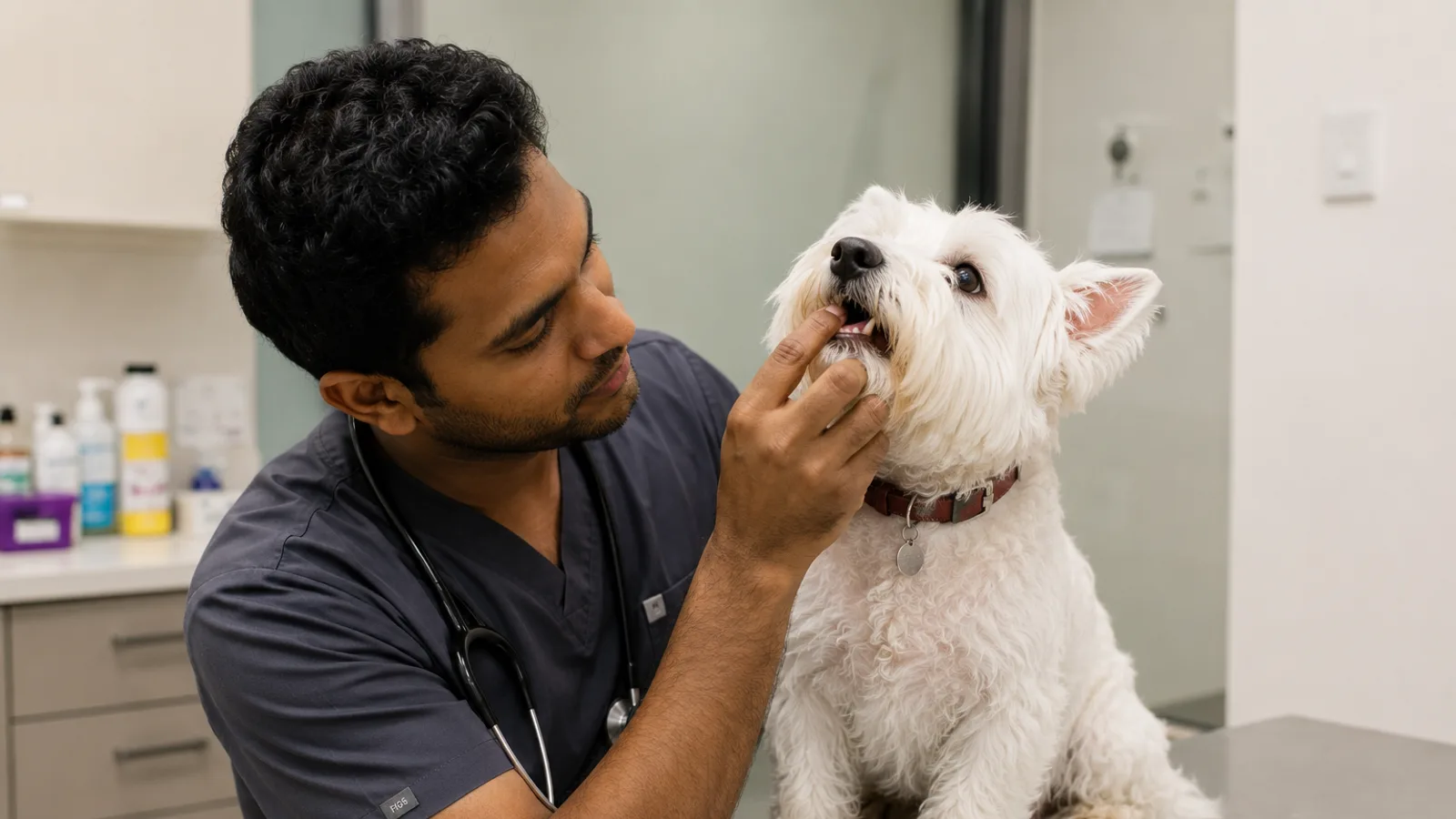

The right vet is the relationship that quietly underwrites the next twelve to fifteen years of your dog's life. The wrong vet is the one whose name you write angrily into a five-star review at 2am after a Sunday emergency. This is how to pick the first one, the questions to ask, and the moments that should make you switch.
1. What you are actually looking for
A short list of attributes, in roughly the order they matter:
- Gentle handling. The single biggest predictor of whether the dog will look forward to visits. A vet who slows down for a nervous dog, drops to the floor, lets the dog approach the equipment first, and waits for the consent to handle is worth a longer commute.
- Transparent pricing. A good clinic gives you a written estimate before non-emergency work. A great clinic does it before they swab the urine. If you have to ask three times, you have your answer.
- Diagnostic honesty. The vet who says "I do not know, let me refer you" is more valuable than the one who runs S$800 of bloodwork to look confident.
- After-hours pathway. Many neighbourhood clinics partner with one of the big A&E hospitals for overnight cover. Ask who they refer to and what the handover looks like.
- Dental capability. Routine dental scaling under anaesthesia is the most common surgical procedure most dogs go through. A clinic with an in-house dental rig, dental radiography, and a vet who has done a postgraduate dental certificate is a meaningful upgrade.
- Booking ease. Online booking, WhatsApp, or a real person on the phone. The clinic you cannot reach is the clinic you stop using.
One accreditation signal is non-negotiable: every practising vet in Singapore must be registered with the Animal & Veterinary Service (AVS), and clinics that dispense and hospitalise operate as licensed veterinary centres under AVS. You can sanity-check a vet's standing through the NParks AVS pages, and many reputable clinics list membership of the Singapore Veterinary Association and postgraduate qualifications on their own sites. Treat those as a floor, not a guarantee; the handling and the honesty above still decide the relationship.
2. The first-visit checklist
Book a general wellness consult before you need a real one. A first visit is your only chance to evaluate a clinic when nothing is wrong. Watch for:
- How the receptionist greets the dog. (You can tell a lot from the first thirty seconds.)
- Whether the vet introduces themselves to the dog before they handle the dog.
- Whether they ask what you have noticed at home before they tell you what they see.
- Whether they explain each recommended test in plain English, with a price.
- Whether they hand you a written discharge note with everything you discussed.
The first visit also tells you whether the clinic remembers you. If the second visit feels like the first visit (the receptionist re-asks every detail, the vet has not read the previous note), the records side of the practice is weak. That is a quiet warning sign for harder cases later.
3. General versus specialist versus emergency
Three tiers of veterinary care in Singapore, roughly:
- General practice. The neighbourhood clinic. Annual visits, vaccinations, minor surgeries, dentals, parasite control. Most dogs spend 95% of their lifetime visits here.
- Specialist clinics and hospitals. Internal medicine, dermatology, ophthalmology, cardiology, oncology, orthopaedic surgery. You get to a specialist by referral, usually after your GP has flagged something that needs deeper diagnostics. Beecroft, Vet Central Specialty, and a handful of others run multi-discipline specialist practices.
- 24-hour A&E. The clinics that pick up when something happens at 3am. Mount Pleasant (multiple branches), Animal Recovery (Whitley and Bishan), and Beecroft cover most of the island. Save the number for the one closest to your home; the second-closest matters too in case the first is full.
A good general practice has a working relationship with at least one specialist hospital and at least one A&E. Ask early. You want the answer before the moment you need to use it.
4. What the vet directory actually tells you
The vet directory covers 110 clinics across the five regions of Singapore. Each row carries the basics (address, phone, opening hours, Google rating with review count), plus the flags that matter at 11pm on a Sunday: 24-hour, accident and emergency, in-house lab, in-house imaging, and isolation ward. The default sort pushes 24-hour clinics and A&E clinics to the top of every regional list. The dedicated emergency clinic page filters to that subset only.
We are honest about how far we have checked each clinic: editor visited means one of us has actually been; owner confirmed means the clinic has looked over its own listing; community verified means a reader put us right. We refresh phone numbers and hours every few months, and re-check whenever we visit in person.
5. The five times you should switch
Switching vets is normal and easy. The Veterinary Surgeons Board (VSB) framework gives owners the right to request a full copy of records from any clinic. You do not need a reason; the new clinic asks the old clinic on your behalf and it usually clears in a week. Switch if:
- You stop trusting the recommendations. The vet who recommends a S$1,200 panel every visit, or never gives you a no-treatment option, is selling rather than treating.
- The pricing stops being transparent. Quiet add-ons on the invoice, surprise charges, no written estimate before non-urgent work.
- The handling stresses your dog out. Some dogs are anxious everywhere, but a clinic where the handling makes things worse is a clinic that is wrong for your dog specifically.
- You cannot get an answer in an emergency. If the clinic does not pick up or refer cleanly after hours, you need a different plan.
- You moved. A clinic that worked when you were in Tiong Bahru does not work when you have moved to Punggol and the dog hates the car.
6. Dental capability deserves its own paragraph
Dental disease is the most common health problem in adult dogs in Singapore, and a routine scale-and-polish under general anaesthesia is the most common surgical procedure most dogs go through in a lifetime. The handling of this matters more than it sounds, because the difference between a good dental practice and an average one is not just price; it is whether the vet pulls a tooth that could have been saved, whether dental radiographs catch a hidden abscess, and whether the post-op pain is managed properly.
A clinic that takes dental work seriously usually has three things in common: a dedicated dental table with proper scaling and polishing equipment, dental radiography on site (this is the upgrade most general clinics still skip), and a vet who has done a postgraduate dental course or apprenticeship. Ask if the clinic publishes a CV or training page. Pricing for a routine scale and polish under anaesthesia sits between S$400 and S$1,400 depending on the dog's size, the complexity, and whether extractions are needed. If the price quoted is far below that, ask what is included. Hand-scaling without anaesthesia ("anaesthesia-free dental") looks like a bargain but only removes the visible tartar above the gum line; the actual disease lives below.
7. Building your A&E plan now, not later
The single most useful thing you can do this week is pin three contacts:
- Your general vet's phone number and the address of their nearest branch.
- The nearest 24-hour A&E clinic to your home, with a backup if it is full.
- The 24-hour AVS animal cruelty hotline (1800 476 1600) for road injuries to strays or strangers' dogs.
A two-minute exercise that pays off the first time you actually need it. Our emergency clinic page lists every 24-hour and A&E facility we have verified, sorted by region.