
DOG BREED GUIDE · CONDO & LANDED HOMES
Last updated First published 31 May 2026
Notice one little habit together →A small idea to try, with progress kept in your Pack.
Also known as Miniature Goldendoodle, Mini Doodle, Toy Goldendoodle (smaller line).
Thinking about adopting a Mini Goldendoodle?
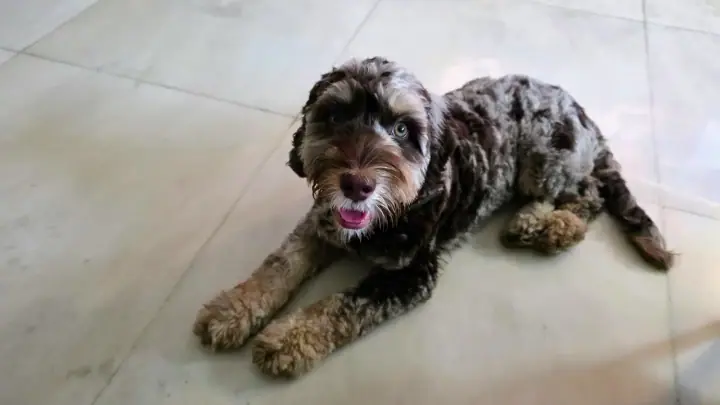
The Mini Goldendoodle is a dog that combines the curiosity of a detective with the persistence of a door-to-door salesman, ensuring your personal space is never personal for long.
Can a Mini Goldendoodle live in an HDB flat?
NoNot on the HDB approved-breed list
Not on HDB's approved small-breed list, so it cannot be kept in a flat under the standard rules.
HDB sets and maintains the approved-breed list. Check the current rules at HDB.gov.sg →
Full list of HDB-approved breeds on this site →At a glance
- Size category
- Small
- Weight
- 7 to 14 kg
- Height
- 33 to 50 cm
- Lifespan
- 12 to 15 years
- Energy level
- ●●●●○ 4/5 (editorial, unvalidated)
- Shedding
- ●○○○○ 1/5 (editorial, unvalidated)
- Heat tolerance
- ●●○○○ 2/5 (editorial, unvalidated)
- Barking
- ●●○○○ 2/5 (editorial, unvalidated)
- Trainability
- ●●●●● 5/5 (editorial, unvalidated)
- Grooming needs
- ●●●●● 5/5 (editorial, unvalidated)
- Origin
- United States
Editorial climate-care note
Heat tolerance rated 2 out of 5. Singapore's 28 to 32 degrees Celsius heat and high humidity are taxing for Mini Goldendoodles, whose wavy or curly coats trap warmth. Walk before 8am or after 7pm, keep sessions short, and ensure air-conditioned rest periods during the day.
This score is not a safe temperature or exercise limit. Any dog can develop heatstroke.
Plan activity around your dog, not a timer
A breed score cannot tell you how many minutes are safe today. Avoid hot conditions, watch your dog's breathing, and agree an activity plan with your vet.
Read PDSA's heatstroke guidance →Common health issues in Singapore's climate
Build a care budget
- Year 1
- S$4,752 to S$6,428
- Over 10 years
- S$43,975 to S$59,495
Illustrative planning assumptions for food, grooming and routine vet care, with inflation and a year-one setup uplift. These are not verified provider quotes or a lifespan prediction. Adjust the calculator to current quotes; add insurance, boarding and emergencies separately.
Run the full lifetime cost calculator →The Mini Goldendoodle is what happens when a Golden Retriever and a Miniature Poodle agree, in a deeply Singaporean way, that property is small and life is busy. The result is a teddy-bear-shaped dog that fits HDB rules, sheds almost nothing, and will follow you to the bathroom for the next thirteen years whether you invited it or not.
It is one of the most popular family dogs in Singapore for good reason. It is also the dog most likely to surprise you at the groomer if you stopped reading at "low-shedding".
It is a cross, not a standardised breed. No kennel club maintains a standard for it and no registry holds a central health database, so adult size, coat and temperament vary between litters and between generations. Everything below describes a typical range.
Personality and temperament
The Mini Goldendoodle handles HDB life better than its energy score suggests. It is small enough to stretch out in a four-room flat, polite in the lift, soft with the neighbours, and unusually quiet for a dog with this much enthusiasm underneath. Barking is rated 2 out of 5. You will not be the household with the loud dog.
Trainability is rated 5 out of 5, the top band: the Golden side brings willingness, the Poodle side brings speed, and the combination learns almost anything you can be bothered to teach. It is good with children and generally easy with other dogs.
The honest counterweight is attachment. Both parent breeds are people-oriented, and this cross expects company. A household empty from nine to seven will produce a dog that copes badly, and the fix is structural rather than behavioural: a midday walker, daycare a day or two a week, or a routine that keeps someone within reach.
Exercise in Singapore's climate
Heat tolerance is rated 2 out of 5. The Poodle side gives you the famous low-shedding curls, and it also gives you a coat that traps Singapore's humidity like a very small mobile sauna. Daily maximums of 31 to 33 degrees Celsius and average relative humidity around 82% year-round (Meteorological Service Singapore) mean this is the everyday condition rather than a hot-day exception.
Walk before 7am or after 7pm, stick to shaded routes (the park connectors through Bishan-Ang Mo Kio, the Southern Ridges and the East Coast corridor will become familiar), and carry water on anything over twenty minutes. A cooling mat at home is not a luxury; it is the reason the dog will settle on the floor instead of stalking you for attention at 2pm.
Energy is rated 4 out of 5, which is more than the size suggests, and the walking window is narrow. Two walks plus indoor fetch usually covers it, but the mental work is what makes the arrangement comfortable. With a 5-out-of-5 trainability rating, this dog will happily do twenty minutes of shaping, scent work or trick chains in the air conditioning, and be more satisfied than by a walk you should not have taken.
Coat and grooming in the humidity
Grooming needs are rated 5 out of 5, and the annual grooming line on this page is S$1,600. This is the cost buyers most often underestimate, and it is not optional maintenance: the coat grows continuously rather than shedding out, so hair that would fall away on a shedding breed tangles into the coat instead.
A full groom every 6 to 8 weeks plus home brushing two or three times a week is the working rhythm. Brush with a comb that reaches the skin rather than skating over the top of the coat, which is the most common home-grooming mistake and the reason owners are surprised by mats they thought they had brushed out. Behind the ears, in the armpits and around the tail are where it starts.
In this humidity that maintenance is preventive medicine, not tidiness. A matted coat holds moisture against the skin, and hot spots and itchy skin are both on this page's health-issue list. Dry the dog properly to the skin after any bath or rain, and check the ears weekly: drop ears under a curly coat are where ear infections, also on that list, begin.
Diet and feeding
Food runs about S$1,200 a year on this page's estimate. Set the portion with your vet against your dog's actual weight rather than a breed average, which matters for a cross whose adult weight ranges from 7 kg to 14 kg on this page alone.
Keep the dog lean. Patellar luxation and joint and mobility problems are both on the health-issue list, and a mid-size dog carrying extra weight is loading exactly those structures.
Allergies and itchy skin are also flagged. If you are chasing recurrent itching or ear trouble, resist rotating brands hopefully, which makes the picture harder for a vet to read, and ask instead about a properly run elimination trial. Most allergic skin disease is environmental rather than dietary, and in Singapore the environmental load runs all year. Introduce any food change gradually over a week or more.
Keep kibble sealed and out of direct heat, and keep water available and refreshed often.
Training
This is one of the easiest crosses to train and the practical question is what to spend that ease on. Short, frequent, reward-based sessions suit it, and the dog will ask for more.
- Time alone, in small increments from the first week. The single highest-value investment for this cross, and much harder to install once distress has set in.
- Grooming tolerance. A salon visit every six to eight weeks for fifteen years. Handle paws, ears, face and tail daily from puppyhood and take the puppy to the groomer before the coat needs real work, so the table is familiar rather than an ambush.
- Settle on a mat. With a 4-out-of-5 energy dog and a narrow outdoor window, an off switch you can ask for is worth more than a long trick list.
Health
Because this is a cross, there is no body of health data measured on Mini Goldendoodles the way there is for a standardised breed. What follows is what each parent breed is documented to carry a predisposition to. A cross can inherit from either parent, from both, or from neither.
On hybrid vigour, be sceptical of the sales version. A 2024 Royal Veterinary College study compared three popular Poodle-cross designer breeds against their purebred parent breeds across 57 health conditions in over 9,000 dogs and found no consistent health advantage for the crossbreeds. Most comparisons showed no meaningful difference, and the crossbreeds showed higher odds of a condition about as often as lower odds. The Mini Goldendoodle was not among the crosses studied, but the finding is a fair caution against assuming a cross is automatically the healthy option.
On the Golden Retriever side, the UK Kennel Club lists as good practice a DNA test for progressive retinal atrophy (GR_PRA2), elbow testing under the BVA/KC Elbow Dysplasia Scheme, eye testing and gonioscopy for PLA under the BVA/KC/ISDS Eye Scheme, and hip testing under the BVA/KC Hip Dysplasia Scheme, with DNA tests for ichthyosis (ICT-A) and a second progressive retinal atrophy (GR_PRA1) as best practice.
On the Poodle side, the same body's recommendations for the Miniature Poodle include DNA tests for osteochondrodysplasia and progressive retinal atrophy (prcd-PRA), plus eye testing under the BVA/KC/ISDS Eye Scheme and hip testing under the BVA/KC Hip Dysplasia Scheme.
Notice that eyes and hips appear on both sides. That is the practical takeaway: ask for eye certification and hip results on both parents rather than accepting one side's paperwork, and ask which form of PRA each side was tested for, because they are different tests.
This page's own health-issue flags are patellar luxation, ear infections, allergies, itchy skin, eye conditions, joint and mobility problems and hot spots. Routine veterinary care is around S$1,500 a year. Arrange insurance in the first weeks, before any skin or joint issue has presented. None of this replaces your vet's assessment of your own dog.
Housing and space in Singapore
The Mini Goldendoodle does not qualify for an HDB flat. HDB permits a cross of any two breeds that both appear on its published list, and while the Poodle is on that list in its Toy and Miniature sizes, the Golden Retriever is not. Both parents have to be on the list, so this cross falls outside it whatever the individual dog weighs. Confirm the position with HDB directly before you commit. That determination is HDB's to make, not the breeder's, and adult size in this cross genuinely varies, so ask for the parents' adult measurements before the deposit.
Ownership limits come from AVS rather than HDB. Under AVS's rules, an HDB flat may keep a maximum of one dog of an approved small breed plus up to two cats, and no dog on the Specified dogs list; private property may keep up to three cats or dogs in combination. Every dog needs an AVS licence. Licence fees depend on sterilisation status, age and the number of pets. One-time and three-year licences are different options. Check the current AVS fee table before paying.
Inside the flat, the requirements are cooling, company and somewhere to settle. This breed asks less of your floor area than of your calendar.
Care and cost in Singapore
On this page's figures: about S$1,200 a year for food, S$1,600 for grooming and S$1,500 for routine veterinary care. Grooming is the line that catches people out, and it is a fifteen-year commitment rather than a phase. Run the ten-year picture with the cost calculator.
Getting a Mini Goldendoodle: buying and adoption
With no kennel club standard or central health database behind this cross, the breeder is the only check. Ask for the AVS dog farm licence number, eye certification and hip results on both parents, the relevant PRA DNA results on each side, patella assessment, and a written 24-month health guarantee. Ask which generation the litter is and which size of Poodle sits behind it, because that decides the adult size and coat you will actually live with.
Be wary of size promises. "Mini" is a marketing word rather than a measurement, and a Mini Goldendoodle that arrives at 18 kg is an HDB problem as well as a surprise. Parents' adult weights, in writing.
Adoption is worth checking properly. Goldendoodle crosses come through SOSD, Causes for Animals and Mercylight, usually surrendered because the grooming cost or the dog's need for company outran a first owner's expectations. A small cross that qualifies can route through Project ADORE. An adult also arrives with its adult size, coat and temperament visible, which on a cross is worth a great deal.
Life stages: puppy to senior
Puppy, to about 12 months. Time alone and grooming tolerance are the two jobs and both are far harder later. Visit the groomer early. Protect the knees with steps at furniture and keep exercise self-paced while the growth plates are open. Insurance in force before anything presents.
Adolescent, roughly 9 to 18 months. The puppy coat changes to the adult coat and matting gets abruptly worse for a few months. This is where owners fall behind and end up with a shave-down. Increase brushing rather than resigning yourself to the clippers. Attachment behaviours can intensify here too, so keep practising short separations.
Adult, roughly 2 to 8 years. Settled years. Hold the weight, keep the grooming rhythm ahead of the coat, ears on the weekly check, teeth on the daily one. If allergic skin disease has appeared, treat it as a long management project where consistency beats intensity.
Senior, from about 9 years. Lifespan on this page is 12 to 15 years. Move to twice-yearly vet visits, with eyes checked properly given how much of both parent breeds' screening is ocular. Watch for stiffness getting on and off furniture, keep a ramp available, and shorten walks to suit the dog. Heat tolerance was never good and narrows with age. Keep the clip short and comfortable rather than handsome; a shorter maintenance cut in old age is a kindness.
See dog-friendly cafes and parks in your region → | Run the 10-year cost of a Mini Goldendoodle in Singapore →
Three things to know
-
Low-shedding is not low-maintenance
Grooming is rated 5 out of 5 at S$1,600 a year, every six to eight weeks for fifteen years, plus brushing to the skin two or three times a week. Skip the home brushing and the next visit becomes a shave-down.
-
Ask for eyes and hips on both parents, not one
Both the Golden Retriever and the Miniature Poodle carry eye and hip screening recommendations, and the PRA tests differ between the two sides. One side's paperwork is half an answer.
-
"Mini" is a marketing word, not a measurement
Adult size in this cross genuinely varies, HDB assesses these dogs individually, and a Mini Goldendoodle that grows past the limit is a housing problem. Get the parents' adult weights in writing before the deposit.
Annual cost in Singapore
Editable planning estimates, not verified provider quotes or a prediction of your dog's bills. Boarding, one-off equipment and emergencies are additional.
- Food
- S$1,200
- Grooming
- S$1,600
- Routine vet
- S$1,500
- Sum of the three
- S$4,300/year
Run the lifetime cost calculator →
Get a current insurance quote for your dog's age and circumstances. Compare exclusions, waiting periods, excess and cover limits. Compare policy questions here →
Frequently asked questions
Is a Mini Goldendoodle HDB-approved in Singapore?
No. The Mini Goldendoodle is not on the HDB approved-breed list, so under current rules it cannot be kept in an HDB flat. It may still suit private housing. Always check the latest HDB and AVS guidance.
Do Mini Goldendoodles bark a lot?
Our current barking assessment is: is fairly quiet (editorial estimate). It has not been independently validated. Ask about this dog's observed behaviour, triggers and time alone; the breed label cannot predict your neighbour's experience.
How much grooming does a Mini Goldendoodle need?
Our current grooming assessment is: needs a lot of grooming, including regular professional trims (editorial estimate). Confirm the individual coat-care routine and any professional grooming with the rescue, groomer or vet. The score is not a measured frequency or price.
How does a Mini Goldendoodle cope with Singapore's heat?
An editorial heat score cannot establish a safe temperature or walk duration for an individual dog. Activity, humidity, health, age and body shape matter. Avoid hot conditions, provide shade and water, and ask your vet about an appropriate activity plan.
Is a Mini Goldendoodle a good breed for a first-time owner?
Our household-fit note is: Editorial: may suit. This is not a validated prediction. Assess the individual dog, your daily capacity, training support and known care needs before deciding.
How much does a Mini Goldendoodle cost to keep in Singapore?
The stored planning assumption is S$4,300 a year for food, grooming and routine veterinary care. It is not a verified typical cost for this breed. Replace it with current quotes and your own usage; add setup, licensing, insurance if chosen, boarding and emergency savings separately.
Other small breeds to consider
Community
Meet 1 Mini Goldendoodle living in Singapore

A Mini Goldendoodle in Singapore, the short version
The Mini Goldendoodle is a popular hybrid in Singapore, valued for its low-shedding coat and gentle temperament. HDB allows a cross of any two breeds from its approved list, but the Golden Retriever is not one of them, so a Mini Goldendoodle does not qualify for a flat on that basis. Singapore's heat and humidity are challenging, because the wavy or curly coat traps warmth, so walks should be scheduled before 8am or after 7pm. Regular grooming every 6 to 8 weeks is essential in the humid climate to prevent matting and skin infections. Ear checks are needed weekly due to floppy ears that trap moisture. Annual vet costs typically range SGD 800 to 1,200, with grooming adding SGD 150 to 250 per session.
Mini Goldendoodle vs...
Deciding between two breeds? See them side by side.
Find Mini Goldendoodle-friendly spots in Singapore
High-energy breed, so these outdoor venues give Mini Goldendoodles the space they need.
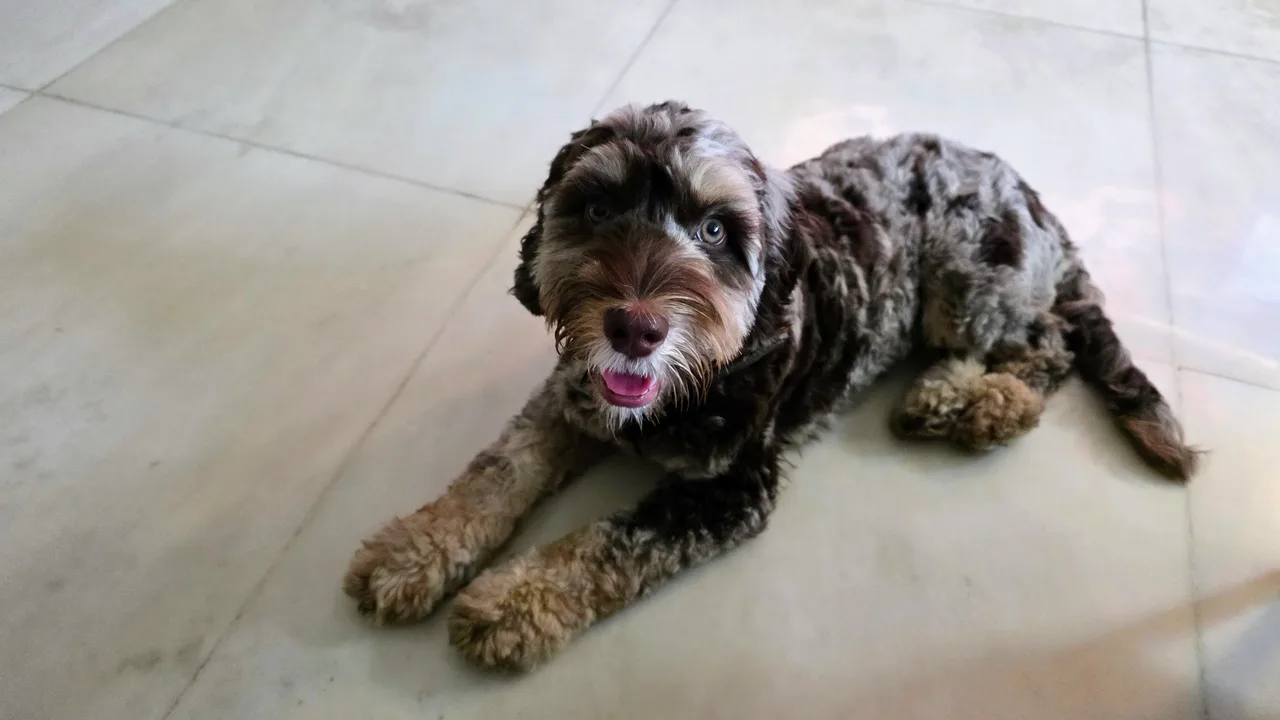 Find Your Match Meet Mini Goldendoodle first “I'm half retriever, half poodle, 100% social butterfly” Swipe through a dating-profile-style card before you commit. Say hello →
 Breed fit quiz Does a Mini Goldendoodle actually suit your life? Answer a few questions about your lifestyle and see how well this breed matches your real setup. Find out →