

HDB-APPROVED · DOG BREED GUIDE
Last updated First published 1 June 2026
Notice one little habit together →A small idea to try, with progress kept in your Pack.
Also known as Tibbie, Prayer Dog.
Thinking about adopting a Tibetan Spaniel?
The Tibetan Spaniel, with a history of surveying monastery walls, is perfectly poised to watch over your sofa and critique passers-by from your window.
Can a Tibetan Spaniel live in an HDB flat?
YesOn the HDB approved-breed list
Named on HDB's approved small-breed list for flats. Check any listed variety restrictions and confirm the individual dog before committing.
HDB sets and maintains the approved-breed list. Check the current rules at HDB.gov.sg →
Full list of HDB-approved breeds on this site →At a glance
- Size category
- Small
- Weight
- 4 to 7 kg
- Height
- 23 to 25 cm
- Lifespan
- 12 to 16 years
- Energy level
- ●●●○○ 3/5 (editorial, unvalidated)
- Shedding
- ●●●○○ 3/5 (editorial, unvalidated)
- Heat tolerance
- ●●○○○ 2/5 (editorial, unvalidated)
- Barking
- ●●●○○ 3/5 (editorial, unvalidated)
- Trainability
- ●●●○○ 3/5 (editorial, unvalidated)
- Grooming needs
- ●●●○○ 3/5 (editorial, unvalidated)
- Origin
- Tibet
Editorial climate-care note
Heat tolerance rated 2 out of 5. The Tibetan Spaniel was bred for high-altitude cool climates and struggles significantly in Singapore's 28 to 32 degrees Celsius humidity. Despite its small size, it overheats quickly and needs air-conditioning at home year-round. Walks must be limited to early morning before 8am or after 7pm in the evening, kept under 20 minutes.
This score is not a safe temperature or exercise limit. Any dog can develop heatstroke.
Plan activity around your dog, not a timer
A breed score cannot tell you how many minutes are safe today. Avoid hot conditions, watch your dog's breathing, and agree an activity plan with your vet.
Read PDSA's heatstroke guidance →Common health issues in Singapore's climate
Build a care budget
- Year 1
- S$3,536 to S$4,784
- Over 10 years
- S$32,725 to S$44,276
Illustrative planning assumptions for food, grooming and routine vet care, with inflation and a year-one setup uplift. These are not verified provider quotes or a lifespan prediction. Adjust the calculator to current quotes; add insurance, boarding and emergencies separately.
Run the full lifetime cost calculator →The Tibetan Spaniel is not a spaniel, has never flushed anything out of anywhere, and spent its history sitting on monastery walls in the Himalayas watching for arrivals and telling the monks about them. That job description explains the modern dog almost completely: alert, self-possessed, deeply attached to its own people, and quietly convinced that the window is a post worth manning.
It is on HDB's approved list, it is rated good with children and good with other dogs, and beginner friendliness is high. The one thing to plan for is the coat and the climate, because a dog developed at altitude in Tibet is working against the weather here.
Personality and temperament
Tibbies are a nice middle point between a lapdog and an independent breed. Affectionate and physically close with their household, more reserved with strangers, and rarely needy.
Trainability is rated 3 out of 5, which reflects a dog that has opinions rather than a dog that struggles. They are bright and observant, and they respond far better to being paid than to being told. Beginner friendliness is nonetheless rated high, because the temperament is forgiving even when the training is imperfect.
Energy is rated 3 out of 5 and barking 3 out of 5, both moderate. The barking is watchful rather than reactive, and it will focus on whatever the dog can see. A Tibbie parked on the back of a sofa with a view of the corridor will use that view.
They are climbers, unusually for a small breed, and will find the highest available surface. Plan for that rather than fighting it.
Exercise in Singapore's climate
Heat tolerance is rated 2 out of 5, and heatstroke is on this page's health-issue list. Two things combine to produce that. The double coat is built for a cold, high, dry climate, and the muzzle is slightly shortened, which reduces the airflow a dog cools itself with. Neither is extreme on its own; together they leave less margin than a 4 to 7 kg dog would otherwise have.
Singapore's daily maximum of 31 to 33 degrees Celsius with average relative humidity around 82% year round (Meteorological Service Singapore) makes the cool-hour rule firm. Two walks a day of twenty minutes or so, before 8am and after 8pm, in shade, with water.
At 3 out of 5 energy that is genuinely sufficient, which is one of the reasons the breed suits a flat. Fill the remainder indoors with short training games and puzzle feeders. An observant dog with nothing to observe becomes an observant dog that barks, so giving it something to do is also the most effective thing you can do about noise.
Watch for breathing that becomes noisy and does not settle a minute or two after stopping, and turn back rather than finishing the route.
Coat and grooming in the humidity
Grooming needs are rated 3 out of 5 and shedding 3 out of 5, at about S$1,200 a year. That is a moderate, manageable coat by the standards of this site, and considerably less demanding than the Lhasa Apso it is often confused with.
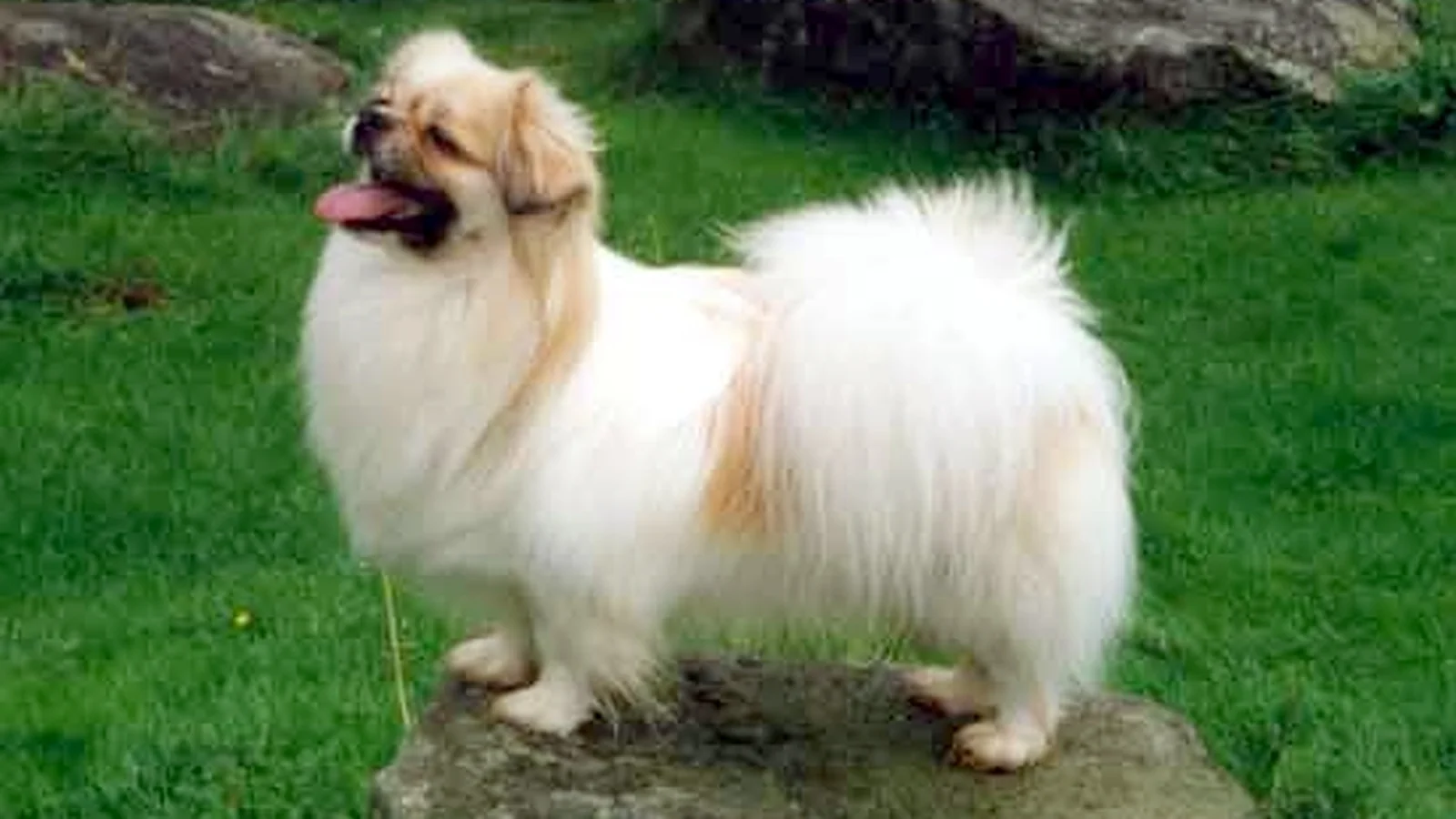
The Tibetan Spaniel has a silky double coat, longer around the neck and on the ears, tail and the backs of the legs, and it does not mat as readily as a Lhasa or a Coton. Brush thoroughly two or three times a week, getting down through the topcoat to remove dead undercoat, which is what actually helps the dog cool. Concentrate on the ruff, behind the ears and the feathering on the back legs.
Book a groom every six to eight weeks and keep the coat tidy and practical. Do not shave it: a double coat insulates in both directions and shields skin from a high UV index, and shaved double coats often grow back patchy.
Dry the dog to the skin after every bath and every wet walk, because damp undercoat in this humidity is how skin trouble starts.
Diet and feeding
Food runs about S$1,100 a year. With moderate energy and a coat that hides a thickening waist, this is a breed that puts on weight quietly, so assess by hand rather than eye and ask your vet to body-condition score at each visit.
Keeping the dog lean matters for two entries on this page's health-issue list at once. Patellar luxation leads it, and extra weight goes through the knees. Heatstroke is on it, and extra weight is extra heat to shed through a system that is already limited.
Weigh the food and count treats inside the daily total. Dental health is on the list too, so brush daily: a small jaw over a 12 to 16 year life accumulates a lot of consequences.
Training
An observant, opinionated dog trains on reward and disengages under pressure. Three priorities:
- The "quiet" cue, from week ten. A sentinel breed in a flat needs the alert shaped rather than suppressed. Teach the sequence: alert once or twice, come to you, settle, get paid for the settle. Trying to prevent the alert argues with centuries of selection.
- Four feet on the floor, and manage the climbing. This breed will get onto high things. Given patellar luxation at the top of the health list, provide steps to the places you are happy for it to reach and make the rest genuinely inaccessible, because the jump down is what does the damage.
- Handling and grooming tolerance. Brushing several times a week and a groomer every six to eight weeks for up to sixteen years.
Health
The UK Kennel Club recommends a DNA test for progressive retinal atrophy (PRA3) and eye testing using the BVA/KC/ISDS Eye Scheme. It places the breed in Breed Watch Category 1, and states that "currently no points of concern specific to this breed have been identified for special attention by judges, other than those covered routinely by The Kennel Club's breed standard".
Both recommendations point at the eyes, and eye conditions sit second on this page's own health-issue list, so that is where to concentrate.
Ask for the PRA3 DNA result on both parents. Progressive retinal atrophy is an inherited degeneration of the retina that ends in blindness and cannot be treated. Because the genetics are understood, a breeder who tests does not produce affected puppies, so a missing result is not an administrative oversight, it is a choice. Ask for the eye scheme certificates as well.
Then ask for a written veterinary patella assessment on both parents, since patellar luxation leads this page's list and the Kennel Club scheme does not cover it for this breed.
Heart conditions are also listed, so ask your vet to listen at every visit rather than only when something seems wrong. Allergies and dental health complete the list, and both are largely management rather than screening.
Routine veterinary care runs about S$900 a year, one of the lower figures on this site, which reflects a fundamentally robust little breed. Arrange insurance in the first weeks anyway, before any knee or eye note is on a clinical record to be written back as an exclusion. None of this replaces your own vet's assessment of your own dog.
Housing and space in Singapore
The Tibetan Spaniel is named on HDB's published list of approved breeds for flats, which runs to 61 named breeds plus a cross of any two of them. Confirm the current position there before you commit, since HDB maintains and updates the list.
Ownership limits come from AVS rather than HDB. Under AVS's rules, an HDB flat may keep a maximum of one dog of an approved small breed plus up to two cats, and no dog on the Specified dogs list; private property may keep up to three cats or dogs in combination. Every dog needs an AVS licence. Licence fees depend on sterilisation status, age and the number of pets. One-time and three-year licences are different options. Check the current AVS fee table before paying.
Three practical points, and the first is specific to this breed. Tibbies climb and like a vantage point, so decide which high surfaces are allowed, give the dog a safe way up and down, and secure the ones that are not, particularly anything near a window or a balcony. A small dog that has learned to get onto the back of a sofa can get onto other things.
Then the usual: a cool tiled place to lie out of the afternoon sun, and runners on polished tile where the dog turns and stops.
Care and cost in Singapore
On this page's figures: about S$1,100 a year for food, S$1,200 for grooming and S$900 for routine veterinary care. That is a modest and evenly spread total, and the low veterinary line genuinely reflects a hardy breed rather than an underestimate. Multiply by 12 to 16 years. Run the ten-year picture with the cost calculator.
Getting a Tibetan Spaniel: buying and adoption
Ask for the AVS dog farm licence number, the PRA3 DNA results and eye certificates for both parents, and a written veterinary patella assessment for both parents.
Ask how the puppies have been socialised. A naturally reserved breed becomes a comfortable adult through early, varied, unpressured contact with people, and a litter raised in a household beats one raised in a quiet kennel.
Be clear about which breed you are buying. Tibetan Spaniels, Lhasa Apsos, Shih Tzus and Pekingese are related in the popular imagination and are quite different in coat, temperament and grooming cost, and sellers are not always precise. A breeder who cannot discuss the differences fluently is not the right breeder.
Adoption is worth checking. Tibbies and small Asian companion crosses come through SOSD, Causes for Animals and Mercylight. An adult arrives with its temperament visible, which for a reserved breed is a real advantage.
Life stages: puppy to senior
Puppy, to about 12 months. Socialise generously and without pressure. Start the "quiet" cue in week ten. Begin daily tooth brushing and get grooming handling established before the adult coat comes in. Decide the climbing rules now and provide the steps. Keep the puppy lean and get insurance in force early.
Adolescent, roughly 9 to 18 months. The adult double coat and ruff arrive and brushing demand rises. Independence firms up and the watchfulness becomes a real habit, so keep rewarding the settle. Watch for a skip or hop in the back legs and mention it even if it passes.
Adult, roughly 2 to 10 years. An easy, undemanding middle. Coat brushed, teeth daily, weight checked by hand, walks in the cool hours, something to think about each day.
Senior, from about 11 years. Lifespan here is 12 to 16 years, among the longer ones on this site. Move to twice-yearly vet visits and ask for the heart to be listened to. Watch for cloudiness or bumping into things in low light, given the PRA picture, and for hesitation before jumping, which usually means knees. Older dogs with a shortened muzzle tolerate heat less, so shorten the walks. Keep the vantage point accessible with steps, because taking away the window is taking away the job.
See dog-friendly cafes and parks in your region → | Run the 10-year cost of a Tibetan Spaniel in Singapore →
Three things to know
-
Ask for the PRA3 DNA result by name
The Kennel Club recommends it alongside eye testing, eye conditions sit second on this page's own health list, and progressive retinal atrophy causes untreatable blindness that a test prevents entirely.
-
The coat and the muzzle stack
Heat tolerance is rated 2 out of 5 because a Himalayan double coat and a slightly shortened muzzle both work against the dog here, and heatstroke is on the health list. Cool hours only, brush the dead undercoat out, and never shave it.
-
Give the sentinel a job and a safe vantage point
This breed climbs and watches, and patellar luxation leads its health list, so provide steps to the high places you allow and secure the ones you do not. The jump down is what damages the knee.
Annual cost in Singapore
Editable planning estimates, not verified provider quotes or a prediction of your dog's bills. Boarding, one-off equipment and emergencies are additional.
- Food
- S$1,100
- Grooming
- S$1,200
- Routine vet
- S$900
- Sum of the three
- S$3,200/year
Run the lifetime cost calculator →
Get a current insurance quote for your dog's age and circumstances. Compare exclusions, waiting periods, excess and cover limits. Compare policy questions here →
Frequently asked questions
Is a Tibetan Spaniel HDB-approved in Singapore?
Yes. The Tibetan Spaniel is on the HDB list of breeds approved for flats. Confirm the current HDB and AVS rules before you commit, as the approved list can change.
Do Tibetan Spaniels bark a lot?
Our current barking assessment is: has a moderate bark (editorial estimate). It has not been independently validated. Ask about this dog's observed behaviour, triggers and time alone; the breed label cannot predict your neighbour's experience.
How much grooming does a Tibetan Spaniel need?
Our current grooming assessment is: needs moderate grooming (editorial estimate). Confirm the individual coat-care routine and any professional grooming with the rescue, groomer or vet. The score is not a measured frequency or price.
How does a Tibetan Spaniel cope with Singapore's heat?
An editorial heat score cannot establish a safe temperature or walk duration for an individual dog. Activity, humidity, health, age and body shape matter. Avoid hot conditions, provide shade and water, and ask your vet about an appropriate activity plan.
Is a Tibetan Spaniel a good breed for a first-time owner?
Our household-fit note is: Editorial: may suit. This is not a validated prediction. Assess the individual dog, your daily capacity, training support and known care needs before deciding.
How much does a Tibetan Spaniel cost to keep in Singapore?
The stored planning assumption is S$3,200 a year for food, grooming and routine veterinary care. It is not a verified typical cost for this breed. Replace it with current quotes and your own usage; add setup, licensing, insurance if chosen, boarding and emergency savings separately.
Other small breeds to consider

A Tibetan Spaniel in Singapore, the short version
The Tibetan Spaniel is HDB-approved and suits Singapore apartment living well in terms of size and temperament, but its origins in high-altitude Tibetan monasteries mean it is poorly adapted to tropical heat. In Singapore's 28 to 32 degrees Celsius year-round humidity, this breed overheats more readily than its small frame suggests. Air-conditioning at home is essential. Walks must be kept to before 8am or after 7pm, limited to 20 minutes. The breed is gentle and relatively low-energy, making it suitable for quieter households. Regular eye and dental care is important. Annual vet costs in Singapore typically range SGD 900 to 1,400.
Find Tibetan Spaniel-friendly spots in Singapore
Good spots to visit with a Tibetan Spaniel in Singapore.
 Find Your Match Meet Tibetan Spaniel first “I sat on monastery walls watching for trouble long before it was a personality trait” Swipe through a dating-profile-style card before you commit. Say hello →
 Breed fit quiz Does a Tibetan Spaniel actually suit your life? Answer a few questions about your lifestyle and see how well this breed matches your real setup. Find out →