
HDB-APPROVED · DOG BREED GUIDE
Last updated First published 1 June 2026
Notice one little habit together →A small idea to try, with progress kept in your Pack.
Also known as Sheltie, Shetland Collie.
Thinking about adopting a Shetland Sheepdog?
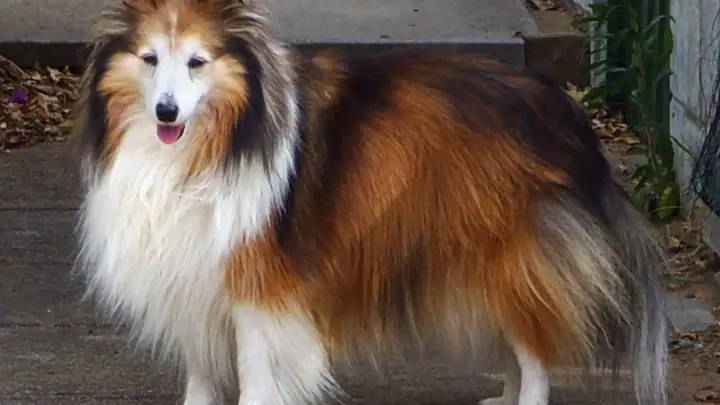
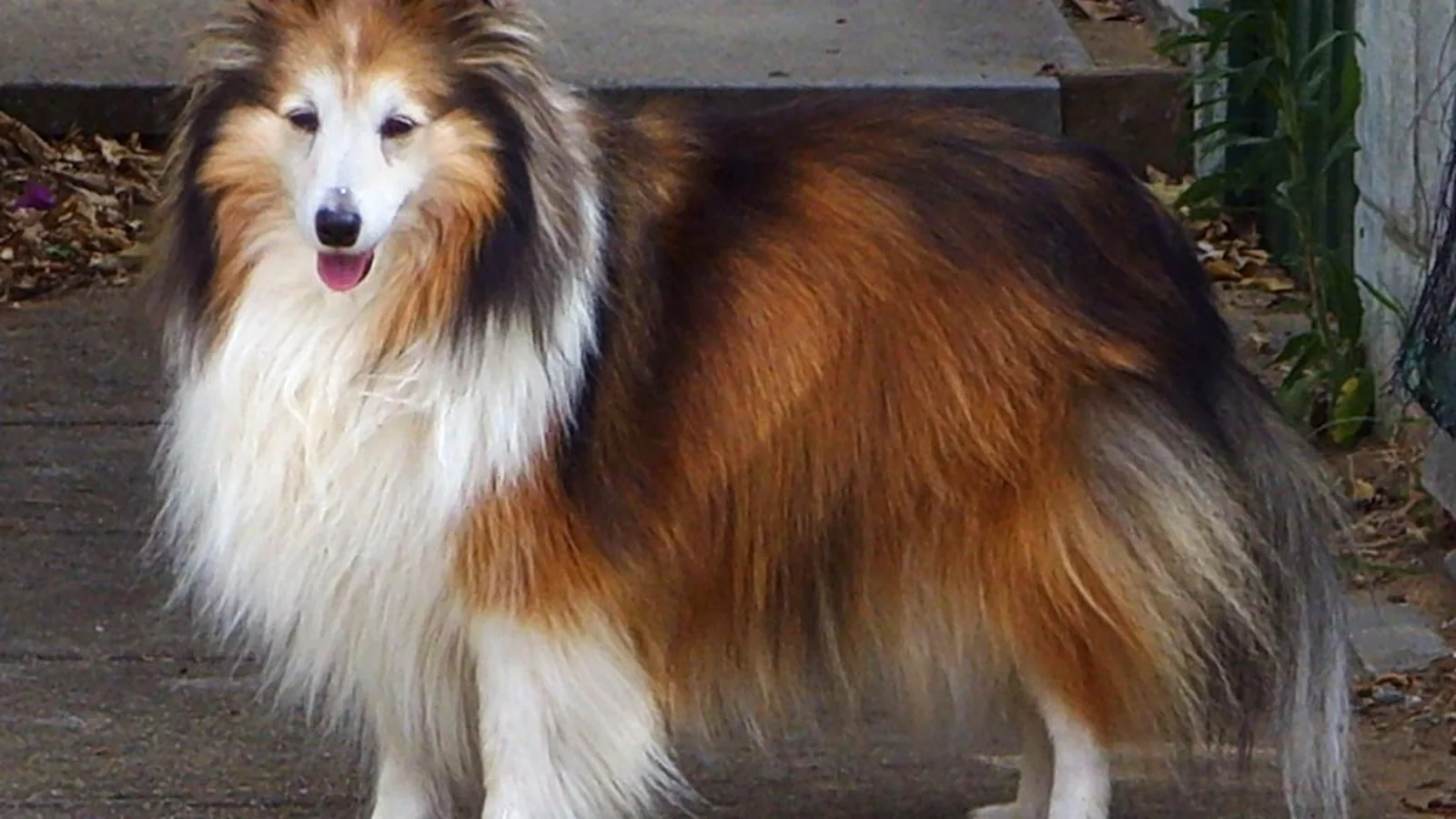
The Shetland Sheepdog's fur is an ever-present reminder that it was built for a climate far cooler than Singapore, making it the ideal breed for anyone secretly yearning for an arctic explorer's laundry routine.
Can a Shetland Sheepdog live in an HDB flat?
YesOn the HDB approved-breed list
Named on HDB's approved small-breed list for flats. Check any listed variety restrictions and confirm the individual dog before committing.
HDB sets and maintains the approved-breed list. Check the current rules at HDB.gov.sg →
Full list of HDB-approved breeds on this site →At a glance
- Size category
- Small
- Weight
- 6 to 12 kg
- Height
- 33 to 41 cm
- Lifespan
- 12 to 14 years
- Energy level
- ●●●●○ 4/5 (editorial, unvalidated)
- Shedding
- ●●●●● 5/5 (editorial, unvalidated)
- Heat tolerance
- ●○○○○ 1/5 (editorial, unvalidated)
- Barking
- ●●●●○ 4/5 (editorial, unvalidated)
- Trainability
- ●●●●● 5/5 (editorial, unvalidated)
- Grooming needs
- ●●●●○ 4/5 (editorial, unvalidated)
- Origin
- United Kingdom (Shetland Islands)
Editorial climate-care note
Heat tolerance rated 1 out of 5. The Shetland Sheepdog is one of the least heat-tolerant breeds in Singapore. Its thick double coat is designed for cold climates and traps heat dangerously in 28 to 32 degrees Celsius humidity. Air-conditioning is a must at all times. Outdoor activity must be restricted to before 8am or after 7pm, with walks kept brief.
This score is not a safe temperature or exercise limit. Any dog can develop heatstroke.
Plan activity around your dog, not a timer
A breed score cannot tell you how many minutes are safe today. Avoid hot conditions, watch your dog's breathing, and agree an activity plan with your vet.
Read PDSA's heatstroke guidance →Common health issues in Singapore's climate
Build a care budget
- Year 1
- S$4,310 to S$5,831
- Over 10 years
- S$39,884 to S$53,961
Illustrative planning assumptions for food, grooming and routine vet care, with inflation and a year-one setup uplift. These are not verified provider quotes or a lifespan prediction. Adjust the calculator to current quotes; add insurance, boarding and emergencies separately.
Run the full lifetime cost calculator →The Shetland Sheepdog is essentially a miniaturised Rough Collie, bred on the Shetland Islands as a small, hardy sheep-herder for crofters who could not feed a 30 kg dog. It is one of the most intelligent breeds in the world and one of the most loyal companion dogs you can buy. It also sheds an extraordinary amount of hair and was designed for North Sea winters, which means living with a Sheltie in Singapore is a daily exercise in adaptation.
Personality and temperament
The Sheltie is intensely trainable and intensely bonded to its household. Trainability is rated 5 out of 5 on this page, the top band. It learns commands in a handful of repetitions, will happily do trick training for an hour, and excels at agility, obedience and scent work. A Sheltie with a job is a delight.
The same wiring produces the difficulties:
- It cannot be left to its own devices. A Sheltie alone in a quiet flat with nothing to do becomes vocal, anxious and slightly neurotic within a fortnight. Anxiety and stress appear on this page's health-issue flags, which is unusual and deliberate.
- It is vocal. Barking is rated 4 out of 5. Herding dogs work partly by voice, and a Sheltie will announce the lift, the corridor and the weather.
- It herds. With no sheep available, that becomes circling children, chivvying other pets and reacting to fast movement. Redirect it early rather than scolding a dog for doing its job.
- It is soft. This is a sensitive breed. Harsh handling produces a shut-down dog, not a compliant one.
Exercise in Singapore's climate
Heat tolerance is rated 1 out of 5, the lowest band we use. The Sheltie is built for five degrees Celsius and damp wind, and Singapore's daily maximum of 31 to 33 degrees with average relative humidity around 82% year-round (Meteorological Service Singapore) is about as far from that as a climate gets. Heatstroke is the first item on this page's health-issue list for the breed.
The walking window is genuinely 7am to 8am and 7pm to 9pm. Two real walks a day plus 15 to 30 minutes of training or enrichment is the baseline for a 4-out-of-5 energy dog. Air conditioning at home is strongly recommended, a cooling mat is not optional, and some owners use cooling vests on longer walks, which look mildly ridiculous and work.
Because the outdoor window is so narrow and the dog is so clever, indoor work carries most of the load here. A Sheltie will do twenty minutes of nosework or shaping in the air conditioning and be more satisfied than by a walk you should not have taken. Watch for panting that does not settle, drooling, a wobbly gait or a dog that lies down and will not move on, and treat any of them as a stop-now signal.
Coat and grooming in the humidity
The coat is the dominant feature of life with this breed. Shedding is rated 5 out of 5, the top of the scale. A long, dense double coat designed for cold-wet conditions sheds heavily year-round in the tropics, with two heavier coat-blow periods on top.
Brush four to five times a week, down to the skin rather than over the surface. Vacuum daily and accept it. Book a professional bath and blow-dry every 4 to 6 weeks at S$120 to S$180; the annual grooming line on this page is S$1,600, second only to the doodle crosses.
Resist the urge to shave the coat down. The double coat insulates against heat as well as cold, shaving exposes skin that has never seen sun, and in many lines the regrowth is permanently altered. A sanitary trim around the belly, paws and tail base is fine. A full body shave is not. The productive alternative is a thorough blow-out that removes the dead undercoat, which is what the professional bath is actually for.
Dry the coat properly after any bath or rain. A dense double coat holding moisture against the skin in this humidity is how hot spots start.
Diet and feeding
Food is around S$90 to S$140 a month. Keep the dog lean: joint and mobility problems are on this page's health-issue list, and a herding breed carrying extra weight is loading the same joints it is asking to turn quickly.
One feeding detail is genuinely breed-specific and belongs here rather than in the health section, because it affects what you buy and what you allow: the MDR1 drug-sensitivity variant found in this breed changes which medicines are safe, including some common parasite treatments. Knowing your dog's MDR1 status before it needs a drug is worth more than any supplement, and it is covered below.
Keep kibble sealed and out of direct heat, and keep water available and refreshed more often than a label suggests for a heavily coated dog panting in this climate.
Training
This is one of the easiest breeds in the world to teach and one of the easiest to under-employ. Short, frequent, reward-based sessions suit it, and the dog will ask for more.
Spend the early effort on:
- Time alone, built in small increments from the first week. This is the highest-value training investment for the breed, and it is much harder to install after the anxiety has established.
- A managed response to noise. Alert, come, settle, get rewarded for the settle. Suppression does not work on a herding voice.
- Grooming tolerance. Four brushings a week for fourteen years is a lot of handling. Make it ordinary in puppyhood.
- Redirecting the herding. Give the dog something to do when children run or someone leaves the room quickly, and reward that instead of correcting the circling afterwards.
Health
The UK Kennel Club lists as good practice before breeding: prioritising genetic diversity, and eye testing under the BVA/KC/ISDS Eye Scheme including litter screening. As best practice it adds DNA tests for collie eye anomaly and choroidal hypoplasia (CEA/CH), multi-drug resistance (MDR1), two forms of progressive retinal atrophy (BBS2-PRA and CNGA1-PRA), and von Willebrand disease (vWD3-2), plus elbow testing under the BVA/KC Elbow Dysplasia Scheme and hip testing under the BVA/KC Hip Dysplasia Scheme. It places the breed in Breed Watch Category 2.
That is one of the longer recommended lists of any breed on this site, and the shape of it tells you where to look: eyes, in several distinct forms, plus a clotting disorder, plus joints, plus a drug-metabolism variant.
MDR1 deserves its own paragraph because it is the one that can hurt your dog at a routine appointment. A dog carrying the variant metabolises certain drugs differently, and some medicines that are entirely safe in other breeds are not safe at normal doses. Test your dog, write the result somewhere you will find it, and tell any vet treating your dog before they prescribe, including at an emergency clinic at 2am when you are not thinking clearly. Ask a breeder for the MDR1 result on both parents.
Eye screening appears at both the good-practice and best-practice tiers, including litter screening, so ask whether the litter itself was eye-tested rather than only the parents.
This page's own health-issue flags are heatstroke, joint and mobility problems, epilepsy, allergies, dental health and anxiety or stress. Routine annual vet care lands at S$600 to S$900. None of this replaces your vet's assessment of your own dog.
Housing and space in Singapore
This page records the Shetland Sheepdog as HDB-approved. At 6 to 12 kg it fits, and confirming the current position with HDB before committing is worthwhile, since HDB maintains and updates the list.
Ownership limits come from AVS rather than HDB. Under AVS's rules, an HDB flat may keep a maximum of one dog of an approved small breed plus up to two cats, and no dog on the Specified dogs list; private property may keep up to three cats or dogs in combination. Every dog needs an AVS licence. Licence fees depend on sterilisation status, age and the number of pets. One-time and three-year licences are different options. Check the current AVS fee table before paying.
The real housing question for this breed is not floor area, it is cooling and company. A flat that is reliably air-conditioned in at least one room the dog can use, and a household that is not empty from nine to seven, matter far more than square metres.
Care and cost in Singapore
Plan for S$4,000 to S$5,500 in year one and around S$3,900 a year ongoing. Food is S$90 to S$140 a month, grooming lands at S$120 to S$180 every 5 to 6 weeks, and routine annual vet care is S$600 to S$900. Add a good vacuum, amortised over the dog's life, without irony. Run the ten-year picture with the cost calculator.
Getting a Shetland Sheepdog: buying and adoption
Ask for the AVS dog farm licence number, eye testing results on the parents and ideally the litter, the MDR1 DNA result on both parents, and hip and elbow scores. Given how long the Kennel Club's recommended list is for this breed, a breeder's answer to "which of these have you done" is a fast and reliable way to sort serious from casual.
Ask about temperament and noise in the line as well. Sound sensitivity and anxiety are heritable tendencies as much as trained ones, and a nervous parent is worth knowing about.
Adoption is worth checking. Shelties and Sheltie crosses come through SOSD, Causes for Animals and Mercylight, most often surrendered when the shedding or the vocalness turned out to exceed what a first owner expected. An adult arrives with its coat, its voice and its temperament visible.
What to skip: any Sheltie imported at below local pricing with no eye or MDR1 documentation. On a breed where the recommended screening list runs to nine items, undocumented parents are the entire risk.
Life stages: puppy to senior
Puppy, to about 12 months. Establish time alone, grooming tolerance and a managed noise response, in that order of difficulty-later. Get the MDR1 test done early and record it where a vet can find it. Keep exercise self-paced while the growth plates are open, and socialise deliberately in cool environments.
Adolescent, roughly 9 to 18 months. The adult coat arrives and the grooming load roughly doubles. Vocalness and sound sensitivity often peak here too. Increase the mental work rather than the physical, hold the rules steady, and do not let a sensitive adolescent be frightened into reactivity by rough handling.
Adult, roughly 2 to 8 years. The good years, and the right ones for a real hobby: agility, obedience, scent work, anything that uses the brain. Keep the weight steady, the coat blown out on schedule, insurance in force.
Senior, from about 9 years. Lifespan on this page is 12 to 14 years. Move to twice-yearly vet visits, with eyes checked properly given how much of the breed's screening list is ocular. Expect stiffness, and shorten walks to suit the dog. Heat tolerance was the worst on our scale to begin with and narrows further, so the cool-hour window gets stricter, not looser. Keep brushing even when a full groom becomes tiring; a shorter, easier maintenance clip in old age is a kindness rather than a defeat, and is different from a shave-down.
See dog-friendly cafes and parks in your region → | Run the 10-year cost of a Shetland Sheepdog in Singapore →
Three things to know
-
Get the MDR1 result and keep it where a vet will see it
The Kennel Club lists MDR1 DNA testing for this breed, and the variant changes which drugs are safe at normal doses. This is the piece of paper that protects your dog in an emergency clinic at 2am.
-
The shedding is the deal, and shaving is not the answer
Rated 5 out of 5, year-round, in a climate with no clean seasonal break. Brush four to five times a week and book the blow-out. A full body shave exposes the skin and can permanently change the coat.
-
This dog cannot be left alone all day
Heat tolerance 1 out of 5 and anxiety on the health list. A cool flat and company for a real part of the day are the two requirements, and neither is negotiable by training.
Annual cost in Singapore
Editable planning estimates, not verified provider quotes or a prediction of your dog's bills. Boarding, one-off equipment and emergencies are additional.
- Food
- S$1,400
- Grooming
- S$1,600
- Routine vet
- S$900
- Sum of the three
- S$3,900/year
Run the lifetime cost calculator →
Get a current insurance quote for your dog's age and circumstances. Compare exclusions, waiting periods, excess and cover limits. Compare policy questions here →
Frequently asked questions
Is a Shetland Sheepdog HDB-approved in Singapore?
Yes. The Shetland Sheepdog is on the HDB list of breeds approved for flats. Confirm the current HDB and AVS rules before you commit, as the approved list can change.
Do Shetland Sheepdogs bark a lot?
Our current barking assessment is: is fairly vocal (editorial estimate). It has not been independently validated. Ask about this dog's observed behaviour, triggers and time alone; the breed label cannot predict your neighbour's experience.
How much grooming does a Shetland Sheepdog need?
Our current grooming assessment is: is high-maintenance to groom (editorial estimate). Confirm the individual coat-care routine and any professional grooming with the rescue, groomer or vet. The score is not a measured frequency or price.
How does a Shetland Sheepdog cope with Singapore's heat?
An editorial heat score cannot establish a safe temperature or walk duration for an individual dog. Activity, humidity, health, age and body shape matter. Avoid hot conditions, provide shade and water, and ask your vet about an appropriate activity plan.
Is a Shetland Sheepdog a good breed for a first-time owner?
Our household-fit note is: Editorial: may suit. This is not a validated prediction. Assess the individual dog, your daily capacity, training support and known care needs before deciding.
How much does a Shetland Sheepdog cost to keep in Singapore?
The stored planning assumption is S$3,900 a year for food, grooming and routine veterinary care. It is not a verified typical cost for this breed. Replace it with current quotes and your own usage; add setup, licensing, insurance if chosen, boarding and emergency savings separately.
Other small breeds to consider
A Shetland Sheepdog in Singapore, the short version
The Shetland Sheepdog is HDB-approved but is among the poorest heat-tolerant breeds in Singapore. Its dense double coat was bred for cold Scottish climates and poses a serious heatstroke risk in the island's 28 to 32 degrees Celsius year-round humidity. Full-time air-conditioning at home is non-negotiable. Walks must be before 8am or after 7pm and kept under 20 minutes. Shelties are highly intelligent, prone to anxiety, and need daily mental stimulation indoors. Grooming requirements are high; expect shedding year-round. Annual vet costs in Singapore typically range SGD 1,200 to 1,800 including joint and dental checks.
Find Shetland Sheepdog-friendly spots in Singapore
High-energy breed, so these outdoor venues give Shetland Sheepdogs the space they need.
 Find Your Match Meet Shetland Sheepdog first “I'm a mini collie with a genuine work ethic and nothing productive to do with it” Swipe through a dating-profile-style card before you commit. Say hello →
 Breed fit quiz Does a Shetland Sheepdog actually suit your life? Answer a few questions about your lifestyle and see how well this breed matches your real setup. Find out →