

HDB-APPROVED · DOG BREED GUIDE
Last updated First published 31 May 2026
Notice one little habit together →A small idea to try, with progress kept in your Pack.
Also known as Mini Schnauzer, Zwergschnauzer.
Thinking about adopting a Miniature Schnauzer?
A Miniature Schnauzer's eyebrows are as expressive as a silent film star's, which is fitting, considering their knack for transforming mundane neighbourhood strolls into epic adventures with invisible foes.
Can a Miniature Schnauzer live in an HDB flat?
YesOn the HDB approved-breed list
Named on HDB's approved small-breed list for flats. Check any listed variety restrictions and confirm the individual dog before committing.
HDB sets and maintains the approved-breed list. Check the current rules at HDB.gov.sg →
Full list of HDB-approved breeds on this site →At a glance
- Size category
- Small
- Weight
- 5 to 9 kg
- Height
- 30 to 36 cm
- Lifespan
- 12 to 15 years
- Energy level
- ●●●●○ 4/5 (editorial, unvalidated)
- Shedding
- ●○○○○ 1/5 (editorial, unvalidated)
- Heat tolerance
- ●●●○○ 3/5 (editorial, unvalidated)
- Barking
- ●●●●○ 4/5 (editorial, unvalidated)
- Trainability
- ●●●●○ 4/5 (editorial, unvalidated)
- Grooming needs
- ●●●●○ 4/5 (editorial, unvalidated)
- Origin
- Germany (late 1800s, bred down from the Standard Schnauzer for ratting on farms)
Editorial climate-care note
Wiry coat manages moderate heat reasonably well, though regular trims help airflow to the skin in humid months.
This score is not a safe temperature or exercise limit. Any dog can develop heatstroke.
Plan activity around your dog, not a timer
A breed score cannot tell you how many minutes are safe today. Avoid hot conditions, watch your dog's breathing, and agree an activity plan with your vet.
Read PDSA's heatstroke guidance →Common health issues in Singapore's climate
Build a care budget
- Year 1
- S$3,757 to S$5,083
- Over 10 years
- S$34,771 to S$47,043
Illustrative planning assumptions for food, grooming and routine vet care, with inflation and a year-one setup uplift. These are not verified provider quotes or a lifespan prediction. Adjust the calculator to current quotes; add insurance, boarding and emergencies separately.
Run the full lifetime cost calculator →The Miniature Schnauzer is one of the genuinely well-suited breeds for Singapore flat life, and it arrives with a specific, unglamorous warning attached that most owners hear too late: this is a dog that can become seriously ill from a plate of leftovers.
Everything else about the breed is easier than people expect. The coat barely sheds, the size is right, the brain is willing, and the eyebrows are a permanent source of entertainment. So this guide gets the pancreas conversation done properly and then talks about the dog you actually get.
Personality and temperament
Schnauzers are terriers with a German work ethic, and the combination shows up as a dog that is busy, opinionated and thoroughly involved in whatever you are doing. Trainability is rated 4 out of 5 and it is genuine willingness rather than compliance. It is rated good with children and good with other dogs, and beginner friendliness is high.
Barking is rated 4 out of 5, and that is the trait to plan around in a flat. Schnauzers were farm dogs whose job included telling you something had arrived, and they have not forgotten. Living metres from a shared corridor, this needs deliberate work from the first month rather than management later.
Energy is rated 4 out of 5 in a 5 to 9 kg dog. That is a lot of engine in a small package, and it wants using. An under-occupied Schnauzer redirects into barking, digging at furnishings and general editorial commentary on your household.
Exercise in Singapore's climate
Heat tolerance is rated 3 out of 5, which is respectable, and the wiry coat is part of why. A harsh double coat sits away from the skin rather than lying flat against it, so there is some air movement, provided the coat is kept properly trimmed rather than allowed to grow soft and dense.
With a daily maximum of 31 to 33 degrees Celsius and average relative humidity around 82% year round (Meteorological Service Singapore), the pattern that works is two proper walks a day in the cool hours, thirty to forty minutes each, before 8am and after 8pm, plus real mental work in between.
Lean into the nose. This is a breed that was paid to hunt vermin and it finds scent work genuinely satisfying. A snuffle mat, a scattered handful of kibble in the living room, or a hidden toy will settle a Miniature Schnauzer more effectively than an extra fifteen minutes of pavement, and it can be done at two in the afternoon when going outside is a bad idea.
Coat and grooming in the humidity
Shedding is rated 1 out of 5 and grooming needs 4 out of 5, at about S$1,200 a year. That is the classic wiry-coat trade and it is a good one for this climate, because almost no hair ends up on your floor and the coat itself handles humidity better than a soft one would.
The professional appointment every six to eight weeks is not optional. Ask specifically about hand-stripping versus clipping. Clipping is more common in Singapore and perfectly acceptable, but it does soften the coat texture over time, and a softened coat lies flatter, traps more moisture and insulates more. If you want the coat to keep doing its job in this climate, discuss it with your groomer rather than defaulting.
Two breed-specific jobs at home. The beard is a food and water magnet and in this humidity a permanently damp beard develops odour and skin irritation, so wipe and dry it after meals. And brush the leg furnishings two or three times a week, because that is where mats form first.
Diet and feeding
This is the section that matters most, and the reason is at the top of this page's health-issue list.
Food runs about S$1,000 a year. Pancreatitis is the first condition listed for this breed, and the Miniature Schnauzer's association with it is not incidental. The breed is predisposed to raised blood fat levels, and a high-fat meal in a dog already prone to that can trigger an episode of pancreatitis, which is painful, sometimes severe, and occasionally fatal.
In practical Singapore terms, that means the affectionate thing everyone does is the dangerous thing here:
- No table scraps, and this is the whole rule. Not the fat off the char siew, not the chicken skin, not the leftover curry. Tell everyone in the household, and tell whoever looks after the dog when you travel. Most pancreatitis episodes have an obvious dietary trigger the day before.
- Read the fat content on treats, not just the food. Many popular treats are far richer than the daily kibble they sit alongside.
- Keep the dog lean. Weight makes everything about this picture worse.
Know the signs and treat them as urgent: repeated vomiting, a hunched posture or a praying stretch with the front end down and the rear up, a painful abdomen, lethargy, and refusing food. That is a same-day veterinary visit.
Urinary issues are also on this page's list, so keep water available and refreshed through the day.
Training
At 4 out of 5 trainability with terrier independence, this dog learns quickly and negotiates constantly. Priorities:
- The "quiet" cue, from week ten. With barking at 4 out of 5 in a flat, this is the highest-value training you will ever do with this dog. Teach the sequence rather than the silence: alert once or twice, come to you, settle, get paid. Rewarding the settle works. Suppressing the alert does not.
- Grooming tolerance. Six to eight week appointments for fifteen years, plus beard-wiping most days. A dog that finds handling normal has an easier life.
- Leave it. Given the pancreas, a reliable "leave it" is not a party trick on this breed, it is a safety behaviour. Food on the floor at a hawker centre, a dropped sausage at a barbecue, the neighbour's kind offering. Train it properly.
Health
The UK Kennel Club recommends eye testing using the BVA/KC/ISDS Eye Scheme, including litter screening, and a DNA test for mycobacterium avium (MAC). It places the Miniature Schnauzer in Breed Watch Category 1, and states that "currently no points of concern specific to this breed have been identified for special attention by judges, other than those covered routinely by The Kennel Club breed standard".
The litter screening detail on the eye scheme is worth acting on. It means the eyes of the puppies themselves can be checked before they go home, not only the parents, so ask whether the litter was screened and for the result on your specific puppy.
This page lists pancreatitis, urinary issues and dental health as the breed's health issues. The pancreatitis picture is covered in the feeding section above and is the one that will most likely affect your life with this dog.
The urinary entry pairs with it. Schnauzers form bladder stones more readily than many breeds, and the signs overlap with things owners tend to excuse: going more often, straining, small amounts, or an accident indoors from a previously reliable dog. None of those are naughtiness and all of them are worth a vet visit. Water, and frequent chances to empty the bladder, help.
Dental health is the standard small-breed problem. A crowded mouth traps food, and daily brushing does more than an annual scale.
Routine veterinary care runs about S$1,200 a year here. Arrange insurance in the first weeks, before any pancreatic or urinary episode exists on a clinical record to be excluded, because on this breed those are precisely the two things you would want covered. None of this replaces your own vet's assessment of your own dog.
Housing and space in Singapore
The Miniature Schnauzer is named on HDB's published list of approved breeds for flats. Confirm the current position there before you commit, since HDB maintains and updates the list.
Ownership limits come from AVS rather than HDB. Under AVS's rules, an HDB flat may keep a maximum of one dog of an approved small breed plus up to two cats, and no dog on the Specified dogs list; private property may keep up to three cats or dogs in combination. Every dog needs an AVS licence. Licence fees depend on sterilisation status, age and the number of pets. One-time and three-year licences are different options. Check the current AVS fee table before paying.
Space suits this breed well. The two adjustments worth making are about noise and food. Put the resting place away from the front door so corridor traffic is not a constant event, and make the kitchen and dining area genuinely secure, because a busy terrier with a strong nose and a vulnerable pancreas should not have casual access to leftovers.
Care and cost in Singapore
On this page's figures: about S$1,000 a year for food, S$1,200 for grooming and S$1,200 for routine veterinary care. That is a fairly even spread and a reasonable total for a small dog. The line most likely to move is the veterinary one, and it moves in steps rather than gradually: a pancreatitis episode can mean hospitalisation. Run the ten-year picture with the cost calculator.
Getting a Miniature Schnauzer: buying and adoption
Ask for the AVS dog farm licence number, the eye scheme results for both parents, whether the litter itself was eye-screened, and the MAC DNA result. Then ask the question that separates people who breed this specific breed from people who breed dogs: has any dog in the line had pancreatitis, and what does the breeder feed. A serious Schnauzer breeder will talk about fat content without prompting.
Adoption is worth checking properly. Schnauzers and Schnauzer crosses come through SOSD, Causes for Animals and Mercylight. Barking in a flat is a common surrender reason, and it is usually a training gap rather than a temperament fault, which means the dog is often perfectly manageable in a home that does the work. An adult also arrives with any pancreatic history visible rather than potential.
What to skip: any seller who has never heard of the pancreatitis association, and any puppy from a line where nobody will discuss it.
Life stages: puppy to senior
Puppy, to about 12 months. Three jobs: "quiet" from week ten, "leave it" trained to a genuinely reliable standard, and the no-scraps rule established with every human in the household before the puppy has ever tasted one. Get grooming handling started before the adult coat arrives, and insurance in force early.
Adolescent, roughly 9 to 18 months. The adult wiry coat comes in and the grooming cycle becomes real. Terrier opinions peak here, and so does barking if the early work lapsed. Keep the mental exercise up: this is the age at which a bored Schnauzer invents a hobby you will not enjoy.
Adult, roughly 2 to 9 years. Steady state. Weight held, beard dried, teeth brushed, coat trimmed on schedule, and no leftovers ever. Watch the toileting pattern, because urinary stones tend to announce themselves as a change in habit rather than as obvious illness.
Senior, from about 10 years. Lifespan here is 12 to 15 years. Move to twice-yearly vet visits and ask for urine to be checked as part of them. Older Schnauzers become less tolerant of dietary indiscretion rather than more, so the scraps rule tightens rather than relaxes. Keep the coat shorter for comfort, keep the walks going in the cool hours, and expect the eyebrows to stay expressive to the end.
See dog-friendly cafes and parks in your region → | Run the 10-year cost of a Miniature Schnauzer in Singapore →
Three things to know
-
No table scraps, ever, and tell the whole household
Pancreatitis leads this page's health list and the breed is predisposed to the raised blood fats behind it. A single fatty treat can trigger a painful and occasionally fatal episode. Repeated vomiting with a hunched posture is a same-day vet visit.
-
Teach "quiet" in the first month
Barking is rated 4 out of 5 in a farm-bred alert dog living beside a shared corridor. Reward the settle after the alert rather than trying to prevent the alert.
-
Ask whether the litter was eye-screened, not just the parents
The Kennel Club's eye scheme recommendation for this breed includes litter screening, so a result exists for your specific puppy. Ask for it, along with the MAC DNA result.
Annual cost in Singapore
Editable planning estimates, not verified provider quotes or a prediction of your dog's bills. Boarding, one-off equipment and emergencies are additional.
- Food
- S$1,000
- Grooming
- S$1,200
- Routine vet
- S$1,200
- Sum of the three
- S$3,400/year
Run the lifetime cost calculator →
Get a current insurance quote for your dog's age and circumstances. Compare exclusions, waiting periods, excess and cover limits. Compare policy questions here →
Frequently asked questions
Is a Miniature Schnauzer HDB-approved in Singapore?
Yes. The Miniature Schnauzer is on the HDB list of breeds approved for flats. Confirm the current HDB and AVS rules before you commit, as the approved list can change.
Do Miniature Schnauzers bark a lot?
Our current barking assessment is: is fairly vocal (editorial estimate). It has not been independently validated. Ask about this dog's observed behaviour, triggers and time alone; the breed label cannot predict your neighbour's experience.
How much grooming does a Miniature Schnauzer need?
Our current grooming assessment is: is high-maintenance to groom (editorial estimate). Confirm the individual coat-care routine and any professional grooming with the rescue, groomer or vet. The score is not a measured frequency or price.
How does a Miniature Schnauzer cope with Singapore's heat?
An editorial heat score cannot establish a safe temperature or walk duration for an individual dog. Activity, humidity, health, age and body shape matter. Avoid hot conditions, provide shade and water, and ask your vet about an appropriate activity plan.
Is a Miniature Schnauzer a good breed for a first-time owner?
Our household-fit note is: Editorial: may suit. This is not a validated prediction. Assess the individual dog, your daily capacity, training support and known care needs before deciding.
How much does a Miniature Schnauzer cost to keep in Singapore?
The stored planning assumption is S$3,400 a year for food, grooming and routine veterinary care. It is not a verified typical cost for this breed. Replace it with current quotes and your own usage; add setup, licensing, insurance if chosen, boarding and emergency savings separately.
Other small breeds to consider
Community
Meet 1 Miniature Schnauzer living in Singapore

A Miniature Schnauzer in Singapore, the short version
A Miniature Schnauzer is HDB-approved and a solid flat companion, alert, moderately active, and comfortable in a smaller space. Its wiry coat manages Singapore's humidity reasonably well, though regular trims help keep it comfortable and reduce matting. The breed carries a well-documented predisposition to pancreatitis, which makes diet management a genuinely important part of ownership here, rich or fatty foods, including well-meaning table scraps, are a real risk rather than a minor indulgence. HDB and condo living both suit it fine. Regular vet checkups that include bloodwork are worth budgeting for given the breed's known digestive and urinary sensitivities.
Miniature Schnauzer vs...
Deciding between two breeds? See them side by side.
Find Miniature Schnauzer-friendly spots in Singapore
High-energy breed, so these outdoor venues give Miniature Schnauzers the space they need.
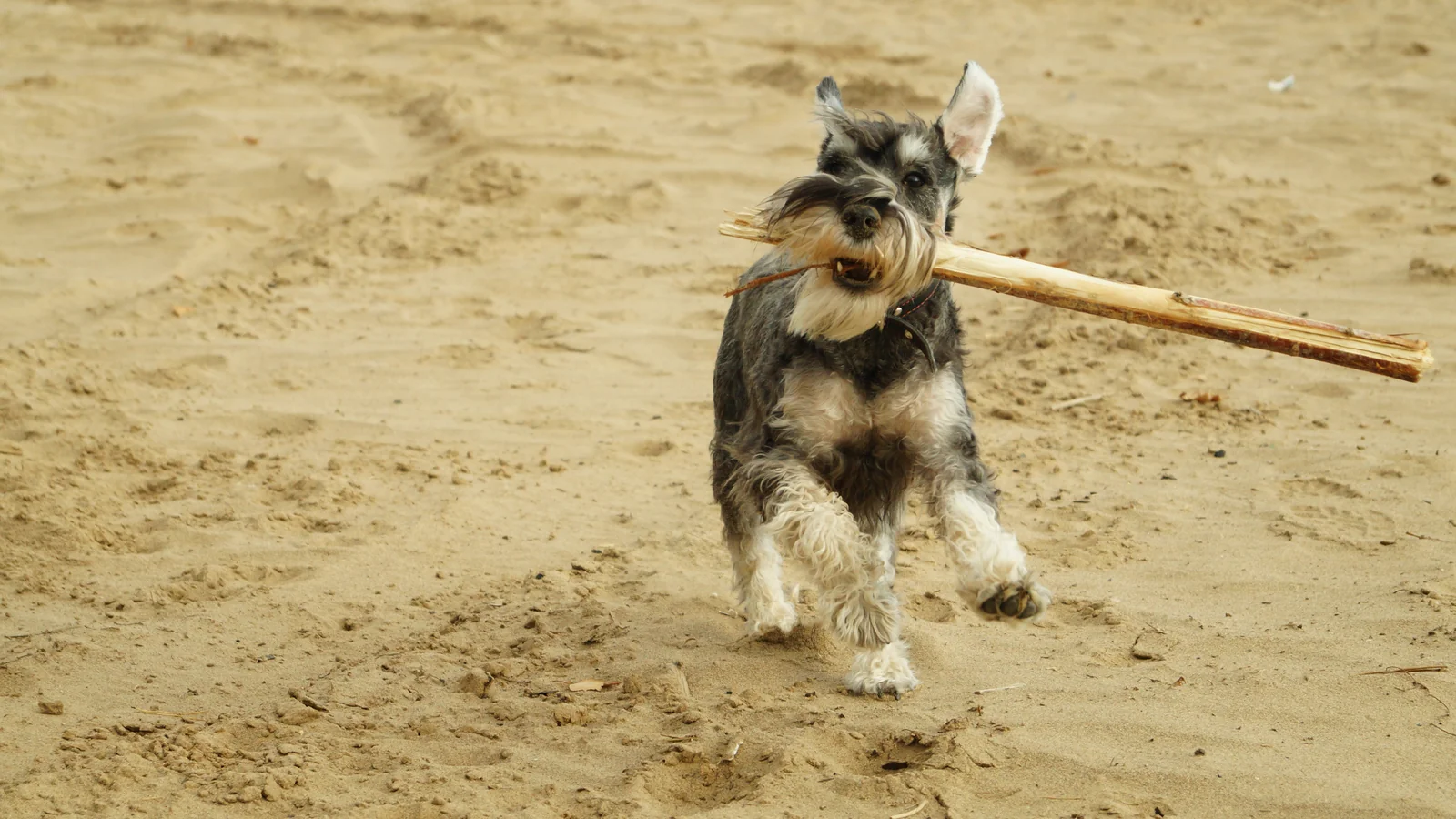 Find Your Match Meet Miniature Schnauzer first “My eyebrows have stronger opinions than most people's entire personalities” Swipe through a dating-profile-style card before you commit. Say hello →
 Breed fit quiz Does a Miniature Schnauzer actually suit your life? Answer a few questions about your lifestyle and see how well this breed matches your real setup. Find out →