
DOG BREED GUIDE · CONDO & LANDED HOMES
Last updated First published 31 May 2026
Notice one little habit together →A small idea to try, with progress kept in your Pack.
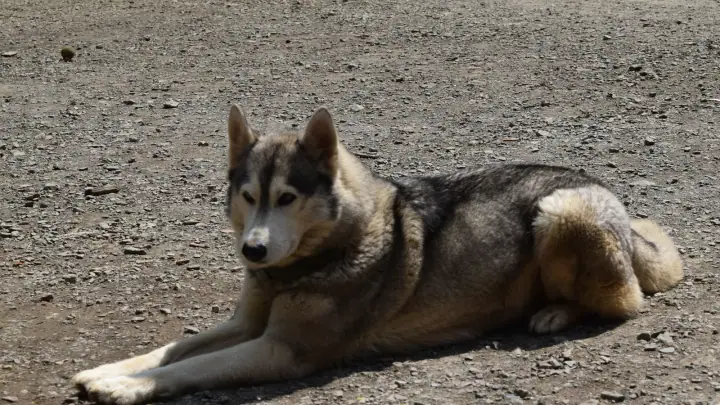
Also known as Husky, Sibe.
Thinking about adopting a Siberian Husky?
The Siberian Husky was bred to haul sleds across icy tundras, so in Singapore, it's like asking a polar bear to wear a Hawaiian shirt at Sentosa.
Can a Siberian Husky live in an HDB flat?
NoNot on the HDB approved-breed list
Not on HDB's approved small-breed list, so it cannot be kept in a flat under the standard rules.
HDB sets and maintains the approved-breed list. Check the current rules at HDB.gov.sg →
Full list of HDB-approved breeds on this site →At a glance
- Size category
- Large
- Weight
- 16 to 27 kg
- Height
- 51 to 60 cm
- Lifespan
- 12 to 14 years
- Energy level
- ●●●●● 5/5 (editorial, unvalidated)
- Shedding
- ●●●●● 5/5 (editorial, unvalidated)
- Heat tolerance
- ●○○○○ 1/5 (editorial, unvalidated)
- Barking
- ●●●○○ 3/5 (editorial, unvalidated)
- Trainability
- ●●○○○ 2/5 (editorial, unvalidated)
- Grooming needs
- ●●●●○ 4/5 (editorial, unvalidated)
- Origin
- Siberia (developed by the Chukchi people as a long-distance sled dog for travel across frozen terrain)
Editorial climate-care note
Built for snow, not the tropics. A poor climate match for SG; needs air-conditioning access and strictly early or late walks.
This score is not a safe temperature or exercise limit. Any dog can develop heatstroke.
Plan activity around your dog, not a timer
A breed score cannot tell you how many minutes are safe today. Avoid hot conditions, watch your dog's breathing, and agree an activity plan with your vet.
Read PDSA's heatstroke guidance →Common health issues in Singapore's climate
Build a care budget
- Year 1
- S$7,735 to S$10,465
- Over 10 years
- S$71,587 to S$96,853
Illustrative planning assumptions for food, grooming and routine vet care, with inflation and a year-one setup uplift. These are not verified provider quotes or a lifespan prediction. Adjust the calculator to current quotes; add insurance, boarding and emergencies separately.
Run the full lifetime cost calculator →This page has to begin honestly, because the alternative is a guide that helps nobody. The Siberian Husky is the worst climate match of any breed on this site. Heat tolerance is rated 1 out of 5, energy 5 out of 5, shedding 5 out of 5, and it carries the highest food, grooming and veterinary lines we record, at S$2,400, S$2,200 and S$2,400 a year respectively.
If you are still deciding, the kind answer is to choose something else. If you already have one, or you are set on it and have the housing and the resources, the rest of this page is written to help you do it properly, because a Husky in Singapore can be managed well and a great many are not.
Personality and temperament
Huskies are friendly, sociable and almost comically indifferent to authority. It is rated good with children and good with other dogs, and there is very little guarding instinct in the breed: a Husky will typically greet a burglar warmly and then ask to be taken out.
Trainability is rated 2 out of 5, the lowest on this site, and that number is honest rather than unkind. This is a breed developed to run in a team, making decisions over distance, without a handler beside it. It is intelligent and it is not biddable, and those are different things. A Husky will learn a cue perfectly and then decide, in the moment, whether the cue is relevant to its current plans.
Two practical consequences. Recall is genuinely unreliable in this breed and should be treated as such for the dog's whole life. And the vocalising is real: barking is rated 3 out of 5, but Huskies howl and talk in a way that is charming in a landed house and is not a small thing in a condominium.
Exercise in Singapore's climate
This is the central problem and it does not have a comfortable solution.
The double coat is one of the most effective insulating systems in dogs, developed for Arctic work, and it holds heat in as efficiently as it once held cold out. Against Singapore's daily maximum of 31 to 33 degrees Celsius with average relative humidity around 82% year round (Meteorological Service Singapore), a Husky has almost no capacity to shed heat and no cool season in which to recover. Heatstroke is on this page's health-issue list, and in this breed here it is the thing most likely to kill the dog.
Energy at 5 out of 5 in an animal that cannot safely exercise for most of the day is the squeeze. What that means in practice:
- Air-conditioning is not a luxury for this breed here, it is the housing requirement. A Husky needs somewhere genuinely cool to spend the middle of the day, every day, for its whole life.
- Exercise happens in the dark. Before 7am and after 9pm, and even then keep it moderate and watch the dog rather than the clock.
- Swimming, wherever you can get it. It is the only way to give this dog real physical work without overheating it.
- Mental work carries far more of the load than it would anywhere else. Scent games, puzzle feeders, training sessions, frozen enrichment. A Husky that cannot run and has nothing to think about will dig, chew, escape and howl, and every one of those is a Husky problem rather than a bad dog.
Know the signs and act on the first: laboured or noisy breathing that does not settle when you stop, a dog lagging or lying down, a wide dark tongue, stumbling. Cool with water and get to a vet. Do not use ice water.
Coat and grooming in the humidity
Shedding is rated 5 out of 5 and grooming 4 out of 5, at about S$2,200 a year. Huskies shed continuously here and then shed spectacularly when the undercoat releases. There is no version of this breed that does not put hair in your home.
The single most important instruction on this page after the air-conditioning one: never shave a Husky to cool it down. The double coat insulates in both directions and also shields skin from a very high UV index. Shaving removes the air layer that helps, exposes skin that has never been exposed, and in this breed the coat frequently grows back patchy and coarser. What actually cools the dog is removing dead undercoat, so brush hard and often, several times a week, right down to the skin, and use a professional de-shedding service regularly.
Dry the dog thoroughly after swimming and bathing. A dense double coat holds water for a long time, and damp undercoat against skin in this humidity is how hot spots begin.
Diet and feeding
Food runs about S$2,400 a year, the highest on this site, for a 16 to 27 kg dog. Huskies are famously efficient feeders and many eat less than their size suggests, so feed to the dog's condition rather than to the bag.
Keep the dog lean. Joint mobility is on this page's health-issue list, and every extra kilogram is more mass to cool in a climate that already gives this breed no margin.
Grow puppies slowly on a large-breed puppy formula and avoid over-exercising a developing joint on hard ground. Take the standard deep-chested precautions against bloat: smaller meals rather than one large one, and no hard exercise in the hour either side of eating.
Water matters more than usual. Multiple bowls, refreshed often, and water on every outing without exception.
Training
With trainability at 2 out of 5, the goal is not obedience, it is management. Four priorities:
- Containment, treated as a safety system. Huskies are accomplished escape artists who climb, dig and slip collars, and a loose Husky in Singapore traffic in the afternoon heat is a genuine emergency. Secure the gate, the balcony and the front door, and use a properly fitted harness.
- Lead walking, established early. This is a breed selected for generations to pull into a harness. That instinct is not going to be trained out; it is going to be managed with equipment and consistency.
- Accept the recall ceiling. Work on it, reward it lavishly, and keep the dog on a lead in unfenced spaces for life. This is not a training failure, it is the breed.
- Daily mental work. Not optional here. It is the substitute for the running the climate forbids.
Health
The UK Kennel Club recommends eye testing, including gonioscopy for PLA, using the BVA/RKC/ISDS Eye Scheme, and hip testing for hip dysplasia using the BVA/RKC Hip Dysplasia Scheme. It does not currently offer a breed-specific DNA testing package. It places the Siberian Husky in Breed Watch Category 2 and notes that the breed "can be affected by conformational concerns".
Those two recommendations line up exactly with the first two entries on this page's own health-issue list, eye conditions and joint mobility, which makes them straightforward to insist on. Ask for the eye certificates including the gonioscopy result, and the hip scores, on both parents. Numbers, not assurances.
The third entry on this page's list is heatstroke, and no screening scheme addresses it because it is not inherited. It is environmental, it is the most likely serious problem your dog will face here, and it is almost entirely within your control. That is worth saying plainly rather than burying: the biggest health risk to a Siberian Husky in Singapore is the decision to own one somewhere hot, and the mitigation is air-conditioning, cool-hour exercise and vigilance.
Routine veterinary care runs about S$2,400 a year, the highest on this site. Arrange insurance in the first weeks, before any joint or eye note exists on a clinical record to be written back as an exclusion. None of this replaces your own vet's assessment of your own dog.
Housing and space in Singapore
The Siberian Husky is not on HDB's published list of approved breeds for flats, which runs to 61 named breeds plus a cross of any two of them. So the housing is a condominium that permits the size or landed property, and the management corporation by-laws are worth reading before a deposit rather than after.
Ownership limits come from AVS rather than HDB. Under AVS's rules, an HDB flat may keep a maximum of one dog of an approved small breed plus up to two cats, and no dog on the Specified dogs list; private property may keep up to three cats or dogs in combination. Every dog needs an AVS licence. Licence fees depend on sterilisation status, age and the number of pets. One-time and three-year licences are different options. Check the current AVS fee table before paying.
Beyond permission, this breed imposes two real requirements on a home. Reliable cooling for the middle of every day, which is a running cost as well as a fitting. And genuine containment: secure fencing that cannot be climbed or dug under, and doors and balconies treated as escape points rather than furniture.
Care and cost in Singapore
On this page's figures: about S$2,400 a year for food, S$2,200 for grooming and S$2,400 for routine veterinary care. That is the most expensive dog on this site by a clear margin, and the figures exclude the electricity bill that this breed's cooling requirement adds, which is real and which nobody quotes you. Run the ten-year picture with the cost calculator.
Getting a Siberian Husky: buying and adoption
Ask for the AVS dog farm licence number, hip scores and eye certificates including gonioscopy for both parents.
Then ask yourself the harder question, because no breeder will ask it for you: what happens to this dog if your housing changes, if the air-conditioning becomes unaffordable, or if your life gets busier. Huskies are among the most frequently surrendered large breeds in warm countries, and the reasons are almost always foreseeable at the point of purchase.
Which is exactly why adoption deserves more than a polite mention here. Huskies come through SOSD, Causes for Animals and Mercylight, and there are usually several looking for homes at any time. Taking on an adult Husky is a genuinely good thing to do, you can see the temperament and the coat you are getting, and it does not add another dog to a population that is already struggling in this climate.
What to skip: any seller marketing eye colour or coat markings, which tells you what they are selecting for.
Life stages: puppy to senior
Puppy, to about 12 months. Set the cool-hours pattern and the air-conditioning routine from day one, because these are lifelong. Grow the dog slowly and keep it lean. Start brushing early, since this coat needs a dog that tolerates long sessions. Secure the home before the puppy arrives. Insurance in force early.
Adolescent, roughly 9 to 24 months. The long, testing phase. Full size, full energy, no judgement, and a strong interest in leaving. Escape attempts, digging and howling all peak here, and they are symptoms of an under-occupied dog rather than defiance. Increase the mental work, tighten the containment, and do not expect the recall to arrive.
Adult, roughly 2 to 8 years. Steady state once the routine holds: cool days indoors, exercise in the dark, swimming where possible, brushing several times a week, weight held.
Senior, from about 9 years. Lifespan here is 12 to 14 years. Move to twice-yearly vet visits. Older Huskies tolerate heat even less well than young ones, so the cooling matters more rather than less, and this is the stage at which owners sometimes relax it. Watch for stiffness rising and reluctance on stairs, and keep the coat work going, because an old dog with a matted undercoat is an uncomfortable one.
See dog-friendly cafes and parks in your region → | Run the 10-year cost of a Siberian Husky in Singapore →
Three things to know
-
Air-conditioning is the housing requirement, not a comfort
Heat tolerance is rated 1 out of 5 and heatstroke is on this page's health list. A Husky needs a genuinely cool place for the middle of every day, and the electricity is part of the true cost of the breed.
-
Never shave the coat
A double coat insulates both ways and shields skin from a high UV index, and in this breed it often grows back patchy. Brush the dead undercoat out several times a week instead, right down to the skin.
-
Adopt rather than buy, if you are set on the breed
Huskies are among the most surrendered large breeds in warm countries, several are looking for homes here at any time, and taking an adult means you see the dog you are getting rather than hoping.
Annual cost in Singapore
Editable planning estimates, not verified provider quotes or a prediction of your dog's bills. Boarding, one-off equipment and emergencies are additional.
- Food
- S$2,400
- Grooming
- S$2,200
- Routine vet
- S$2,400
- Sum of the three
- S$7,000/year
Run the lifetime cost calculator →
Get a current insurance quote for your dog's age and circumstances. Compare exclusions, waiting periods, excess and cover limits. Compare policy questions here →
Frequently asked questions
Is a Siberian Husky HDB-approved in Singapore?
No. The Siberian Husky is not on the HDB approved-breed list, so under current rules it cannot be kept in an HDB flat. It may still suit private housing. Always check the latest HDB and AVS guidance.
Do Siberian Huskys bark a lot?
Our current barking assessment is: has a moderate bark (editorial estimate). It has not been independently validated. Ask about this dog's observed behaviour, triggers and time alone; the breed label cannot predict your neighbour's experience.
How much grooming does a Siberian Husky need?
Our current grooming assessment is: is high-maintenance to groom (editorial estimate). Confirm the individual coat-care routine and any professional grooming with the rescue, groomer or vet. The score is not a measured frequency or price.
How does a Siberian Husky cope with Singapore's heat?
An editorial heat score cannot establish a safe temperature or walk duration for an individual dog. Activity, humidity, health, age and body shape matter. Avoid hot conditions, provide shade and water, and ask your vet about an appropriate activity plan.
Is a Siberian Husky a good breed for a first-time owner?
Our household-fit note is: Editorial: may need more support. This is not a validated prediction. Assess the individual dog, your daily capacity, training support and known care needs before deciding.
How much does a Siberian Husky cost to keep in Singapore?
The stored planning assumption is S$7,000 a year for food, grooming and routine veterinary care. It is not a verified typical cost for this breed. Replace it with current quotes and your own usage; add setup, licensing, insurance if chosen, boarding and emergency savings separately.
Other large breeds to consider

A Siberian Husky in Singapore, the short version
A Siberian Husky isn't HDB-approved, and frankly Singapore's one of the harder places in the world to keep one well. Built for snow and sustained cold, its double coat and metabolism are a poor match for tropical humidity, and heatstroke risk is genuinely high without careful management. It needs constant air-conditioning access, strictly early or late exercise, and ideally a landed home rather than a high-rise unit. This isn't a breed to take on for novelty; it's a serious, high-maintenance commitment in this climate that demands a home genuinely built around managing the heat, not just enough floor space.
Siberian Husky vs...
Deciding between two breeds? See them side by side.
Find Siberian Husky-friendly spots in Singapore
High-energy breed, so these outdoor venues give Siberian Huskys the space they need.
 Breed fit quiz Does a Siberian Husky actually suit your life? Answer a few questions about your lifestyle and see how well this breed matches your real setup. Find out →