

DOG BREED GUIDE · CONDO & LANDED HOMES
Last updated First published 16 July 2026
Notice one little habit together →A small idea to try, with progress kept in your Pack.
Also known as Groodle (Australian usage), Golden Poo, Goldie Poo.
Thinking about adopting a Goldendoodle?
The Goldendoodle brings together the Golden Retriever's famously patient, family-oriented nature and the Standard Poodle's intelligence and low-shedding coat into one of the most capable and people-friendly large crosses available in Singapore today.
Can a Goldendoodle live in an HDB flat?
NoNot on the HDB approved-breed list
Not on HDB's approved small-breed list, so it cannot be kept in a flat under the standard rules.
HDB sets and maintains the approved-breed list. Check the current rules at HDB.gov.sg →
Full list of HDB-approved breeds on this site →At a glance
- Size category
- Large
- Weight
- 20 to 35 kg
- Height
- 50 to 65 cm
- Lifespan
- 10 to 15 years
- Energy level
- ●●●●○ 4/5 (editorial, unvalidated)
- Shedding
- ●○○○○ 1/5 (editorial, unvalidated)
- Heat tolerance
- ●●○○○ 2/5 (editorial, unvalidated)
- Barking
- ●●○○○ 2/5 (editorial, unvalidated)
- Trainability
- ●●●●● 5/5 (editorial, unvalidated)
- Grooming needs
- ●●●●○ 4/5 (editorial, unvalidated)
- Origin
- United States and Australia (developed from the 1990s onward)
Editorial climate-care note
Heat tolerance rated 2 out of 5. The Goldendoodle's thick, wavy coat retains heat in Singapore's 28 to 32 degree Celsius conditions. Regular professional grooming to a shorter "summer clip" every six to eight weeks is essential. Restrict exercise to early mornings and evenings. Golden Retriever genetics also predispose some dogs to hot-spot skin infections in humid conditions; keep the coat clean and dry.
This score is not a safe temperature or exercise limit. Any dog can develop heatstroke.
Plan activity around your dog, not a timer
A breed score cannot tell you how many minutes are safe today. Avoid hot conditions, watch your dog's breathing, and agree an activity plan with your vet.
Read PDSA's heatstroke guidance →Common health issues in Singapore's climate
Build a care budget
- Year 1
- S$6,409 to S$8,671
- Over 10 years
- S$59,315 to S$80,249
Illustrative planning assumptions for food, grooming and routine vet care, with inflation and a year-one setup uplift. These are not verified provider quotes or a lifespan prediction. Adjust the calculator to current quotes; add insurance, boarding and emergencies separately.
Run the full lifetime cost calculator →The Goldendoodle is the dog a lot of Singapore families think they want, and for a decent number of them they are right. It is clever, it is soft-natured, it does not carpet the flat in hair, and it has the Golden Retriever's genuine patience with children. It is also a large, energetic, high-maintenance dog in a hot country, sold at a premium by an industry with no breed standard to answer to.
Both halves of that are worth taking seriously, so this guide covers the coat and the temperament properly, and then spends real time on the two things a cross-breed page usually skips: what health screening you can actually demand, and where this dog is allowed to live.
Personality and temperament
Trainability is rated 5 out of 5, the top of the scale, and it is the most reliable thing about the cross. Both parent breeds are working dogs bred to take direction from a person, and the combination produces a dog that wants instructions. Barking is rated 2 out of 5, which is low for a dog this size and useful anywhere with neighbours.
Energy is rated 4 out of 5, and this is where expectations and reality part company. The Goldendoodle is marketed with the Golden Retriever's gentleness and quietly omits the Standard Poodle's drive. A Poodle is not a decorative animal, it is a gundog, and a bored Goldendoodle with 4 out of 5 energy and a first-rate brain will find a project. Usually your skirting boards.
It is rated good with children and good with other dogs, and it is genuinely beginner-friendly in temperament. The caveat is that beginner-friendly in temperament is not the same as beginner-friendly in logistics, and the logistics of this breed are demanding.
Exercise in Singapore's climate
Heat tolerance is rated 2 out of 5. The wavy or curly coat that makes the cross attractive is also insulation, and it sits poorly against Singapore's daily maximum of 31 to 33 degrees Celsius with average relative humidity around 82% year round (Meteorological Service Singapore).
An adult needs real exercise, an hour or more a day, and all of it has to happen in the cool hours. Before 8am and after 8pm, on grass and shaded park connectors rather than pavement that has been storing heat since lunchtime. Test the ground with the back of your hand before you set off, because a curly coat gives no clue about what is happening at paw level.
Swimming is the exception worth planning around. Both parent breeds are water dogs, most Goldendoodles take to it instantly, and it is the one way to give a large dog hard exercise in this climate without cooking it. Dry the coat thoroughly afterwards, and dry the ears, for reasons the health section will make clear.
Give the brain equal billing. Scent games, a puzzle feeder at every meal, and short training sessions through the day are not enrichment extras for this cross. With 4 out of 5 energy, 5 out of 5 trainability and a climate that caps the physical outlet, mental work is how you make up the difference.
Coat and grooming in the humidity
Shedding is rated 1 out of 5 and grooming needs 4 out of 5, and those two numbers together are the honest description of this coat. You are not trading grooming for shedding. You are trading a vacuum cleaner for a standing appointment.
Grooming runs about S$2,000 a year on this page's estimate, one of the highest lines on this site, and it buys a professional groom every six to eight weeks. Between appointments the coat needs brushing and combing several times a week, to the skin, not just over the surface. A curly coat mats from the inside out, so a dog that looks fine can be felted underneath, and a matted coat in this humidity traps moisture against skin and turns into the hot spots listed on this page.
Two Singapore points. Keep the clip short all year, because there is no season here that rewards length. And accept that a badly matted coat has only one humane outcome at the groomer, which is to shave it off and start again, so the brushing at home is not optional maintenance, it is what prevents that.
On the word hypoallergenic: coat type varies between litters and even between siblings, because this is a cross rather than a fixed breed. Low-shedding is a real and useful property, and it is not the same thing as allergen-free. If somebody in the household reacts to dogs, spend time with the actual puppy's parents before committing rather than trusting the category.
Diet and feeding
Food runs about S$2,000 a year for a dog of this size. Two things matter more than brand.
The first is growth rate. This is a large-breed dog that reaches 20 to 35 kg, and joint mobility is on this page's health-issue list. Large-breed puppies grown fast are more likely to have joint problems later, so use a food formulated for large-breed puppies, follow the feeding guide rather than the dog's enthusiasm, and keep a growing Goldendoodle on the lean side of ideal. It should look slightly leggy and underdone at nine months. That is correct.
The second is bloat risk, which is the standard caution for any deep-chested large dog. Feed two or three smaller meals rather than one large one, use a slow feeder if the dog inhales, and avoid hard exercise in the hour either side of a meal.
Allergies are also on this page's list, and food is the first thing owners blame. Resist rotating brands hopefully at the first sign of itch, because it makes the picture harder for a vet to read. If diet is genuinely suspected, ask about a properly run elimination trial.
Training
At 5 out of 5 this is an easy dog to teach and a very easy dog to teach the wrong things. Priorities:
- Loose-lead walking, before the dog is heavy. A 30 kg dog that pulls is a completely different daily experience from a 30 kg dog that does not, and the difference is decided at six months, not at two years. Over-invest here.
- Grooming tolerance as a trained behaviour. This dog faces a lifetime of being combed, clipped and dried. Teach it to stand still and enjoy handling from week ten and you will save it, and yourself, considerable stress and money.
- A settle, and time alone. A clever dog that has never learned to switch off becomes a dog that supervises you. Build alone-time deliberately, in small doses, well before you need it.
- Recall to a whistle. Gundog ancestry on both sides makes this achievable to a genuinely high standard, and it is worth having.
Health
Here is the thing that matters most on this page, and the reason to read it before you pay a deposit. There is no kennel club health screening scheme for a Goldendoodle, because it is not a breed. No governing body publishes recommended tests for it, no Breed Watch category applies to it, and any seller implying otherwise is selling you comfort. What exists, and what you should demand, are the screening schemes for the two parent breeds, applied to the actual parents of your actual puppy.
For the Golden Retriever side, the UK Kennel Club recommends hip testing using the BVA/KC Hip Dysplasia Scheme, elbow testing using the BVA/KC Elbow Dysplasia Scheme, eye testing with gonioscopy using the BVA/KC/ISDS Eye Scheme, and DNA tests for progressive retinal atrophy (GR_PRA1 and GR_PRA2) and for ichthyosis (ICT-A). It places the Golden Retriever in Breed Watch Category 2.
For the Standard Poodle, the recommendations are hip testing using the BVA/KC Hip Dysplasia Scheme, eye testing using the BVA/KC/ISDS Eye Scheme, and a DNA test for von Willebrand disease (vWD1). The Standard Poodle sits in Breed Watch Category 1, where the Kennel Club records no points of concern identified for special attention by judges.
So the ask is concrete: hip scores for both parents, elbow scores for the Golden parent, current eye certificates for both, and the DNA results named above. Not "the parents are health tested", which means nothing. The documents, with the dogs' names on them, matching the dogs in front of you.
Beyond screening, this page lists heart conditions, eye conditions, ear infections, joint mobility, allergies and hot spots. Two of those are climate-driven and largely preventable, and they are the ones you will actually deal with. Drop ears plus a curly coat plus this humidity is the classic recipe for recurrent ear infections, so check and dry the ears weekly and after every swim. Hot spots come from damp coat against skin, which is the brushing and drying discipline again.
Routine veterinary care runs about S$1,800 a year here, before anything goes wrong. Insure early, before an ear or skin problem is on record to be excluded. None of this replaces your own vet's assessment of your own dog.
Housing and space in Singapore
This is where a lot of Goldendoodle plans come apart, so it is worth being direct. The Golden Retriever is not on HDB's published list of approved breeds for flats. HDB does permit a cross of two breeds that are both on the list, but the Golden Retriever is not one of them, so a Goldendoodle does not qualify for a flat on that basis.
In practice that means a condominium that permits the breed and the size, or landed property. Check the specific management corporation rules before you commit, not after, because condo pet by-laws vary considerably and some cap weight.
Ownership limits come from AVS rather than HDB. Under AVS's rules, an HDB flat may keep a maximum of one dog of an approved small breed plus up to two cats, and no dog on the Specified dogs list; private property may keep up to three cats or dogs in combination. Every dog needs an AVS licence. Licence fees depend on sterilisation status, age and the number of pets. One-time and three-year licences are different options. Check the current AVS fee table before paying.
Indoors, plan for a cool tiled resting spot out of the afternoon sun, and for the sheer logistics of drying a large curly dog several times a week.
Care and cost in Singapore
On this page's figures: about S$2,000 a year for food, S$2,000 for grooming and S$1,800 for routine veterinary care. That is one of the highest total running costs on this site, and the grooming line in particular is a fixed commitment rather than a variable one. A Goldendoodle whose owner economises on grooming becomes a Goldendoodle with a matted coat and a skin problem, which costs more. Run the ten-year picture with the cost calculator.
Getting a Goldendoodle: buying and adoption
Ask for the AVS dog farm licence number or the AVS import licence if the dog is coming from Australia or the UK, which many do. Then ask for the parent-breed screening documents named in the health section, by name, and read them. A breeder who has done this work will hand them over without being pressed. A seller who says the parents are healthy and moves the conversation on has told you what you need to know.
Ask which generation the puppy is and what the parents' coats are like, because coat type and shedding vary far more in a cross than buyers expect, and the low-shedding coat is usually the reason people chose the dog.
Adoption is genuinely worth checking. Doodles come through SOSD, Causes for Animals and Mercylight, and the common surrender reasons for this cross are instructive: the dog grew larger than expected, the grooming bill was not budgeted for, or the family moved to a flat where the dog is not permitted. An adult arrives with its adult size, adult coat and adult temperament visible, which on a cross-breed is worth a great deal.
What to skip: any seller quoting a health guarantee in place of parent screening documents, and any listing that leans on the word hypoallergenic.
Life stages: puppy to senior
Puppy, to about 12 months. Grow it slowly on large-breed puppy food and keep it lean. Start grooming handling in week ten, before the adult coat arrives. Teach loose-lead walking while the dog still weighs less than you can comfortably hold. Get insurance in force early.
Adolescent, roughly 9 to 18 months. The coat changes from puppy fluff to the adult texture, and this is when matting suddenly becomes a problem for owners who were getting away with a light brush. Increase grooming frequency now. Energy peaks here too, and so does the temptation to over-exercise a still-developing joint in the heat.
Adult, roughly 2 to 9 years. Steady state: the grooming cycle, the ear routine, the weight, the cool-hours walks. Keep the swimming going if the dog enjoys it, since it is the best exercise available to a large dog in this climate.
Senior, from about 9 years. Lifespan here is 10 to 15 years, which is a wide range for a cross, and larger individuals tend toward the lower end. Move to twice-yearly vet visits. Watch for stiffness getting up, and for the ears, which do not improve with age. Older dogs tolerate the heat less well, so shorten walks and lean harder on swimming and scent work. Keep grooming sessions shorter and more frequent as standing becomes tiring.
See dog-friendly cafes and parks in your region → | Run the 10-year cost of a Goldendoodle in Singapore →
Three things to know
-
There is no Goldendoodle health scheme, so demand the parents'
Hip and elbow scores plus eye certificates and the named DNA tests for the Golden Retriever side, hip, eye and von Willebrand for the Standard Poodle side. Documents with the parents' names on them, not an assurance.
-
It cannot live in an HDB flat
HDB permits a cross of two breeds from its approved list, and the Golden Retriever is not on that list. Plan for a condo that permits the size, or landed, and check the by-laws before you pay a deposit.
-
Low-shedding is a grooming bill, not a saving
Shedding is rated 1 out of 5 and grooming 4 out of 5, at about S$2,000 a year plus brushing to the skin several times a week. Skip it and the humidity turns a matted coat into the hot spots on this page's health list.
Annual cost in Singapore
Editable planning estimates, not verified provider quotes or a prediction of your dog's bills. Boarding, one-off equipment and emergencies are additional.
- Food
- S$2,000
- Grooming
- S$2,000
- Routine vet
- S$1,800
- Sum of the three
- S$5,800/year
Run the lifetime cost calculator →
Get a current insurance quote for your dog's age and circumstances. Compare exclusions, waiting periods, excess and cover limits. Compare policy questions here →
Frequently asked questions
Is a Goldendoodle HDB-approved in Singapore?
No. The Goldendoodle is not on the HDB approved-breed list, so under current rules it cannot be kept in an HDB flat. It may still suit private housing. Always check the latest HDB and AVS guidance.
Do Goldendoodles bark a lot?
Our current barking assessment is: is fairly quiet (editorial estimate). It has not been independently validated. Ask about this dog's observed behaviour, triggers and time alone; the breed label cannot predict your neighbour's experience.
How much grooming does a Goldendoodle need?
Our current grooming assessment is: is high-maintenance to groom (editorial estimate). Confirm the individual coat-care routine and any professional grooming with the rescue, groomer or vet. The score is not a measured frequency or price.
How does a Goldendoodle cope with Singapore's heat?
An editorial heat score cannot establish a safe temperature or walk duration for an individual dog. Activity, humidity, health, age and body shape matter. Avoid hot conditions, provide shade and water, and ask your vet about an appropriate activity plan.
Is a Goldendoodle a good breed for a first-time owner?
Our household-fit note is: Editorial: may suit. This is not a validated prediction. Assess the individual dog, your daily capacity, training support and known care needs before deciding.
How much does a Goldendoodle cost to keep in Singapore?
The stored planning assumption is S$5,800 a year for food, grooming and routine veterinary care. It is not a verified typical cost for this breed. Replace it with current quotes and your own usage; add setup, licensing, insurance if chosen, boarding and emergency savings separately.
Other large breeds to consider
A Goldendoodle in Singapore, the short version
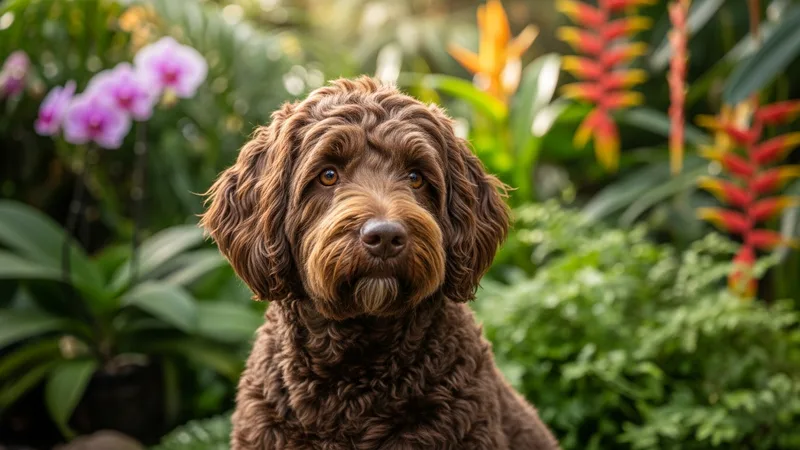
Standard Goldendoodles are a common sight at Singapore dog runs and condo estates. Most are imported from Australia or the UK through AVS-licensed importers, with prices ranging SGD 6,000 to 15,000. The breed's size restricts it to landed property or private condominiums; HDB does not include the standard Goldendoodle on its approved-breed list, though a smaller Mini Goldendoodle variant exists with different eligibility worth checking separately. Heat tolerance rates 2 out of 5, so a shorter summer clip every six to eight weeks and morning or evening exercise matter. Local vets commonly watch for hip and eye conditions plus hot spots. Rescue placements are uncommon; most owners source through licensed importers.
Find Goldendoodle-friendly spots in Singapore
High-energy breed, so these outdoor venues give Goldendoodles the space they need.
 Breed fit quiz Does a Goldendoodle actually suit your life? Answer a few questions about your lifestyle and see how well this breed matches your real setup. Find out →