
HDB-APPROVED · DOG BREED GUIDE
Last updated First published 1 June 2026
Notice one little habit together →A small idea to try, with progress kept in your Pack.
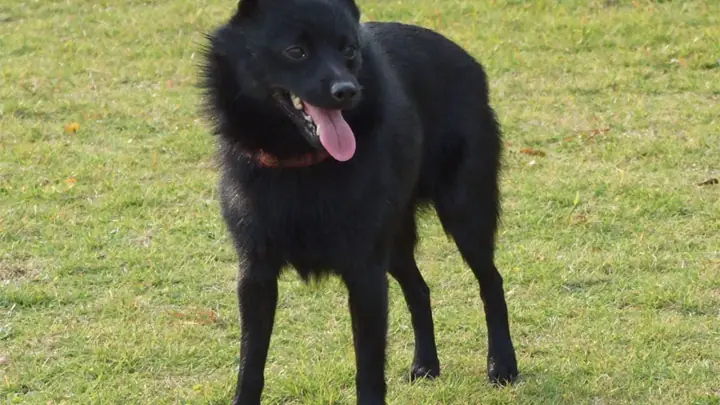
Also known as Little Captain, Belgian Barge Dog, Skip.
Thinking about adopting a Schipperke?
The Schipperke's fox-like face and endless curiosity make it a natural detective, eager to patrol every crevice of your HDB flat, and possibly chew on your socks while it's at it.
Can a Schipperke live in an HDB flat?
YesOn the HDB approved-breed list
Named on HDB's approved small-breed list for flats. Check any listed variety restrictions and confirm the individual dog before committing.
HDB sets and maintains the approved-breed list. Check the current rules at HDB.gov.sg →
Full list of HDB-approved breeds on this site →At a glance
- Size category
- Small
- Weight
- 4 to 8 kg
- Height
- 25 to 33 cm
- Lifespan
- 13 to 16 years
- Energy level
- ●●●●● 5/5 (editorial, unvalidated)
- Shedding
- ●●●○○ 3/5 (editorial, unvalidated)
- Heat tolerance
- ●●○○○ 2/5 (editorial, unvalidated)
- Barking
- ●●●●○ 4/5 (editorial, unvalidated)
- Trainability
- ●●●●○ 4/5 (editorial, unvalidated)
- Grooming needs
- ●●○○○ 2/5 (editorial, unvalidated)
- Origin
- Belgium
Editorial climate-care note
Heat tolerance rated 2 out of 5. The Schipperke handles mild heat but struggles in Singapore's year-round 28 to 32 degrees Celsius humidity. Its dense double coat traps heat, and the breed has higher-than-average energy, which worsens overheating risk. Morning and evening walks only; midday outdoor activity should be avoided entirely.
This score is not a safe temperature or exercise limit. Any dog can develop heatstroke.
Plan activity around your dog, not a timer
A breed score cannot tell you how many minutes are safe today. Avoid hot conditions, watch your dog's breathing, and agree an activity plan with your vet.
Read PDSA's heatstroke guidance →Common health issues in Singapore's climate
Build a care budget
- Year 1
- S$3,205 to S$4,336
- Over 10 years
- S$29,657 to S$40,125
Illustrative planning assumptions for food, grooming and routine vet care, with inflation and a year-one setup uplift. These are not verified provider quotes or a lifespan prediction. Adjust the calculator to current quotes; add insurance, boarding and emergencies separately.
Run the full lifetime cost calculator →The Schipperke is a small Belgian watchdog, the name meaning "little captain" in Flemish, originally bred to guard canal barges, kill rats and bark at strangers. It is HDB-approved on size. It is also one of the most energetic and intense small breeds on the approved list, and the wrong choice for most apartment households who pick a small dog because they expect a low-effort life.
This page rates the Schipperke as not beginner-friendly, which is unusual for a dog under 8 kg and entirely deliberate.
Personality and temperament
This is a dog with the brain and the stamina of a much larger working breed packed into a 6 kg body. Energy is rated 5 out of 5, the top of our scale, and trainability 4 out of 5. It is confident, curious, busy, and utterly convinced that supervising the household is its job.
The good news is the brain. Schipperkes are bright and well suited to scent work, agility and obedience, respond well to reward-based training, and genuinely love having something to do. If you want a small dog you can also do trick training, recall work and agility with, this is one of the very best options under 8 kg.
The rest is the honest part:
- It barks. Rated 4 out of 5, and excessive barking is listed as a health-and-behaviour issue on this page rather than a quirk. This is a breed selected for centuries to raise the alarm on a boat.
- It pulls. Leash pulling is also on that list. A confident, driven small dog with somewhere to be will lean into a lead unless taught otherwise early.
- It is suspicious of strangers. A watchdog's wariness is temperament, not a training failure, and it needs real socialisation to stay proportionate.
- It does not tolerate boredom. A Schipperke that gets twenty minutes of pottering will be loud, destructive and unhappy within a fortnight.
Exercise in Singapore's climate
This breed needs 60 to 90 minutes of real exercise a day, split across two or three sessions: a brisk walk in the morning, a play or training session in the middle, a longer evening walk. That is a serious commitment in a country where the usable outdoor hours are narrow.
Heat tolerance is rated 2 out of 5. The double coat is dense and weatherproof, designed for Belgian winters. The good news is that it is also short and self-cleaning. The bad news is it does not let body heat out fast enough for a tropical noon, and this is a high-energy dog, which raises overheating risk further because the dog will keep going when it should stop. Singapore's daily maximum of 31 to 33 degrees Celsius with average relative humidity around 82% year-round (Meteorological Service Singapore) means walks before 7am and after 7pm, full stop. Air conditioning at home is strongly recommended rather than optional in a flat facing afternoon sun.
The resolution of that tension, high energy and few cool hours, is mental work. A fifteen-minute training session twice a day is as valuable as a walk for tiring this dog out, and it can happen indoors at two in the afternoon. Scent games, shaping, puzzle feeders and trick chains all suit the breed. Treat indoor enrichment as core exercise here, not as a supplement.
Coat and grooming in the humidity
Grooming needs are rated 2 out of 5, which makes this one of the easier coats in the guide. Weekly brushing at home and a bath every 4 to 6 weeks covers it, and most owners book a basic groom every 6 to 8 weeks at S$50 to S$80. Shedding is rated 3 out of 5: moderate, with heavier periods, and the short harsh coat sheds dirt easily on its own.
Do not shave the double coat for the heat. It insulates in both directions and protects skin that has never had direct sun. Brush the dead undercoat out instead, which is what actually helps a dog carrying too much insulation.
Dry the dog properly after a bath or rain, and check the skin under the thicker ruff around the neck where moisture lingers longest.
Diet and feeding
Food is around S$80 to S$120 a month, which is high for a 6 kg dog and reflects the energy level rather than the size. Set portions against your dog's actual condition and workload rather than a breed average, and expect them to change if the exercise routine changes.
Dental health is on this page's health-issue list, so daily brushing or vet-appropriate dental chews plus professional cleaning on schedule is worth building into the routine early. A small jaw accumulates plaque faster than a large one.
Keep kibble sealed and out of direct heat in a humid kitchen, and keep water available and refreshed often for a dog this active in this climate.
Training
This is a breed that rewards training more than almost any other small dog, and punishes the absence of it just as reliably. Start early and be consistent.
- "Quiet", from week ten. Not suppression, which fights the wiring, but a sequence: alert once or twice, come to you, settle, get rewarded for settling. Excessive barking is on this page's own issue list for the breed, and in an HDB corridor it is the trait most likely to end badly.
- Loose-lead walking, from the first walk. Leash pulling is the other listed behaviour issue. A harness plus consistent stop-and-wait work beats correction, and it is far easier to install in a puppy than to fix in a driven adult.
- Recall, worked hard. A ratting breed will chase. Build recall properly and still use a lead where it matters.
- Socialisation with strangers. Deliberate, positive and continued through adolescence, so natural wariness stays proportionate rather than becoming reactivity.
Health
The UK Kennel Club lists prioritising genetic diversity as good practice before breeding Schipperkes, and as best practice a DNA test for mucopolysaccharidosis type IIIB (MPSIIIB) and a DNA test for the T-box bob tail variant. It places the breed in Breed Watch Category 1, meaning no points of concern specific to the breed have been identified for special attention by judges beyond what the breed standard already covers.
MPSIIIB is the test that matters most and the one to insist on. It is an inherited neurological storage disease, it is specifically associated with this breed, and there is a DNA test for it. Ask for the result on both parents. A Schipperke breeder who has not heard of it is not a Schipperke breeder to buy from.
The T-box test relates to the naturally tailless variant found in the breed rather than to a disease, and matters to breeders more than to owners, but its presence on the list is a useful signal of whether a breeder is working from current guidance.
This page's own health-issue flags are epilepsy, patellar luxation, dental health, and the two behaviour items already covered. Patellar luxation is common across small breeds and worth asking the breeder about directly. Legg-Calve-Perthes disease, a hip condition seen in small breeds, is also worth raising. Routine annual vet care lands at S$600 to S$900, and lifespan on this page is 13 to 16 years, unusually long for a dog this active. None of this replaces your vet's assessment of your own dog.
Housing and space in Singapore
This page records the Schipperke as HDB-approved on size at 4 to 8 kg. Confirm the current position with HDB before you commit, since HDB maintains and updates the approved list.
Ownership limits come from AVS rather than HDB. Under AVS's rules, an HDB flat may keep a maximum of one dog of an approved small breed plus up to two cats, and no dog on the Specified dogs list; private property may keep up to three cats or dogs in combination. Every dog needs an AVS licence. Licence fees depend on sterilisation status, age and the number of pets. One-time and three-year licences are different options. Check the current AVS fee table before paying.
The honest housing note is that size is the least relevant thing about fitting this breed into a flat. A Schipperke physically fits anywhere. What it needs is a household with the time for 60 to 90 minutes of exercise plus daily training, cooling for the afternoon, and neighbours who will not be worn down by a watchdog learning its manners. If those are not available, a different breed is the kinder answer.
Care and cost in Singapore
Plan for S$3,500 to S$5,000 in year one and around S$2,900 a year ongoing. Food is S$80 to S$120 a month, grooming is one of the easier lines at S$50 to S$80 every 6 to 8 weeks, and routine annual vet care is S$600 to S$900. Run the ten-year picture with the cost calculator.
Getting a Schipperke: buying and adoption
Local supply is thin. Most Schipperkes in Singapore are imported from Europe, Australia or the United States through AVS-licensed pet shops or direct breeder relationships, so the waiting list is longer than for a common breed and the paperwork matters more because you often cannot visit.
The checklist: AVS licence number on the invoice, the MPSIIIB DNA result on both parents, patella assessment, eye clearance, and a written health guarantee. Ask about temperament and noise in the line specifically, because in a breed this driven the difference between a well-bred and a carelessly bred dog shows up in behaviour long before it shows up in health.
Adoption is less likely than for common breeds simply because there are fewer Schipperkes here, but it is still worth registering interest with SOSD, Causes for Animals and Mercylight rather than assuming. When Schipperkes do come through rescue, it is usually because a household underestimated the exercise requirement, which means the dog itself is often fine and the mismatch was the problem.
Life stages: puppy to senior
Puppy, to about 12 months. Front-load everything. "Quiet" from week ten, loose-lead work from the first walk, deliberate socialisation with strangers, and a daily training habit established while the dog is small enough that mistakes are cheap. Keep exercise self-paced while the growth plates are open, and protect the knees with steps at furniture.
Adolescent, roughly 9 to 18 months. The energy peaks and the watchdog instinct arrives properly. This is when most Schipperke problems get created: an under-exercised adolescent with a new sense of territory is exactly the dog that starts barking at the corridor and pulling on lead. Increase the mental work, hold the rules, and do not let the routine slip because the weather is bad.
Adult, roughly 2 to 10 years. The best years, and long ones. Keep a real job in the routine, whether that is scent work, agility or structured training. Keep the weight down, the teeth brushed, the cool-hour rule intact. Insurance in force.
Senior, from about 11 years. Lifespan is 13 to 16 years, so this is a long stretch. The hardest adjustment is usually psychological rather than physical: a breed this driven does not stop wanting the job before its body stops managing it. Shorten the walks, keep the training going in gentler form, and let scent work carry more of the load as mobility declines. Move to twice-yearly vet visits, watch for stiffness and for reluctance to jump, and keep the mouth on the checklist. Heat tolerance was never good and narrows with age.
See dog-friendly cafes and parks in your region → | Run the 10-year cost of a Schipperke in Singapore →
Three things to know
-
This is not a low-effort small dog
Energy 5 out of 5, 60 to 90 minutes of real exercise a day plus daily training, and this page rates it not beginner-friendly. It is the small breed that most consistently surprises HDB owners who imagined a lapdog.
-
Ask for the MPSIIIB DNA result on both parents
It is the Kennel Club's named test for this breed, it covers an inherited neurological disease, and a breeder who cannot produce it has not done the work.
-
Train "quiet" and loose-lead before anything else
Excessive barking and leash pulling are on this page's own issue list for the breed, not incidental. Both are far cheaper to teach at ten weeks than to fix at two years.
Annual cost in Singapore
Editable planning estimates, not verified provider quotes or a prediction of your dog's bills. Boarding, one-off equipment and emergencies are additional.
- Food
- S$1,200
- Grooming
- S$800
- Routine vet
- S$900
- Sum of the three
- S$2,900/year
Run the lifetime cost calculator →
Get a current insurance quote for your dog's age and circumstances. Compare exclusions, waiting periods, excess and cover limits. Compare policy questions here →
Frequently asked questions
Is a Schipperke HDB-approved in Singapore?
Yes. The Schipperke is on the HDB list of breeds approved for flats. Confirm the current HDB and AVS rules before you commit, as the approved list can change.
Do Schipperkes bark a lot?
Our current barking assessment is: is fairly vocal (editorial estimate). It has not been independently validated. Ask about this dog's observed behaviour, triggers and time alone; the breed label cannot predict your neighbour's experience.
How much grooming does a Schipperke need?
Our current grooming assessment is: is low-maintenance to groom (editorial estimate). Confirm the individual coat-care routine and any professional grooming with the rescue, groomer or vet. The score is not a measured frequency or price.
How does a Schipperke cope with Singapore's heat?
An editorial heat score cannot establish a safe temperature or walk duration for an individual dog. Activity, humidity, health, age and body shape matter. Avoid hot conditions, provide shade and water, and ask your vet about an appropriate activity plan.
Is a Schipperke a good breed for a first-time owner?
Our household-fit note is: Editorial: may need more support. This is not a validated prediction. Assess the individual dog, your daily capacity, training support and known care needs before deciding.
How much does a Schipperke cost to keep in Singapore?
The stored planning assumption is S$2,900 a year for food, grooming and routine veterinary care. It is not a verified typical cost for this breed. Replace it with current quotes and your own usage; add setup, licensing, insurance if chosen, boarding and emergency savings separately.
Other small breeds to consider
A Schipperke in Singapore, the short version
The Schipperke is HDB-approved and adapts well to apartment living, but Singapore's heat requires careful management. This small, energetic breed has a thick double coat that retains heat, making it vulnerable to heatstroke in 28 to 32 degrees Celsius humidity. Air-conditioning at home is essential, not optional. Walks should be kept to early morning or after 7pm, under 20 minutes each. The Schipperke is naturally curious and prone to escaping, so a secure leash is vital. Dental hygiene and annual vet checks including joint health are recommended. Budget SGD 1,200 to 1,800 annually for care in Singapore.
Find Schipperke-friendly spots in Singapore
High-energy breed, so these outdoor venues give Schipperkes the space they need.
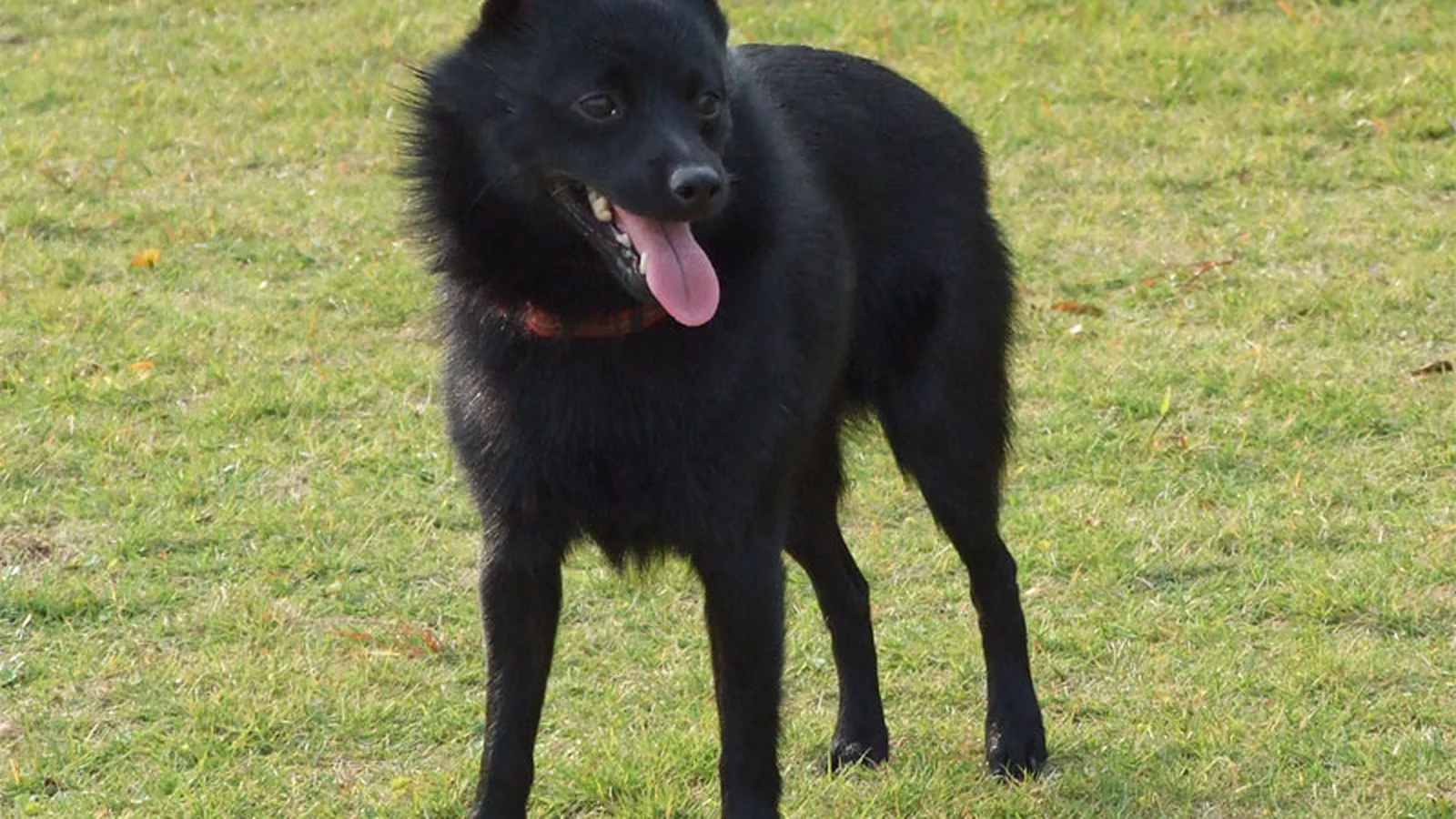 Find Your Match Meet Schipperke first “I'm a tiny sea captain and this household is now my vessel” Swipe through a dating-profile-style card before you commit. Say hello →
 Breed fit quiz Does a Schipperke actually suit your life? Answer a few questions about your lifestyle and see how well this breed matches your real setup. Find out →