
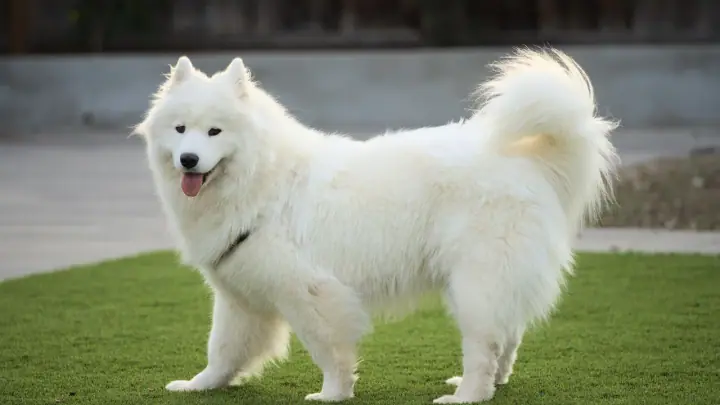
DOG BREED GUIDE · CONDO & LANDED HOMES
Last updated First published 31 May 2026
Notice one little habit together →A small idea to try, with progress kept in your Pack.
Also known as Sammy, Smiling Sammy, Bjelkier.
Thinking about adopting a Samoyed?
The Samoyed's perpetual smile is charming, but it's also a reminder that this fluffy Arctic herder might be the happiest resident of a refrigerator, not a humid HDB flat.
Can a Samoyed live in an HDB flat?
NoNot on the HDB approved-breed list
Not on HDB's approved small-breed list, so it cannot be kept in a flat under the standard rules.
HDB sets and maintains the approved-breed list. Check the current rules at HDB.gov.sg →
Full list of HDB-approved breeds on this site →At a glance
- Size category
- Large
- Weight
- 16 to 30 kg
- Height
- 48 to 60 cm
- Lifespan
- 12 to 14 years
- Energy level
- ●●●●○ 4/5 (editorial, unvalidated)
- Shedding
- ●●●●● 5/5 (editorial, unvalidated)
- Heat tolerance
- ●○○○○ 1/5 (editorial, unvalidated)
- Barking
- ●●●●○ 4/5 (editorial, unvalidated)
- Trainability
- ●●●○○ 3/5 (editorial, unvalidated)
- Grooming needs
- ●●●●● 5/5 (editorial, unvalidated)
- Origin
- Siberia (developed by the Samoyedic peoples for reindeer herding and sled work in Arctic conditions)
Editorial climate-care note
Arctic double coat is a poor fit for SG humidity. Requires air-conditioning and walks confined to the coolest hours.
This score is not a safe temperature or exercise limit. Any dog can develop heatstroke.
Plan activity around your dog, not a timer
A breed score cannot tell you how many minutes are safe today. Avoid hot conditions, watch your dog's breathing, and agree an activity plan with your vet.
Read PDSA's heatstroke guidance →Common health issues in Singapore's climate
Build a care budget
- Year 1
- S$8,951 to S$12,109
- Over 10 years
- S$82,836 to S$112,072
Illustrative planning assumptions for food, grooming and routine vet care, with inflation and a year-one setup uplift. These are not verified provider quotes or a lifespan prediction. Adjust the calculator to current quotes; add insurance, boarding and emergencies separately.
Run the full lifetime cost calculator →This guide argues against the Samoyed for most Singapore households, and that argument has to come first. The Samoyed is an Arctic working dog, developed by the Samoyedic peoples of Siberia for reindeer herding and sled work in conditions far below freezing. Its signature white coat is a dense double layer built to hold body heat in, not let it out. Moved into Singapore's climate, where the daily maximum usually runs 31 to 33 degrees Celsius and relative humidity averages around 82 percent, that coat does exactly what it was engineered to do: it traps heat against the dog's body. The Samoyed does not adapt to heat. It tolerates heat, with sustained help from its owner, and an honest guide has to say that plainly rather than dress it up.
If you are reading this while deciding whether to get a Samoyed, the fairest thing this guide can do is ask you to weigh the breed against your home, your climate and the dog's own comfort before you commit, not after. If you already share your home with one, the argument above will not be new to you: you already know what the coat does in this weather, and the rest of this guide is written as much for you as for someone still deciding. Breeds with a similar look but a lighter, less insulating coat, such as the American Eskimo Dog or the Bichon Frise, generally carry a smaller heat burden in this climate, though no white, fluffy-coated breed is naturally suited to the tropics. If you have reliable air conditioning, the budget for serious grooming, the discipline to keep outdoor time to the cooler hours, and you have read the paragraph above without wanting to look away, the rest of this guide is written for you.
What a Samoyed Is Actually Like to Live With
The Samoyed Club of America, the breed's American parent club, describes the Samoyed as exceptionally social, intelligent, loyal and vocal, and daily life with one bears that description out. The breed is genuinely gentle and forms close attachments to its family, which is consistent with why it tends to do well with children and with other dogs. It is not a breed that copes with being left alone for long stretches: the parent club is direct that a Samoyed without company and stimulation is likely to become an unhappy, destructive dog, and that a Samoyed left on its own in a backyard, away from people, is a genuine welfare problem rather than a minor inconvenience. In an apartment or a landed home in Singapore, that translates into a dog that wants to be wherever you are, all day, for its whole life.
The vocal reputation is not exaggerated. Samoyeds are talkative dogs that use a wide range of howls, "woos" and other vocalisations to express themselves, and they will use their paws and noses to get your attention as well. They will alert-bark at visitors and usually settle once they have worked out who it is, but boredom or isolation reliably makes the barking and howling worse, not better. If you live close to neighbours, in a condo corridor or against a semi-detached wall, that is worth thinking through honestly before you commit, and worth working on early with "quiet" and "settle" cues if you already own one.
Two more habits are worth knowing about before they surprise you. Digging is instinctive in this breed rather than naughtiness, something to redirect (a sandpit or a permitted digging spot) rather than expect to train out entirely. And an under-exercised, under-stimulated Samoyed will find its own jobs, which in practice tends to mean chewed furniture, chewed coat and tail hair, or a dog that has worked out how to open doors and gates. None of this is unusual for a working breed bred to operate at a distance from its handler and make its own decisions; it is simply what "intelligent and independent" looks like day to day, and it is manageable with consistent structure rather than harsh correction.
Exercise in Singapore's Climate
Singapore's daily minimum temperature is usually 23 to 25 degrees Celsius even at night, climbing to a daily maximum of 31 to 33 degrees, with humidity averaging around 82 percent across the year and climbing above 90 percent in the early morning. There is no real "cool season" to plan around. The practical response is to walk in the two windows either side of the heat: early, before the morning humidity builds, and after dusk, once the pavement and the air have both had a chance to lose the day's heat. Tarmac and unshaded pavement hold heat well into the evening, so grass, shaded park paths and covered walkways are worth choosing over open tarmac in the middle of the day.
Cornell University's veterinary college defines heatstroke as the point where a dog can no longer regulate its own body temperature and it climbs to roughly 40.5 degrees Celsius (105 degrees Fahrenheit) or higher, and it is explicit that the outcome depends on how high the temperature gets and how long it stays elevated before treatment starts: this is a genuine medical emergency, not a "let the dog rest it off" situation. Thick, insulating coats are one of the risk factors Cornell lists alongside short muzzles, age, weight and existing heart or breathing conditions, which puts the Samoyed on the wrong side of that list by coat type alone. In practice that means treating the middle of the day as off limits for anything beyond a toilet break, watching for heavy panting, drooling, wobbliness or collapse on every outing, and having a plan (a car with air conditioning, a route to an emergency vet) rather than improvising one if a walk goes wrong.
The exercise itself still needs to happen. This is a breed bred to work, and a Samoyed that only gets a short toilet walk each day will make its own entertainment indoors, as above. Scent games, food puzzles, basic obedience practice and low-impact tug fill the gap on the hottest days, and a shaded, ventilated outdoor space, even a condo garden used in the cooler hours, gives the dog room to move without the risk of the midday sun.
Grooming and Coat Care in the Humidity
The coat is the other half of the Singapore problem, and it is worth being honest that this is the line in the budget and the calendar that catches new owners out. Singapore's humidity mats a double coat faster than a temperate climate ever would, particularly around the ears, armpits, tail base and the "trousers" on the back legs, and a mat close to the skin traps moisture and heat against the dog rather than letting it evaporate. Left long enough, a matted coat needs to be cut out rather than brushed out, which is a worse outcome for the dog's comfort in this climate, not a better one.
The American Kennel Club's grooming guidance for double-coated breeds recommends brushing at least once a week with a slicker brush followed by a comb, brushing the hair itself rather than scraping the skin, and avoiding excessive bathing, which strips the natural oils the coat needs. In Singapore's climate, once a week is realistically a minimum rather than a target; two to three sessions a week keeps mats from forming in the first place, and a dog that sheds as heavily as the Samoyed does needs the loose undercoat removed regularly so it is not trapping heat against the skin.
Do not shave the coat to deal with the heat, even though it is a tempting shortcut in this climate. The AKC's chief veterinary officer, Dr Jerry Klein, has explained why directly: the coat acts as an insulator, and shaving it removes that protection, makes the dog more vulnerable to heat stroke rather than less, and risks sunburn and improper regrowth, sometimes with the undercoat growing back faster than the guard hairs and permanently changing the coat's texture and colour. The one exception both the AKC and professional groomers make is severe matting that a vet or groomer judges too painful or too embedded to brush out safely; that is a last resort decided with a professional, not a routine summer haircut. The reliable path in this climate is consistent brushing, sensible bathing with a de-shedding shampoo rather than frequent full baths, and professional grooming on a schedule that keeps mats from forming rather than one that responds to them once they have.
Diet and Feeding in the Heat
Nothing about a Samoyed's basic nutritional needs changes because of Singapore's climate, but the practical details of feeding do. Humidity is hard on dry kibble: an open bag left in a Singapore kitchen picks up moisture faster than the same bag would in a temperate country, which shortens its usable life and makes it more hospitable to mould. Buying smaller bags more often, decanting into an airtight container rather than leaving the bag rolled shut, and keeping food out of direct sunlight and away from the stove all matter more here than the packaging suggests.
Portioning around exercise and heat is the other adjustment. A large meal right before or after a walk in the heat is worth avoiding, since a full stomach makes strenuous activity in the heat less comfortable for the dog, and splitting the day's food into two meals timed around the cooler walk windows rather than the hottest part of the day tends to work better in practice than one large meal.
Water matters more here than it would in a cooler country. A Samoyed loses fluid to panting throughout Singapore's heat in a way it simply would not in a cold climate, so water needs to be available at all times, refreshed more often than once a day so it stays cool and appealing, and carried on every outing rather than assumed to be available somewhere along the route. None of this requires a particular brand or product: a clean, always-available water source and a feeding routine that respects the heat, rather than ignoring it, is the whole of the adjustment.
Training: What Comes Easily and What Doesn't
The Samoyed Club of America's own guidance on training is candid about both sides of this. Samoyeds are intelligent, want to please a consistent owner, and generally respond well to voice commands and reward-based methods; harsh correction is not something a properly raised Samoyed needs, and it tends to backfire on a breed this sensitive to its relationship with its handler. That is the easy part.
The hard part comes from the same intelligence. This is a breed developed to work at a distance from a handler, herding and hauling with a fair amount of its own decision-making, and that independence shows up as a dog that will look for its own solutions if a task is not made clear or interesting enough. The parent club is blunt about the pattern this produces: a bored, under-stimulated Samoyed digs, chews, barks and finds its own entertainment, and the fix is structure and mental work, not more discipline. Puppy classes and structured obedience through the first year, consistent house rules from day one, and short, engaging sessions rather than long repetitive drills tend to work better with this breed than a purely drill-based approach.
Recall is worth calling out specifically. A Samoyed's herding and sledding instincts mean it can range widely and follow its nose or its interest a long way from you if it is off lead in an unfenced space, so a solid, well-proofed recall, and a properly fenced area for genuine off-lead time, matters more with this breed than with a naturally clingy one.
Health: What to Watch For
Three things sit at the centre of this breed's health picture in Singapore: heat, joints and eyes, and all three are worth planning around rather than reacting to.
Heat. As above, heatstroke is a genuine medical emergency once a dog's temperature climbs to around 40.5 degrees Celsius and it cannot bring it back down on its own. The double coat, combined with Singapore's year-round heat and humidity, puts this breed at elevated risk by coat type alone. Know the warning signs (heavy panting, drooling, wobbliness, collapse) and know your route to an emergency vet before you need it, not after.
Joints. Hip dysplasia, where the ball and socket of the hip joint do not fit together properly, is common enough in the breed that the Samoyed Health Foundation puts it at around 11 percent of Samoyeds evaluated, and the Samoyed Club of America recommends that all breeding dogs be x-rayed and evaluated by the Orthopedic Foundation for Animals or PennHIP before breeding. Signs in an individual dog include stiffness, reluctance to exercise or climb stairs, and audible clicking, and keeping a Samoyed at a lean weight through its life is one of the more effective things an owner can do to reduce joint stress, alongside a vet's guidance on exercise and, where needed, medication.
Eyes. The Samoyed Club of America's health resources list progressive retinal atrophy as a recognised concern in the breed, an inherited condition that starts with night blindness and progresses to full vision loss with no available treatment, alongside retinal dysplasia (present from birth, ranging from harmless folds to more serious detachment), cataracts, and a minor but common issue called distichiasis, where extra eyelashes irritate the cornea. Genetic testing exists for the inherited forms, and the parent club recommends annual evaluation by a veterinary ophthalmologist for breeding dogs.
Two further conditions are well enough documented in this breed to be worth knowing, even though they sit outside the three issues above. Samoyed hereditary glomerulopathy is an inherited, X-linked kidney disease specific to the breed, tracked by DNA testing, and more severe in male dogs than in female carriers. Samoyeds are also disproportionately represented among diabetic dogs: the Samoyed Health Foundation cites Samoyeds as around twelve times more likely to develop diabetes than a mixed-breed dog, with typical warning signs of excessive thirst, urination and appetite alongside weight loss. Subaortic stenosis, a narrowing below the aortic valve, also occurs in the breed; the parent club recommends cardiac evaluation of breeding dogs at intervals through early adulthood because some murmurs only appear later.
None of this is a substitute for a vet. If you notice any of the signs above, or anything that looks like pain, reduced mobility, vision changes, unusual thirst or urination, or reluctance to exercise, the right next step is a veterinary appointment, not a guess at a diagnosis from an article.
Housing and Space in Singapore
HDB sets and maintains the approved-breed list for HDB flats, and the Samoyed is not currently on it. Check the current rules directly at HDB before making any decisions based on this guide, since the list and the rules around it can change. In practice this steers the breed towards condominiums and landed housing, both of which come with their own management-council or estate rules on pets that are worth checking before you commit, separately from HDB's rules.
AVS sets ownership limits regardless of housing type: private property may keep up to three cats or dogs (or a combination) per household, while an HDB flat is limited to two cats and one dog of an approved small breed, with no dog from the Specified Dogs list. Every dog in Singapore needs to be licensed with AVS. At the time of writing (August 2026), the fee for a sterilised dog is S$15 for a one-year licence, S$25 for two years, S$35 for three years, or S$35 for a one-time licence, with a 10 percent rebate for GIRO, online or AXS payment; unsterilised dogs cost more, at S$90, S$165 and S$230 for the same terms. AVS has stated that dog and cat licence fees will be harmonised under a single structure from 1 September 2026, so check the current figures at the time you licence your dog rather than relying on this article.
Space matters for this breed beyond the legal minimum. A Samoyed's coat and activity level both do better with room to move and, ideally, a shaded outdoor area it can use in the cooler hours rather than a home it only leaves for scheduled walks. That points towards landed property or a condo with usable, shaded common grounds over a small high-rise unit, even where the unit itself is legally permitted.
Getting a Samoyed: Breeders and Adoption
If you are buying from a breeder, ask for the paperwork before you ask about the puppy: the breeder's AVS dog farm licence number, hip evaluation on both parents through PennHIP or the Orthopedic Foundation for Animals, a cardiac evaluation from a veterinary cardiologist, an eye certification from a board-certified veterinary ophthalmologist, and DNA screening for Samoyed hereditary glomerulopathy. A written health guarantee is reasonable to ask for; a breeder who cannot produce any of the paperwork above is not one to proceed with, whatever the puppy looks like.
Ask directly about climate as well. A breeder who is comfortable placing a Samoyed puppy into a home without full air conditioning is not prioritising the dog's welfare, and that is worth treating as a genuine red flag rather than a minor difference of opinion. Take your time with this search rather than treating it as a same-week purchase: the paperwork above takes a breeder years to build into their programme, and a breeder who can produce all of it on short notice for an unplanned litter is worth a second look, not less scrutiny.
Adoption is a real option and worth considering seriously rather than as an afterthought. Samoyeds and Samoyed crosses do turn up through Singapore's rescue network from time to time; SOSD and Causes for Animals are among the groups that rehome them as they appear. Project ADORE, run by AVS, is worth knowing about but does not apply here: it is specifically for local mixed-breed dogs (Singapore Specials) in HDB flats, so it does not cover a Samoyed or a Samoyed cross.
Be cautious of any puppy imported without the health paperwork above on both parents, regardless of where it comes from. The paperwork exists because the conditions it screens for are real and, in several cases, serious; skipping it to save money or time up front shifts that cost onto the dog, and often onto you, later.
Life Stages: Puppy to Senior
A Samoyed typically lives 12 to 14 years, so the climate and grooming commitments above are not a short-term arrangement. Puppyhood brings the heaviest lifting: house training, socialisation, the start of coat care habits, and the same heat restrictions as an adult but with a body that regulates temperature even less reliably. Growth plates are still developing through the first year or so, which is a reason to keep exercise structured and moderate rather than to let a young, energetic dog free-run itself into exhaustion, particularly in the heat.
Adulthood is where the routine settles: consistent grooming, consistent exercise timed around the coolest parts of the day, and the ongoing mental work this breed needs to stay content. Health screening for hips, eyes and heart matters most for breeding dogs, but keeping a general eye on mobility and vision as an adult dog ages makes any change easier to catch early.
Senior Samoyeds slow down, but rarely as much as their coat and heat sensitivity might suggest they should. Joint stiffness becomes more likely, so shorter, gentler walks at the coolest points of the day tend to suit an older dog better than the same distance covered faster. Regular vet checks become more important as a dog ages into the years where joint and kidney issues, in particular, are more likely to surface, and a lean body weight remains one of the simplest things an owner can control that measurably helps an older dog's comfort.
Three things to know
-
The climate question is welfare, not preference
A Samoyed in Singapore needs a fully air-conditioned home, walks restricted to the cooler hours, and an owner who is willing to plan around the dog's heat tolerance every day for twelve to fourteen years. If any of those conditions are not stable in your life, the kind choice is a different breed.
-
The grooming line in the cost breakdown above is the second budget line that breaks households
A felted coat from missed brushing is a welfare problem in its own right, not just a grooming inconvenience.
-
The medical predispositions are serious and screen-able
Samoyed hereditary glomerulopathy, hip dysplasia, and cardiac conditions need to be on the breeder's paperwork before any deposit. Pet insurance arranged in the first months turns a difficult diagnosis at year seven into a manageable one rather than an impossible one.
Annual cost in Singapore
Editable planning estimates, not verified provider quotes or a prediction of your dog's bills. Boarding, one-off equipment and emergencies are additional.
- Food
- S$2,200
- Grooming
- S$3,500
- Routine vet
- S$2,400
- Sum of the three
- S$8,100/year
Run the lifetime cost calculator →
Get a current insurance quote for your dog's age and circumstances. Compare exclusions, waiting periods, excess and cover limits. Compare policy questions here →
Frequently asked questions
Is a Samoyed HDB-approved in Singapore?
No. The Samoyed is not on the HDB approved-breed list, so under current rules it cannot be kept in an HDB flat. It may still suit private housing. Always check the latest HDB and AVS guidance.
Do Samoyeds bark a lot?
Our current barking assessment is: is fairly vocal (editorial estimate). It has not been independently validated. Ask about this dog's observed behaviour, triggers and time alone; the breed label cannot predict your neighbour's experience.
How much grooming does a Samoyed need?
Our current grooming assessment is: needs a lot of grooming, including regular professional trims (editorial estimate). Confirm the individual coat-care routine and any professional grooming with the rescue, groomer or vet. The score is not a measured frequency or price.
How does a Samoyed cope with Singapore's heat?
An editorial heat score cannot establish a safe temperature or walk duration for an individual dog. Activity, humidity, health, age and body shape matter. Avoid hot conditions, provide shade and water, and ask your vet about an appropriate activity plan.
Is a Samoyed a good breed for a first-time owner?
Our household-fit note is: Editorial: may need more support. This is not a validated prediction. Assess the individual dog, your daily capacity, training support and known care needs before deciding.
How much does a Samoyed cost to keep in Singapore?
The stored planning assumption is S$8,100 a year for food, grooming and routine veterinary care. It is not a verified typical cost for this breed. Replace it with current quotes and your own usage; add setup, licensing, insurance if chosen, boarding and emergency savings separately.
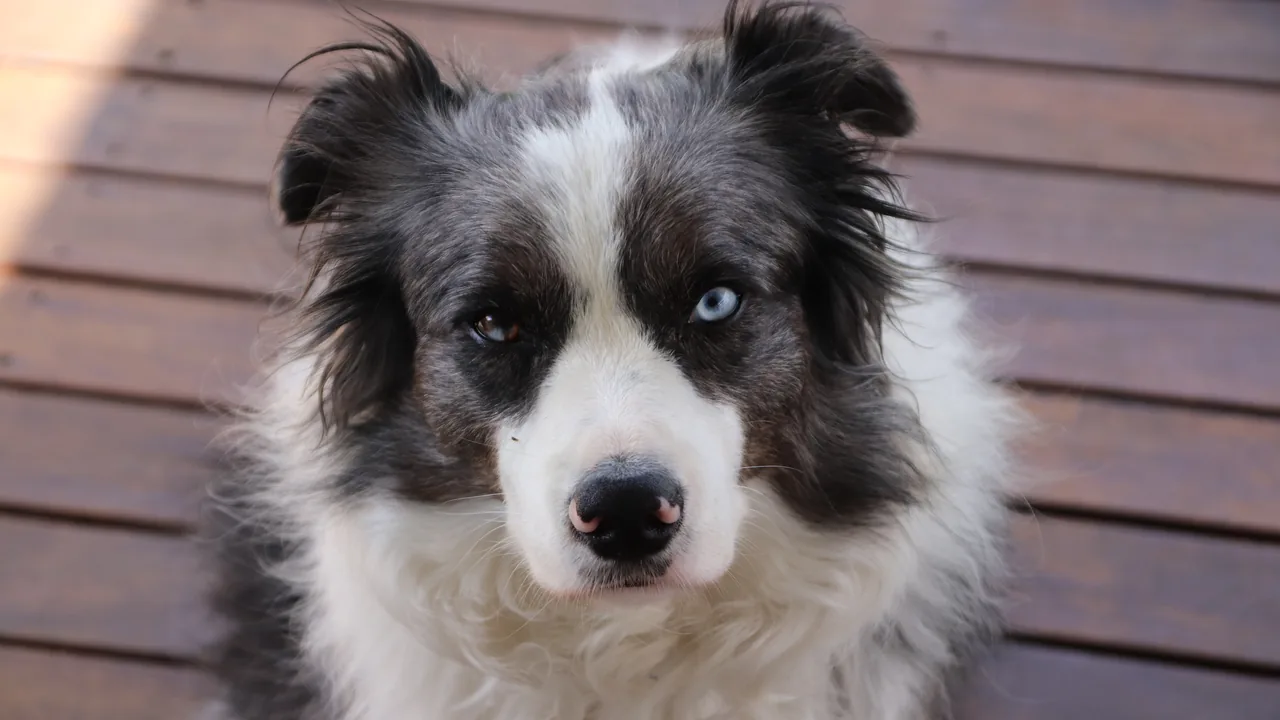
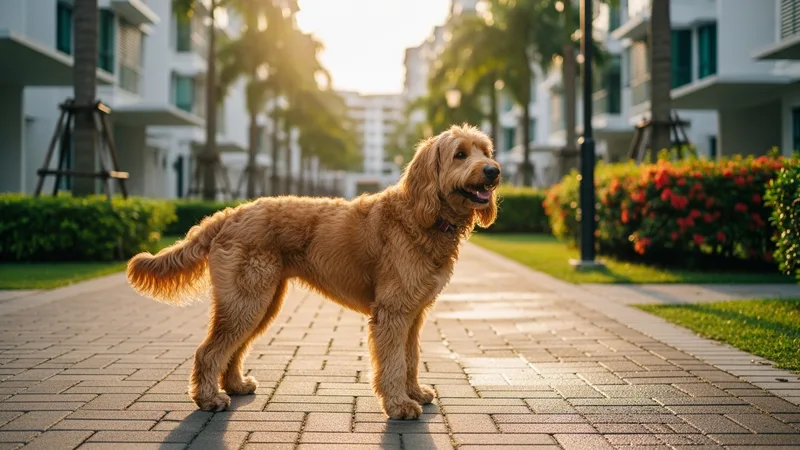
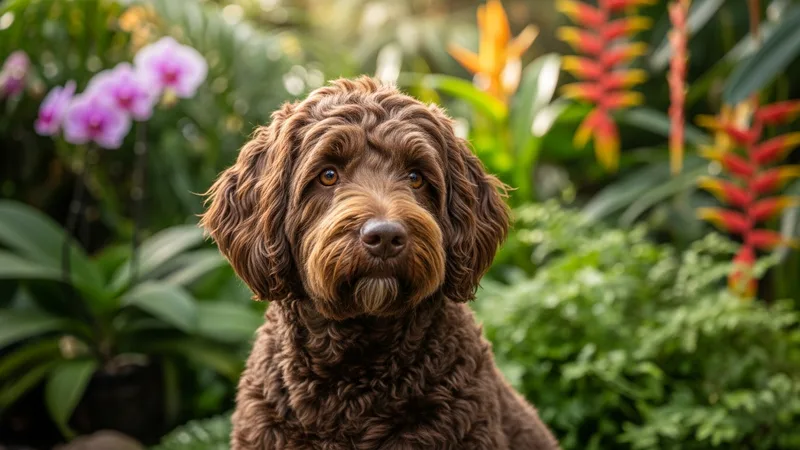
Other large breeds to consider
A Samoyed in Singapore, the short version
A Samoyed isn't HDB-approved and, like other Arctic breeds, is a difficult fit for Singapore's climate. The thick double coat that insulates against snow works against it here, trapping heat rather than releasing it. Owners need reliable air-conditioning, exercise confined to the coolest hours, and realistic expectations about how much the heat will limit outdoor time compared with a temperate country. Landed housing with shade and airflow suits it far better than a high-rise unit. Regular grooming to manage the heavy shedding is a near-constant task in this climate, not an occasional one, and is worth budgeting time and money for.
Samoyed vs...
Deciding between two breeds? See them side by side.
Find Samoyed-friendly spots in Singapore
High-energy breed, so these outdoor venues give Samoyeds the space they need.
 Breed fit quiz Does a Samoyed actually suit your life? Answer a few questions about your lifestyle and see how well this breed matches your real setup. Find out →