
HDB-APPROVED · DOG BREED GUIDE
Last updated First published 31 May 2026
Notice one little habit together →A small idea to try, with progress kept in your Pack.
Also known as Mops, Carlin, Dutch Bulldog (historic).
Thinking about adopting a Pug?
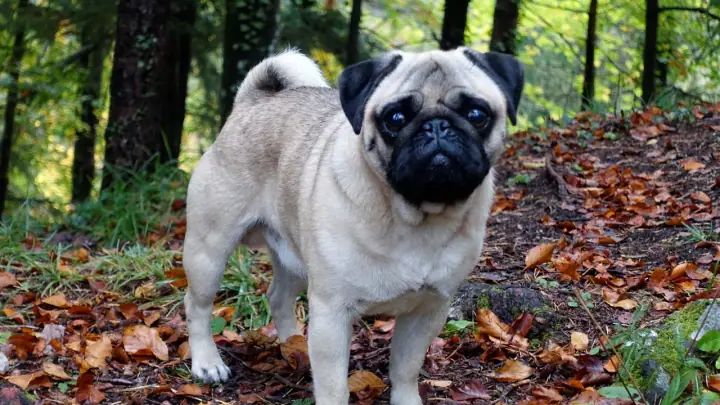
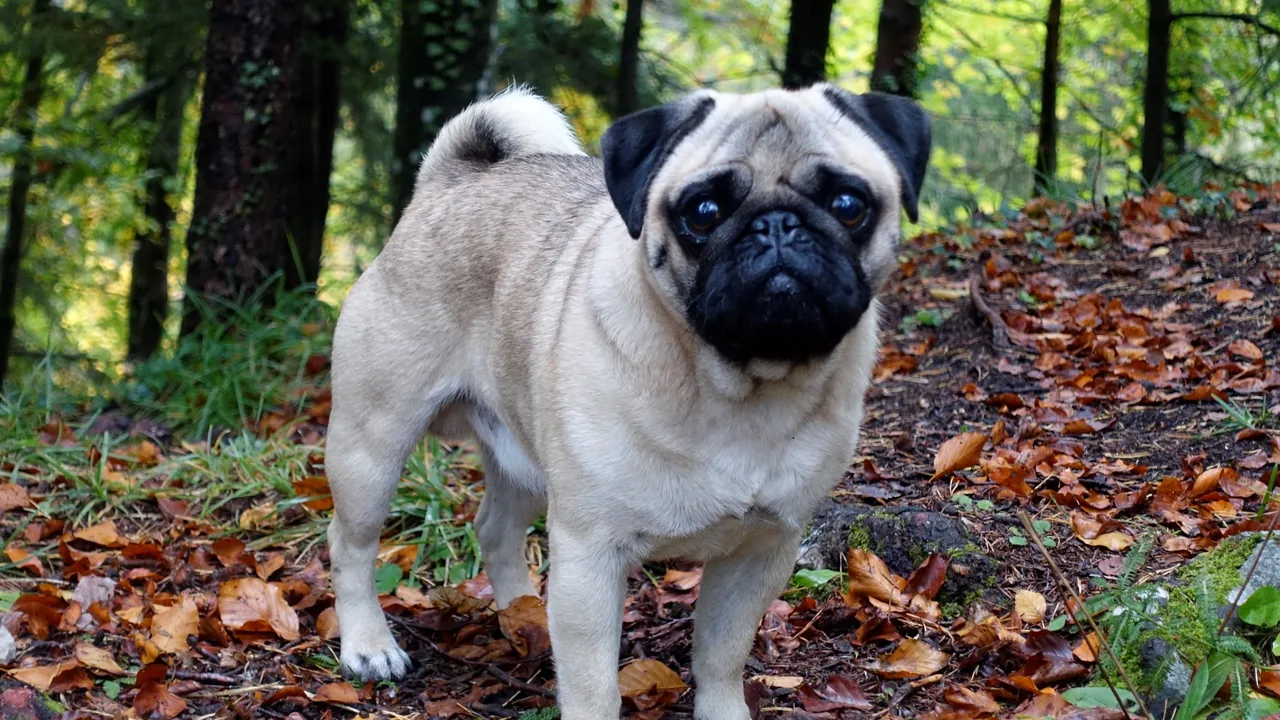
Look past the Pug's eternal puppy face, and you'll find a dog that has been honing its couch-potato skills since the days when European traders thought nutmeg was serious business.
Can a Pug live in an HDB flat?
YesOn the HDB approved-breed list
Named on HDB's approved small-breed list for flats. Check any listed variety restrictions and confirm the individual dog before committing.
HDB sets and maintains the approved-breed list. Check the current rules at HDB.gov.sg →
Full list of HDB-approved breeds on this site →At a glance
- Size category
- Small
- Weight
- 6 to 9 kg
- Height
- 25 to 33 cm
- Lifespan
- 12 to 15 years
- Energy level
- ●●○○○ 2/5 (editorial, unvalidated)
- Shedding
- ●●●●● 5/5 (editorial, unvalidated)
- Heat tolerance
- ●○○○○ 1/5 (editorial, unvalidated)
- Barking
- ●●○○○ 2/5 (editorial, unvalidated)
- Trainability
- ●●●○○ 3/5 (editorial, unvalidated)
- Grooming needs
- ●●○○○ 2/5 (editorial, unvalidated)
- Origin
- China (kept by Buddhist monks; brought to Europe in the 16th century via Dutch traders)
Editorial climate-care note
Short muzzle restricts airflow, a known heatstroke risk in SG's humidity. Keep outings brief and in shade, avoid exercise after meals.
This score is not a safe temperature or exercise limit. Any dog can develop heatstroke.
Plan activity around your dog, not a timer
A breed score cannot tell you how many minutes are safe today. Avoid hot conditions, watch your dog's breathing, and agree an activity plan with your vet.
Read PDSA's heatstroke guidance →Common health issues in Singapore's climate
Build a care budget
- Year 1
- S$3,978 to S$5,382
- Over 10 years
- S$36,816 to S$49,810
Illustrative planning assumptions for food, grooming and routine vet care, with inflation and a year-one setup uplift. These are not verified provider quotes or a lifespan prediction. Adjust the calculator to current quotes; add insurance, boarding and emergencies separately.
Run the full lifetime cost calculator →Every Pug owner in Singapore learns the same lesson, usually in the first month, usually on a walk that seemed perfectly reasonable when it started. The dog is fine, then the dog is not fine, and the sound of its breathing changes in a way you do not forget. Pugs are wonderful company and they are the single most climate-mismatched popular breed in this country, and both of those things are true at the same time.
This guide spends more time on heat than a breed guide normally would, because for a Pug in Singapore heat is not a seasonal caution. It is the whole shape of the dog's life.
Personality and temperament
The Pug is one of the genuinely easy companions. Energy is rated 2 out of 5 and barking 2 out of 5, which in a block of flats is a rare and valuable combination: a dog that wants to be near you, does not need a job, and does not announce the lift. It is rated good with children and good with other dogs, and beginner friendliness is high.
What people underestimate is how much the Pug wants to be with you specifically. This is a breed developed for centuries as a companion and nothing else, and it shows. A Pug left alone for long working days is not a stoic dog quietly coping. It is a sociable animal doing the thing it was least designed for.
Three temperament notes that matter in practice:
- Comic, and aware of it. Pugs repeat whatever made you laugh. This is charming and it is also how a Pug trains you rather than the other way around.
- Stubborn rather than slow. Trainability is rated 3 out of 5. The breed understands you perfectly and is negotiating.
- Sensitive to tone. Harsh handling shuts a Pug down quickly. Everything works better warm.
Exercise in Singapore's climate
Heat tolerance is rated 1 out of 5, the lowest rating on this site, and heatstroke is the first health issue listed on this page. A Pug's shortened muzzle restricts airflow, and airflow is how a dog sheds heat. Panting is a dog's air-conditioning, and this breed was built with a smaller vent.
Singapore's daily maximum of 31 to 33 degrees Celsius with average relative humidity around 82% year round (Meteorological Service Singapore) removes the recovery margin that a Pug in a temperate country still has. There is no cool season here to be careless in.
What works: two short outings a day in the genuinely cool hours, before 8am and after 8pm, on shaded routes, with water, and with a willingness to turn back early. Fifteen to twenty minutes is a real walk for this breed. Indoors, a snuffle mat, a slow feeder and five minutes of trick work do more for a Pug's contentment than distance ever will.
What does not work, and this is the list that saves dogs: midday walks of any length, exercise after a meal, hot pavement, car journeys without air-conditioning, and the assumption that because the dog is willing it is coping. A Pug will follow you into heat that is hurting it. The judgement has to be yours.
Learn what early trouble looks like before you need to know it: noisy or laboured breathing that does not settle within a couple of minutes of stopping, a tongue that looks wider and darker than usual, stumbling, or a dog that sits down and will not continue. Get the dog cool and wet and to a vet. Do not use ice water.
Coat and grooming in the humidity
Grooming needs are rated 2 out of 5, which is honest, and shedding is rated 5 out of 5, which surprises almost everybody. The Pug has a short coat and sheds relentlessly from it. If you are choosing this breed to avoid hair on a sofa, choose again. Grooming runs about S$400 a year on this page's estimate, the lowest line of any breed on this site with a coat worth mentioning.
Weekly brushing with a rubber curry mitt removes a startling volume and keeps the load down. The part that actually matters in this climate is the face. The skin folds over a Pug's muzzle trap moisture, and in Singapore's humidity a damp fold becomes a sore fold quickly. Wipe the folds with a soft damp cloth and, crucially, dry them properly, every day. It takes twenty seconds and it prevents the most common avoidable vet visit this breed makes.
Same discipline after a bath or a rain-shortened walk: dry the folds, dry the ears, dry the tail curl.
Diet and feeding
Food runs about S$1,000 a year here. Weight management is on this page's health-issue list and for a Pug it is not a cosmetic concern. Every extra kilogram is more tissue for a compromised airway to supply and more load on joints already flagged on this page. An overweight Pug in a tropical climate is a dog whose two biggest problems are amplifying each other.
Practical measures that work: weigh the food rather than eyeing it, count treats as part of the daily total, use a slow feeder because Pugs inhale, and ask your vet to body-condition score the dog at every visit so you get an outside opinion before the shape drifts. Owners are famously bad at seeing gradual weight gain in their own dog.
Never exercise a Pug straight after a meal, and keep water available and refreshed all day.
Training
Trainability is rated 3 out of 5 and the Pug's willingness runs on food, which makes training easy and weight control hard. Use the dog's actual meal as the training currency rather than adding treats on top.
Three priorities for a Pug in a flat:
- Handling tolerance, from week ten. This dog will have its face wiped daily, its eyes checked and quite possibly medicated. A Pug that accepts handling calmly is a Pug that gets better care for its whole life.
- Settle on a mat. Low energy is only an asset if the dog knows how to switch off somewhere cool rather than following you room to room.
- Walking politely on a harness, never a collar. Pressure on the throat of a brachycephalic dog is the wrong idea in every direction. A Y-front harness spreads the load across the chest.
Health
The UK Kennel Club recommends three pre-breeding screening measures for the Pug: eye testing using the BVA/KC/ISDS Eye Scheme, hip testing for hip dysplasia using the BVA/KC Hip Dysplasia Scheme, and a DNA test for Pug dog encephalitis (PDE). It places the breed in Breed Watch Category 3 and states plainly that "this breed can be affected by conformational concerns".
That phrase is doing a lot of work, so it is worth unpacking rather than nodding at. Conformational means the shape of the dog itself, not a disease it might catch. The features that make a Pug look like a Pug are the same features that make it harder for a Pug to breathe, cool itself and protect its eyes. You cannot vaccinate against a face.
On the eyes specifically, the Kennel Club notes that "some brachycephalic dogs may have shallow eye sockets, causing their eyes to become more prominent and at a higher risk of trauma, ulcers and increasing the chance of them becoming dry and painful (due to not being able to blink properly)". Eye conditions are the second issue listed on this page. In practice this means a Pug can scratch a cornea on something a longer-faced dog would never have made contact with, and that a squinting or weeping eye is an urgent appointment rather than a wait-and-see.
Joint mobility and dental health complete this page's list. The dental part is a small-mouth problem: the same jaw shortening crowds teeth, and crowded teeth trap food. Daily brushing genuinely changes the outcome.
The cost picture is where the honesty belongs. This page carries an annual routine veterinary estimate of S$2,200 for the Pug, the highest of any small breed on this site, and that figure is for routine care in a healthy dog. It does not include airway surgery, eye surgery or the management of a chronic problem. Insure this breed early, before anything has been noted on a clinical record and written back to you as a pre-existing exclusion. On a Pug, buying the policy in the first weeks is most of the value of having one.
Ask the breeder how the parents breathe. Not whether they are healthy, which invites a yes. Ask to see and hear both parents moving about, and treat any reluctance as the answer. None of this replaces your own vet's assessment of your own dog.
Housing and space in Singapore
The Pug is named on HDB's published list of approved breeds for flats. Confirm the current position there before you commit, since HDB maintains and updates the list.
Ownership limits come from AVS rather than HDB. Under AVS's rules, an HDB flat may keep a maximum of one dog of an approved small breed plus up to two cats, and no dog on the Specified dogs list; private property may keep up to three cats or dogs in combination. Every dog needs an AVS licence. Licence fees depend on sterilisation status, age and the number of pets. One-time and three-year licences are different options. Check the current AVS fee table before paying.
Space is not the constraint for this breed. Temperature is. The single most important housing question for a Pug in Singapore is what happens to your flat between 11am and 4pm when nobody is home. A west-facing unit that closes up to 34 degrees is a genuine welfare problem for this dog, not a discomfort. Plan for a cool room, a fan at minimum, and realistically air-conditioning on the worst days.
Two smaller things. Pugs should not manage stairs repeatedly, so a ground-floor route out matters more than floor area. And keep the resting spot off the hot side of the flat, on a tile floor rather than a plush bed, because a Pug will choose warmth over sense.
Care and cost in Singapore
On this page's figures: about S$1,000 a year for food, S$400 for grooming and S$2,200 for routine veterinary care. The grooming line is genuinely low and the veterinary line is genuinely high, and that ratio is the honest summary of the breed. You are not buying a high-maintenance coat. You are buying a dog whose anatomy needs medical attention. Run the ten-year picture with the cost calculator.
Getting a Pug: buying and adoption
Ask for the AVS dog farm licence number, the Kennel Club screening results named above for both parents, and a written health guarantee. Then ask the questions this breed specifically needs: how do the parents breathe at rest and after moving, have either had airway or eye surgery, and has any dog in the line been treated for corneal ulceration. A breeder who is selecting for a longer muzzle and open nostrils will tell you so proudly, because it is the hard thing to do.
Walk away from a flat-faced puppy that is snuffling or snorting audibly at rest. That is not a cute noise, whatever the seller calls it.
Adoption is very much worth checking here. Pugs come through SOSD, Causes for Animals and Mercylight, and this is a breed where an adult is arguably the better buy: you can see and hear how the dog breathes now, rather than hoping. Many are surrendered by owners who did not budget for the veterinary side, which is a sad reason and an informative one.
What to skip: any Pug advertised on how flat its face is, and any seller who describes laboured breathing as normal for the breed.
Life stages: puppy to senior
Puppy, to about 12 months. Establish the face-wiping and tooth-brushing routine before the dog has opinions. Get insurance in force early. Fix the heat habits now, because the walk pattern you set in month two is the one you will still be doing in year ten. Keep the puppy lean.
Adolescent, roughly 9 to 18 months. Weight starts drifting here, usually because the dog is charming and food is how we express affection. This is also when breathing noise, if it is going to become a problem, becomes noticeable under exertion. Raise it with your vet rather than accepting it.
Adult, roughly 2 to 9 years. The management years. Weight, folds, teeth and eyes, checked as routine rather than as events. Keep a photo record of the eyes if anything has ever been treated, so you can tell what has changed. Heat discipline does not relax with familiarity.
Senior, from about 9 years. Lifespan here is 12 to 15 years. Move to twice-yearly vet visits. Older Pugs tolerate heat even less well, so shorten the walks again and stop apologising for it. Watch for stiffness getting on and off furniture, and for the eyes becoming cloudy or dry. Keep sessions short, keep the flat cool, and keep the dog near you, which is the only thing it has ever really asked for.
See dog-friendly cafes and parks in your region → | Run the 10-year cost of a Pug in Singapore →
Three things to know
-
Heat is the whole brief
Heat tolerance is rated 1 out of 5 and heatstroke leads this page's health list. Walk before 8am and after 8pm, never after a meal, and plan for what your flat does at 2pm when nobody is home.
-
The vet line is the real cost, not the grooming line
This page carries S$2,200 a year for routine veterinary care against S$400 for grooming. Insure in the first weeks, before anything is recorded and excluded.
-
Judge the parents by how they breathe
The Kennel Club places the Pug in Breed Watch Category 3 and says the breed can be affected by conformational concerns. Hear both parents at rest and after moving, and walk away from snuffling sold as charm.
Annual cost in Singapore
Editable planning estimates, not verified provider quotes or a prediction of your dog's bills. Boarding, one-off equipment and emergencies are additional.
- Food
- S$1,000
- Grooming
- S$400
- Routine vet
- S$2,200
- Sum of the three
- S$3,600/year
Run the lifetime cost calculator →
Get a current insurance quote for your dog's age and circumstances. Compare exclusions, waiting periods, excess and cover limits. Compare policy questions here →
Frequently asked questions
Is a Pug HDB-approved in Singapore?
Yes. The Pug is on the HDB list of breeds approved for flats. Confirm the current HDB and AVS rules before you commit, as the approved list can change.
Do Pugs bark a lot?
Our current barking assessment is: is fairly quiet (editorial estimate). It has not been independently validated. Ask about this dog's observed behaviour, triggers and time alone; the breed label cannot predict your neighbour's experience.
How much grooming does a Pug need?
Our current grooming assessment is: is low-maintenance to groom (editorial estimate). Confirm the individual coat-care routine and any professional grooming with the rescue, groomer or vet. The score is not a measured frequency or price.
How does a Pug cope with Singapore's heat?
An editorial heat score cannot establish a safe temperature or walk duration for an individual dog. Activity, humidity, health, age and body shape matter. Avoid hot conditions, provide shade and water, and ask your vet about an appropriate activity plan.
Is a Pug a good breed for a first-time owner?
Our household-fit note is: Editorial: may suit. This is not a validated prediction. Assess the individual dog, your daily capacity, training support and known care needs before deciding.
How much does a Pug cost to keep in Singapore?
The stored planning assumption is S$3,600 a year for food, grooming and routine veterinary care. It is not a verified typical cost for this breed. Replace it with current quotes and your own usage; add setup, licensing, insurance if chosen, boarding and emergency savings separately.
Other small breeds to consider
A Pug in Singapore, the short version
A Pug is HDB-approved and one of the more apartment-suited breeds on paper, small, low exercise needs, happy indoors. The real consideration is its short muzzle, which makes heat regulation hard even on an ordinary Singapore afternoon. Walks need to be brief and timed for the cool hours, and the dog should never be left without air-conditioning or a fan during the heat of the day. A flat or condo works well precisely because it limits how much heat exposure the dog gets. First-time owners should budget for the breed's known eye and breathing issues rather than assume small dog means low maintenance.
Pug vs...
Deciding between two breeds? See them side by side.
Find Pug-friendly spots in Singapore
Good spots to visit with a Pug in Singapore.
 Find Your Match Meet Pug first “I'm a professional snack thief with a face that gets away with everything” Swipe through a dating-profile-style card before you commit. Say hello →
 Breed fit quiz Does a Pug actually suit your life? Answer a few questions about your lifestyle and see how well this breed matches your real setup. Find out →