
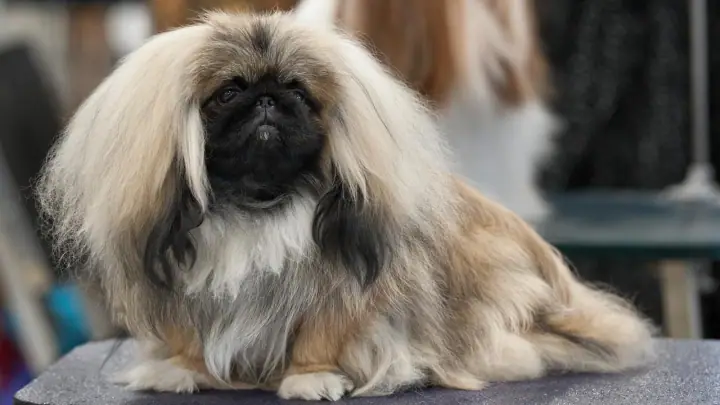
HDB-APPROVED · DOG BREED GUIDE
Last updated First published 1 June 2026
Notice one little habit together →A small idea to try, with progress kept in your Pack.
Also known as Peke, Lion Dog, Sleeve Dog.
Thinking about adopting a Pekingese?
The Pekingese believes it's the rightful ruler of any household, which is quite the feat when your regal little face is perpetually melting in Singapore's equatorial embrace.
Can a Pekingese live in an HDB flat?
YesOn the HDB approved-breed list
Named on HDB's approved small-breed list for flats. Check any listed variety restrictions and confirm the individual dog before committing.
HDB sets and maintains the approved-breed list. Check the current rules at HDB.gov.sg →
Full list of HDB-approved breeds on this site →At a glance
- Size category
- Small
- Weight
- 3 to 6 kg
- Height
- 15 to 23 cm
- Lifespan
- 12 to 15 years
- Energy level
- ●●○○○ 2/5 (editorial, unvalidated)
- Shedding
- ●●●●○ 4/5 (editorial, unvalidated)
- Heat tolerance
- ●○○○○ 1/5 (editorial, unvalidated)
- Barking
- ●●●○○ 3/5 (editorial, unvalidated)
- Trainability
- ●●○○○ 2/5 (editorial, unvalidated)
- Grooming needs
- ●●●●● 5/5 (editorial, unvalidated)
- Origin
- China
Editorial climate-care note
Heat tolerance rated 1 out of 5. The Pekingese is one of the most heat-intolerant breeds in Singapore. Its flat face (brachycephalic structure) severely restricts airflow, making the 28 to 32 degrees Celsius heat and high humidity a dangerous combination. Air-conditioning is absolutely essential. Walks must be kept to under 10 minutes, only before 8am or after 7pm. Watch for heavy panting, drooling, and laboured breathing at all times outdoors.
This score is not a safe temperature or exercise limit. Any dog can develop heatstroke.
Plan activity around your dog, not a timer
A breed score cannot tell you how many minutes are safe today. Avoid hot conditions, watch your dog's breathing, and agree an activity plan with your vet.
Read PDSA's heatstroke guidance →Common health issues in Singapore's climate
Build a care budget
- Year 1
- S$4,641 to S$6,279
- Over 10 years
- S$42,952 to S$58,112
Illustrative planning assumptions for food, grooming and routine vet care, with inflation and a year-one setup uplift. These are not verified provider quotes or a lifespan prediction. Adjust the calculator to current quotes; add insurance, boarding and emergencies separately.
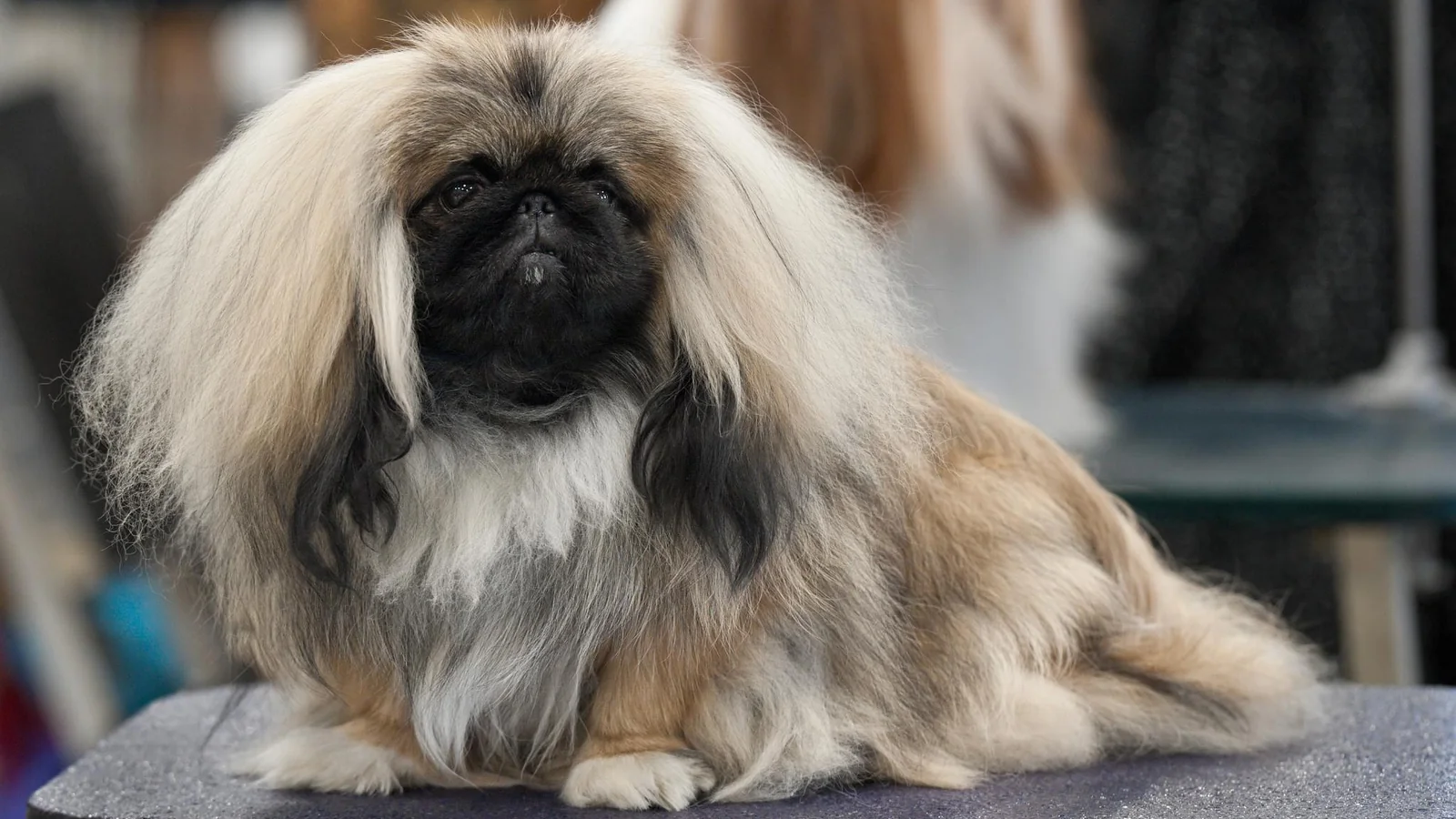
Run the full lifetime cost calculator →The Pekingese is one of the oldest breeds on the AVS approved list, bred in the Forbidden City as a sleeve dog for Chinese emperors for two thousand years before the rest of the world saw one. It is small, hyper-confident, deeply loyal to its household and absolutely convinced it is the most important being in the room.
It is also flat-faced, heavy-coated and built for a Beijing winter, which makes it one of the more challenging breeds to own well in Singapore. This page rates it not beginner-friendly, and the reasons are all in the sections below rather than in its temperament.
Personality and temperament
The Peke is dignified rather than playful, and people who love the breed love exactly that. It is affectionate on its own terms, intensely loyal to one or two people, and quite comfortable being left to its own company for stretches, which is unusual in a toy breed and genuinely useful.
Three honest notes:
- Trainability is rated 2 out of 5, the lowest on this site. This is not stupidity, it is independence: a Pekingese will consider your request and frequently decline. Reward-based work in short bursts gets somewhere. Repetition and pressure do not.
- Not recommended with young children. This page records that, and the reason is a combination of fragility and a low tolerance for being handled roughly. With adults or older children who respect the dog's space, Pekes are excellent company.
- It guards what it considers its own. Barking is rated 3 out of 5, moderate, but resource guarding of a person or a spot is a recognised trait worth managing early rather than finding funny.
Exercise in Singapore's climate
Heat tolerance is rated 1 out of 5, the lowest band we use, and with this breed the rating understates the case because two separate problems compound. The Pekingese has a thick double coat designed for sub-zero winters, and a brachycephalic airway that cannot move enough air to cool the dog by panting. Singapore's daily maximum of 31 to 33 degrees Celsius and average relative humidity around 82% year-round (Meteorological Service Singapore) means the air it is panting is already near saturated.
Heatstroke is on this page's health-issue list. A Peke can be in serious trouble within fifteen minutes of midday sun.
The rules:
- Walks under ten minutes, before 8am or after 7pm only, on grass or shaded paving.
- Any daytime outing means an air-conditioned destination and an air-conditioned route: lift to carpark, into the cafe, back to the car.
- Never a parked car, not for a minute.
- A cooling mat at home is not optional, and air conditioning is essential rather than nice.
- Watch continuously outdoors for heavy panting, drooling, laboured or noisy breathing, or a dog that stops and will not go on. Any of those means shade, water, cooling and a phone call to a vet.
The genuine consolation is that energy is rated 2 out of 5. Two short strolls a day, with frequent pauses for the dog to look regally at things, is the whole exercise budget. This is not a park connector dog. It is a void-deck dog, a balcony dog and an air-conditioned-living-room dog, and it needs almost no space, which in an HDB is worth a great deal. Save the emergency vet number in your phone before you need it; our emergency vet page lists the 24-hour clinics.
Coat and grooming in the humidity
Grooming needs are rated 5 out of 5 and the annual grooming line on this page is S$1,800, the highest of any breed we cover. Shedding is rated 4 out of 5 on top of that, so this is a coat that both costs money at the salon and lands on your furniture.
The long, dense double coat needs brushing several times a week down to the skin, and professional grooming every 4 to 6 weeks. Many Singapore owners keep a Peke in a shorter working trim rather than full show coat, and there is a good welfare argument for it here even though the double coat should not be shaved to the skin.
The facial folds are a daily job, not a weekly one. A flat face with skin folds in this humidity holds moisture against the skin and develops fold dermatitis quickly. Clean and, more importantly, dry them properly. Itchy skin and ear infections are both on this page's health-issue list, and both are substantially preventable with routine.
The eyes need daily attention too, for reasons covered in the health section.
Diet and feeding
Food runs about S$1,100 a year on this page's estimate. Two specifics matter more here than for most small dogs.
Weight is a breathing issue rather than a waistline one. Any extra weight on a dog with a compromised airway makes an already marginal cooling system worse, and in this climate that is a safety matter. Keep a Peke genuinely lean and weigh the food rather than judging by eye.
Flat-faced dogs also struggle mechanically with food: they take in air while eating and can find a deep bowl awkward to work with. A shallow, wide dish suits the face shape better, and a slow feeder helps a dog that gulps. Dental health is on this page's issue list, because a shortened jaw crowds a full set of teeth, so daily brushing or vet-appropriate dental chews plus professional cleaning on schedule is high-return care.
Keep kibble sealed and out of direct heat, and keep water available and refreshed often.
Training
Set expectations by the 2-out-of-5 trainability rating and work with the breed rather than against it. Short, food-led, low-pressure sessions. No drilling, no repetition for its own sake, and no confrontation with a dog that will simply dig in.
What is worth the effort:
- Handling tolerance. Daily face and fold cleaning, daily eye care, frequent grooming. A Peke that objects to being handled makes all of that harder for fifteen years. Start in the first week.
- A "leave it" and calm around food and favourite spots, to keep guarding tendencies proportionate.
- Harness, not collar. Nothing that puts pressure on the throat of a dog with a restricted airway.
Never train or play to the point of hard panting. With this breed, exertion is the risk.
Health
The UK Kennel Club lists prioritising genetic diversity as good practice before breeding, and eye testing under the BVA/KC/ISDS Eye Scheme as best practice. It notes that the breed can be affected by conformational concerns, and places the Pekingese in Breed Watch Category 3, its highest concern tier. Very few breeds sit in Category 3, and it is a plain statement that conformation in this breed can be and has been pushed too far.
As a brachycephalic breed, the Kennel Club notes susceptibility to breathing difficulties from excessive soft tissue in the nose and throat, skin problems where facial folds create warm moist conditions, and eye conditions including shallow sockets and a raised risk of trauma.
That last one deserves emphasis because it is the emergency an owner is most likely to face. Shallow eye sockets mean the eyes sit proud and are exposed, and a scratch, an ulcer or in the worst case a proptosed eye can happen from an ordinary knock. Any squinting, pawing at the face, cloudiness or discharge in a Pekingese is a same-day veterinary matter, not a wait-and-see.
This page's own health-issue flags are brachycephalic airway, eye conditions, dental health, intervertebral disc disease, patellar luxation, ear infections, itchy skin and heatstroke. That is the longest list on this site, and the routine vet estimate is S$1,300 a year before anything goes wrong. Arrange insurance in the first weeks, before anything has presented.
None of this replaces your vet's assessment of your own dog.
Housing and space in Singapore
This page records the Pekingese as HDB-approved, and at 3 to 6 kg it fits easily. Confirm the current position with HDB before you commit, since HDB maintains and updates the approved list.
Ownership limits come from AVS rather than HDB. Under AVS's rules, an HDB flat may keep a maximum of one dog of an approved small breed plus up to two cats, and no dog on the Specified dogs list; private property may keep up to three cats or dogs in combination. Every dog needs an AVS licence. Licence fees depend on sterilisation status, age and the number of pets. One-time and three-year licences are different options. Check the current AVS fee table before paying.
The housing requirement that decides whether this works is cooling, not space. A flat with reliable air conditioning in a room the dog can use, at the hours nobody is home, is a genuine prerequisite. Add ramps or steps at furniture: intervertebral disc disease is on the health list and jumping down is the avoidable part of that risk.
If an international move is possible in this dog's lifetime, check airline policy first. Many carriers refuse brachycephalic breeds in the hold, and some will not carry them at all.
Care and cost in Singapore
On this page's figures: about S$1,100 a year for food, S$1,800 for grooming, and S$1,300 for routine veterinary care. The grooming line is the highest on the site and the vet line is high for a 4 kg dog, and both are structural rather than bad luck. Run the ten-year picture with the cost calculator.
Getting a Pekingese: buying and adoption
Given the Category 3 listing, the breeder decision matters more than anything you do afterwards. Ask for the AVS dog farm licence number, the eye certificate on both parents under a recognised scheme, patella assessment, and a written health guarantee.
Then look at the parents yourself, and listen. A parent that snorts, snuffles or rattles while lying still is showing you the airway her puppies may inherit. Prefer a dog with a visible muzzle over a flatter one, prefer eyes that sit less prominently, and be suspicious of any breeder presenting an extremely flat face as the desirable version of the breed. In a Category 3 breed, moderation is the thing to pay for.
Adoption is worth checking properly. Pekingese and Peke crosses come through SOSD, Causes for Animals and Mercylight, often surrendered when the grooming or the medical load outgrew a first owner. An adult also arrives with an airway you can hear and eyes you can see, which on this breed is worth more than a puppy's unknowns.
Life stages: puppy to senior
Puppy, to about 12 months. Establish the heat rules and the daily fold, eye and face routine immediately, so handling is ordinary rather than a fight later. Ramps at the furniture from day one. Ask your vet to assess the airway and the eyes at each puppy check so you have a baseline. Insurance in force before anything appears.
Adolescent, roughly 9 to 18 months. The adult coat comes in and the grooming load steps up. If breathing at rest or recovery after mild activity is getting worse rather than better, that is a vet conversation now.
Adult, roughly 2 to 8 years. Hold the weight down, keep the folds dry, keep the harness on, keep the cool-hours rule intact even on days that feel mild. Watch the eyes daily; most serious eye problems in this breed start as something small and are cheap to fix early.
Senior, from about 9 years. Lifespan on this page is 12 to 15 years. Move to twice-yearly vet visits. Heat tolerance narrows further, so the already short walks get shorter. Watch for a change in the sound of breathing at rest, for reluctance to jump or a yelp on being lifted, which points at the back, and for bad breath or one-sided chewing, which points at the mouth. Keep the coat in a shorter, comfortable clip rather than a handsome one; an old Peke in a practical trim is a more comfortable dog.
See dog-friendly cafes and parks in your region → | Run the 10-year cost of a Pekingese in Singapore →
Three things to know
-
Heat is a survival issue and two problems compound
A winter double coat and a brachycephalic airway, in a climate with no cool season. Walks under ten minutes at the cool hours, air conditioning as a prerequisite, and a 24-hour vet saved before you need it.
-
The Kennel Club puts this breed in Breed Watch Category 3, its highest concern tier
Buy moderation: a visible muzzle, less prominent eyes, parents that breathe quietly at rest. That single choice affects the dog's life more than anything you do afterwards.
-
The daily routine is the medicine
Facial folds cleaned and dried, eyes checked, teeth brushed. Grooming is the highest cost line on this site at S$1,800 a year, and the health issue list is the longest. Both are manageable with routine and expensive without it.
Annual cost in Singapore
Editable planning estimates, not verified provider quotes or a prediction of your dog's bills. Boarding, one-off equipment and emergencies are additional.
- Food
- S$1,100
- Grooming
- S$1,800
- Routine vet
- S$1,300
- Sum of the three
- S$4,200/year
Run the lifetime cost calculator →
Get a current insurance quote for your dog's age and circumstances. Compare exclusions, waiting periods, excess and cover limits. Compare policy questions here →
Frequently asked questions
Is a Pekingese HDB-approved in Singapore?
Yes. The Pekingese is on the HDB list of breeds approved for flats. Confirm the current HDB and AVS rules before you commit, as the approved list can change.
Do Pekingeses bark a lot?
Our current barking assessment is: has a moderate bark (editorial estimate). It has not been independently validated. Ask about this dog's observed behaviour, triggers and time alone; the breed label cannot predict your neighbour's experience.
How much grooming does a Pekingese need?
Our current grooming assessment is: needs a lot of grooming, including regular professional trims (editorial estimate). Confirm the individual coat-care routine and any professional grooming with the rescue, groomer or vet. The score is not a measured frequency or price.
How does a Pekingese cope with Singapore's heat?
An editorial heat score cannot establish a safe temperature or walk duration for an individual dog. Activity, humidity, health, age and body shape matter. Avoid hot conditions, provide shade and water, and ask your vet about an appropriate activity plan.
Is a Pekingese a good breed for a first-time owner?
Our household-fit note is: Editorial: may need more support. This is not a validated prediction. Assess the individual dog, your daily capacity, training support and known care needs before deciding.
How much does a Pekingese cost to keep in Singapore?
The stored planning assumption is S$4,200 a year for food, grooming and routine veterinary care. It is not a verified typical cost for this breed. Replace it with current quotes and your own usage; add setup, licensing, insurance if chosen, boarding and emergency savings separately.
Other small breeds to consider
A Pekingese in Singapore, the short version
The Pekingese is HDB-approved and suits Singapore's compact apartments given its low exercise requirements and regal, laid-back personality. However, it is one of the most heat-intolerant breeds available. Its brachycephalic structure severely limits airflow in Singapore's 28 to 32 degrees Celsius humidity. Air-conditioning is not optional; it is a welfare necessity. Walks must be limited to under 10 minutes before 8am or after 7pm only, and outdoor activity should be minimal year-round. Eye cleaning must be done daily due to skin folds and bulging eyes prone to injury and infection. Annual vet costs typically range SGD 1,000 to 1,800 including respiratory monitoring.
Find Pekingese-friendly spots in Singapore
Good spots to visit with a Pekingese in Singapore.
 Find Your Match Meet Pekingese first “I move like a tiny lion and I refuse to be rushed by anyone” Swipe through a dating-profile-style card before you commit. Say hello →
 Breed fit quiz Does a Pekingese actually suit your life? Answer a few questions about your lifestyle and see how well this breed matches your real setup. Find out →