
HDB-APPROVED · DOG BREED GUIDE
Last updated First published 31 May 2026
Notice one little habit together →A small idea to try, with progress kept in your Pack.
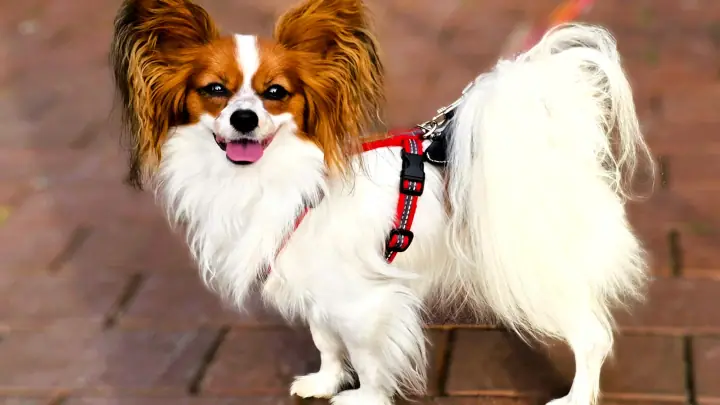
Also known as Continental Toy Spaniel, Butterfly Dog, Pap.
Thinking about adopting a Papillon?
Those delicate butterfly ears might fool you, but the Papillon's greatest trick is its knack for mastering complex commands while still finding time to outsmart its humans.
Can a Papillon live in an HDB flat?
YesOn the HDB approved-breed list
Named on HDB's approved small-breed list for flats. Check any listed variety restrictions and confirm the individual dog before committing.
HDB sets and maintains the approved-breed list. Check the current rules at HDB.gov.sg →
Full list of HDB-approved breeds on this site →At a glance
- Size category
- Small
- Weight
- 3 to 5 kg
- Height
- 20 to 28 cm
- Lifespan
- 13 to 16 years
- Energy level
- ●●●●○ 4/5 (editorial, unvalidated)
- Shedding
- ●●○○○ 2/5 (editorial, unvalidated)
- Heat tolerance
- ●●●○○ 3/5 (editorial, unvalidated)
- Barking
- ●●●○○ 3/5 (editorial, unvalidated)
- Trainability
- ●●●●● 5/5 (editorial, unvalidated)
- Grooming needs
- ●●●○○ 3/5 (editorial, unvalidated)
- Origin
- France / Belgium
Editorial climate-care note
Heat tolerance rated 3 out of 5. The Papillon's fine, single-layer silky coat helps manage Singapore's 28 to 32 degrees Celsius heat better than double-coated breeds. However, its small size and tiny trachea mean overexertion in heat can cause respiratory distress. Walk before 8am or after 7pm and watch for signs of heat stress, particularly the characteristic honking cough of tracheal collapse.
This score is not a safe temperature or exercise limit. Any dog can develop heatstroke.
Plan activity around your dog, not a timer
A breed score cannot tell you how many minutes are safe today. Avoid hot conditions, watch your dog's breathing, and agree an activity plan with your vet.
Read PDSA's heatstroke guidance →Common health issues in Singapore's climate
Build a care budget
- Year 1
- S$3,205 to S$4,336
- Over 10 years
- S$29,657 to S$40,125
Illustrative planning assumptions for food, grooming and routine vet care, with inflation and a year-one setup uplift. These are not verified provider quotes or a lifespan prediction. Adjust the calculator to current quotes; add insurance, boarding and emergencies separately.
Run the full lifetime cost calculator →The Papillon is the most underrated dog on this site. It is three to five kilograms, it is on HDB's approved list, this page rates it 5 out of 5 for trainability, and it consistently outperforms dogs ten times its size at obedience and agility. If you want a genuinely clever dog and you live in a flat, this is the answer almost nobody gives.
There are two honest caveats, and this page records both. It is rated not good with young children, and it is rated low for beginner friendliness. Neither is about temperament. Both are about how small and how quick this dog is.
Personality and temperament
Trainability at 5 out of 5 is the headline and it is well earned. Papillons learn sequences, not just cues. They enjoy the work, they offer behaviours to see what pays, and they get bored by repetition faster than most owners expect.
Energy is rated 4 out of 5. This is not a decorative lapdog. It is a busy, curious, athletic little animal that happens to be portable, and an under-occupied Papillon becomes a noisy one.
Barking is rated 3 out of 5, moderate, and typically alert-driven. It is rated good with other dogs, and notably fearless with them, which is its own hazard: a 4 kg dog with no sense of its own size needs an owner who manages introductions rather than trusting the dog's judgement.
On children, the rating of not good with kids deserves the real explanation rather than a shrug. This is a fine-boned dog that can be seriously injured by being dropped, sat on or grabbed. In a household with careful older children it is often lovely. With toddlers, the risk runs mostly one way, and it is the dog that gets hurt.
Exercise in Singapore's climate
Heat tolerance is rated 3 out of 5. The Papillon's coat is a fine single layer rather than an insulating double coat, which helps considerably in this climate and is one reason the breed copes better here than its fluffy appearance suggests.
The limitation is size rather than coat. A very small dog has little thermal mass, sits close to the ground where radiated heat from pavement is worst, and dehydrates quickly. Singapore's daily maximum of 31 to 33 degrees Celsius with average relative humidity around 82% year round (Meteorological Service Singapore) is manageable for this breed in the cool hours and not otherwise.
Two walks a day of twenty to thirty minutes before 8am and after 8pm, on grass where you can find it, and always with water. Test the pavement with the back of your hand: a surface you would not kneel on is a surface this dog should not be walking on.
The real exercise is mental, and this is the breed where that is genuinely true rather than a consolation. Teach it agility-style skills indoors, teach it names for its toys, teach it to find things. A Papillon given a job is a calm, satisfied dog. A Papillon given a cushion is a bored one with a bark.
Coat and grooming in the humidity
Grooming needs are rated 3 out of 5 and shedding 2 out of 5, at about S$900 a year, which is one of the lower grooming lines on this site for a long-coated breed.
The reason is the coat's structure. A single silky coat with no woolly undercoat does not mat the way a Poodle or Bichon coat does, so a thorough brush two or three times a week is genuinely enough, with attention to the feathering on the ears, chest, legs and tail where tangles do form.
Those famous butterfly ears need checking rather than styling. Heavy ear fringing plus humidity means moisture and debris get trapped, so look inside weekly and dry them properly after any bath.
Keep the feet tidy. Hair between the pads on a small dog on smooth tile is a slipping hazard, and slipping matters more on this breed than most, for reasons the health section covers.
Diet and feeding
Food runs about S$700 a year, the lowest on this site, which is one of the quiet advantages of a 3 to 5 kg dog.
Portion precision matters enormously at this size. A single biscuit is a meaningful fraction of a Papillon's daily intake, and both of the breed's main structural vulnerabilities, the kneecaps and the windpipe, are made worse by extra weight. Weigh the food and count treats within the total.
Two small-dog specifics. Puppies of toy breeds can drop their blood sugar if meals are spaced too far apart, so feed a Papillon puppy little and often and ask your vet what interval they want. And dental health is on this page's health-issue list, so keep to a diet your vet is happy with and brush daily rather than relying on chews.
Keep water available and refreshed through the day. At this body size, dehydration arrives faster than owners expect.
Training
With a 5 out of 5 dog, training is the pleasure of the breed rather than a chore. Priorities:
- A harness, never a collar, from the first walk. Collapsed trachea is on this page's health-issue list. A small dog pulling against a collar puts pressure directly on a windpipe that is already the breed's weak point. Use a Y-front harness and treat this as non-negotiable rather than a preference.
- Four feet on the floor. Patellar luxation leads this page's health list. Every launch off a sofa is load through a kneecap that may already track badly. Provide steps, lift the dog, and reward the sit rather than the leap.
- Real mental work, structured. Trick training, scent games, a rotating set of puzzles. This is how you get a settled Papillon.
- Careful socialisation with big dogs. The breed's confidence exceeds its dimensions. You are the judgement here.
Health
The UK Kennel Club recommends eye testing using the BVA/KC/ISDS Eye Scheme and three DNA tests for the Papillon: progressive retinal atrophy (pap-PRA), neuronal axonal deficiency (NAD-PLA2G6), and von Willebrand's disease (vWD1). It places the breed in Breed Watch Category 1, and states that "currently no points of concern specific to this breed have been identified for special attention by judges, other than those covered routinely by The Kennel Club's breed standard".
Three named DNA tests is a longer list than most toy breeds carry, and the reason to be glad rather than alarmed is that a named test is a solved problem. Each one is a condition a responsible breeder can simply avoid producing. Ask for all three results on both parents, plus the eye certificates.
The von Willebrand result has a practical use beyond breeding that owners rarely think about. It is an inherited clotting disorder, and knowing your dog's status before a routine spay, neuter or dental is genuinely useful information for the vet doing it. Keep the result with the dog's records.
Beyond the screening, this page lists patellar luxation, dental health, eye conditions, collapsed trachea, heart conditions, allergies and epilepsy. Two of those shape daily life, and both are covered in the training section, because on this breed the management is behavioural: the harness protects the trachea, and weight control plus discouraging jumping protects the knees.
Routine veterinary care runs about S$1,300 a year here. Arrange insurance in the first weeks, before any knee or airway note is on a clinical record to be written back as an exclusion. None of this replaces your own vet's assessment of your own dog.
Housing and space in Singapore
The Papillon is named on HDB's published list of approved breeds for flats. Confirm the current position there before you commit, since HDB maintains and updates the list.
Ownership limits come from AVS rather than HDB. Under AVS's rules, an HDB flat may keep a maximum of one dog of an approved small breed plus up to two cats, and no dog on the Specified dogs list; private property may keep up to three cats or dogs in combination. Every dog needs an AVS licence. Licence fees depend on sterilisation status, age and the number of pets. One-time and three-year licences are different options. Check the current AVS fee table before paying.
A flat suits this breed perfectly on space. The adjustments are about surfaces and heights. Put runners on polished tile where the dog runs and turns. Add steps to the sofa or the bed if the dog is allowed up, or decide it is not. And check the gaps: a 3 kg dog fits through, under and behind things a larger dog cannot, including balcony railings and gate bars, so look at your home from its eye level once before the puppy arrives.
Care and cost in Singapore
On this page's figures: about S$700 a year for food, S$900 for grooming and S$1,300 for routine veterinary care. That is among the cheapest totals on this site, and with a lifespan of 13 to 16 years the arithmetic is more favourable than most small breeds. Run the ten-year picture with the cost calculator.
Getting a Papillon: buying and adoption
Ask for the AVS dog farm licence number and the four results named above: pap-PRA, NAD-PLA2G6, vWD1 and current eye certificates for both parents. Add a written veterinary patella assessment for both parents, since that is the condition most likely to affect your dog day to day.
Ask to see the puppies moving around rather than being held. You are watching for a confident, busy little animal that recovers quickly from a surprise, which is what a properly socialised Papillon looks like at eight weeks.
Be sceptical of anything sold on being unusually tiny. As with other toy breeds, deliberately undersized dogs bring more fragility, more dental crowding and more anaesthetic risk, and the premium is being charged for the problem.
Adoption is worth checking. Papillons and Papillon crosses come through SOSD, Causes for Animals and Mercylight, and small clever dogs are surrendered surprisingly often by owners who did not anticipate the energy or the noise that comes with boredom. An adult arrives with its temperament and its knees already legible.
Life stages: puppy to senior
Puppy, to about 12 months. Feed little and often while very young. Fit a harness from the first walk and never use a collar for lead pressure. Start daily tooth brushing and weekly ear checks. Socialise carefully and deliberately, especially around larger dogs and children, and get insurance in force early.
Adolescent, roughly 9 to 18 months. The ear and tail feathering comes in and brushing becomes a real task rather than a token one. Watch for a skip or hop in the back legs, and for any honking cough on excitement or lead pressure, which is the classic early sign of tracheal weakness. Both are worth reporting to your vet even if they pass.
Adult, roughly 2 to 10 years. Steady state, and the years to enjoy the brain. Keep teaching new things. Hold the weight, keep the harness, keep the teeth brushed, keep the floors non-slip.
Senior, from about 11 years. Lifespan here is 13 to 16 years. Move to twice-yearly vet visits. Watch for the eyes in dim light given the PRA picture, for a cough that becomes more frequent, and for hesitation before jumping, which usually means the knees or the back rather than reluctance. Keep the walks short and frequent, keep the mental work going, because a clever old dog still wants a job.
See dog-friendly cafes and parks in your region → | Run the 10-year cost of a Papillon in Singapore →
Three things to know
-
A harness, never a collar
Collapsed trachea is on this page's health list, and lead pressure on a small dog's windpipe is the avoidable version of that problem. A honking cough on excitement is the early sign and deserves a vet visit.
-
Three named DNA tests exist, so ask for all three
The Kennel Club recommends pap-PRA, NAD-PLA2G6 and von Willebrand's alongside eye testing. Keep the von Willebrand result with the dog's records, because it matters before any surgery.
-
This is a working brain in a 4 kg body
Trainability is rated 5 out of 5 and energy 4 out of 5. Give it structured mental work daily and you get a calm, delightful flat dog. Give it a cushion and you get a bored one that barks.
Annual cost in Singapore
Editable planning estimates, not verified provider quotes or a prediction of your dog's bills. Boarding, one-off equipment and emergencies are additional.
- Food
- S$700
- Grooming
- S$900
- Routine vet
- S$1,300
- Sum of the three
- S$2,900/year
Run the lifetime cost calculator →
Get a current insurance quote for your dog's age and circumstances. Compare exclusions, waiting periods, excess and cover limits. Compare policy questions here →
Frequently asked questions
Is a Papillon HDB-approved in Singapore?
Yes. The Papillon is on the HDB list of breeds approved for flats. Confirm the current HDB and AVS rules before you commit, as the approved list can change.
Do Papillons bark a lot?
Our current barking assessment is: has a moderate bark (editorial estimate). It has not been independently validated. Ask about this dog's observed behaviour, triggers and time alone; the breed label cannot predict your neighbour's experience.
How much grooming does a Papillon need?
Our current grooming assessment is: needs moderate grooming (editorial estimate). Confirm the individual coat-care routine and any professional grooming with the rescue, groomer or vet. The score is not a measured frequency or price.
How does a Papillon cope with Singapore's heat?
An editorial heat score cannot establish a safe temperature or walk duration for an individual dog. Activity, humidity, health, age and body shape matter. Avoid hot conditions, provide shade and water, and ask your vet about an appropriate activity plan.
Is a Papillon a good breed for a first-time owner?
Our household-fit note is: Editorial: may need more support. This is not a validated prediction. Assess the individual dog, your daily capacity, training support and known care needs before deciding.
How much does a Papillon cost to keep in Singapore?
The stored planning assumption is S$2,900 a year for food, grooming and routine veterinary care. It is not a verified typical cost for this breed. Replace it with current quotes and your own usage; add setup, licensing, insurance if chosen, boarding and emergency savings separately.
Other small breeds to consider
A Papillon in Singapore, the short version
The Papillon is HDB-approved and an ideal Singapore companion thanks to its light coat, compact size, and highly adaptable temperament. Its single-layer silky coat manages the tropical heat reasonably well, rated 3 out of 5, but overexertion in the humidity must be avoided due to tracheal sensitivity. Walk before 8am or after 7pm using a harness rather than a collar to protect the trachea. The Papillon is exceptionally intelligent and trainable, making it great for active urban owners. Dental care is a priority for this small breed. Annual vet costs typically range SGD 600 to 1,000.
Find Papillon-friendly spots in Singapore
High-energy breed, so these outdoor venues give Papillons the space they need.
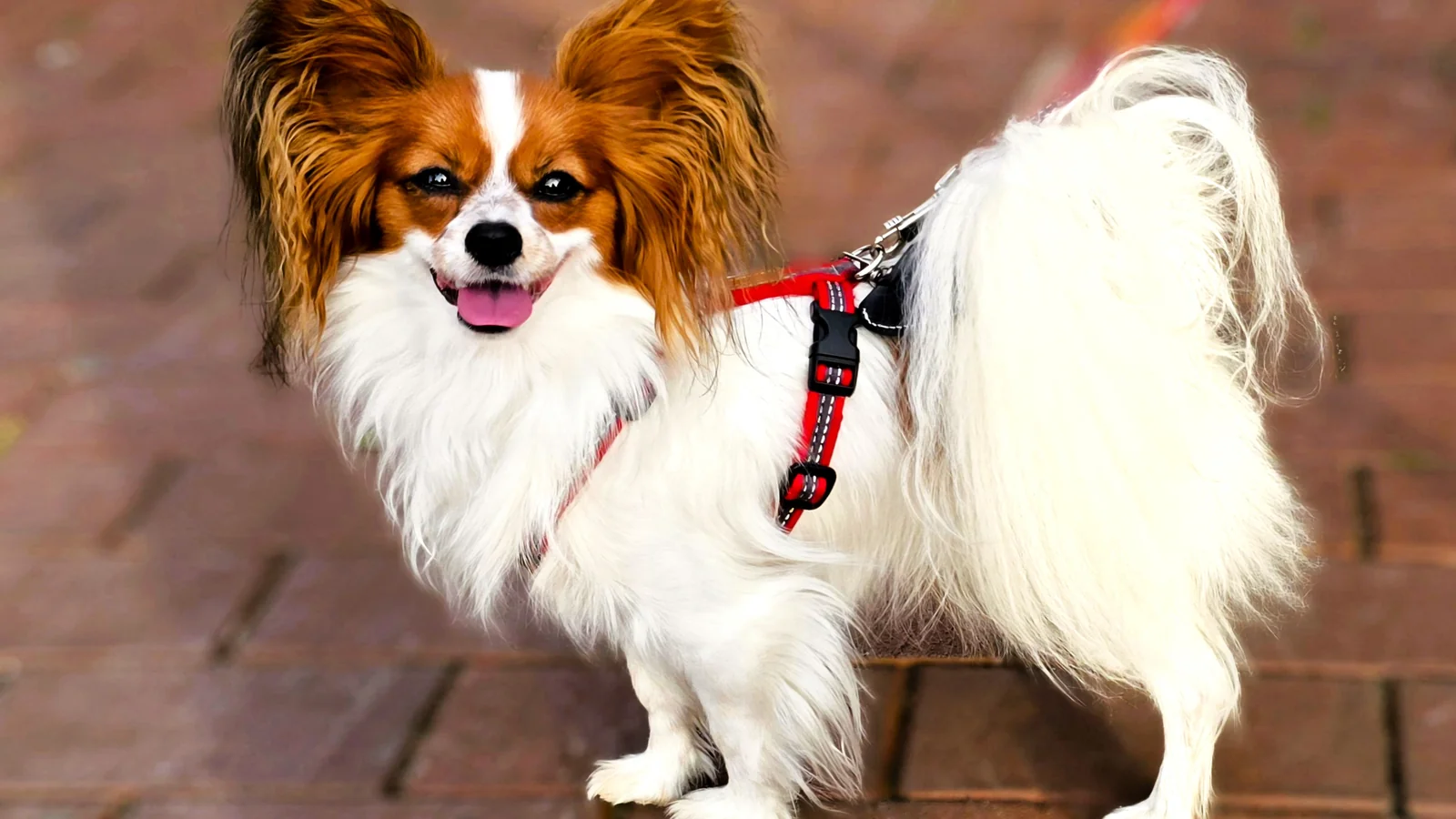 Find Your Match Meet Papillon first “My ears are famous, my sprint speed is underrated, and I know both things about myself” Swipe through a dating-profile-style card before you commit. Say hello →
 Breed fit quiz Does a Papillon actually suit your life? Answer a few questions about your lifestyle and see how well this breed matches your real setup. Find out →