

HDB-APPROVED · DOG BREED GUIDE
Last updated First published 31 May 2026
Notice one little habit together →A small idea to try, with progress kept in your Pack.
Also known as Min Pin, Zwergpinscher, King of Toys.
Thinking about adopting a Miniature Pinscher?
The Miniature Pinscher boasts a gait often compared to the hackney horse's trot, which is a charming quirk until it transitions into a sprint towards the open door, leaving you reconsidering your exercise regimen.
Can a Miniature Pinscher live in an HDB flat?
YesOn the HDB approved-breed list
Named on HDB's approved small-breed list for flats. Check any listed variety restrictions and confirm the individual dog before committing.
HDB sets and maintains the approved-breed list. Check the current rules at HDB.gov.sg →
Full list of HDB-approved breeds on this site →At a glance
- Size category
- Small
- Weight
- 4 to 6 kg
- Height
- 25 to 30 cm
- Lifespan
- 12 to 16 years
- Energy level
- ●●●●● 5/5 (editorial, unvalidated)
- Shedding
- ●●●○○ 3/5 (editorial, unvalidated)
- Heat tolerance
- ●●●○○ 3/5 (editorial, unvalidated)
- Barking
- ●●●●○ 4/5 (editorial, unvalidated)
- Trainability
- ●●●○○ 3/5 (editorial, unvalidated)
- Grooming needs
- ●○○○○ 1/5 (editorial, unvalidated)
- Origin
- Germany
Editorial climate-care note
Heat tolerance rated 3 out of 5. The Miniature Pinscher's short, sleek coat makes it one of the better small breeds for Singapore's heat, though the 28 to 32 degrees Celsius ambient temperature and high humidity can still cause discomfort. Avoid midday walks; early morning or evening outings of 20 to 30 minutes are ideal.
This score is not a safe temperature or exercise limit. Any dog can develop heatstroke.
Plan activity around your dog, not a timer
A breed score cannot tell you how many minutes are safe today. Avoid hot conditions, watch your dog's breathing, and agree an activity plan with your vet.
Read PDSA's heatstroke guidance →Common health issues in Singapore's climate
Build a care budget
- Year 1
- S$2,542 to S$3,438
- Over 10 years
- S$23,521 to S$31,823
Illustrative planning assumptions for food, grooming and routine vet care, with inflation and a year-one setup uplift. These are not verified provider quotes or a lifespan prediction. Adjust the calculator to current quotes; add insurance, boarding and emergencies separately.
Run the full lifetime cost calculator →The Miniature Pinscher is four to six kilograms of pure engine. Energy is rated 5 out of 5 on this page, the top of the scale, matched only by breeds twenty times its weight, and that single number explains almost everything about living with one.
People choose this dog for the size, the short coat and the S$400 grooming bill, all of which are genuinely excellent for a Singapore flat. Then the dog arrives and turns out to be a small athlete with strong opinions and a loud voice. This guide is written for the version of you that reads it beforehand.
Personality and temperament
Min Pins are bold, curious, and busy in a way that is genuinely entertaining if you were expecting it. They move with a distinctive high-stepping gait, they investigate everything, and they have no apparent awareness of their own dimensions.
Trainability is rated 3 out of 5, which reflects independence rather than any shortage of brain. This dog understands you perfectly and is weighing its options.
Barking is rated 4 out of 5. Combined with the alertness, that makes the corridor a permanent broadcast opportunity, and it is the trait most likely to cause a problem with neighbours.
The page rates this breed not good with young children and low for beginner friendliness. That is fair and it is about physics and patience, not aggression: a fast, fine-boned dog that dislikes rough handling, in a household with toddlers, is a dog at risk of injury and a child at risk of a snap. With older, calmer children it is often a delight.
Exercise in Singapore's climate
Heat tolerance is rated 3 out of 5, and the short sleek single coat is doing that work. This is one of the better small breeds for Singapore's humidity, with nothing to hold moisture and nothing to trim.
The catch is the pairing. Energy at 5 out of 5 with heat tolerance at 3 out of 5 means a dog that wants far more activity than the outdoors will safely provide for most of the day. Singapore runs a daily maximum of 31 to 33 degrees Celsius with average relative humidity around 82% year round (Meteorological Service Singapore), and at this body size dehydration arrives fast.
Two walks a day of thirty minutes in the cool hours, before 8am and after 8pm, with water every time. Check the pavement with the back of your hand, because a dog this low gets the full radiated heat off concrete.
Then take the rest indoors, and take it seriously. A flirt pole in a corridor, a scattered handful of kibble to hunt, a toy hidden and searched for, a short burst of trick training, repeated several times through the day. A Min Pin with 5 out of 5 energy and nothing to do does not sit quietly. It barks, it patrols, and it finds something of yours to disassemble. The indoor work is not enrichment here, it is the bulk of the exercise.
Coat and grooming in the humidity
Grooming needs are rated 1 out of 5 at about S$400 a year and shedding is rated 3 out of 5. This is close to the easiest coat on this site and it is a genuine advantage in this climate: no undercoat to hold damp, no feathering to mat, nothing to clip.
A weekly going-over with a rubber mitt is the entire routine. Bath rarely and dry the dog properly rather than leaving damp skin in humidity.
Two things a smooth-coated toy dog does need. Thin coat over pale-ish skin gives little sun protection, so shade rather than coat is what protects this dog outdoors. And they feel cold indoors: a Min Pin will hunt out the warmest spot in an air-conditioned room, burrow under a blanket, and genuinely appreciate a jumper in a heavily chilled office or car. That is not an affectation, it is a dog with no insulation.
Diet and feeding
Food runs about S$700 a year, the joint lowest on this site.
At 4 to 6 kg, portion precision beats product choice. A couple of stray treats is a large share of the daily allowance, and both patellar luxation and joint mobility appear on this page's health-issue list, so weight goes straight through the knees.
Weigh the food, count treats inside the total, and use the dog's own kibble as training currency, which on a breed you should be training this much is useful twice over.
Toy-breed puppies can drop their blood sugar if meals are spaced too far apart, so feed a Min Pin puppy little and often and take your vet's guidance on the interval.
Dental health is on this page's list, which is the standard small-jaw problem: crowded teeth trap food, and this dog may live sixteen years. Brush daily.
Training
An independent dog with a lot of energy needs the training to be interesting rather than repetitive. Four priorities:
- The "quiet" cue, from week ten. Barking at 4 out of 5 beside a shared corridor is the biggest risk to this arrangement. Teach the sequence rather than the silence: alert once or twice, come to you, settle, get paid for the settle.
- Daily structured mental work. This is the substitute for the outdoor exercise the climate will not give you, and it is also the most effective anti-barking measure available. Short sessions, several times a day, varied.
- Recall and impulse control, worked hard. This is a bold small dog with genuine prey drive and no sense of traffic. Build recall properly and still keep the lead on near roads, always.
- Four feet on the floor. Every launch off the sofa loads a kneecap that may already track badly. Provide steps, reward the sit, ignore the leap.
Health
The UK Kennel Club recommends eye testing using the BVA/KC/ISDS Eye Scheme, including litter screening, and does not currently offer a breed-specific DNA testing package for the Miniature Pinscher. It places the breed in Breed Watch Category 1, and states that "currently no points of concern specific to this breed have been identified for special attention by judges, other than those covered routinely by The Kennel Club's breed standard".
The litter screening detail is worth acting on rather than skimming. It means the puppies themselves can be eye-tested before they go home, not only the parents, so ask whether the litter was screened and for the result on your specific puppy. That is a stronger piece of information than a parent certificate and most buyers never think to ask for it.
Beyond that one scheme, the questions replace the certificates, and two matter.
Knees. Patellar luxation leads this page's health-issue list, with joint mobility also on it. Ask for a written veterinary patella assessment on both parents. It is partly heritable, and it is also heavily influenced by weight and jumping, which are yours to manage.
Seizures. Epilepsy is on this page's list, there is no test to point at, and a direct question is the only tool available. Ask whether any dog in the line has had them, and take a vague answer as an answer.
Heart conditions are also listed, so ask your vet to listen at every visit rather than only when something seems wrong.
Routine veterinary care runs about S$1,200 a year here. Arrange insurance in the first weeks, before any knee or heart note exists on a clinical record to be written back as an exclusion. None of this replaces your own vet's assessment of your own dog.
Housing and space in Singapore
The Miniature Pinscher is named on HDB's published list of approved breeds for flats, which runs to 61 named breeds plus a cross of any two of them. Confirm the current position there before you commit, since HDB maintains and updates the list.
Ownership limits come from AVS rather than HDB. Under AVS's rules, an HDB flat may keep a maximum of one dog of an approved small breed plus up to two cats, and no dog on the Specified dogs list; private property may keep up to three cats or dogs in combination. Every dog needs an AVS licence. Licence fees depend on sterilisation status, age and the number of pets. One-time and three-year licences are different options. Check the current AVS fee table before paying.
The flat needs three things, and one of them is unusual on this site.
Runners on polished tile, because a fast dog turning on a slick floor is how knees get worse. Steps to any furniture the dog is allowed on. And a genuine escape audit: this is a determined, agile, curious small dog that can get through, under and over more than you expect. Balcony railings, gate bars, window grilles and the gap behind the washing machine are all worth looking at from the dog's eye level before it arrives.
Put the resting spot away from the front door, so a dog rated 4 out of 5 for barking is not on corridor duty all day.
Care and cost in Singapore
On this page's figures: about S$700 a year for food, S$400 for grooming and S$1,200 for routine veterinary care. That is the cheapest total on this site, and the low grooming line is real rather than optimistic, because there genuinely is almost no coat to maintain. What this breed costs you is time and attention rather than money. Run the ten-year picture with the cost calculator.
Getting a Miniature Pinscher: buying and adoption
Ask for the AVS dog farm licence number, the eye scheme results for both parents, and whether the litter itself was eye-screened, along with your puppy's individual result. Then ask for a written veterinary patella assessment on both parents and a direct answer about seizures in the line.
Ask how much handling the puppies get and from how many different people. A bold breed with a low tolerance for rough handling benefits enormously from early, varied, gentle socialisation, and a litter raised in a busy household is a better starting point than one raised in a quiet kennel.
Watch the puppies move. You want busy, confident and quick to recover from a surprise.
Adoption is realistic. Min Pins and small smooth-coated crosses come through SOSD, Causes for Animals and Mercylight, and the recurring surrender story is precisely the mismatch at the top of this page: somebody bought a small dog and received a small athlete. That dog is usually entirely sound and simply needs a home willing to give it a job. An adult also arrives with its energy level honestly on display rather than described.
What to skip: any seller who calls this a lapdog, and any who cannot produce eye results.
Life stages: puppy to senior
Puppy, to about 12 months. Feed little and often while very young. Start the "quiet" cue in week ten and pair it with daily mental work, because they solve the same problem. Begin daily tooth brushing. Do the escape audit before the puppy arrives, not after the first scare. Keep it lean while the knees form, and get insurance in force early.
Adolescent, roughly 9 to 18 months. Independence peaks, recall gets tested, and the energy arrives fully. This is when barking becomes a habit if the early work lapsed, and when a skip or hop in the back legs typically first shows. Report the latter to your vet even if it resolves. Increase the mental work rather than the walk length, because the climate has not changed.
Adult, roughly 2 to 10 years. Steady, funny and easy, provided the dog has a job. Games daily, weight held, teeth brushed, floors non-slip, lead on near traffic.
Senior, from about 11 years. Lifespan here is 12 to 16 years. Move to twice-yearly vet visits and ask for the heart to be listened to each time. Watch for hesitation before jumping, which usually means knees rather than reluctance, and for dental disease, the most under-treated problem in small older dogs. An older smooth-coated dog feels the cold more, so mind the air-conditioning. Keep the games going at a gentler pace, because the brain outlasts the legs in this breed by years.
See dog-friendly cafes and parks in your region → | Run the 10-year cost of a Miniature Pinscher in Singapore →
Three things to know
-
Energy 5 out of 5 in a 5 kg dog, and the climate caps the outdoor half
Two cool-hour walks will not be enough on their own. Daily indoor games, scent work and trick training are the bulk of this dog's exercise, and they are also the most effective thing you can do about the barking.
-
Ask whether the litter was eye-screened, not just the parents
The Kennel Club's eye scheme recommendation for this breed includes litter screening, so a result can exist for your specific puppy. Almost no buyer asks for it.
-
Do an escape audit before the dog arrives
This is a determined, agile, curious small dog with no road sense. Balcony railings, gate bars and window grilles all deserve a look from its eye level, and the lead stays on near traffic however good the recall gets.
Annual cost in Singapore
Editable planning estimates, not verified provider quotes or a prediction of your dog's bills. Boarding, one-off equipment and emergencies are additional.
- Food
- S$700
- Grooming
- S$400
- Routine vet
- S$1,200
- Sum of the three
- S$2,300/year
Run the lifetime cost calculator →
Get a current insurance quote for your dog's age and circumstances. Compare exclusions, waiting periods, excess and cover limits. Compare policy questions here →
Frequently asked questions
Is a Miniature Pinscher HDB-approved in Singapore?
Yes. The Miniature Pinscher is on the HDB list of breeds approved for flats. Confirm the current HDB and AVS rules before you commit, as the approved list can change.
Do Miniature Pinschers bark a lot?
Our current barking assessment is: is fairly vocal (editorial estimate). It has not been independently validated. Ask about this dog's observed behaviour, triggers and time alone; the breed label cannot predict your neighbour's experience.
How much grooming does a Miniature Pinscher need?
Our current grooming assessment is: needs minimal grooming (editorial estimate). Confirm the individual coat-care routine and any professional grooming with the rescue, groomer or vet. The score is not a measured frequency or price.
How does a Miniature Pinscher cope with Singapore's heat?
An editorial heat score cannot establish a safe temperature or walk duration for an individual dog. Activity, humidity, health, age and body shape matter. Avoid hot conditions, provide shade and water, and ask your vet about an appropriate activity plan.
Is a Miniature Pinscher a good breed for a first-time owner?
Our household-fit note is: Editorial: may need more support. This is not a validated prediction. Assess the individual dog, your daily capacity, training support and known care needs before deciding.
How much does a Miniature Pinscher cost to keep in Singapore?
The stored planning assumption is S$2,300 a year for food, grooming and routine veterinary care. It is not a verified typical cost for this breed. Replace it with current quotes and your own usage; add setup, licensing, insurance if chosen, boarding and emergency savings separately.
Other small breeds to consider
A Miniature Pinscher in Singapore, the short version
The Miniature Pinscher is HDB-approved and well-suited to Singapore apartment living, thanks to its compact size and relatively low grooming needs. Its short, sleek coat is an advantage in the tropical climate, making heat management easier than for longer-coated breeds. Walk before 8am or after 7pm; Min Pins are energetic and need daily exercise despite the heat. Known for a bold, fearless temperament, they can be vocal, which is a consideration in HDB and condo settings. Health monitoring should focus on joint and eye checks. Annual vet costs typically range SGD 500 to 900.
Miniature Pinscher vs...
Deciding between two breeds? See them side by side.
Find Miniature Pinscher-friendly spots in Singapore
High-energy breed, so these outdoor venues give Miniature Pinschers the space they need.
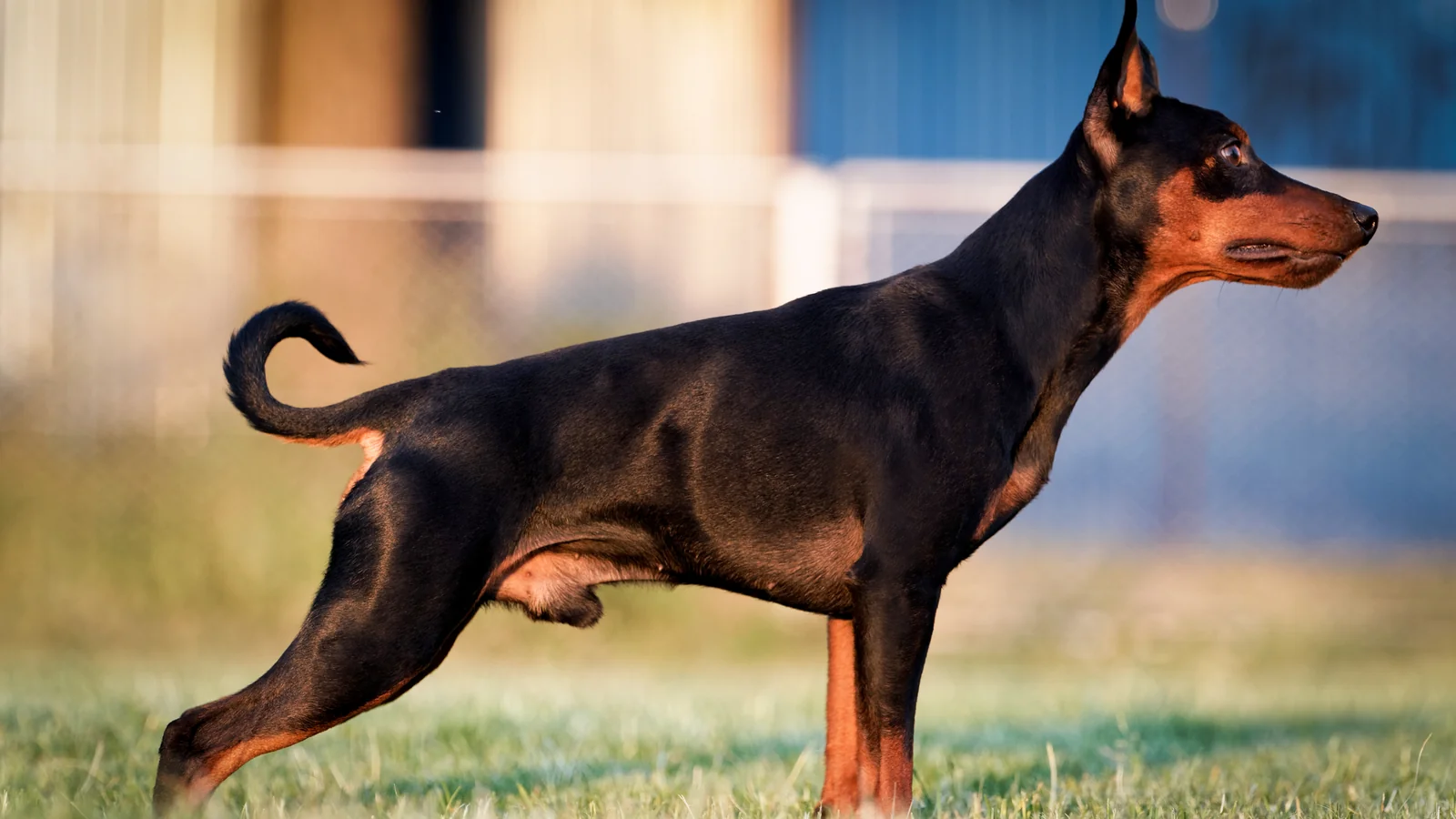 Find Your Match Meet Miniature Pinscher first “I look like a tiny Doberman and I use that reputation shamelessly” Swipe through a dating-profile-style card before you commit. Say hello →
 Breed fit quiz Does a Miniature Pinscher actually suit your life? Answer a few questions about your lifestyle and see how well this breed matches your real setup. Find out →