
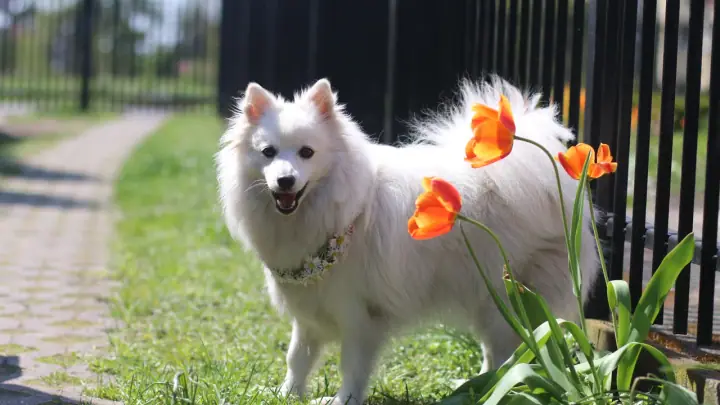
HDB-APPROVED · DOG BREED GUIDE
Last updated First published 31 May 2026
Notice one little habit together →A small idea to try, with progress kept in your Pack.
Also known as Nihon Supittsu, Japanese Pomeranian (incorrect but common).
Thinking about adopting a Japanese Spitz?
The Japanese Spitz might look like a fluffy snowball, but it's essentially a pocket-sized alarm system that thrives on routine and will ensure you never miss a delivery or a neighbourhood chat.
Can a Japanese Spitz live in an HDB flat?
YesOn the HDB approved-breed list
Named on HDB's approved small-breed list for flats. Check any listed variety restrictions and confirm the individual dog before committing.
HDB sets and maintains the approved-breed list. Check the current rules at HDB.gov.sg →
Full list of HDB-approved breeds on this site →At a glance
- Size category
- Small
- Weight
- 5 to 10 kg
- Height
- 30 to 38 cm
- Lifespan
- 12 to 14 years
- Energy level
- ●●●○○ 3/5 (editorial, unvalidated)
- Shedding
- ●●●●○ 4/5 (editorial, unvalidated)
- Heat tolerance
- ●○○○○ 1/5 (editorial, unvalidated)
- Barking
- ●●●●○ 4/5 (editorial, unvalidated)
- Trainability
- ●●●●○ 4/5 (editorial, unvalidated)
- Grooming needs
- ●●●●○ 4/5 (editorial, unvalidated)
- Origin
- Japan
Editorial climate-care note
Heat tolerance rated 1 out of 5. The Japanese Spitz's thick, white double coat is bred for cold climates and makes this one of the most heat-sensitive breeds available in Singapore. The 28 to 32 degrees Celsius heat and high humidity pose a serious risk of overheating. Air-conditioning is non-negotiable. Limit walks to no more than 15 minutes, only before 8am or after 7pm. Daily coat brushing removes dead fur to help air circulation.
This score is not a safe temperature or exercise limit. Any dog can develop heatstroke.
Plan activity around your dog, not a timer
A breed score cannot tell you how many minutes are safe today. Avoid hot conditions, watch your dog's breathing, and agree an activity plan with your vet.
Read PDSA's heatstroke guidance →Common health issues in Singapore's climate
Build a care budget
- Year 1
- S$3,978 to S$5,382
- Over 10 years
- S$36,816 to S$49,810
Illustrative planning assumptions for food, grooming and routine vet care, with inflation and a year-one setup uplift. These are not verified provider quotes or a lifespan prediction. Adjust the calculator to current quotes; add insurance, boarding and emergencies separately.
Run the full lifetime cost calculator →There is a particular kind of Singapore dog owner who falls for the Japanese Spitz on sight, and it is entirely understandable. The breed is beautiful in a way that photographs unfairly well: a bright white cloud with a fox's face and a permanent expression of having just heard good news. Then the dog arrives, and the two facts nobody mentioned at the point of sale start to matter. It is built for cold. And it has opinions about the corridor.
Neither is a reason not to have one. Both are reasons to go in with your eyes open, because a Japanese Spitz managed well is a lovely flat dog, and a Japanese Spitz managed badly is hot, bored and loud.
Personality and temperament
This is an affectionate, bright, people-oriented breed that bonds hard to its household. Trainability is rated 4 out of 5, and it is genuinely willing rather than merely clever, which is a better combination than it sounds. It is rated good with children and good with other dogs.
The trait that decides whether flat life works is the voice. Barking is rated 4 out of 5. The Japanese Spitz was kept as a companion and watchdog, and it takes the watching seriously. In a landed house that is a mild quirk. Four metres from a shared corridor, with a lift that dings all day and neighbours arriving at every hour, it is the thing that will define your relationship with the people around you.
Two more worth knowing. The breed is sensitive, and it reads household tension quickly, so a stressed home tends to produce a noisier dog. And it dislikes being alone. Long solo working days are the second most common source of barking complaints for this breed, after the corridor itself.
Exercise in Singapore's climate
Heat tolerance is rated 1 out of 5, the lowest rating on this site. That white cloud is a true double coat: a dense insulating undercoat beneath a longer outer coat, engineered to hold warmth in. It does that job perfectly well in Singapore, which is the problem.
With a daily maximum of 31 to 33 degrees Celsius and average relative humidity around 82% year round (Meteorological Service Singapore), the dog has very little capacity to dump heat and no cool season in which to recover. Energy is rated 3 out of 5, so this is not a breed that needs distance, which is fortunate.
The working pattern is two short outings in genuinely cool hours, before 8am and after 8pm, kept to fifteen or twenty minutes, on shaded routes and grass rather than pavement that has been absorbing sun all afternoon. Carry water. Turn back at the first sign the dog is working to breathe rather than pushing on to finish the loop.
Because the physical exercise has to stay modest, the mental side carries more of the load than it would for most breeds. A clever, willing dog with 3 out of 5 energy and nothing to think about becomes a dog that barks for entertainment. Five minutes of trick training, a snuffle mat at breakfast, or a food puzzle while you work does more for this breed's behaviour than another lap of the void deck.
Coat and grooming in the humidity
Grooming needs are rated 4 out of 5 and shedding 4 out of 5, with an annual grooming line on this page of S$1,400. The coat is famously non-matting for its length and it is not the daily labour that a Maltese or a Shih Tzu asks for, but it does shed substantially and it needs real brushing, two or three times a week, right down to the skin rather than a decorative pass over the top.
The Singapore-specific instruction is the one to get right, and it runs against instinct: do not shave a Japanese Spitz to cool it down. A double coat insulates in both directions, and the undercoat is part of how the dog manages heat as well as cold. Shaving it off removes the air layer, exposes pale skin to a very high UV index, and in double-coated breeds the coat frequently grows back patchy and coarser than before. What actually cools the dog is removing dead undercoat, so brush it out properly and often, and let a groomer tidy rather than strip.
The other humidity job is drying. A dense white coat holds water, and a coat that stays damp against skin in this climate is how hot spots begin. Dry to the skin after every bath, and after any walk that ends in rain.
Diet and feeding
Food runs about S$900 a year. Weight management appears on this page's health-issue list, and on this breed it connects directly to the joints: patellar luxation is the first condition listed here, and a heavier dog puts more load through a kneecap that may already track badly.
Keep the dog lean enough that you can feel ribs easily under the coat, which on a fluffy breed means using your hands rather than your eyes. Weigh portions, count treats inside the daily total, and get your vet to body-condition score at each visit, because a thick white coat hides weight gain better than almost any other coat type.
Keep water available and refreshed through the day, and keep kibble sealed and out of the heat.
Training
With trainability at 4 out of 5 this breed learns fast and enjoys the process. Spend that willingness on the two things that decide whether flat life is pleasant.
- The "quiet" cue, from week ten. The realistic goal is not a silent dog, which fights what the breed is. It is a sequence: alert once or twice, come to you, settle, get paid for the settle. Rewarding the settle rather than punishing the bark is what makes it stick, and starting it in the first month is worth more than any amount of correction later.
- Being alone, taught deliberately. Build it in minutes, not hours, and long before you need it. A dog that has never practised being alone until the day you return to the office learns the lesson under stress, which is when barking becomes a habit rather than an event.
Handling tolerance is worth adding to the list, because a coat like this means a lifetime of brushing and a small breed means a lifetime of dental work.
Health
The UK Kennel Club places the Japanese Spitz in Breed Watch Category 1 and states that "currently no points of concern specific to this breed have been identified for special attention by judges, other than those covered routinely by The Kennel Club's breed standard". It lists no breed-specific pre-breeding screening scheme, and offers no breed-specific DNA testing package.
That is genuinely good news, and it is also why the buying conversation matters more here rather than less. Where there is no certificate to demand, the quality of what you ask replaces it.
The condition to ask about is patellar luxation, which leads this page's health-issue list. It is a kneecap that slips out of its groove, common across small breeds, and it ranges from an occasional skip in the step that resolves by itself to a joint that needs surgical correction. It is partly heritable, so both parents should have had their patellas assessed by a vet, and you should ask to see that written down rather than described.
Also on this page's list: dental health, eye conditions, arthritis, urinary issues and weight management. The dental and arthritis entries are connected to the ones above in a way worth saying out loud. A small mouth crowds teeth, and crowded teeth need daily brushing rather than an annual scale. A knee that has tracked badly for a decade becomes an arthritic knee in old age, which is the strongest argument for keeping this dog lean from puppyhood.
Routine veterinary care runs about S$1,300 a year on this page's estimate. Arrange insurance in the first weeks, before any joint or eye note exists on a clinical record to be written back as an exclusion. None of this replaces your own vet's assessment of your own dog.
Housing and space in Singapore
The Japanese Spitz is named on HDB's published list of approved breeds for flats. Confirm the current position there before you commit, since HDB maintains and updates the list.
Ownership limits come from AVS rather than HDB. Under AVS's rules, an HDB flat may keep a maximum of one dog of an approved small breed plus up to two cats, and no dog on the Specified dogs list; private property may keep up to three cats or dogs in combination. Every dog needs an AVS licence. Licence fees depend on sterilisation status, age and the number of pets. One-time and three-year licences are different options. Check the current AVS fee table before paying.
Two adjustments make a real difference indoors. Give the dog a cool hard surface to lie on, tile rather than a padded bed, positioned away from afternoon sun, and think about where the flat gets hottest between 11am and 4pm. And set the resting place away from the front door. A watchful breed parked with a view of the entrance spends its day being triggered by a corridor it cannot do anything about.
Care and cost in Singapore
On this page's figures: about S$900 a year for food, S$1,400 for grooming and S$1,300 for routine veterinary care. The grooming line is the one people underestimate, because the coat looks self-maintaining in photographs and is not. Budget for a groomer every six to eight weeks on top of the brushing you do at home. Run the ten-year picture with the cost calculator.
Getting a Japanese Spitz: buying and adoption
Since there is no kennel-club screening scheme to ask for, ask for these instead: the AVS dog farm licence number, a veterinary patella assessment in writing for both parents, an eye examination for both parents, and a written health guarantee. Ask how much time the puppies spend with people, because this is a breed whose barking problems usually start as under-socialisation rather than temperament.
Ask one more question that catches out the wrong sellers: what the breeder does about heat. Anyone breeding this coat in this climate has had to think about it, and an answer about air-conditioning, coat care and walk timing tells you that you are dealing with someone who keeps dogs rather than produces them.
Adoption is realistic. Japanese Spitz and Spitz-type dogs come through SOSD, Causes for Animals and Mercylight, and barking complaints in a flat are one of the most common reasons a first home gives up. That is worth reading carefully rather than as a warning: a dog surrendered for noise in an unsuitable setup is often perfectly quiet in a suitable one, and an adult arrives with a visible temperament rather than a hoped-for one.
What to skip: any puppy sold on how white it is, and any seller who tells you the coat should be shaved for the tropics.
Life stages: puppy to senior
Puppy, to about 12 months. Three jobs, in order: the "quiet" cue from week ten, deliberate practice at being alone, and brushing accepted as normal before the adult coat arrives. Get insurance in force early and keep the puppy lean while the knees are forming.
Adolescent, roughly 9 to 18 months. The adult double coat comes in and the shedding steps up, which is when brushing frequency has to rise rather than lapse. Watch for any skip or hop in the back legs, which is how patellar luxation usually first shows itself, and mention it to your vet even if it resolves on its own.
Adult, roughly 2 to 9 years. Routine holds this breed steady: consistent walk timing, consistent brushing, consistent weight. If barking has become a habit rather than an event, treat it as a training project with a behaviourist rather than waiting for the dog to grow out of it, because it will not.
Senior, from about 10 years. Lifespan here is 12 to 14 years. Move to twice-yearly vet visits. Arthritis is on this page's list and it tends to arrive in the knees that have been skipping for years, so watch for reluctance at stairs or on slippery floors, and put down runners where the dog moves most. Older dogs tolerate heat even less, so shorten the walks again. Keep grooming sessions short and frequent rather than long, and keep the flat cool.
See dog-friendly cafes and parks in your region → | Run the 10-year cost of a Japanese Spitz in Singapore →
Three things to know
-
Never shave the coat to cool the dog
A double coat insulates both ways and protects pale skin from a high UV index, and in this breed it often grows back patchy. Brush the dead undercoat out instead, two or three times a week, right down to the skin.
-
Teach "quiet" in the first month
Barking is rated 4 out of 5 in a watchful breed living beside a shared corridor. Reward the settle after the alert rather than trying to prevent the alert, and practise being alone long before you need it.
-
There is no screening certificate for this breed, so ask about knees
The Kennel Club lists no breed-specific pre-breeding screening and places the Japanese Spitz in Breed Watch Category 1. Patellar luxation still leads this page's health list, so ask for both parents' patella assessments in writing.
Annual cost in Singapore
Editable planning estimates, not verified provider quotes or a prediction of your dog's bills. Boarding, one-off equipment and emergencies are additional.
- Food
- S$900
- Grooming
- S$1,400
- Routine vet
- S$1,300
- Sum of the three
- S$3,600/year
Run the lifetime cost calculator →
Get a current insurance quote for your dog's age and circumstances. Compare exclusions, waiting periods, excess and cover limits. Compare policy questions here →
Frequently asked questions
Is a Japanese Spitz HDB-approved in Singapore?
Yes. The Japanese Spitz is on the HDB list of breeds approved for flats. Confirm the current HDB and AVS rules before you commit, as the approved list can change.
Do Japanese Spitzs bark a lot?
Our current barking assessment is: is fairly vocal (editorial estimate). It has not been independently validated. Ask about this dog's observed behaviour, triggers and time alone; the breed label cannot predict your neighbour's experience.
How much grooming does a Japanese Spitz need?
Our current grooming assessment is: is high-maintenance to groom (editorial estimate). Confirm the individual coat-care routine and any professional grooming with the rescue, groomer or vet. The score is not a measured frequency or price.
How does a Japanese Spitz cope with Singapore's heat?
An editorial heat score cannot establish a safe temperature or walk duration for an individual dog. Activity, humidity, health, age and body shape matter. Avoid hot conditions, provide shade and water, and ask your vet about an appropriate activity plan.
Is a Japanese Spitz a good breed for a first-time owner?
Our household-fit note is: Editorial: may suit. This is not a validated prediction. Assess the individual dog, your daily capacity, training support and known care needs before deciding.
How much does a Japanese Spitz cost to keep in Singapore?
The stored planning assumption is S$3,600 a year for food, grooming and routine veterinary care. It is not a verified typical cost for this breed. Replace it with current quotes and your own usage; add setup, licensing, insurance if chosen, boarding and emergency savings separately.
Other small breeds to consider


Community
Meet 1 Japanese Spitz living in Singapore
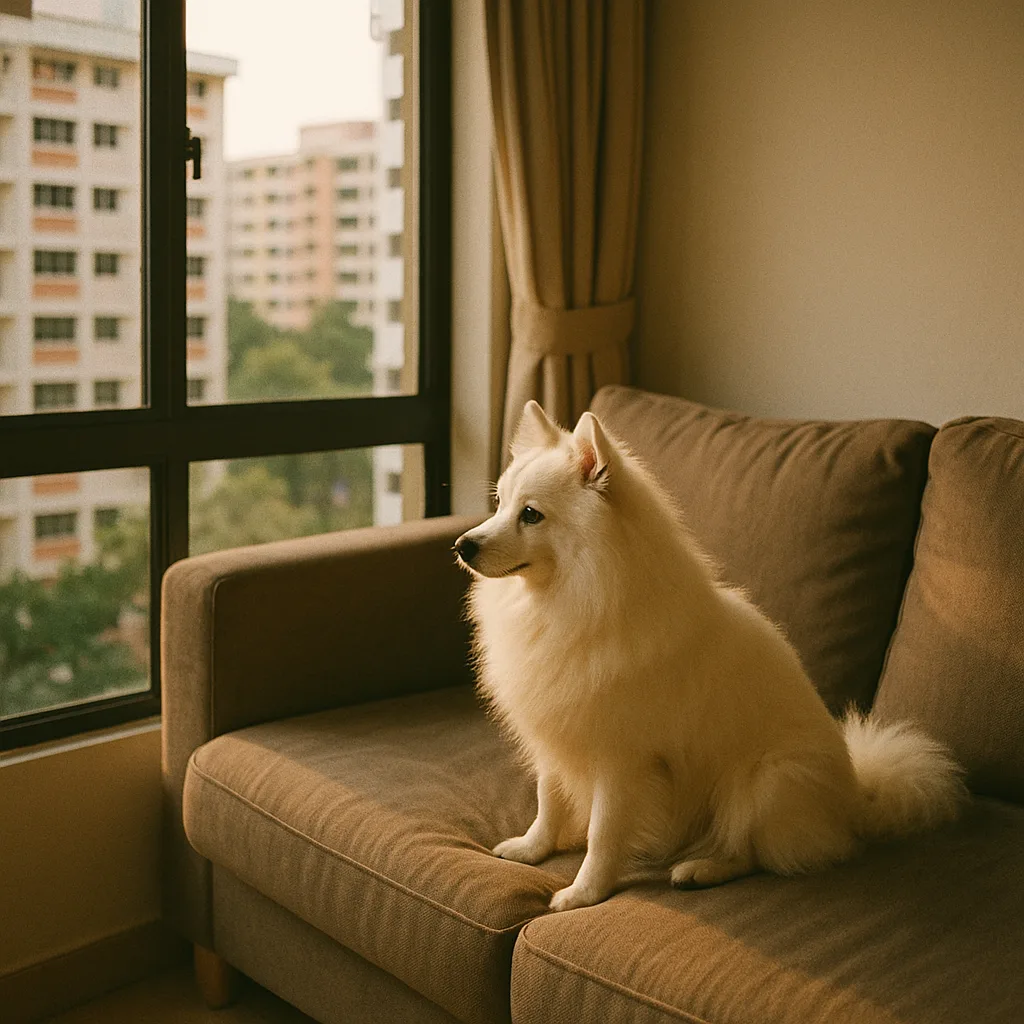
A Japanese Spitz in Singapore, the short version
The Japanese Spitz is HDB-approved and popular in Singapore for its fox-like appearance and affectionate temperament. However, its thick double coat is built for cold climates, making it one of the worst heat-tolerant breeds in the tropics. Heat tolerance is rated 1 out of 5. Air-conditioning at home is essential. Walks are limited to before 8am or after 7pm, and duration should not exceed 15 minutes. Daily brushing keeps the coat clear of dead fur and improves airflow. Patellar luxation and eye conditions are the primary health concerns. Annual vet costs typically range SGD 700 to 1,100.
Find Japanese Spitz-friendly spots in Singapore
Good spots to visit with a Japanese Spitz in Singapore.
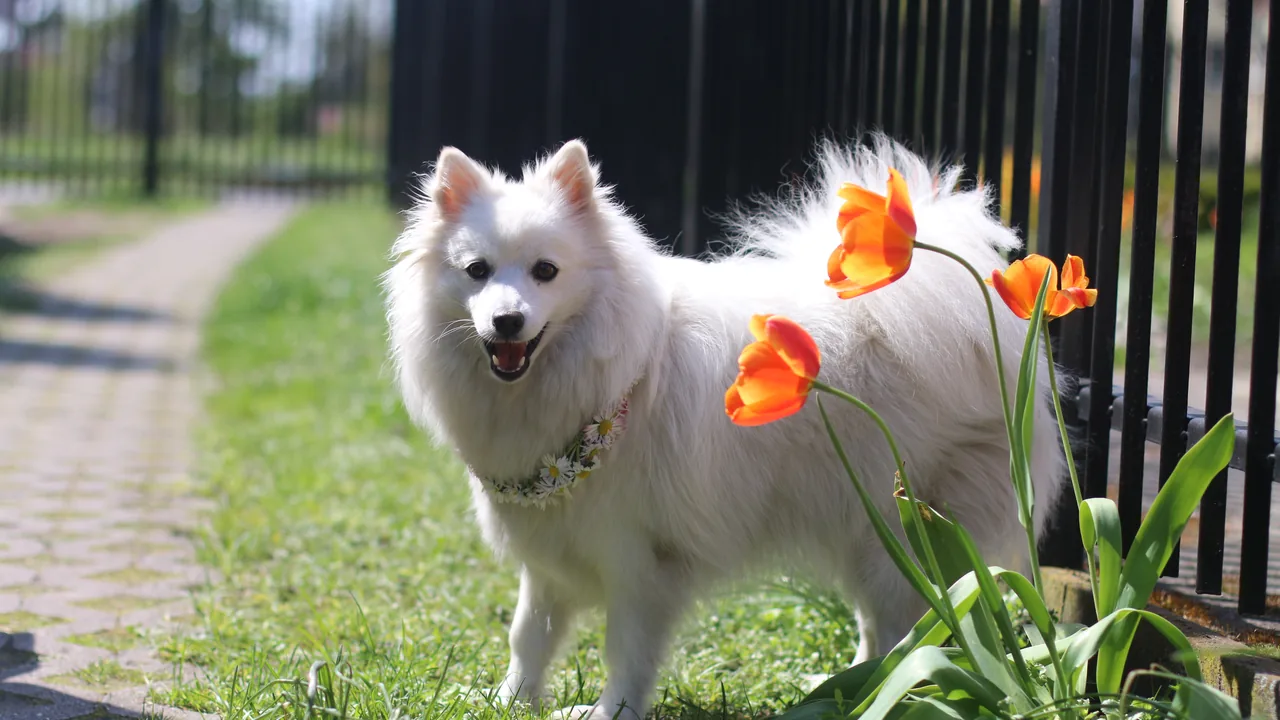 Find Your Match Meet Japanese Spitz first “I'm immaculately white, permanently tidy, and quietly judging the state of your bedroom floor” Swipe through a dating-profile-style card before you commit. Say hello →
 Breed fit quiz Does a Japanese Spitz actually suit your life? Answer a few questions about your lifestyle and see how well this breed matches your real setup. Find out →