
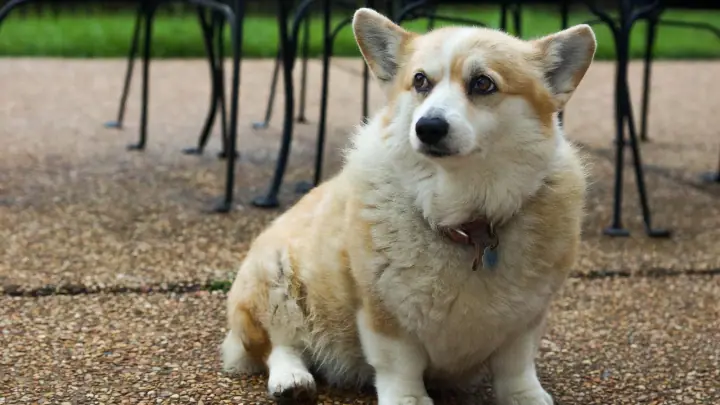
DOG BREED GUIDE · CONDO & LANDED HOMES
Last updated First published 31 May 2026
Notice one little habit together →A small idea to try, with progress kept in your Pack.
Also known as Pembroke, Corgi, Welsh Corgi.
Thinking about adopting a Pembroke Welsh Corgi?
The Pembroke Welsh Corgi's distinctive rear-end wiggle is more than a charming quirk, it's the dance of a natural leader ready to herd your family from room to room in your HDB flat.
Can a Pembroke Welsh Corgi live in an HDB flat?
NoNot on the HDB approved-breed list
Not on HDB's approved small-breed list, so it cannot be kept in a flat under the standard rules.
HDB sets and maintains the approved-breed list. Check the current rules at HDB.gov.sg →
Full list of HDB-approved breeds on this site →At a glance
- Size category
- Medium
- Weight
- 10 to 14 kg
- Height
- 25 to 30 cm
- Lifespan
- 12 to 14 years
- Energy level
- ●●●●○ 4/5 (editorial, unvalidated)
- Shedding
- ●●●●● 5/5 (editorial, unvalidated)
- Heat tolerance
- ●●○○○ 2/5 (editorial, unvalidated)
- Barking
- ●●●●○ 4/5 (editorial, unvalidated)
- Trainability
- ●●●●○ 4/5 (editorial, unvalidated)
- Grooming needs
- ●●●○○ 3/5 (editorial, unvalidated)
- Origin
- Wales (Pembrokeshire, working cattle-droving dog, dating back at least a thousand years)
Editorial climate-care note
Dense double coat sheds heat poorly. Comfortable in the cool hours, best kept indoors with fans or air-con by midday.
This score is not a safe temperature or exercise limit. Any dog can develop heatstroke.
Plan activity around your dog, not a timer
A breed score cannot tell you how many minutes are safe today. Avoid hot conditions, watch your dog's breathing, and agree an activity plan with your vet.
Read PDSA's heatstroke guidance →Common health issues in Singapore's climate
Build a care budget
- Year 1
- S$3,868 to S$5,233
- Over 10 years
- S$35,793 to S$48,426
Illustrative planning assumptions for food, grooming and routine vet care, with inflation and a year-one setup uplift. These are not verified provider quotes or a lifespan prediction. Adjust the calculator to current quotes; add insurance, boarding and emergencies separately.
Run the full lifetime cost calculator →The Pembroke Welsh Corgi is a cattle-droving dog from Pembrokeshire, bred low to the ground so it could nip at a cow's heels and duck under the kick that followed. A thousand years of that work produced a dog with the brain and the stamina of a herding breed loaded onto a frame roughly a foot high. Both halves of that come with you into an HDB flat.
In Singapore the Corgi is popular, HDB-sized and photogenic, and it is also one of the breeds most often bought on the strength of a photograph. The three things worth understanding before you commit are the shedding, which is relentless, the back, which is the breed's structural weak point, and the herding brain, which needs a job or it will invent one.
Personality and temperament
A Corgi is bright, busy, opinionated and genuinely funny. This page rates trainability 4 out of 5 and energy 4 out of 5, and both are honest. The breed learns fast, enjoys working with you, and is generally sociable with children and other dogs.
The parts that catch new owners out all trace back to the job it was bred for:
- It is vocal. Barking is rated 4 out of 5. A droving dog moved cattle with its voice, and the modern version applies the same technique to the lift, the delivery rider and the neighbour's trolley. Manageable with training, not eliminable.
- It herds what is available. With no cattle in the flat, that means ankles, children and other pets. Nipping at heels is not aggression, it is the breed doing its job on the only livestock it can find, and it needs redirecting early rather than scolding.
- It needs a task. A Corgi with two walks and nothing to think about is a Corgi that finds its own entertainment, usually loudly.
- It is stubborn in a specific way. Herding dogs were bred to make decisions at a distance from the handler. Yours will occasionally weigh your instruction against its own judgement and go with its own.
The Corgi is a working dog in a small package. The size fits the flat. The brain still expects a farm.
Exercise in Singapore's climate
Heat tolerance on this page is 2 out of 5. The dense double coat sheds heat poorly, and Singapore's daily maximum of 31 to 33 degrees Celsius with average relative humidity around 82% year-round (Meteorological Service Singapore) gives the dog nowhere to recover. The Corgi is comfortable in the cool hours and best kept indoors with fans or air conditioning by midday.
Practically, that means walks in the early morning and after sunset, on grass or shaded park connector wherever possible, with water carried. Watch for panting that does not settle, drooling, or a dog that lies down and will not move on. A short-legged dog also sits closer to hot tarmac than a taller one does, so surface temperature matters more here than the air temperature suggests: press the back of your hand to the pavement for five seconds before you set off.
The harder problem is that this is a 4-out-of-5 energy dog with a narrow window in which to spend it. Two walks will not be enough on their own. Fill the gap indoors with the kind of work the breed was built for: scent games, food puzzles, a "find it" routine around the flat, short training sessions, and trick work. Twenty minutes of thinking tires a Corgi more reliably than twenty minutes of walking, and it can happen in the air conditioning at two in the afternoon.
One caution specific to the shape. Avoid repetitive jumping down from height and long flights of stairs, for reasons covered in the health section below. A Corgi will happily launch itself off the sofa all day; the joints and the spine are the ones paying for it.
Coat and grooming in the humidity
Shedding is rated 5 out of 5, the top of our scale, and no amount of grooming changes that. The Corgi carries a dense double coat over a surprisingly large body for its height, and in Singapore's stable humidity there is no clean seasonal moult, just a continuous deposit of undercoat onto every dark surface you own. Plan for it rather than fighting it.
What actually helps is raking the undercoat out rather than brushing over the top of it. An undercoat rake or deshedding tool two or three times a week removes the loose layer before it lands on the sofa, and a full groom every 8 to 10 weeks keeps it in hand. Grooming needs are rated 3 out of 5, which is moderate: this is a time cost more than a money cost.
Do not shave a Corgi for the heat. The double coat insulates in both directions and protects skin that has never had direct sun on it, and in many lines it grows back with the texture permanently altered. Ask the groomer to strip the undercoat instead.
Two humidity jobs for the weekly list: dry the coat down to the skin after rain or a bath, because a dense coat holding moisture against the skin is how hot spots start, and check the ears, which appear on this page's health-issue list for the breed.
Diet and feeding
Food runs about S$1,100 a year on this page's estimate, and weight is the single most important thing you will manage. Weight management is one of the breed's listed health issues, and it is not a cosmetic concern: a long spine between short legs is a lever, and every extra kilogram increases the load on the discs and the hips. A visibly chubby Corgi is common enough in Singapore to look normal, which is precisely the problem.
Weigh the food rather than judging by eye, set the portion with your vet against your dog's actual weight and condition rather than a breed average, and count treats as part of the daily total. You should be able to feel the ribs easily under a thin layer, and see a waist from above.
Store kibble sealed and out of direct heat, since a humid kitchen spoils dry food and draws pests faster than a temperate one, and keep fresh water available and topped up more often than a label suggests for a dog panting in this climate.
Training
Start early and be consistent, because a herding brain will fill any vacuum you leave. The three cues worth having solid before the dog is six months old are a reliable recall, a "quiet" that follows an alert bark rather than trying to prevent it, and "leave it".
Heel-nipping needs handling as a management problem, not a discipline one. The instinct fires at movement, so it turns up when children run, when someone leaves the room quickly, or at the door. Give the dog something else to do at those moments, a mat to go to or a toy to hold, and reward that instead of correcting the nip after the fact.
Two more that pay off:
- Four on the floor. Teach the dog to use a ramp or steps and to wait to be lifted rather than jumping down. This is a training job with an orthopaedic payoff, and it is much easier to install in a puppy than to retrofit at four.
- A settle. With a narrow walking window and a high-energy dog, an off switch you can ask for is worth more than any trick.
Health
The UK Kennel Club lists hip testing under the BVA/KC Hip Dysplasia Scheme as best practice before breeding Pembroke Welsh Corgis, and places the breed in Breed Watch Category 1, meaning no points of concern specific to the breed have been identified for special attention by judges beyond what the breed standard already covers. That is a comparatively clean bill next to many popular breeds, and it is worth saying so.
The condition that most deserves a Corgi owner's attention is degenerative myelopathy. The Orthopedic Foundation for Animals names Pembroke Welsh Corgis explicitly among the breeds for which the SOD1 DNA test is confirmed. OFA describes DM as a debilitating disease causing gradual paralysis, typically beginning between eight and fourteen years of age, starting with loss of coordination in the hind legs and potentially progressing to hind limb paralysis, incontinence and front limb weakness over six to twelve months. It is not a painful disease, which is both a mercy and the reason it can be mistaken for ordinary old age for too long.
The test reports three results. Normal (N/N) is two normal copies of the gene and minimal risk. Carrier (A/N) is one mutated copy, with reduced but not zero risk. At-risk (A/A) is two mutated copies and the highest risk, though OFA notes that not every A/A dog develops symptoms in its lifetime. Ask a breeder for the SOD1 results on both parents. It is a cheek swab, it is inexpensive, and there is no good reason for a serious Corgi breeder not to have done it.
This page's own health-issue flags for the breed are joint and mobility problems, weight management and ear infections. On the joints, the shape is the risk: a long back on short legs is what the breed is for, and it is also why back injuries matter here more than in a conventionally proportioned dog. The practical protections are unglamorous and effective. Keep the dog lean. Use ramps at the sofa and the bed. Discourage repeated stair descents. Take any sudden reluctance to jump, yelp on being lifted, or wobble in the back end to a vet the same day rather than watching it over a weekend.
None of this replaces your vet's assessment of your own dog.
Housing and space in Singapore
The Pembroke Welsh Corgi is not on HDB's published list of approved breeds for flats. There is no weight to come in under here, because the list names breeds rather than setting a size test. Confirm the current position with HDB before you commit to a puppy rather than relying on a breeder's assurance, since HDB maintains and updates the list.
Ownership limits come from AVS rather than HDB. Under AVS's rules, an HDB flat may keep a maximum of one dog of an approved small breed plus up to two cats, and no dog on the Specified dogs list; private property may keep up to three cats or dogs in combination. Every dog needs an AVS licence. Licence fees depend on sterilisation status, age and the number of pets. One-time and three-year licences are different options. Check the current AVS fee table before paying.
Inside the flat, the layout matters more than the floor area. Ramps or steps at every piece of furniture the dog uses, a non-slip runner on smooth tile where the dog turns at speed, and somewhere cool to lie through the afternoon. Slippery floors are an underrated hazard for a dog built like this.
Care and cost in Singapore
On this page's figures, budget around S$1,100 a year for food, S$900 for grooming and S$1,500 for routine veterinary care. The grooming line is lower than the doodle crosses because most of the work is home brushing rather than salon time; the trade is that you are doing it two or three times a week for the dog's whole life. Run the full ten-year picture with the cost calculator.
Getting a Pembroke Welsh Corgi: buying and adoption
If you are buying, ask for the breeder's AVS dog farm licence number, hip scores on both parents, and the SOD1 degenerative myelopathy result on both parents. That last one is the question that separates a breeder who has read the research from one who has not. A responsible breeder will produce the paperwork rather than describe it, and will ask you as many questions as you ask them.
Ask to see the parents move, and ask their adult weights. Watch out for anyone marketing "fluffy" Corgis at a premium: the long-coated variant occurs naturally in the breed, it is a coat type rather than a rarity, and a price built on it tells you what the breeder is optimising for.
Adoption is worth checking seriously. Corgis and Corgi crosses turn up through SOSD, Causes for Animals and Mercylight, often surrendered once the shedding or the noise turned out to be more than a first owner expected. A small Corgi cross that qualifies can route through Project ADORE. An adult also arrives with its temperament, its weight and its back already visible.
What to skip: any Corgi imported from Malaysia or Indonesia at below local pricing. The saving does not cover the screening that was not done, and on a breed where the two things to test for are hips and SOD1, undocumented parents are the whole risk.
Life stages: puppy to senior
Puppy, to about 12 months. Protect the back and build the brain. No repeated jumping down from furniture, ramps from day one, and self-paced play rather than forced exercise on hard surfaces while the growth plates are open. Socialise deliberately, start the "quiet" cue at around week ten, and redirect heel-nipping from the first time it happens rather than waiting to see whether it passes.
Adolescent, roughly 9 to 18 months. The herding brain comes fully online and the dog starts testing which of your instructions are negotiable. Recall usually gets worse before it gets better. Increase the mental work rather than the physical, keep the rules consistent, and expect the adult coat to arrive with a shedding step-change.
Adult, roughly 2 to 8 years. The good years. Hold the weight steady, keep the undercoat raked, keep the ramps in use even though the dog can manage without them, and keep the ears on the weekly check. Insurance is cheapest and most useful arranged before anything has presented.
Senior, from about 9 years. Lifespan on this page is 12 to 14 years. This is the window in which degenerative myelopathy typically begins, so treat any new scuffing of the back feet, crossing of the hind legs, or difficulty getting up as a reason to see the vet rather than a sign the dog is slowing down. Early DM is painless and easy to dismiss. Move to twice-yearly checks, add non-slip surfaces where the dog walks most, keep the weight down harder than ever because the hind end is now carrying less, and shorten walks to suit the dog. A harness with a rear handle is worth buying before you need it.
See dog-friendly cafes and parks in your region → | Run the 10-year cost of a Pembroke Welsh Corgi in Singapore →
Three things to know
-
Ask for the SOD1 result, on both parents
Degenerative myelopathy is the condition most worth screening in this breed, OFA confirms the test for Pembroke Welsh Corgis, and it costs a cheek swab. A breeder who cannot produce it has not done the homework.
-
The shedding is not manageable, only survivable
Rated 5 out of 5, with no clean seasonal break in this climate. Rake the undercoat two or three times a week and buy the vacuum you were putting off. Never shave the coat for the heat.
-
Keep the dog lean and off the furniture leap
A long back on short legs is a lever, and weight plus jumping is what breaks it. Ramps, non-slip floors and an honest look at the waistline do more for this breed than any supplement.
Annual cost in Singapore
Editable planning estimates, not verified provider quotes or a prediction of your dog's bills. Boarding, one-off equipment and emergencies are additional.
- Food
- S$1,100
- Grooming
- S$900
- Routine vet
- S$1,500
- Sum of the three
- S$3,500/year
Run the lifetime cost calculator →
Get a current insurance quote for your dog's age and circumstances. Compare exclusions, waiting periods, excess and cover limits. Compare policy questions here →
Frequently asked questions
Is a Pembroke Welsh Corgi HDB-approved in Singapore?
No. The Pembroke Welsh Corgi is not on the HDB approved-breed list, so under current rules it cannot be kept in an HDB flat. It may still suit private housing. Always check the latest HDB and AVS guidance.
Do Pembroke Welsh Corgis bark a lot?
Our current barking assessment is: is fairly vocal (editorial estimate). It has not been independently validated. Ask about this dog's observed behaviour, triggers and time alone; the breed label cannot predict your neighbour's experience.
How much grooming does a Pembroke Welsh Corgi need?
Our current grooming assessment is: needs moderate grooming (editorial estimate). Confirm the individual coat-care routine and any professional grooming with the rescue, groomer or vet. The score is not a measured frequency or price.
How does a Pembroke Welsh Corgi cope with Singapore's heat?
An editorial heat score cannot establish a safe temperature or walk duration for an individual dog. Activity, humidity, health, age and body shape matter. Avoid hot conditions, provide shade and water, and ask your vet about an appropriate activity plan.
Is a Pembroke Welsh Corgi a good breed for a first-time owner?
Our household-fit note is: Editorial: may suit. This is not a validated prediction. Assess the individual dog, your daily capacity, training support and known care needs before deciding.
How much does a Pembroke Welsh Corgi cost to keep in Singapore?
The stored planning assumption is S$3,500 a year for food, grooming and routine veterinary care. It is not a verified typical cost for this breed. Replace it with current quotes and your own usage; add setup, licensing, insurance if chosen, boarding and emergency savings separately.
Other medium breeds to consider

Community
Meet 1 Pembroke Welsh Corgi living in Singapore

A Pembroke Welsh Corgi in Singapore, the short version
A Pembroke Welsh Corgi is not on HDB's list of approved breeds for flats. In a condo or landed home it copes well given its moderate size, though it carries more energy than its short legs suggest. Its dense double coat holds heat, so exercise works best in the early morning or evening rather than midday. The breed's long back is a genuine structural concern, jumping on and off furniture repeatedly can contribute to spinal issues over time, which matters more in a flat with limited floor space to run rather than jump. HDB and condo living both work, provided the owner manages weight carefully, since this breed gains it easily and that adds strain to an already vulnerable spine.
Pembroke Welsh Corgi vs...
Deciding between two breeds? See them side by side.
Find Pembroke Welsh Corgi-friendly spots in Singapore
High-energy breed, so these outdoor venues give Pembroke Welsh Corgis the space they need.
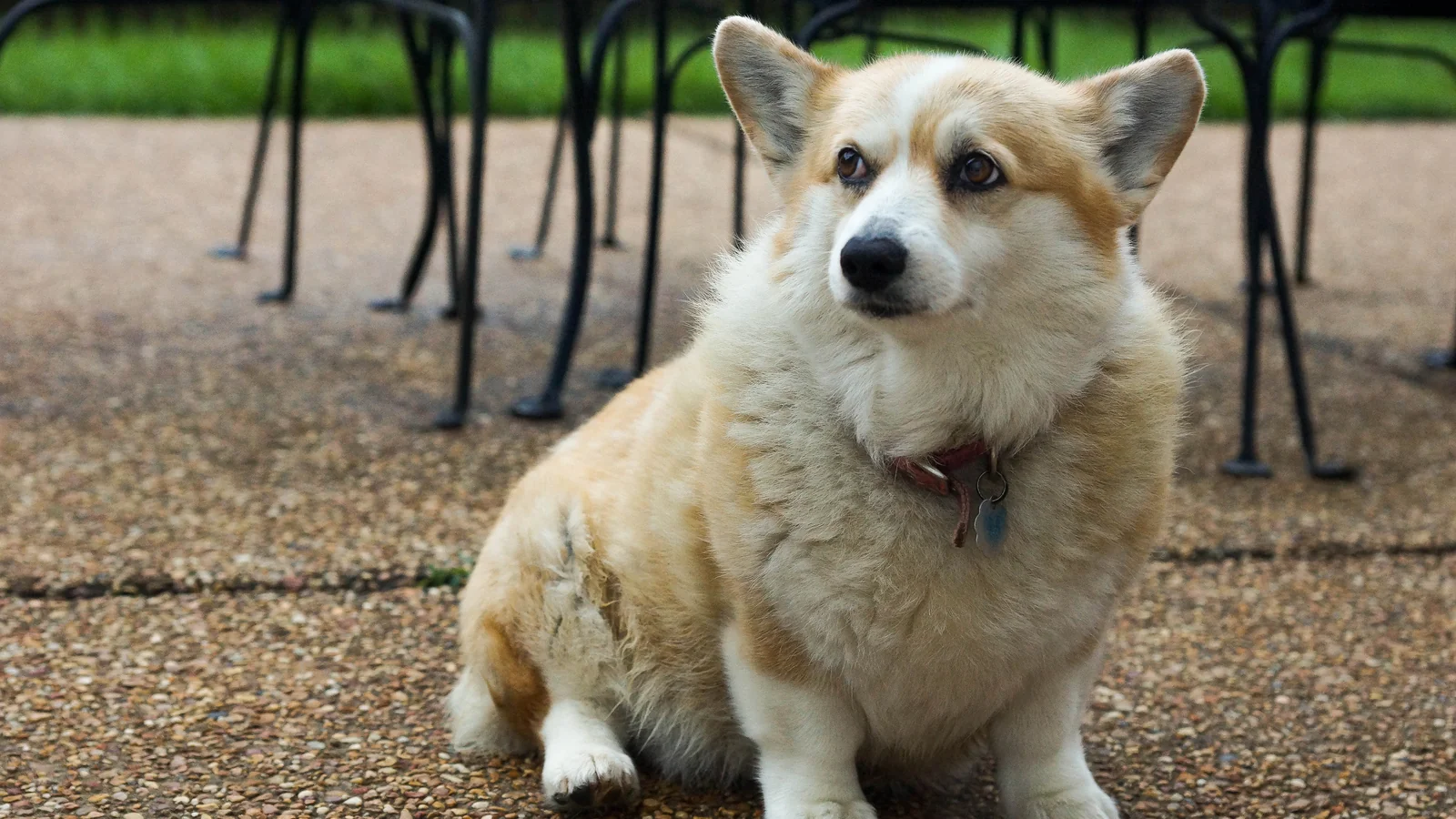 Find Your Match Meet Pembroke Welsh Corgi first “I've got the legs of a much smaller dog and the confidence of a much bigger one” Swipe through a dating-profile-style card before you commit. Say hello →
 Breed fit quiz Does a Pembroke Welsh Corgi actually suit your life? Answer a few questions about your lifestyle and see how well this breed matches your real setup. Find out →