

DOG BREED GUIDE · CONDO & LANDED HOMES
Last updated First published 31 May 2026
Notice one little habit together →A small idea to try, with progress kept in your Pack.
Also known as American Cocker Spaniel, English Cocker Spaniel, Cocker.
Thinking about adopting a Cocker Spaniel?
The Cocker Spaniel's luxurious ears are perfectly designed to catch every crumb of your breakfast, or perhaps just the humidity of a Singapore summer.
Can a Cocker Spaniel live in an HDB flat?
PotentiallyRetired K-9 scheme exception only
Not on the standard HDB approved-breed list. AVS permits eligible retired sniffer dogs of this breed through the K-9 Scheme under Project ADORE. This does not cover every rescue dog or an ordinary puppy. Confirm the individual dog through the relevant K-9 adoption scheme before committing.
HDB sets and maintains the approved-breed list. Check the current rules at HDB.gov.sg → Check AVS K-9 Scheme eligibility →
Full list of HDB-approved breeds on this site →At a glance
- Size category
- Medium
- Weight
- 7 to 14 kg
- Height
- 34 to 41 cm
- Lifespan
- 12 to 15 years
- Energy level
- ●●●●○ 4/5 (editorial, unvalidated)
- Shedding
- ●●●●○ 4/5 (editorial, unvalidated)
- Heat tolerance
- ●●○○○ 2/5 (editorial, unvalidated)
- Barking
- ●●●○○ 3/5 (editorial, unvalidated)
- Trainability
- ●●●●○ 4/5 (editorial, unvalidated)
- Grooming needs
- ●●●●● 5/5 (editorial, unvalidated)
- Origin
- England and United States (English Cocker formally separated from American Cocker in 1946)
Editorial climate-care note
Heat tolerance rated 2 out of 5. The Cocker Spaniel's long, silky, dense coat is ill-suited to Singapore's 28 to 32 degrees Celsius heat and high humidity. Ear canals are especially prone to infection in the humid climate. Walk only before 8am or after 7pm, and schedule grooming every 6 to 8 weeks to keep the coat manageable and reduce skin issues.
This score is not a safe temperature or exercise limit. Any dog can develop heatstroke.
Plan activity around your dog, not a timer
A breed score cannot tell you how many minutes are safe today. Avoid hot conditions, watch your dog's breathing, and agree an activity plan with your vet.
Read PDSA's heatstroke guidance →Common health issues in Singapore's climate
Build a care budget
- Year 1
- S$4,420 to S$5,980
- Over 10 years
- S$40,907 to S$55,344
Illustrative planning assumptions for food, grooming and routine vet care, with inflation and a year-one setup uplift. These are not verified provider quotes or a lifespan prediction. Adjust the calculator to current quotes; add insurance, boarding and emergencies separately.
Run the full lifetime cost calculator →There is a correction to make at the top of this page, because the previous version of it got this wrong and somebody may have acted on it. The Cocker Spaniel is not on HDB's list of approved breeds for flats. Neither the English nor the American Cocker appears on it. There is no weight to come in under, because the list names breeds rather than setting a size test.
That rules the breed out for most Singapore households, which is a shame, because in a condominium or a landed home with someone around during the day, a Cocker is one of the warmest, most companionable dogs you can live with. It also has ears that this climate treats as a personal challenge.
Personality and temperament
Cockers are affectionate to a degree that surprises people who have not lived with one. This is a breed developed to work closely with a person all day and then sit on them all evening, and both halves remain.
Trainability is rated 4 out of 5 and beginner friendliness is high. It is rated good with children and good with other dogs. Barking is rated 3 out of 5, moderate.
Energy is rated 4 out of 5, which is the number people underestimate because of the soft face. This is a working gundog. A Cocker that does not get real exercise and real nose work becomes anxious and noisy rather than merely bored.
The other thing to know is the attachment. Cockers do not do well left alone for long days, and separation problems are among the most common behavioural complaints in the breed.
Exercise in Singapore's climate
Heat tolerance is rated 2 out of 5. The Cocker's coat is long, silky and dense, with feathering on the ears, chest, legs and belly, and it was developed for working through cold wet undergrowth rather than for a daily maximum of 31 to 33 degrees Celsius with average relative humidity around 82% year round (Meteorological Service Singapore).
An adult needs an hour a day, split into two, and all of it before 8am and after 8pm. On grass and shaded park connectors rather than pavement that has been storing heat since noon.
Then use the nose, which is the most satisfying thing you can do for this breed and the most underused. A Cocker was bred to quarter ground and flush game, and scatter-feeding, hidden toys and simple scent trails tap directly into that. Twenty minutes of searching settles a Cocker in a way that another twenty minutes of walking does not, and it can happen indoors in the middle of the day.
Swimming, if you have access to it, suits the breed and the climate equally well. Dry the ears afterwards, thoroughly, for reasons that are about to become the theme of this page.
Coat and grooming in the humidity
Grooming needs are rated 5 out of 5, the top of the scale, at about S$1,500 a year, and shedding is rated 4 out of 5. That is an unusual combination, high maintenance and high shedding, and it is an honest description of what this coat asks for.
Brush and comb several times a week, to the skin, concentrating on the feathering behind the ears, under the front legs, on the belly and around the back end, which is where mats form first. Book a groom every six to eight weeks and keep the feathering short and practical rather than long and traditional. There is no season in Singapore that rewards coat length on a working dog.
Then the ears, which deserve their own paragraph because ear infections lead this page's health-issue list and they are the single most common reason a Cocker in Singapore visits the vet.
The anatomy is against the dog here. A long heavy ear leather hangs over the canal and seals it, hair grows inside, and the whole arrangement traps warmth and moisture. Add 82% humidity and a dog that likes water, and you have a near-perfect environment for infection. The routine that prevents most of it is dull and effective: lift and look inside both ears at least weekly, dry them properly after every bath, swim or wet walk, keep the hair around the opening trimmed, and ask your vet which cleaner they want you to use rather than choosing one yourself. A head shake, an odour, redness or scratching at the ear is a vet visit, not a wait, because ear disease in this breed becomes chronic quickly and chronic ear disease is expensive and painful.
Diet and feeding
Food runs about S$1,100 a year. Weight management is on this page's health-issue list, and Cockers are enthusiastic eaters with expressive faces, which is a difficult combination for owners.
Weigh the food, count treats inside the daily total, and ask your vet to body-condition score at every visit. Joint mobility and arthritis are both on this page's list, so keeping the dog lean is orthopaedic care rather than vanity.
Itchy skin and allergies also appear. Resist rotating foods hopefully at the first sign of scratching, because it makes the picture harder for your vet to read, and in this climate most itch is environmental or moisture-related rather than dietary. If diet is genuinely suspected, ask about a properly run elimination trial.
Training
A willing, soft-natured gundog trains beautifully on encouragement and shuts down under pressure. Priorities:
- Handling tolerance, especially ears, from week ten. This dog will have its ears lifted, inspected, dried and quite possibly medicated every week for fifteen years. A Cocker that finds that normal gets better care and cheaper care than one that fights it. This is the highest-value training on the breed.
- Time alone, practised deliberately. Build it in minutes, early. Separation is this breed's main behavioural vulnerability.
- Nose work as a routine. Not a trick. It is how you meet a gundog's needs in a climate that caps its walking.
- Recall. A dog bred to range ahead and follow scent needs a properly built recall.
Health
The UK Kennel Club recommends eye testing, including gonioscopy for PLA, using the BVA/KC/ISDS Eye Scheme, and hip testing for hip dysplasia using the BVA/KC Hip Dysplasia Scheme. It also lists DNA tests for acral mutilation syndrome (AMS), progressive retinal atrophy (prcd-PRA), adult-onset neuropathy (AON) and familial nephropathy (FN). It places the Cocker Spaniel in Breed Watch Category 1, and states that "currently no points of concern specific to this breed have been identified for special attention by judges, other than those covered routinely by The Kennel Club's breed standard".
Four named DNA tests plus two schemes is a substantial list, and the good news in that is that each named test is a solved problem a responsible breeder can simply avoid producing. Ask for all four results plus the eye and hip paperwork on both parents, and read them.
Familial nephropathy is worth understanding rather than skimming past, because it is a kidney disease that affects young dogs, and a DNA test that costs a breeder very little prevents it entirely. There is no acceptable reason for that result to be missing in 2026.
Beyond screening, this page lists ear infections, eye conditions, itchy skin, allergies, dental health, joint mobility, heart conditions, weight management and arthritis. It is a long list for a fundamentally sound breed, and the first one is the one that will define your week-to-week experience, which is why it got its own treatment in the grooming section above.
Routine veterinary care runs about S$1,400 a year, and recurrent ear disease is the line most likely to push it higher. Arrange insurance in the first weeks, before any ear or skin note is on a clinical record to be written back as an exclusion, because on this breed an ear exclusion removes most of the value of the policy. None of this replaces your own vet's assessment of your own dog.
Housing and space in Singapore
Neither the English nor the American Cocker Spaniel appears on HDB's published list of approved breeds for flats, which runs to 61 named breeds plus a cross of any two of them. That means a flat is not an option regardless of the individual dog's size or temperament, and it also means a Cockapoo does not qualify by the cross route, because a cross needs both parents on the list.
Confirm the current position with HDB before you commit, since HDB maintains and updates the list, and treat any seller who assures you a Cocker is fine in an HDB flat as someone to walk away from.
Ownership limits come from AVS rather than HDB. Under AVS's rules, an HDB flat may keep a maximum of one dog of an approved small breed plus up to two cats, and no dog on the Specified dogs list; private property may keep up to three cats or dogs in combination. Every dog needs an AVS licence. Licence fees depend on sterilisation status, age and the number of pets. One-time and three-year licences are different options. Check the current AVS fee table before paying.
In a condo or landed home, give the dog a cool tiled place to lie out of the afternoon sun, and think about company: this is a breed that does much better in a household where somebody is usually around.
Care and cost in Singapore
On this page's figures: about S$1,100 a year for food, S$1,500 for grooming and S$1,400 for routine veterinary care. Grooming is the largest line, and skipping it produces matting and ear problems that cost more than the appointments. Run the ten-year picture with the cost calculator.
Getting a Cocker Spaniel: buying and adoption
Ask for the AVS dog farm licence number, hip scores, eye certificates including gonioscopy, and the four DNA results named above for both parents.
Ask about ears specifically: whether either parent has been treated for ear disease, whether previous litters have, and what the breeder does about it. Ear trouble in this breed is partly anatomy and partly line, and a breeder who has never been asked will tell you a great deal by how they answer.
Ask which type you are looking at. Working-line Cockers are typically lighter, faster and more driven; show lines are heavier with more coat and more ear. Neither is better, but in this climate more coat and more ear is more work, and more drive is more exercise you have to find in the dark.
Adoption is realistic and worth checking. Cockers and Cocker crosses come through SOSD, Causes for Animals and Mercylight, and chronic ear disease is a recurring surrender reason, which is worth reading carefully rather than as a warning: an adult arrives with its ear history visible, which on this breed is more useful than a puppy's blank slate.
Life stages: puppy to senior
Puppy, to about 12 months. Start the weekly ear routine in week ten, before there is anything wrong, so the dog learns it as ordinary. Begin daily tooth brushing. Practise being alone in short doses. Grow the dog steadily and keep it lean, and get insurance in force early, before the ears have any history.
Adolescent, roughly 9 to 18 months. The adult coat and full feathering arrive and grooming demand climbs sharply. Energy peaks. This is also when the first ear infection typically appears, and how you handle it matters: treat it fully and follow through rather than stopping when the dog seems better, because half-treated ear disease is how the chronic version begins.
Adult, roughly 2 to 9 years. Steady state: ears weekly, coat on schedule, weight held, exercise in the cool hours, nose work daily. Keep the dog company.
Senior, from about 10 years. Lifespan here is 12 to 15 years. Move to twice-yearly vet visits and ask for the heart to be listened to at each, since heart conditions are on this page's list. Arthritis is too, so watch for stiffness and reluctance on stairs and raise it rather than filing it under age. Keep the coat shorter for comfort and the ears just as clean, because older ears do not get easier.
See dog-friendly cafes and parks in your region → | Run the 10-year cost of a Cocker Spaniel in Singapore →
Three things to know
-
It cannot live in an HDB flat, and an earlier version of this page said otherwise
Neither the English nor the American Cocker is on HDB's list of 61 named breeds, and there is no size test to pass. This also rules out the Cockapoo by the cross route, since both parents must be on the list.
-
The ears are the whole maintenance story
Ear infections lead this page's health list, and a heavy ear leather over a hair-filled canal in 82% humidity is close to a designed incubator. Look inside weekly, dry after every swim and bath, and treat a head shake or an odour as a vet visit rather than a wait.
-
Ask for all four DNA tests, especially familial nephropathy
The Kennel Club lists AMS, prcd-PRA, AON and FN alongside eye and hip schemes. FN is a kidney disease of young dogs that a cheap test prevents outright, so a missing result is the end of the conversation.
Annual cost in Singapore
Editable planning estimates, not verified provider quotes or a prediction of your dog's bills. Boarding, one-off equipment and emergencies are additional.
- Food
- S$1,100
- Grooming
- S$1,500
- Routine vet
- S$1,400
- Sum of the three
- S$4,000/year
Run the lifetime cost calculator →
Get a current insurance quote for your dog's age and circumstances. Compare exclusions, waiting periods, excess and cover limits. Compare policy questions here →
Frequently asked questions
Is a Cocker Spaniel HDB-approved in Singapore?
No. The Cocker Spaniel is not on the HDB approved-breed list, so under current rules it cannot be kept in an HDB flat. It may still suit private housing. Always check the latest HDB and AVS guidance.
Do Cocker Spaniels bark a lot?
Our current barking assessment is: has a moderate bark (editorial estimate). It has not been independently validated. Ask about this dog's observed behaviour, triggers and time alone; the breed label cannot predict your neighbour's experience.
How much grooming does a Cocker Spaniel need?
Our current grooming assessment is: needs a lot of grooming, including regular professional trims (editorial estimate). Confirm the individual coat-care routine and any professional grooming with the rescue, groomer or vet. The score is not a measured frequency or price.
How does a Cocker Spaniel cope with Singapore's heat?
An editorial heat score cannot establish a safe temperature or walk duration for an individual dog. Activity, humidity, health, age and body shape matter. Avoid hot conditions, provide shade and water, and ask your vet about an appropriate activity plan.
Is a Cocker Spaniel a good breed for a first-time owner?
Our household-fit note is: Editorial: may suit. This is not a validated prediction. Assess the individual dog, your daily capacity, training support and known care needs before deciding.
How much does a Cocker Spaniel cost to keep in Singapore?
The stored planning assumption is S$4,000 a year for food, grooming and routine veterinary care. It is not a verified typical cost for this breed. Replace it with current quotes and your own usage; add setup, licensing, insurance if chosen, boarding and emergency savings separately.
Other medium breeds to consider



A Cocker Spaniel in Singapore, the short version
The Cocker Spaniel is not on HDB's list of approved breeds for flats, though it is a popular family dog in Singapore condos and landed homes. Its silky, long coat and floppy ears are charming but require significant maintenance in the humid tropical climate, and professional grooming every 6 to 8 weeks is essential, and ear checks must be weekly as moisture trapped in the ear canals leads rapidly to infection. Walks should be timed before 8am or after 7pm. The breed is friendly, affectionate, and adapts well to apartment life. Eye conditions and joint health should be monitored through annual vet visits. Annual vet and grooming costs typically total SGD 1,500 to 2,500.
Cocker Spaniel vs...
Deciding between two breeds? See them side by side.
Find Cocker Spaniel-friendly spots in Singapore
High-energy breed, so these outdoor venues give Cocker Spaniels the space they need.
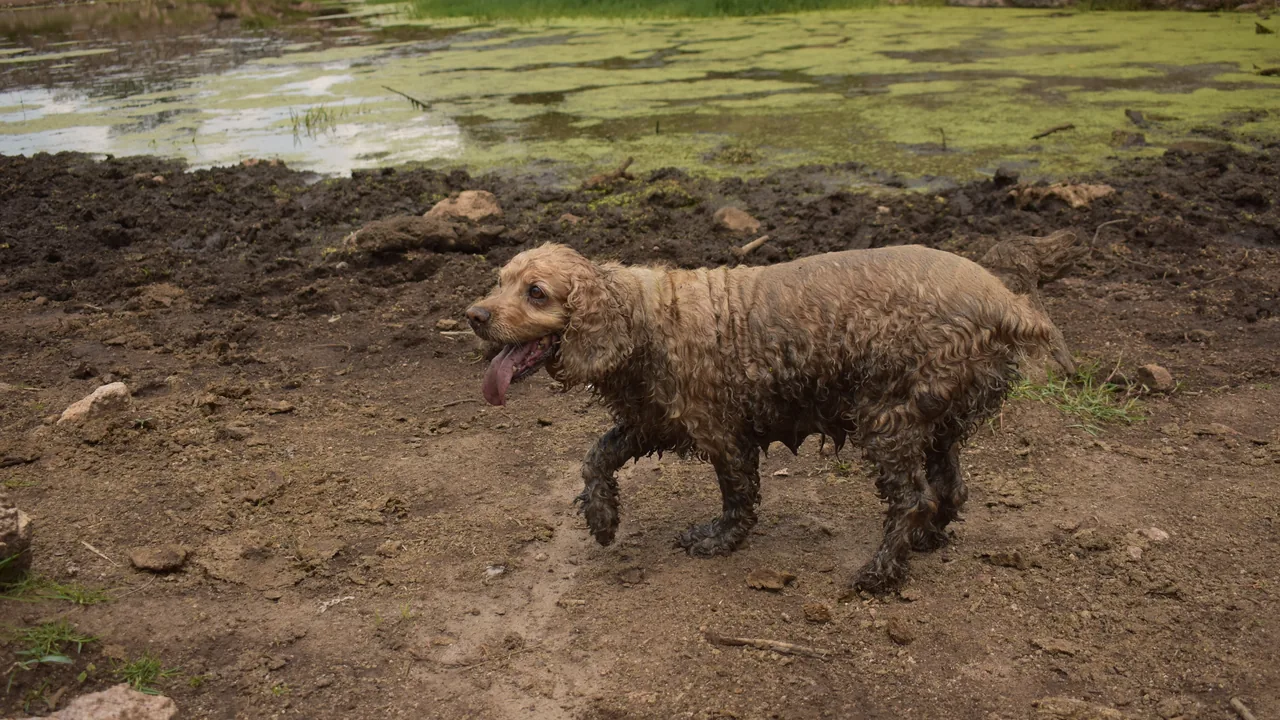 Find Your Match Meet Cocker Spaniel first “I've got the kind of eyes that have gotten dogs out of actual trouble for centuries” Swipe through a dating-profile-style card before you commit. Say hello →
 Breed fit quiz Does a Cocker Spaniel actually suit your life? Answer a few questions about your lifestyle and see how well this breed matches your real setup. Find out →