

HDB-APPROVED · DOG BREED GUIDE
Last updated First published 31 May 2026
Notice one little habit together →A small idea to try, with progress kept in your Pack.
Also known as Short-Haired Skye Terrier (historic), Toto (cultural).
Thinking about adopting a Cairn Terrier?
A Cairn Terrier will dig a trench in your flowerbed with the zeal of a Scotsman searching for lost treasure, a trait less charming when it uncovers the irrigation system.
Can a Cairn Terrier live in an HDB flat?
YesOn the HDB approved-breed list
Named on HDB's approved small-breed list for flats. Check any listed variety restrictions and confirm the individual dog before committing.
HDB sets and maintains the approved-breed list. Check the current rules at HDB.gov.sg →
Full list of HDB-approved breeds on this site →At a glance
- Size category
- Small
- Weight
- 6 to 8 kg
- Height
- 23 to 30 cm
- Lifespan
- 13 to 15 years
- Energy level
- ●●●●○ 4/5 (editorial, unvalidated)
- Shedding
- ●●○○○ 2/5 (editorial, unvalidated)
- Heat tolerance
- ●●○○○ 2/5 (editorial, unvalidated)
- Barking
- ●●●●○ 4/5 (editorial, unvalidated)
- Trainability
- ●●●○○ 3/5 (editorial, unvalidated)
- Grooming needs
- ●●●○○ 3/5 (editorial, unvalidated)
- Origin
- Scotland (Isle of Skye and the Western Highlands, working line dating back centuries)
Editorial climate-care note
Heat tolerance rated 2 out of 5. The Cairn Terrier's dense double coat provides excellent weather protection but traps heat in Singapore's 28 to 32 degrees Celsius climate. Limit walks to early morning before 8am or evening after 7pm, keep sessions brief, and always provide shade and water. Ensure the home is well air-conditioned.
This score is not a safe temperature or exercise limit. Any dog can develop heatstroke.
Plan activity around your dog, not a timer
A breed score cannot tell you how many minutes are safe today. Avoid hot conditions, watch your dog's breathing, and agree an activity plan with your vet.
Read PDSA's heatstroke guidance →Common health issues in Singapore's climate
Build a care budget
- Year 1
- S$3,426 to S$4,635
- Over 10 years
- S$31,703 to S$42,892
Illustrative planning assumptions for food, grooming and routine vet care, with inflation and a year-one setup uplift. These are not verified provider quotes or a lifespan prediction. Adjust the calculator to current quotes; add insurance, boarding and emergencies separately.
Run the full lifetime cost calculator →The Cairn Terrier is one of the oldest working terrier breeds in Britain, developed on the Isle of Skye and the Western Highlands to hunt vermin among the region's stone cairns. It's small, weather-resistant and fearless, and it's the breed that played Toto in The Wizard of Oz, about as much mainstream recognition as a terrier has ever had. In Singapore it's a less common choice than some of the other small terriers, and the honest version of what it's like to keep one here, in a flat, in this heat, is worth reading before you commit.
Temperament: what a Cairn Terrier is actually like to live with
The American Kennel Club describes the breed as "happy, busy little earthdogs", and that's a fair summary of daily life with one. A Cairn is a working terrier in a small body, and the temperament doesn't shrink to match the size. Expect a dog that's busy, curious, food motivated and vocal: barking at the lift doors, at delivery riders, at anything that moves oddly on the other side of a gate. That vocal streak is part of the breed, not a training failure you can fully engineer away, though consistent management helps.
Digging is the other constant. A Cairn was bred to find and dig out vermin from stone enclosures, and that instinct doesn't know the difference between a Scottish hillside and a flowerbed, a sofa cushion or the gap under a kitchen cabinet. Prey drive follows the same logic. Cats, hamsters, the neighbour's koi, geckos on the wall: to a Cairn these register as legitimate targets, not household fixtures. Recall that holds up against that instinct is hard won and needs years of reinforcement, not a few weeks of puppy class. Treat lead-on as the default in any space that isn't fully enclosed, and don't assume a well-behaved leash walk means a well-behaved off-leash dog.
The breed generally does well with children, but it's less reliably easy around unfamiliar dogs, and introductions in tight, shared spaces like lifts and corridors are worth managing rather than leaving to chance. None of this makes a Cairn a difficult dog exactly, but it does make it a poor match for an owner who wants a low-maintenance first dog that keeps itself occupied.
Exercise in Singapore's heat and humidity
Singapore's daily temperatures typically run from a night-time low around 23 to 25 degrees Celsius up to a daytime high around 31 to 33 degrees, with mean relative humidity around 82 percent overall and above 90 percent in the early morning, according to the Meteorological Service Singapore. A Cairn's double coat, built for a Scottish climate rather than this one, insulates well but doesn't shed heat efficiently, and the breed won't reliably self-limit when it's overheating. That combination puts the responsibility for pacing exercise on you, not the dog.
Walk before 8am or after 7pm where possible, keep exertion brief and broken up rather than one long midday session, and carry water on anything over about 20 minutes. A Cairn's energy needs more than a walk to satisfy: budget for two structured outings a day, plus scent games, tug or trick training indoors during the hottest hours, and a regular trip to a secure, fenced space, such as a town council or NParks dog run, where the dog can move at full pace off lead. Because recall isn't the breed's strong suit and not every dog at a run is a known quantity, watch the first few minutes with any unfamiliar dog closely rather than assuming it'll sort itself out.
Coat and grooming in the humidity
The Cairn's coat is a harsh, weatherproof double coat: a wiry topcoat over a soft undercoat. The Royal Kennel Club's breed profile calls for more than weekly grooming to keep it in order. In Singapore's humidity, that same coat traps heat and moisture against the skin if it isn't kept up, so grooming here is doing more than cosmetic work.
There are two real routes, and the trade-off is texture against convenience, not right against wrong. Hand-stripping, pulling the dead outer coat by hand or with a stripping tool rather than cutting it, keeps the coat harsh and its weatherproofing intact, and is what the Cairn Terrier Club of America recommends to preserve coat texture. It takes longer and needs an experienced groomer. Clipping is faster and produces a softer coat that some owners find easier to maintain in the tropics, but repeated clipping over time softens the coat's texture and colour and reduces its natural weatherproofing. Neither choice is wrong; it's worth revisiting with your groomer if the coat starts looking softer or duller than you'd like.
Whichever route you take, weekly brushing through to the undercoat, not just the surface, cuts down on the matting that humidity encourages, and regular ear checks matter because damp, humid air is exactly the environment ear infections like.
Diet and feeding
Nothing about a Cairn's nutritional needs changes because it lives in Singapore, but the climate changes how you manage food day to day. Dry kibble left in a humid kitchen picks up moisture faster than it would in a temperate one, which speeds up spoilage and encourages mould. Keep it in a sealed, airtight container rather than the bag it came in, and buy in quantities you'll use up within a few weeks rather than months. Wet or fresh food spoils faster still once served, so don't leave it out in the heat.
Fresh water matters more here than in a cooler climate, simply because a dog that's panting to cool down is losing water it needs to replace; check the bowl more than once a day, especially after exercise. A Cairn is a food-motivated terrier, which makes it an easy breed to train with treats and an easy breed to accidentally overfeed, particularly once the exercise routine shifts to shorter, heat-adjusted sessions. Portion by your vet's guidance rather than by the bag's generic serving suggestion, and count treat-training rewards as part of the day's food total, not an addition to it.
Training
Trainability in this breed sits in the middle: a Cairn is smart and food motivated, which makes basic obedience and trick training genuinely enjoyable, but it's also independent by design, bred to make its own decisions when working alone underground, and that independence shows up as selective listening the moment something more interesting than you turns up.
What's easy: house manners, sit, stay, loose-lead walking on a normal walk, and anything you can shape with food rewards. What's hard: recall around any kind of movement, quiet on command once something has triggered the alarm bark, and settling around unfamiliar dogs without supervision. Short, frequent sessions work better than long ones, and starting recall and calm greetings early, before adolescence, saves a lot of frustration later. A well-socialised Cairn that's met a wide range of dogs, people and situations as a puppy is a considerably easier adult to live with than one that hasn't, given the breed's baseline wariness of the unfamiliar.
Health
Use the health information listed alongside this page as your starting checklist, and talk to your vet about what it means for your dog specifically rather than treating any of this as a diagnosis. A few of the conditions are worth understanding in more depth before you buy or adopt.
Eye conditions are common enough in the breed that the Royal Kennel Club lists eye testing under the BVA/KC/ISDS Eye Scheme as a recommended screening test for breeding Cairns. The Foundation of the Cairn Terrier Club of America's health information describes cataracts and ocular melanosis, a build-up of pigment that can reduce the eye's ability to drain fluid, as conditions seen in the breed. Ask a breeder for current eye clearance on both parents.
Cushing's syndrome and hypothyroidism are both endocrine conditions the same health information covers in Cairns: Cushing's as an excess of the hormone cortisol, hypothyroidism as underproduction of thyroid hormone. Both can develop gradually, with changes to coat, weight, energy or thirst, which is why routine vet checkups matter more than waiting for an obvious symptom.
Patellar luxation, the kneecap slipping out of its normal groove, is also listed as a Cairn health concern by the Foundation of the Cairn Terrier Club of America, and it's checked for in a standard orthopaedic exam. Ask whether a breeder's dogs have been assessed.
Gut health is worth managing proactively too: sudden diet changes are a common trigger for short-term digestive upset in terriers generally, so introduce any new food gradually, and treat ongoing vomiting, diarrhoea or appetite loss as a reason to see a vet rather than wait it out.
Dental health and weight management aren't unique to this breed, but they matter more than usual given a lifespan that regularly reaches 13 to 15 years: years of unmanaged plaque or a few extra kilograms compound in ways they wouldn't in a shorter-lived breed. Regular dental checks and portioning food to condition, not appetite, are two of the most useful habits to build early. None of this is a reason to avoid the breed; it's a reason to ask breeders the right questions, build a relationship with a vet early, and consider pet insurance before any condition becomes a pre-existing one.
Housing and space
HDB sets and maintains the list of smaller dog breeds approved for HDB flats, and the Cairn Terrier currently appears on it. HDB can revise that list, so check the current version at HDB before you commit rather than relying on this page. Separately, AVS caps ownership: an HDB flat may keep at most one dog of an approved breed plus up to two cats, while private property allows up to three dogs or cats in combination. Your address determines which limit applies to you.
Every pet dog in Singapore needs to be licensed with AVS. At the time of writing, in August 2026, licence fees for a sterilised dog run from S$15 for one year up to S$35 for three years or one-time, with a further 10 percent rebate for GIRO, online or AXS payment; unsterilised dogs cost substantially more, from S$90 for one year up to S$230 for three years or one-time. AVS has stated that dog and cat licence fees will be brought onto the same fee structure from 1 September 2026, so check the current schedule if you're licensing after that date.
A Cairn's size makes it a genuine fit for flat living, but the parts of the breed that don't show up on a floor plan, the barking and the exercise needs, are the ones your neighbours will notice first. Thin HDB walls and shared corridors make early, consistent bark management worth prioritising from week one, not something to address later.
Getting a Cairn Terrier
If you're buying from a breeder, ask for the AVS dog farm licence number, current eye clearance on both parents (the BVA/KC/ISDS Eye Scheme test referenced above is a reasonable benchmark), and an orthopaedic assessment covering the knees. Ask directly whether Cushing's syndrome or hypothyroidism has appeared in the line, and expect a breeder who takes health seriously to answer without hesitation. A written health guarantee is standard practice, not a bonus.
Adoption is a real option and worth considering before you default to buying. Small terriers do turn up in Singapore's rescue network from time to time; SOSD is a reasonable place to start, though it's worth checking directly rather than assuming a specific breed is or isn't currently available. If what you actually want is a smaller, easy-going companion rather than this specific breed, adopting a local mixed-breed dog through Project ADORE, which rehomes Singapore Special dogs in HDB flats in partnership with AVS, is also worth considering.
Be wary of anyone selling a Cairn at a premium for an unusual or rare colour: the breed standard already covers a working range of natural, earthy shades, and unusual-colour pricing is more often a marketing angle than a genuine rarity. Be equally cautious of any dog brought in informally without proper import and AVS licensing paperwork, and ask to see the dog and its documentation in person before you commit to anything.
Life stages
Puppyhood is where the breed's stubbornness shows up earliest: housetraining and basic manners take patient, consistent repetition, and it's worth starting socialisation and recall work well before the instincts described above fully switch on. Keep puppy exercise short and shaded, since a young dog's ability to self-regulate in heat is even less developed than an adult's.
Adulthood is the breed at its most energetic, and the exercise and enrichment needs described above are at their peak through these years; a bored adult Cairn is a digging, barking adult Cairn. Most of the behavioural work you put in during the first two years pays off here.
Seniors slow down gradually rather than suddenly, and the conditions covered in the health section, particularly the eye and endocrine ones, become more relevant to watch for as the dog ages. Regular vet checkups matter more in the second half of a 13 to 15 year lifespan than the first, not less.
Three things to know
-
It is a working terrier in a small body
The energy, the prey drive, and the vocalisation are baked into the breed, and they need a household ready to manage all three. Structured exercise, secure handling, and consistent training are the deal you sign for the next 13 years.
-
The health list is long rather than dramatic
The conditions tracked for this breed on this page, from patellar luxation to dental disease, are mostly manageable when they are caught early and expensive when they are not. Insurance taken out in the first months, before anything is on the record, is the decision that matters most, because a condition becomes pre-existing the moment a vet writes it down.
-
Recall is the safety system, and it is not reliable in this breed
Prey drive will override most cues in the moment. Train it for years, test it, and assume it will fail at the worst time. Lead on, double-clipped, in any space that is not enclosed.
Annual cost in Singapore
Editable planning estimates, not verified provider quotes or a prediction of your dog's bills. Boarding, one-off equipment and emergencies are additional.
- Food
- S$900
- Grooming
- S$900
- Routine vet
- S$1,300
- Sum of the three
- S$3,100/year
Run the lifetime cost calculator →
Get a current insurance quote for your dog's age and circumstances. Compare exclusions, waiting periods, excess and cover limits. Compare policy questions here →
Frequently asked questions
Is a Cairn Terrier HDB-approved in Singapore?
Yes. The Cairn Terrier is on the HDB list of breeds approved for flats. Confirm the current HDB and AVS rules before you commit, as the approved list can change.
Do Cairn Terriers bark a lot?
Our current barking assessment is: is fairly vocal (editorial estimate). It has not been independently validated. Ask about this dog's observed behaviour, triggers and time alone; the breed label cannot predict your neighbour's experience.
How much grooming does a Cairn Terrier need?
Our current grooming assessment is: needs moderate grooming (editorial estimate). Confirm the individual coat-care routine and any professional grooming with the rescue, groomer or vet. The score is not a measured frequency or price.
How does a Cairn Terrier cope with Singapore's heat?
An editorial heat score cannot establish a safe temperature or walk duration for an individual dog. Activity, humidity, health, age and body shape matter. Avoid hot conditions, provide shade and water, and ask your vet about an appropriate activity plan.
Is a Cairn Terrier a good breed for a first-time owner?
Our household-fit note is: Editorial: may need more support. This is not a validated prediction. Assess the individual dog, your daily capacity, training support and known care needs before deciding.
How much does a Cairn Terrier cost to keep in Singapore?
The stored planning assumption is S$3,100 a year for food, grooming and routine veterinary care. It is not a verified typical cost for this breed. Replace it with current quotes and your own usage; add setup, licensing, insurance if chosen, boarding and emergency savings separately.
Other small breeds to consider
A Cairn Terrier in Singapore, the short version
The Cairn Terrier is HDB-approved and compact enough for Singapore apartment living, though its double coat makes it susceptible to the tropical heat and humidity. Walks must be early morning or late evening only; the breed is spirited and needs daily exercise despite limitations. Cairn Terriers are notably prone to diabetes at elevated rates. Weight management and a controlled diet are essential. Eye conditions, dental health, and regular grooming every 8 weeks should be on every owner's checklist. They are lively, loyal, and low-shedding. Annual vet costs typically range SGD 700 to 1,100.
Find Cairn Terrier-friendly spots in Singapore
High-energy breed, so these outdoor venues give Cairn Terriers the space they need.
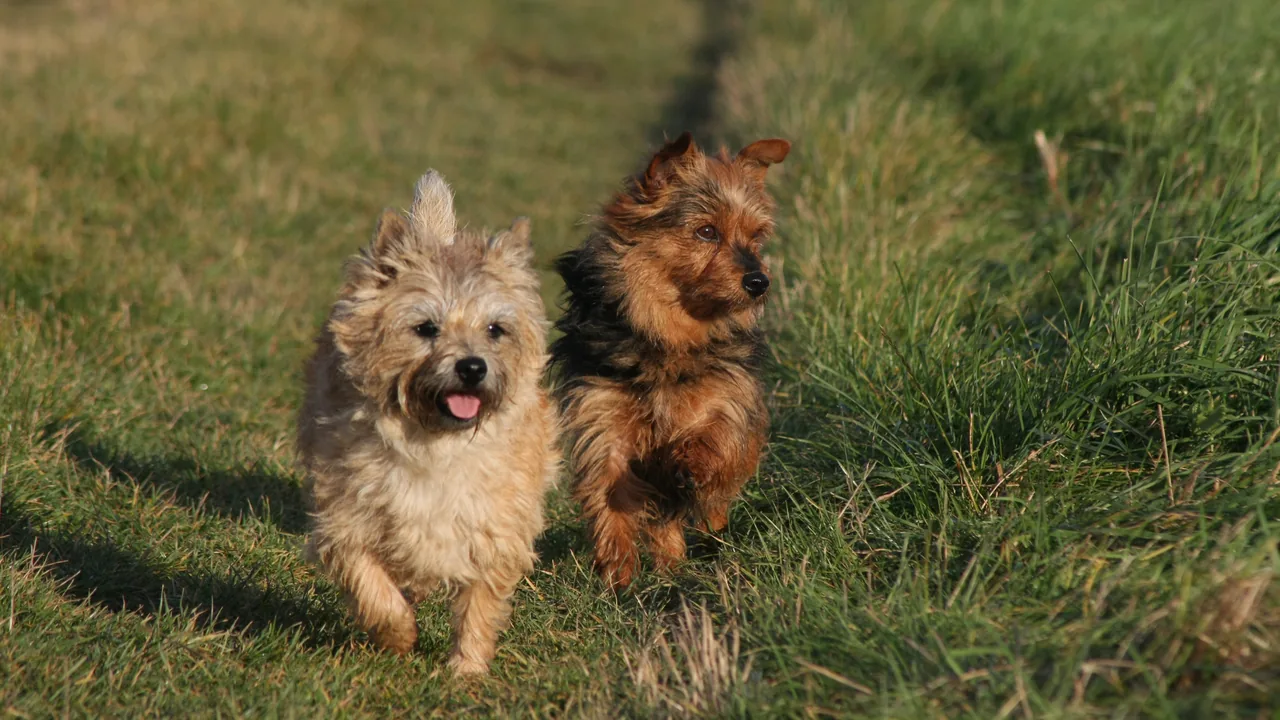 Find Your Match Meet Cairn Terrier first “I'm small, scrappy, and I've technically been in a famous movie” Swipe through a dating-profile-style card before you commit. Say hello →
 Breed fit quiz Does a Cairn Terrier actually suit your life? Answer a few questions about your lifestyle and see how well this breed matches your real setup. Find out →