
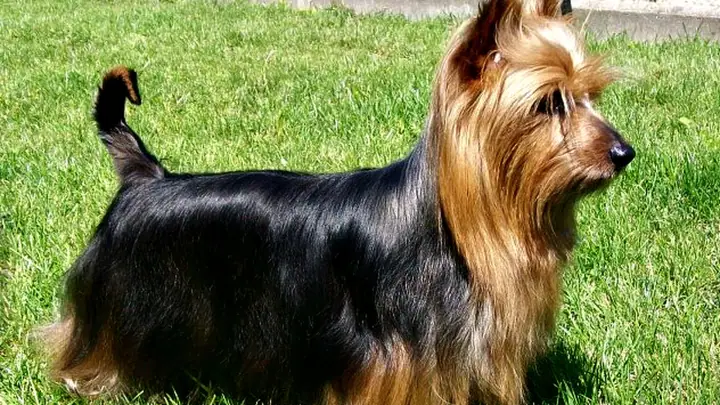
HDB-APPROVED · DOG BREED GUIDE
Last updated First published 1 June 2026
Notice one little habit together →A small idea to try, with progress kept in your Pack.
Also known as Silky Terrier, Sydney Silky.
Thinking about adopting a Australian Silky Terrier?
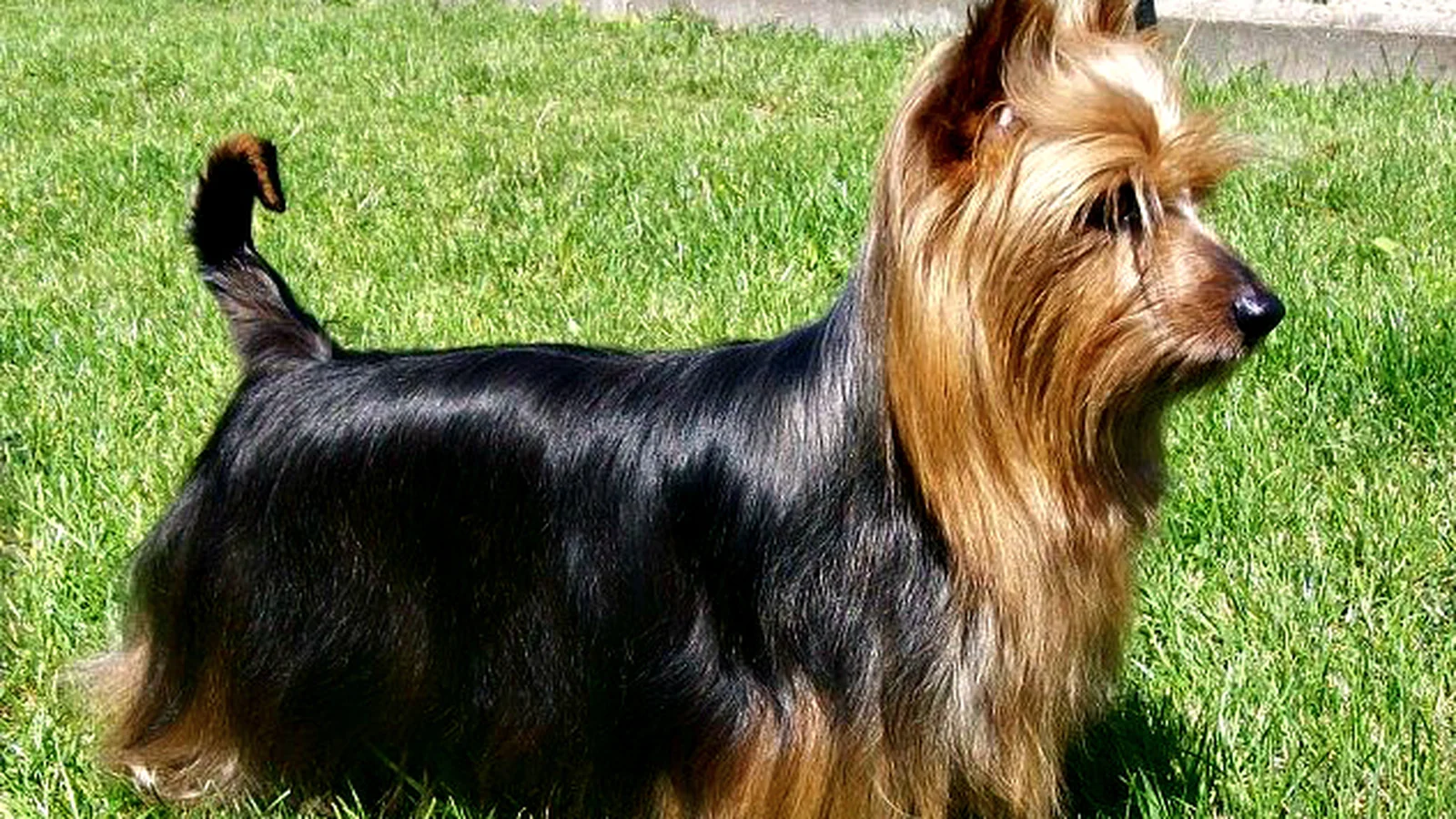
Silky Terriers may look like they belong on a royal lap, but they're more likely to be chasing pigeons at the park, showing off a work ethic that belies their dainty appearance.
Can a Australian Silky Terrier live in an HDB flat?
YesOn the HDB approved-breed list
Named on HDB's approved small-breed list for flats. Check any listed variety restrictions and confirm the individual dog before committing.
HDB sets and maintains the approved-breed list. Check the current rules at HDB.gov.sg →
Full list of HDB-approved breeds on this site →At a glance
- Size category
- Small
- Weight
- 3 to 5 kg
- Height
- 23 to 26 cm
- Lifespan
- 12 to 15 years
- Energy level
- ●●●○○ 3/5 (editorial, unvalidated)
- Shedding
- ●○○○○ 1/5 (editorial, unvalidated)
- Heat tolerance
- ●●●○○ 3/5 (editorial, unvalidated)
- Barking
- ●●●●○ 4/5 (editorial, unvalidated)
- Trainability
- ●●●●○ 4/5 (editorial, unvalidated)
- Grooming needs
- ●●●●○ 4/5 (editorial, unvalidated)
- Origin
- Australia
Editorial climate-care note
Likely manageable in Singapore with grooming and heat precautions, but current evidence gathered is not strong enough yet for a high-confidence breed-specific heat rating.
This score is not a safe temperature or exercise limit. Any dog can develop heatstroke.
Plan activity around your dog, not a timer
A breed score cannot tell you how many minutes are safe today. Avoid hot conditions, watch your dog's breathing, and agree an activity plan with your vet.
Read PDSA's heatstroke guidance →Common health issues in Singapore's climate
Build a care budget
- Year 1
- S$3,757 to S$5,083
- Over 10 years
- S$34,771 to S$47,043
Illustrative planning assumptions for food, grooming and routine vet care, with inflation and a year-one setup uplift. These are not verified provider quotes or a lifespan prediction. Adjust the calculator to current quotes; add insurance, boarding and emergencies separately.
Run the full lifetime cost calculator →The Australian Silky Terrier is often mistaken for a Yorkshire Terrier by people who have never met one, and the mistake is understandable and misleading in equal measure. The Silky is a slightly larger, sturdier, more genuinely terrier animal, developed in Australia partly from Yorkie stock and partly from the Australian Terrier, and it kept the working temperament that the Yorkie's show career softened.
What that means in a Singapore flat: a bright, hardy, low-shedding companion that needs a real job and has plenty to say. This page rates barking 4 out of 5, and that is where the honest conversation starts.
Personality and temperament
Trainability is rated 4 out of 5 and beginner friendliness is high, which together describe a dog that is easy to live with if you actually engage with it. It is rated good with children and good with other dogs.
Energy is rated 3 out of 5, moderate, which suits this climate better than a higher number would. This is not a dog that needs to be run into the ground; it is a dog that needs to be interested.
Barking at 4 out of 5 is the trait that decides whether flat life is comfortable for your neighbours. The Silky is alert, opinionated and entirely happy to comment on the corridor. It is not a nervous or aggressive breed, it is a communicative one, and the difference matters because the fix is training rather than management.
There is more terrier here than the coat suggests. A Silky will chase, will dig given the chance, and will invent a project if you do not supply one.
Exercise in Singapore's climate
Heat tolerance is rated 3 out of 5, which is respectable, and the coat is the reason. The Silky's coat is a single layer of fine, glossy hair with no woolly undercoat, so it insulates considerably less than a double-coated dog of the same size and it can be trimmed shorter.
The limit is size. At 3 to 5 kg the dog sits low, gets the radiated heat off pavement, and dehydrates faster than a bigger animal. Singapore's daily maximum of 31 to 33 degrees Celsius with average relative humidity around 82% year round (Meteorological Service Singapore) is fine for this breed in the cool hours and not at other times.
Two walks a day of twenty-five to thirty minutes before 8am and after 8pm, on grass where possible, always with water. Check the pavement temperature with the back of your hand before you set off.
Then give it work. A terrier with a good nose finds searching genuinely satisfying, so scatter a handful of kibble in the living room, hide a toy and send the dog to find it, or use a snuffle mat at breakfast. Ten minutes of that beats twenty more minutes of walking, and it can happen at two in the afternoon when going outside is a poor idea. It is also the most effective thing you can do about the barking, because a large share of it is a bored dog making its own entertainment.
Coat and grooming in the humidity
Shedding is rated 1 out of 5 and grooming needs 4 out of 5, with the highest grooming line in this batch at about S$1,500 a year. The coat sheds almost nothing, which is much of the appeal in a flat, and the hair it loses stays in the coat, which is why it tangles.
The full-length coat this breed is shown in is a poor idea in Singapore for a dog that actually goes outdoors. It collects the environment, it holds moisture in 82% humidity, and it mats at the skin where you cannot see it. Most sensible owners here keep the dog in a shorter practical trim, and the dog is more comfortable for it.
Whatever length you choose, comb to the skin two or three times a week, with attention behind the ears, under the collar, in the armpits and around the back legs. Book a groom every four to six weeks.
Drying is the humidity discipline. Itchy skin, allergies and ear infections all appear on this page's health-issue list, and a fine coat that stays damp against skin is how each of them starts. Dry the dog properly after every bath and every walk that ends in rain, and check inside the ears weekly.
Diet and feeding
Food runs about S$1,000 a year. At 3 to 5 kg, portion precision matters more than brand: a couple of stray treats is a meaningful share of the daily allowance, and patellar luxation leads this page's health-issue list, where extra weight goes directly through the knees.
Weigh the food, count treats inside the total, and use the dog's own kibble as training currency. Ask your vet to body-condition score at each visit, because a coated dog hides weight gain well.
Toy-sized puppies can drop their blood sugar between widely spaced meals, so feed a Silky puppy little and often and take your vet's guidance on the interval.
Dental health is on this page's list and it is the standard small-breed problem: a small jaw crowds teeth, crowded teeth trap food, and a dog living 12 to 15 years has a long time to accumulate the consequences. Brush daily.
Training
At 4 out of 5 this dog learns quickly and negotiates enthusiastically. Three priorities:
- The "quiet" cue, from week ten. With barking at 4 out of 5 in a block of flats, this is the highest-value work you will do. Teach the sequence rather than the silence: alert once or twice, come to you, settle, get rewarded for settling. Rewarding the settle works; suppressing the alert fights the breed and loses.
- Daily mental work, structured. Scent games and trick training, split into short sessions. This is both the exercise substitute the climate forces on you and the most effective anti-barking measure available.
- Grooming and handling tolerance. Combing several times a week and a groomer every four to six weeks for fifteen years. Make it ordinary while the dog is small.
Recall deserves an honest note: the prey drive is real, so build it properly and still keep a lead on near traffic or wildlife.
Health
The UK Kennel Club lists no recommended pre-breeding screening scheme for the Australian Silky Terrier and does not currently offer a breed-specific DNA testing package for it. It places the breed in Breed Watch Category 1, and states that "currently no points of concern specific to this breed have been identified for special attention by judges, other than those covered routinely by The Kennel Club's breed standard".
So there is no certificate to demand here, which puts all the weight on the questions you ask. Two matter most.
Knees. Patellar luxation leads this page's health-issue list. It is a kneecap that slips out of its groove, common across small breeds, ranging from an occasional skip in the step to a joint that needs surgical repair. It is partly heritable, so ask for a written veterinary patella assessment on both parents and read it rather than accepting a summary.
Then ask about seizures, because epilepsy is on this page's list, there is no test to point at, and a direct question is the only tool available. A breeder who has been asked before will answer specifically.
The rest of this page's list is eye conditions, dental health, itchy skin, ear infections, allergies and Cushing's syndrome. The skin and ear entries are largely climate-driven and largely preventable, and the coat and drying routine above is the prevention. Cushing's tends to appear in middle age and later, so increased drinking, increased appetite, a pot belly or thinning coat in an older dog are worth a vet visit rather than being filed under getting on.
Routine veterinary care runs about S$900 a year here, one of the lowest figures on this site. Arrange insurance in the first weeks anyway, before any knee or skin note exists on a clinical record to be written back as an exclusion. None of this replaces your own vet's assessment of your own dog.
Housing and space in Singapore
The Australian Silky Terrier is named on HDB's published list of approved breeds for flats, which runs to 61 named breeds plus a cross of any two of them. The list carries the Australian Silky Terrier and a separate Silky Terrier entry, so the breed is well covered either way. Confirm the current position there before you commit, since HDB maintains and updates the list.
Ownership limits come from AVS rather than HDB. Under AVS's rules, an HDB flat may keep a maximum of one dog of an approved small breed plus up to two cats, and no dog on the Specified dogs list; private property may keep up to three cats or dogs in combination. Every dog needs an AVS licence. Licence fees depend on sterilisation status, age and the number of pets. One-time and three-year licences are different options. Check the current AVS fee table before paying.
Three practical adjustments. Runners on polished tile where the dog turns and stops, because a small dog skidding is how knees get worse. Steps to any furniture the dog is allowed on, or a decision that it is not. And a resting place away from the front door, so an alert dog is not spending its day watching a corridor it can do nothing about.
Care and cost in Singapore
On this page's figures: about S$1,000 a year for food, S$1,500 for grooming and S$900 for routine veterinary care. Grooming is by far the largest line and the least negotiable, because a neglected coat in this humidity becomes a skin problem that costs more than the appointments would have. The low veterinary figure reflects a hardy breed. Run the ten-year picture with the cost calculator.
Getting an Australian Silky Terrier: buying and adoption
With no kennel-club scheme to ask for, ask for these: the AVS dog farm licence number, a written veterinary patella assessment for both parents, an eye examination for both parents, a written health guarantee, and a direct answer about seizures in the line.
Ask how much handling the puppies get and from how many people. A breed rated 4 out of 5 for barking benefits enormously from early, varied socialisation, and a litter raised in a busy household is a better bet than one raised in a quiet kennel.
Ask the breeder what they do about the coat in a warm climate, if they are local. Anyone keeping this coat here has had to think about it, and a considered answer tells you a lot.
Adoption is realistic. Silkies, Yorkies and small terrier crosses come through SOSD, Causes for Animals and Mercylight, and the common surrender reason is noise in a flat, which is usually a training gap rather than a temperament fault. An adult arrives with its coat and its character already visible.
What to skip: any dog sold as a Yorkshire Terrier at a Silky's size or the reverse, since a seller who cannot tell you which breed they are selling is not someone to buy from.
Life stages: puppy to senior
Puppy, to about 12 months. Feed little and often while very young. Start "quiet" work in week ten and practise being alone in short doses from the beginning. Begin daily tooth brushing and weekly ear checks before the dog has opinions. Get grooming handling established well before the adult coat arrives, and insurance in force early.
Adolescent, roughly 9 to 18 months. The adult silky coat comes in and grooming demand rises sharply. Terrier independence peaks and recall gets tested. Watch for a skip or hop in the back legs, which is how patellar luxation usually announces itself, and report it even if it resolves.
Adult, roughly 2 to 9 years. Steady and easy, provided the dog has work. Coat on schedule, ears weekly, teeth daily, weight held. Keep teaching new things, because a Silky that stops learning starts talking.
Senior, from about 10 years. Lifespan here is 12 to 15 years. Move to twice-yearly vet visits. Watch for the Cushing's signs described above, for hesitation before jumping, and for dental disease, which is the most under-treated problem in small older dogs. Keep the coat shorter for comfort, keep walks short and frequent in the cool hours, and keep the nose games going, because the brain stays keen long after the legs slow.
See dog-friendly cafes and parks in your region → | Run the 10-year cost of an Australian Silky Terrier in Singapore →
Three things to know
-
There is no screening scheme for this breed, so ask for knees in writing
The Kennel Club lists no recommended pre-breeding screening and places the Silky in Breed Watch Category 1. Patellar luxation still leads this page's health list, so ask for a written veterinary patella assessment on both parents, and ask plainly about seizures in the line.
-
Teach "quiet" in the first month
Barking is rated 4 out of 5 in an alert terrier living beside a shared corridor. Reward the settle after the alert, and give the dog daily scent work, because most of the noise is a bored dog entertaining itself.
-
Keep the coat short and dry
The show-length coat is a poor choice in 82% humidity for a dog that goes outside. Comb to the skin two or three times a week and dry the dog properly, because the itchy skin and ear infections on this page's list mostly begin as a damp coat.
Annual cost in Singapore
Editable planning estimates, not verified provider quotes or a prediction of your dog's bills. Boarding, one-off equipment and emergencies are additional.
- Food
- S$1,000
- Grooming
- S$1,500
- Routine vet
- S$900
- Sum of the three
- S$3,400/year
Run the lifetime cost calculator →
Get a current insurance quote for your dog's age and circumstances. Compare exclusions, waiting periods, excess and cover limits. Compare policy questions here →
Frequently asked questions
Is a Australian Silky Terrier HDB-approved in Singapore?
Yes. The Australian Silky Terrier is on the HDB list of breeds approved for flats. Confirm the current HDB and AVS rules before you commit, as the approved list can change.
Do Australian Silky Terriers bark a lot?
Our current barking assessment is: is fairly vocal (editorial estimate). It has not been independently validated. Ask about this dog's observed behaviour, triggers and time alone; the breed label cannot predict your neighbour's experience.
How much grooming does a Australian Silky Terrier need?
Our current grooming assessment is: is high-maintenance to groom (editorial estimate). Confirm the individual coat-care routine and any professional grooming with the rescue, groomer or vet. The score is not a measured frequency or price.
How does a Australian Silky Terrier cope with Singapore's heat?
An editorial heat score cannot establish a safe temperature or walk duration for an individual dog. Activity, humidity, health, age and body shape matter. Avoid hot conditions, provide shade and water, and ask your vet about an appropriate activity plan.
Is a Australian Silky Terrier a good breed for a first-time owner?
Our household-fit note is: Editorial: may suit. This is not a validated prediction. Assess the individual dog, your daily capacity, training support and known care needs before deciding.
How much does a Australian Silky Terrier cost to keep in Singapore?
The stored planning assumption is S$3,400 a year for food, grooming and routine veterinary care. It is not a verified typical cost for this breed. Replace it with current quotes and your own usage; add setup, licensing, insurance if chosen, boarding and emergency savings separately.
Other small breeds to consider
A Australian Silky Terrier in Singapore, the short version
Australian Silky Terriers are small, active companion dogs that can adapt to Singapore city living, but they need consistent exercise, coat care, and close monitoring for skin and dental issues. Their long silky coat needs regular brushing and trimming, which matters in a humid climate where skin problems can flare more easily if grooming is neglected. Because they are energetic, owners should favour walks and play during cooler parts of the day rather than intense midday activity. I would treat this breed as workable in Singapore, but I’d avoid making a stronger climate claim until we verify breed-specific heat tolerance from a better source.
Find Australian Silky Terrier-friendly spots in Singapore
Good spots to visit with a Australian Silky Terrier in Singapore.
 Find Your Match Meet Australian Silky Terrier first “I've got a silk coat and an outback attitude that doesn't match it at all” Swipe through a dating-profile-style card before you commit. Say hello →
 Breed fit quiz Does a Australian Silky Terrier actually suit your life? Answer a few questions about your lifestyle and see how well this breed matches your real setup. Find out →