
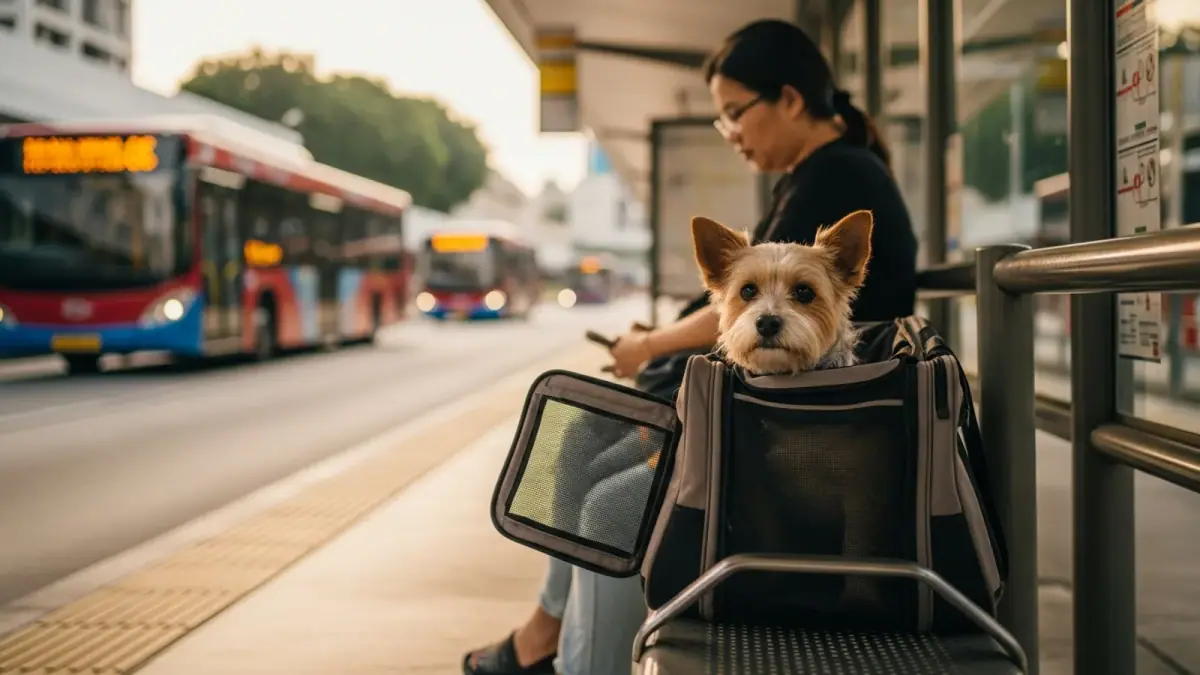

A good outing starts with knowing how both of you will get home. Compare pet-friendly rides, booked pet transport and your own car, then plan around your dog’s comfort, the actual booking conditions and the destination’s rules.
4 min read
The exciting part is choosing where to go. The less glamorous part, a suitable vehicle, a comfortable dog and a return plan, is what makes the outing work. Start there, especially for a first vet visit, a large dog or a journey at a busy time.
Can my dog take the MRT or a public bus?
Pet dogs are not permitted on Singapore’s MRT and public buses, including in a carrier. The Ministry of Transport explains the policy; trained guide dogs assisting people with visual impairment are treated separately. A small carrier does not create a pet exemption. Do not plan around being overlooked or a supposed staff-discretion exception.
Pet-friendly ride or booked pet taxi?
| Option | Useful starting point | Confirm before relying on it |
|---|---|---|
| Pet-friendly app ride | A journey with your dog when a suitable ride is available. | Pet category, vehicle capacity, price, pickup and return availability. |
| Booked pet transport | A planned appointment, particular handling needs or an agreed collection time. | Vehicle and restraint, whether you accompany the dog, waiting charges and return booking. |
| Your own car | Control over timing, stops and the equipment you use. | Secure transport, parking, destination access and a driver who can concentrate on the road. |
| Walking | A route and distance the individual dog can comfortably manage. | Access, conditions, shade, rest and an alternative if the dog cannot continue. |
Using Grab’s pet-friendly category
Grab’s Singapore service page lists Standard | Pet, also referred to as GrabPet. Choose the pet-specific category and check the current in-app requirements. A general ride booking is not confirmation that your dog has been accepted. Tell the provider about the number and size of animals and any equipment or handling needs.
Use the actual quote for your trip. Do not assume a remembered starting fare is today’s price or that a driver will always be available at your destination. For a timed appointment, allow for pickup uncertainty and have a backup. Check whether waiting or a separate return booking is needed.
Questions for a dedicated pet transporter
Ask who will travel with the dog, how the dog is secured and whether other animals share the vehicle. Give the provider the dog’s weight, mobility needs, travel behaviour and crate dimensions where relevant. A service described as a pet taxi does not establish that every vehicle has the same equipment or can carry every dog.
Get a written quote covering both directions, waiting time, late collection, cancellation, stairs or carrying assistance, and any cleaning charges. Ask what happens if an appointment runs late or a vehicle becomes unavailable. Neither a pet taxi nor an app ride is universally cheaper or safer simply because of its label.
Make car travel comfortable and secure
The American Veterinary Medical Association’s pet-travel guidance recommends securing pets during car travel and keeping dogs away from the driver’s lap and a passenger seat with an airbag. Use an appropriate secured crate or vehicle restraint and follow its fitting instructions. A seat cover protects upholstery; it is not a restraint. Keep the dog from putting its head out of a moving window, and never leave it unattended in a parked car.
Introduce the vehicle and equipment gradually before a long journey. Short, manageable practice trips can help you learn what your dog finds difficult. Persistent vomiting, marked anxiety or a health condition deserves veterinary advice before travel. Do not give a human medicine or a sedative on your own initiative. The AVMA pet-travel resource is a useful starting point for a discussion with your vet.
Plan the destination and the journey home
Check the exact entrance, drop-off point and pet-access area. A venue can welcome dogs while the most obvious route there does not. Sentosa’s official dog-outing guide currently lists the cable car, Express trains, buses, beach trams and Sentosa Boardwalk as unavailable to pets. General visitor directions are not a pet-transport permission. Confirm the intended route with the operator if information conflicts.
Keep water, waste bags, a suitable mat and the necessary restraint or carrier ready. Choose a meeting point you can reach without leaving the dog unattended. For an outing involving another household, agree who is responsible for the return trip. Walking home should not be the only fallback if the dog may be tired, unwell or unable to manage the conditions.
Vet visits and urgent journeys
For an ordinary appointment, tell the clinic if you need help getting the dog from the vehicle. If the dog is acutely unwell or injured, call the clinic first for triage and handling instructions, and explain the situation to the transporter. A pet ride is not automatically a veterinary ambulance or a promise of medical support. Save the clinic and transport details before you need them.
For international travel, a transport booking is only one part of the plan. Use our Singapore to Malaysia permit walkthrough for the border process and our import and export guide for relocation planning. Confirm the return requirements before committing to an overseas outing.
Frequently asked questions
- Does a carrier let my pet dog travel on the MRT?
- No. A carrier is not a pet exemption under the stated public-transport policy.
- Is a pet taxi always better than GrabPet?
- No. Compare the actual service, vehicle, handling, availability and total quote for your trip.
- Can a large dog use pet transport?
- Ask the provider about the individual dog and its equipment. Confirm capacity and acceptance before booking; a service name alone is not enough.
- Does a pet-friendly booking include a restraint?
- Check directly. A pet-friendly category or seat cover does not establish that suitable restraint equipment is supplied.
- Should I book the return journey too?
- For an appointment or destination with uncertain pickup availability, agree a return arrangement or a practical backup before leaving.
Editorial migration review: 17 September 2026. Original publication date preserved. Provider availability and conditions can change.
More from The Block
-
 Dog supplements in Singapore: what helps and what to skip Most healthy dogs on a complete diet need no supplements. A few have real evidence; many are marketing. How to tell them apart, and why to ask your vet first.
-
 Flying with your dog from Singapore: cabin, cargo and relocation (2026) Start with the operating airline and exact route. A pet may travel in the cabin, as checked baggage or through a cargo arrangement depending on the carrier and journey. Confirm acceptance before buying equipment or treating your own flight booking as a pet booking.
-
 Raw feeding for dogs in Singapore: a safe, honest guide Raw feeding is not proven to be healthier than an appropriate balanced cooked diet. CDC advises against raw pet food because of risks to animals and people. Nutritional formulation, cold storage and careful cleaning do not remove every infection hazard. A complete cooked diet is a practical starting point for discussing your dog's needs with your vet.
-
 Choosing a dog for an HDB flat: eligibility, adoption and everyday care A dog can become a much-loved part of flat life. Start by checking eligibility for your actual home, then choose for the individual dog’s needs and the daily care you can offer. A small body or a seller’s assurance is not proof of HDB approval.