
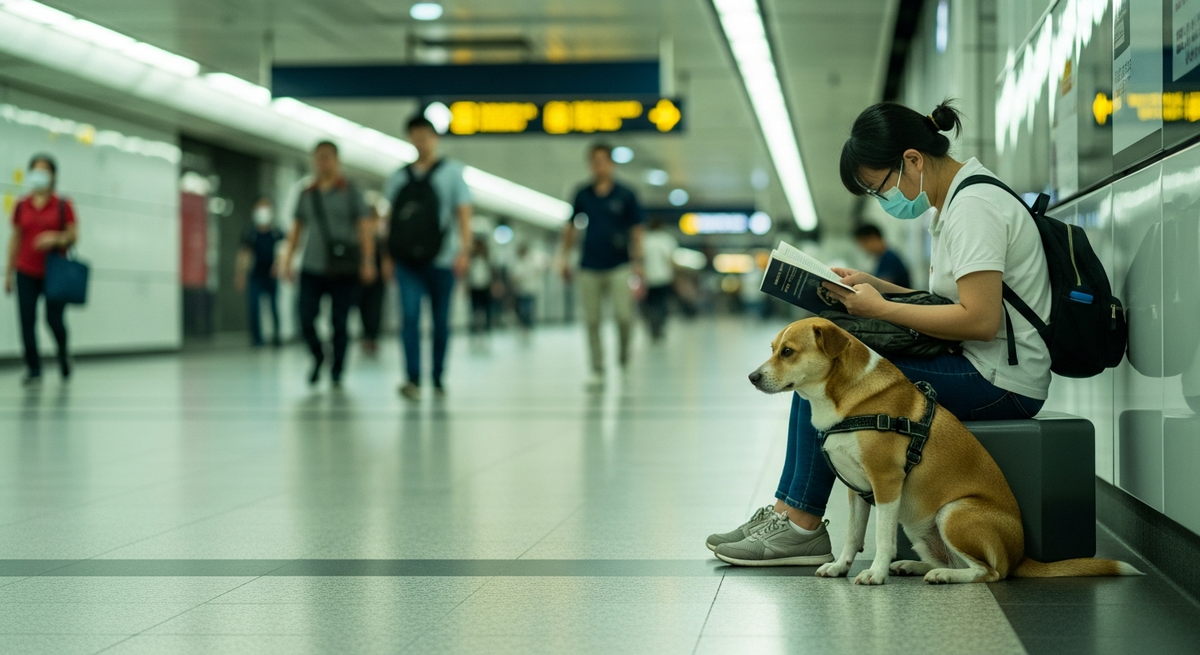

Moving countries with your dog means coordinating three separate things: entry permission, the dog’s health and records, and a carrier that accepts the journey. Start with the destination’s official rules, then build a dated plan for this individual dog and route.
5 min read · Updated 17 September 2026
Start with the destination, then work backwards
Write down the destination, intended travel date, transit stops and whether you and your dog travel together. Use the destination government’s animal-import requirements, not a checklist for someone else’s move. Ask the authority about any ambiguous case before paying for an arrangement that depends on an assumption.
Create a schedule with one row per requirement: action, earliest or latest date, responsible person, official source and evidence of completion. Keep vaccinations, testing, permits, airline acceptance and arrival arrangements separate. A completed flight booking does not mean the paperwork is complete, and a permit does not guarantee that the airline will carry the dog.
Leaving Singapore: export steps
The AVS export guide requires an export licence before departure. It is valid for 90 days from issue, so apply within the relevant window. A veterinary health certificate and AVS endorsement may also be required by the destination. AVS lists normal personal export-licence processing as two working days after complete documents, not a universal three-month permit-processing period.
Preparation can still take months when the destination requires it. Ask the receiving authority which identification, vaccinations, tests, treatments and certificates apply, in what order and with what validity. Do not generalise one country’s rabies-testing rule to every destination. Coordinate appointments with a vet familiar with the specific requirements and keep copies of the completed documents.
Arriving in Singapore: use the current schedule
The AVS import guide now uses Schedules I, II and III. Schedule I does not require rabies vaccination or serology. For Schedules II and III, AVS requires valid rabies vaccination and blood sampling at least 28 days afterwards, with sampling at least 90 days and within 12 months before export. Do not use the old blanket 180-day test-validity claim.
Quarantine depends on the schedule and conditions. Compliant Schedule I imports do not need quarantine; Schedule II has personal-import exemptions and other quarantine arrangements; Schedule III requires at least 30 days at AQC. Read the actual schedule for the dog’s history. Check breed and housing eligibility, PALS licensing, import licence, inspection booking, veterinary certificate and any applicable Customs requirements with the official guidance.
Use the current conditions and forms rather than an old certificate saved from a previous trip. Keep the dog’s chip number consistent across records. If a date or identity does not match, resolve it before travel rather than assuming an explanation at the border will be enough.
A return trip is a second set of requirements
Before taking a Singapore dog abroad, check how it can come back. A short holiday is still an international animal movement. An existing Singapore dog licence does not remove the return import process. Our Singapore to Malaysia permit walkthrough explains why the return leg can make a casual weekend trip impractical.
Keep the return plan alongside the outward plan, including where the dog will stay if a date changes. If you are relocating permanently, ask the relevant authorities which local records need to be updated or cancelled and when. Do not cancel arrangements merely because a flight is provisionally booked.
Agree the actual airline route
Use the operating carrier’s policy for every leg. Cabin, checked-baggage and manifest-cargo travel are different arrangements. Acceptance can depend on the animal, aircraft, route and transit, so do not assume the same airline name means the same answer on every flight. Our flying guide covers the booking questions.
Obtain written confirmation of acceptance and the handover process. Ask what happens after a schedule or aircraft change. Record where you deliver the dog, where it will be collected, who handles transit and whom you contact if the connection is disrupted. These are practical questions to resolve before choosing a ticket solely on price.
Choose a carrier and prepare the dog
Consult IATA’s traveller guidance and the airline before buying a crate. Suitable dimensions and construction matter; a shop’s “airline approved” description is not confirmation for your route. Let the dog become comfortable with the equipment gradually, and discuss health, travel anxiety or motion sickness with your vet.
Build your moving plan around the dog’s needs as well as the calendar. Consider the length of the whole journey, including ground transport and waiting. Arrange a quiet arrival space and a local veterinary contact. A dog who has just arrived may need time to settle before visitors, busy outings or a new daycare routine.
If you use a relocation provider
Ask for a written scope: which permits, veterinary appointments, cargo bookings, transfers, inspections and arrival services are included, and which remain yours to arrange. Ask who the destination partner is and how you will receive updates. Verify claimed credentials rather than treating the phrase “licensed agent” as a universal credential.
Compare itemised quotes for the same route and service. Separate official charges, veterinary work, transport, crate, quarantine where applicable, handling and the provider’s fee. Ask about cancellations, changed flights and extra storage or boarding. Paying a provider does not remove the need to understand the plan or check your dog’s documents.
Keep a shared folder of readable documents and a simple contact sheet. Nominate someone who can act if you cannot be reached. The aim is a traceable plan with a clear owner for every step, not a stack of disconnected forms.
Frequently asked questions
- How early should I start?
- Start when the move becomes a realistic possibility. The required lead time depends on the destination, dog’s records and route; a licence processing time is not the whole preparation time.
- Do all dogs entering Singapore need a rabies test?
- No. Use the applicable AVS schedule and its conditions. Do not apply another country’s requirements to your dog.
- Can I assume there is no quarantine after a short holiday?
- No. Check the return import requirements before booking the outward trip.
- Does an export licence guarantee entry abroad?
- No. It does not replace destination permission, carrier acceptance or the required veterinary documents.
Editorial migration review: 17 September 2026. Original publication date preserved. Check current official requirements before travel.
More dog-friendly guides
-
 What owning a dog actually costs in year one Plan your first year around the dog you are bringing home. Separate setup purchases, regular care and emergency savings, check what adoption fees already cover, and replace estimates with current quotes before committing.
-
 HDB approved dog breeds: what you need to know before you choose HDB ordinarily permits one dog from its approved list, including crosses of two listed breeds. Project ADORE and written-permission provisions cover separate cases. Check housing eligibility, AVS licensing and the individual dog’s care needs before committing.
-
 Adoption or buying in Singapore: fees, care and questions to ask Compare the written arrangement: what care has already happened, what your payment includes and what remains to arrange. Neither route guarantees health, temperament or a match for your household.
-
 How long can you leave a dog alone in an HDB flat? Plan time alone around your individual dog's comfort, toilet needs and reliable care. A full working day needs a support plan, not a blanket six-to-eight-hour allowance.