
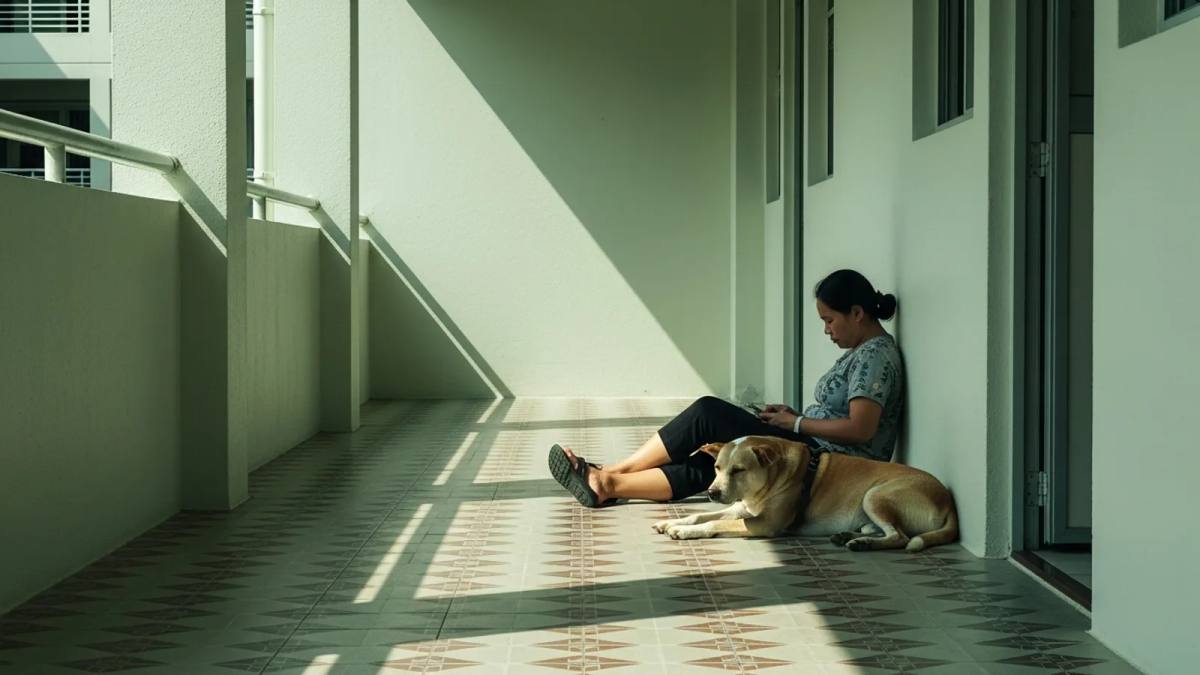

Owners in Singapore's compact flats often assume a tired dog is a settled dog, but physical exercise alone does not always prevent boredom. A dog with plenty of mental energy left over can turn to chewing, barking, pacing, or constant nudging to fill the gap. Recognising these signs early makes it far easier to intervene before they become entrenched habits.
By the numbers
- S$120 to S$250 Typical cost per session for a private in-home training lesson
- S$15 Annual AVS licence fee for a sterilised dog in Singapore
What Are The Real Signs A Dog Is Under Stimulated?
Destructive chewing is usually the first sign owners notice, especially when it moves beyond a chewed shoe into skirting boards, cushions, or door frames. Excessive barking or vocalising for attention is another common marker, particularly when it happens without an obvious trigger like a doorbell or a passing dog. Pacing and restlessness, an inability to settle even after a walk, points to energy that has nowhere useful to go. Compulsive behaviours such as tail chasing or over licking the paws can develop when a dog has too much unspent mental energy and too few outlets for it. Constant nudging, pawing, or following an owner from room to room rounds out the list, and it often gets mistaken for simple affection rather than a request for engagement.
- Destructive chewing or digging that goes beyond normal puppy exploration, targeting furniture, doors, or flooring.
- Excessive barking or vocalising aimed at getting an owner's attention rather than responding to an external trigger.
- Pacing and restlessness, circling a room or an inability to settle even when physically tired.
- Compulsive behaviours such as tail chasing or over licking of the paws or flanks.
- Constant nudging or pawing, following an owner from room to room and demanding interaction.
These signs are distinct from the physical tiredness covered in UDO's indoor exercise guide, which focuses on burning off physical energy in a small space. A dog can complete a full walk and still show every one of these signs an hour later, because the behaviours above are rooted in mental understimulation rather than a lack of movement.
Why Does Mental Stimulation Matter More In A Small Flat?
An 800 sq ft flat gives a dog very little room to self direct its own enrichment. Dogs in larger homes or landed properties can wander between rooms, watch activity through multiple windows, or investigate a garden, all of which provide low effort mental input throughout the day. A dog confined mostly to one or two rooms does not get that incidental stimulation, so any gap in structured mental work shows up faster and more visibly.
Veterinary behaviour organisations including the AVSAB and the ASPCA note that understimulation is linked to a wider range of behavioural problems and anxiety over time, not just the five signs listed above. In a flat setting the effect tends to compound. An under stimulated dog gets more frustrated indoors, the frustration shows up as barking or chewing, and the barking or chewing then adds a layer of stress for the owner too, which makes consistent training harder to keep up.
Corridor noise, lift sounds, and the occasional neighbour walking past do offer some incidental stimulation, but it is passive rather than something a dog can interact with, sniff, or solve. Without deliberate mental input, that passive stimulation is rarely enough to keep a dog settled through a full day indoors, particularly for working breeds or dogs under two years old that are still developing longer attention spans.
How Much Mental Work Does A Dog Actually Need Each Day?
Most dogs benefit from at least around 20 minutes of dedicated mental stimulation daily, separate from physical exercise. That can be split across the day rather than delivered in one block. A short puzzle feeder session at breakfast, a five minute training game before dinner, and a few minutes of scent work in the evening add up quickly without needing extra floor space.
Puzzle feeders slow down eating while forcing a dog to problem solve for its food. Training games, even simple ones like naming toys or practising a stay with distractions, give a dog a job to focus on. Scent work, hiding treats around a room and letting a dog search them out, taps into one of the strongest natural instincts a dog has. Owners who are not sure where to start can use UDO's training plan tool to build a routine suited to their dog's age and energy level, based on guidance broadly consistent with organisations such as the AKC and APDT.
Rotating toys and puzzle feeders every few days keeps the novelty high, since a dog that has solved the same puzzle a dozen times gets little mental benefit from a thirteenth attempt. Younger dogs and high energy breeds often need mental sessions spread more evenly across the day rather than concentrated into one sitting, while older dogs can usually manage with a couple of longer, calmer sessions instead.
What Should Owners Do When The Signs Show Up?
The first step is matching the activity to the specific sign rather than adding more of the same walk. A dog that paces at night often needs a calming mental task before bed, not a longer walk earlier in the day. A dog that nudges constantly for attention usually responds well to short, structured training sessions that give the nudging somewhere useful to go. For dogs that seem to need a broader mix of physical and mental engagement in one sitting, UDO's walk it off tool combines movement with light mental tasks in a single session.
- Pacing at night: try a short scent work session an hour before bedtime rather than a longer walk.
- Constant nudging: five to ten minutes of structured training with a clear start and end point.
- Destructive chewing: rotate puzzle feeders and appropriate chew items throughout the day, not just at mealtimes.
- Excessive barking: pair calm settle training with a mentally engaging task during the times barking usually starts.
Consistency matters more than intensity here. A dog that gets ten focused minutes of training every day tends to improve faster than one that gets a single hour long session once a week. Tracking which of the five signs improves first also helps owners work out which type of stimulation their dog responds to best, whether that is scent work, puzzle feeders, or straightforward obedience games.
Destructive chewing, pacing, and constant nudging are rarely about naughtiness, they are usually a dog asking for more mental work.
Common questions
- How can owners tell the difference between boredom and a medical problem?
- Sudden changes in licking, pacing, or vocalising can sometimes point to pain, allergies, or anxiety rather than boredom alone. If a behaviour appears suddenly, worsens quickly, or comes with changes in appetite or energy, a vet visit is worth the trip before assuming it is purely behavioural.
- Is chewing furniture always a sign of under stimulation?
- Not always, puppies chew as part of normal exploration and teething, so context matters. In adult dogs, though, persistent chewing beyond the odd shoe or cushion usually signals that mental or physical needs are not being met.
- Can too much physical exercise fix these signs on its own?
- Physical tiredness helps but rarely solves the problem alone, since a dog can be physically worn out and still mentally under stimulated. Pairing walks with puzzle feeders, training games, or scent work tends to settle these behaviours far more reliably.
- How much space does a dog actually need for mental stimulation games?
- Very little. Puzzle feeders, scent games, and short training sessions can all be done in a small living room or even a single hallway, which makes them well suited to compact Singapore flats.
- What should owners try first if their dog shows several of these signs at once?
- Start with a short daily training routine and a couple of puzzle feeders at mealtimes, then track which behaviours ease over one to two weeks. UDO's training plan tool can help structure that routine without guesswork.
- When should a professional trainer or behaviourist get involved?
- If compulsive behaviours like tail chasing or over-licking persist despite more mental stimulation, or if barking and restlessness escalate, a certified trainer or behaviourist is worth consulting. Singapore has no official dog-trainer licensing system, so checking for credentials such as CCPDT or IAABC certification is a useful filter.
Sources
- DOGPAPAthedogpapa.com
- S$120 to S$250: Typical cost per session for a private in-home training lesson
- AVS, NParksavs.nparks.gov.sg
- S$15: Annual AVS licence fee for a sterilised dog in Singapore
How we verify content Fact-checking policy How we stay free