Lip licking, yawning and panting can have several explanations. Read the whole dog and the situation rather than translating one movement into a fixed message. Heat, fear, pain and illness can overlap. Difficult breathing, collapse or suspected heatstroke needs urgent veterinary help, not a body-language test.
Notice the moment, then widen the picture
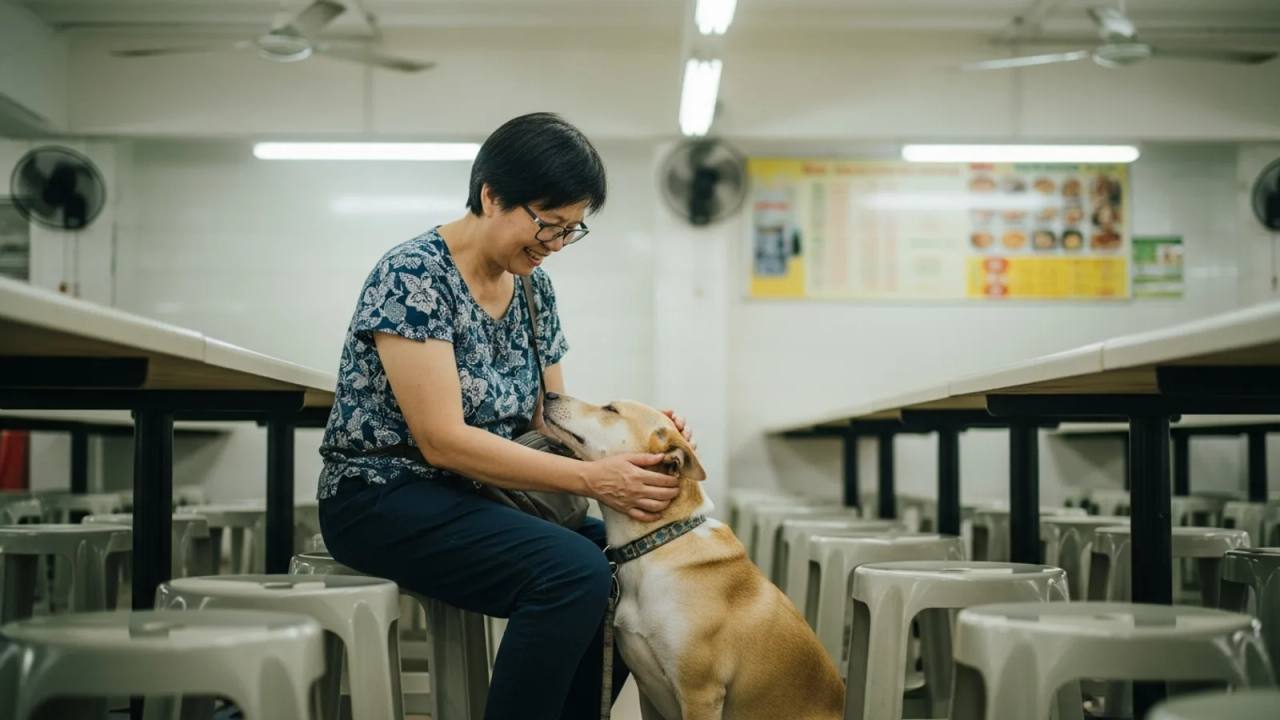
You are waiting for the lift when someone bends towards your dog. A tongue flicks out, the head turns and the dog shifts behind your leg. You do not have to identify a precise emotion before making that greeting easier. Ask for space and let the dog decide whether to approach when there is room.
Now imagine the same tongue movement while dinner is being prepared. It belongs to a different scene. That is why a photograph of a mouth, or a list of signals memorised in isolation, cannot tell the whole story. Start with what happened before the movement and what the dog did next.
Dogs Trust's body-language guidance emphasises the face, posture, movement and setting together. It also notes that dogs do not all progress through the same sequence of warnings. A dog does not owe anyone a particular number of lip licks before an uncomfortable interaction should stop.
A lip lick is a clue, not a translation
Food anticipation and discomfort are among the contexts in which you might see lip licking. If it appears while someone is reaching over the dog, while they are being held, or when another dog crowds them, pause that interaction. Giving space is a useful response even when you cannot be certain of the cause.
Avoid turning the observation into an experiment. Repeating a hug to see whether the dog licks again puts the dog back into the situation you are questioning. Instead, arrange the next greeting differently. Let visitors wait, keep a clear exit and avoid surrounding the dog in a narrow corridor.
Merck includes lip licking among possible nausea signs. Repeated licking therefore also deserves attention beyond behaviour. Note whether there is drooling, trouble eating, vomiting, apparent mouth discomfort or another change. Tell your vet what you have observed rather than deciding that every movement must be anxiety. A behavioural explanation should not prevent a medical assessment.
A yawn does not come with subtitles
Dogs yawn when tired, but yawning can also appear in uncomfortable situations. Whether a nap follows is not a reliable home test that proves the reason. An individual yawn may tell you very little. Repeated yawning alongside withdrawal or tension during an activity is a reason to reconsider that activity.
For example, if a training session is becoming difficult, make the next step easier or finish on something familiar. You do not need to label your dog bored, stubborn or deliberately evasive. Look at the task you have set, the distractions around you and whether a break would help.
The AVSAB humane-training statement supports reward-based methods. Keep learning manageable and avoid punishment for signs of discomfort. If a recurring situation is hard to manage safely, seek qualified help rather than increasing pressure.
Panting needs a safety check first
Singapore's heat makes careful planning important, but it does not make heavy panting automatically harmless. A warm setting cannot rule out overheating, and a cool room cannot prove that panting is emotional. Several explanations may be present together. A change from your dog's usual pattern is useful information, not a diagnosis.
Merck includes changes in breathing among possible signs of pain. Persistent or unexplained panting, especially with changes in movement, appetite or rest, warrants veterinary advice. Do not assume that physical causes are rare simply because a dog also seems worried.
During an outing, stop activity when your dog is struggling and move to a cooler place. If you suspect heatstroke, begin cooling with water cooler than the dog's body and airflow while contacting an emergency vet for transport advice. Avoid pouring water into the mouth or over the head. RSPCA's heatstroke guidance explains the need to cool promptly and obtain veterinary care.
Difficulty breathing, collapse or marked weakness requires urgent help. Do not wait for a set number of minutes to see whether shade solves it. Merck's emergency guidance distinguishes immediate threats that need assessment. If you cannot tell whether an episode is ordinary panting or breathing distress, call a vet immediately.
An open or closed mouth is only part of the picture
A relaxed dog may have an open or closed mouth. A closed mouth alone does not mean tension, and an open one does not guarantee comfort. Look for changes across the whole body rather than judging a single feature against a drawing.
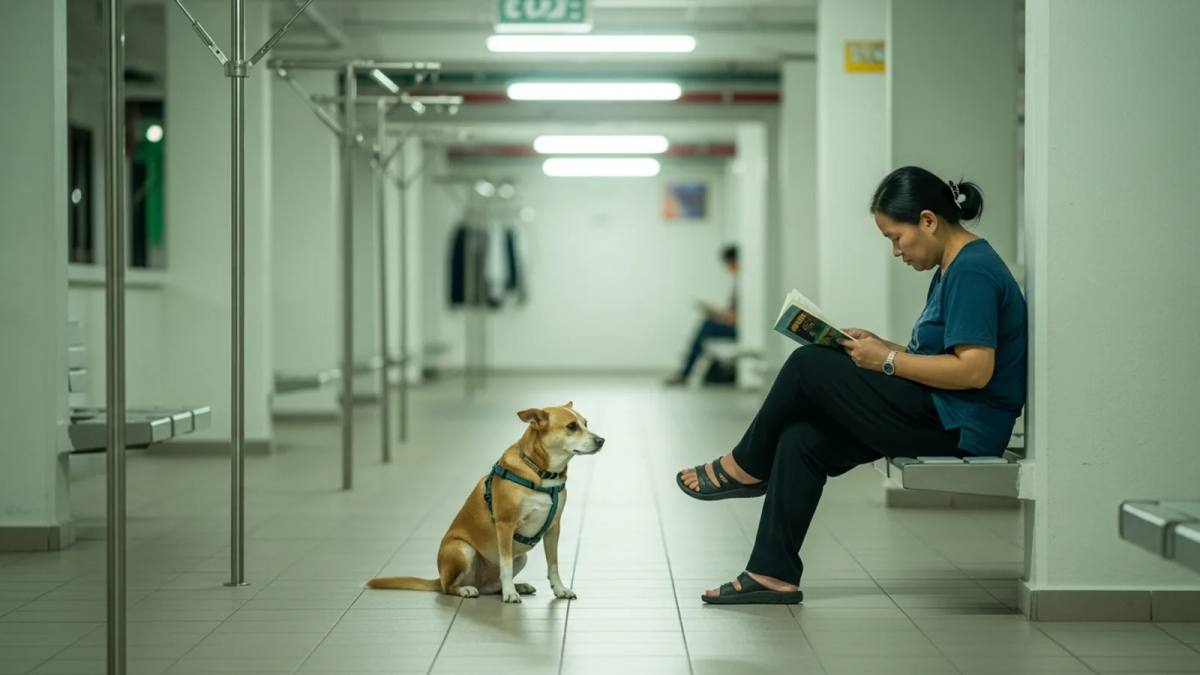
You might notice that a previously moving dog has become still when another dog approaches. That change matters more than whether the lips match a particular expression. Allow distance and avoid pulling the dogs together for a greeting. Being able to pass peacefully is enough.
If there is growling, snapping or a risk of biting, prioritise safe separation. Do not reach towards the mouth to inspect an expression. Arrange individual support with your vet and a suitably qualified behaviour professional. Online descriptions cannot assess the safety of that specific encounter.
Keep a small, useful record
Write down the setting, the activity and the changes you noticed. Include whether the behaviour is new, whether it happens in other situations, and whether eating, sleeping or movement has changed. A brief existing recording may help a professional, but never recreate distress to obtain one.
Choose practical adjustments you can repeat. Wait for a less crowded lift, ask visitors to give your dog space, or shorten an activity before it becomes difficult. These are household decisions you can make without pretending to read your dog's thoughts.
For support, use UDO's vet directory and confirm the clinic's availability directly. For an ordinary quiet afternoon together, playtime ideas can help you choose an activity that suits your dog. Understanding begins with paying attention, including when the best next step is simply a little more room.
Questions about mouth signals
Does a lip lick always mean stress?
No. Context and the rest of the body matter. Repeated licking or a new pattern with other symptoms also needs a medical consideration.
Is a yawn without a nap proof of anxiety?
No. Whether sleep follows does not establish the cause. Look at the surrounding activity and make uncomfortable interactions easier.
Can I assume panting is normal in Singapore?
No. Heat does not rule out illness or overheating. Difficult breathing, collapse or suspected heatstroke needs urgent veterinary help.
You noticed my little pause. Thank you for giving me a moment.
Sources
Notice one little habit together →A small idea to try, with progress kept in your Pack.
How we verify content Fact-checking policy How we stay free