
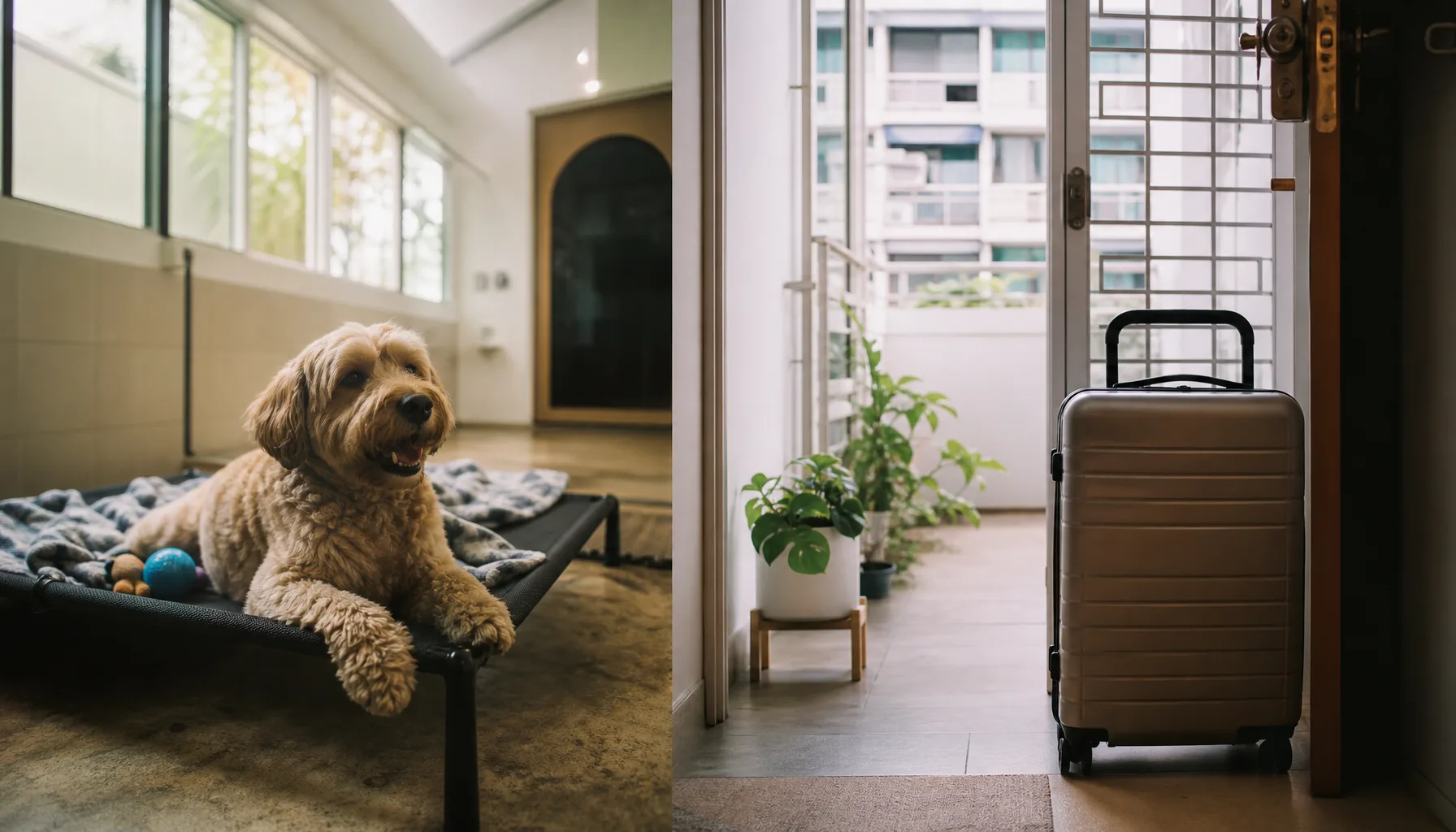

The suitcase can wait a moment. First, decide who will give your dog a familiar routine while you are away. A good care plan covers the ordinary bits, breakfast, walks and somewhere quiet to sleep, as well as who will act if something goes wrong. Start with your dog's needs, then compare the boarding or sitting arrangements that can actually meet them.
1. The decision triangle: boarder first, flight first, or neither
Before paying a deposit, tell the provider about your dog's size, handling needs, medical care and response to other dogs. Ask what happens if it cannot settle or becomes unwell. A spare space is only useful if the team can provide the right care.
Check early for school holidays and festive periods, but avoid treating a fixed number of weeks as a guarantee. Ask for written confirmation of the dates, total price, admission requirements and cancellation terms. If your dog needs a trial or assessment, complete that before relying on the booking.
The calendar rule
Keep the flight and care arrangements flexible until they fit together. A provisional enquiry is not a confirmed booking. Ask whether a delayed return can be accommodated and who could collect the dog if it cannot. Include that backup person's name and number in the handover.
If you compare fares through Trip.com, this is an affiliate link and we may earn a commission at no extra cost to you. Check fare changes and cancellation conditions independently of the boarding contract.
2. The SG-side checklist before you fly
Use the AVS public registry of licensed pet boarding facilities to match the business and premises. Visit or ask to see the relevant sleeping and exercise spaces. Find out who is present overnight, how dogs are separated, and what happens during an evacuation or veterinary emergency.
- Vaccination evidence. Get the provider's written policy and send it to your vet with the dog's records. The WSAVA vaccination guidelines distinguish core vaccines from risk-based protection. They do not support treating an annual combination booster and six-monthly Bordetella dose as a universal schedule for every dog. Let your vet resolve product, timing and health questions before admission.
- Parasite prevention. Confirm the products and dates the boarder accepts against your dog's current treatment plan. Do not add or repeat a dose merely to fit a generic checklist.
- Accepted records. Ask whether a digital copy, clinic summary or original card is needed. Send it for checking before drop-off.
- Meals and comfort. Agree how to provide the usual food, measured portions and any permitted familiar bedding. Explain allergies and handling preferences.
- Medication and emergencies. Provide your vet's written directions. Confirm that staff can administer the treatment, record each dose, recognise the signs your vet has identified and arrange transport. Agree consent, payment arrangements and a local contact who can act.
Consider a short familiarisation stay if the provider and your dog's needs allow it. For a dog that finds boarding difficult, discuss suitable alternatives with your vet or a qualified behaviour professional. A sitter staying at home may suit some dogs, but still needs dependable cover and clear responsibilities.
3. Travel insurance: what owners actually claim against
Do not read “pet care” as a promise to cover a veterinary emergency. For example, section 28 of the linked Singlife travel policy wording describes extended boarding following specified disruptions to the owner's return, with plan restrictions and supporting-document requirements. That example does not establish cover under a policy issued to you.
Separate three questions: who pays if your dog needs treatment, who pays for extra boarding if you return late, and whether you can cancel or shorten a trip because of a pet emergency. Ask the insurer which exact clause applies to each. Check the policy version, limits, excess, exclusions and documentation, rather than relying on a comparison headline.
Keep the boarding agreement, original collection date and receipts. Give the provider a practical payment and consent plan even if you have insurance, because a potential later claim does not arrange immediate care.
4. The Johor option, and the catch on the way home
Do not compare kennel rates before resolving the border rules. Under the current AVS import framework, Malaysia falls outside Schedules I and II. The standard Schedule III route requires at least 30 days in the Animal Quarantine Centre. This is part of the normal route, not merely a penalty for missing paperwork.
Rabies preparation, blood testing, reservations, licences and inspection arrangements need planning well in advance. The land-entry route is Tuas. A short stay overseas does not itself exempt a returning Singapore pet from import conditions. Only rely on an exception if AVS confirms it for your situation in writing.
Include the dog's welfare, quarantine, transport and administrative costs in any decision. Our cross-border permit walkthrough explains the two directions separately. Overseas boarding is not a routine substitute for a local stay simply because a nightly quote is lower.
5. Things to do for the dog while you are gone
If someone is caring for your dog at home, agree a realistic daily schedule. Write down meals, toilet breaks, walks, time alone and how updates will be sent. Explain gates, leads and any handling triggers. Make sure the helper has a backup if they become unavailable.
Choose familiar activities your dog already enjoys. An unfamiliar event is not a necessary part of good care. If you do arrange an outing from our events listing, check the organiser's entry rules and your helper's ability to manage transport and the setting. Rest and a quiet walk can be the better plan.
Before leaving, put the plan in one place: provider and vet contacts, your reachable number, a local decision-maker, collection arrangements and the agreed care instructions. Then ask the carer to talk you through it. That conversation is more useful than assuming a long message has been understood.
Frequently asked questions
How far ahead should I book a dog boarder in Singapore?
What vaccinations does a Singapore boarder require?
How do I check a boarder is AVS-licensed?
Does Singapore travel insurance cover my dog at the boarder?
Is boarding in Johor Bahru cheaper, and is it allowed?
Who should I get to visit or take out my dog while I am away?
Some links in this guide are affiliate links, which means we may earn a small commission at no extra cost to you. We only ever link a partner when it fits the editorial point, and the destinations are managed centrally so they stay current.