
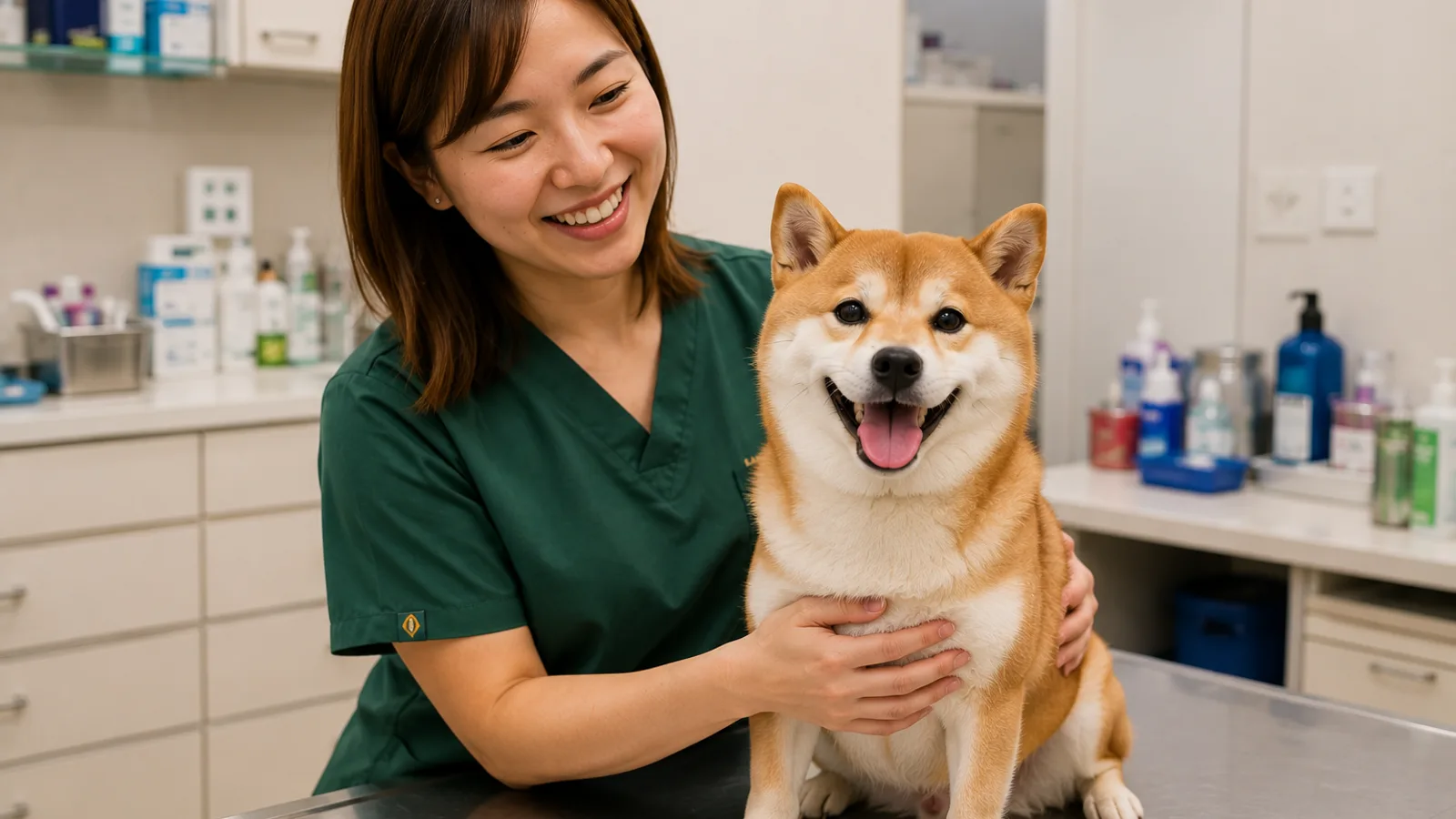

A good vet is the person you can call on a Sunday and trust to tell you the truth, whether that truth is expensive or reassuring. Getting the choice right is less about finding the single best clinic on the island and more about matching a clinic to your dog, your neighbourhood and your budget, then knowing where to go when something happens after hours. This guide walks through the whole decision: how to shortlist, what a first visit tells you, what care costs, the licensing that protects you, and the honest signs that it is time to switch.
By the numbers
- 122 Published veterinary clinics on UrbanDogOwner
- 5 Regions covered across the island
- S$40 to 80 Typical general consultation, confirm at booking
- S$400 to 1,400 Typical dental scale and polish under anaesthesia
- 7 Clinics flagged 24-hour or A&E in the directory
- AVS Every practising vet must be registered with the Animal and Veterinary Service
How do you actually choose a vet in Singapore?
Three things decide it, in roughly this order: proximity, the level of care your dog needs, and the fit between the vet, your dog and you. Proximity matters more than owners expect. The clinic fifteen minutes from home is the one you will actually take your dog to for the annual check, the itchy ear and the limp that appeared overnight, whereas the excellent hospital across the island becomes the appointment you keep putting off. For routine care, a well-reviewed general clinic within an easy commute beats a marginally better one that involves a highway and a car-sick dog.
Level of care is the second filter. Most dogs spend almost all of their veterinary lives in general practice: vaccinations, parasite control, dentals, minor surgery and the everyday not-quite-right. You only need a specialist by referral, when your general vet flags something that wants deeper diagnostics, and you only need a 24-hour hospital in a genuine emergency. So the sensible default is a good general clinic for the day-to-day, with a specialist and an A&E hospital known in advance for the rare moments you need them. Our neighbourhood-by-neighbourhood guide helps you find the general clinic, and the emergency guide covers the after-hours hospitals.
Fit is the part no directory can score for you. A vet who slows down for a nervous dog, drops to the floor, lets the dog sniff the stethoscope before it touches skin, and waits for consent to handle is worth a longer drive, because the dog that does not dread the clinic is the dog you catch problems in early. Fit also means how the vet talks to you: plainly, with options and prices, and without making you feel foolish for asking. You can read a lot of this in a single unhurried consultation.
What should you look for on a first visit?
Book a general wellness consultation before you have a real problem. A first visit is your only chance to evaluate a clinic when nothing is wrong and nobody is stressed, and it tells you most of what you need to know. Watch how the front desk greets your dog in the first thirty seconds, whether the vet introduces themselves to the dog before handling it, and whether they ask what you have noticed at home before telling you what they see.
Look at the facilities without needing to be an expert. A clean, calm waiting area with separate space or timing for cats and anxious dogs is a good sign. Ask, plainly, what the clinic can do in-house: many now have their own laboratory for same-day bloodwork and their own imaging, which saves a second trip when your dog is unwell. For anything surgical, a clinic that runs dental radiography and a proper dental table is a meaningful step up, since dental work is the most common procedure most dogs go through. A short list of questions worth asking on that first visit:
- Which A&E hospital do you refer to after hours, and how does the handover work? You want the answer before you need it.
- Do you run your own lab and imaging, or send samples out? In-house is faster when it matters.
- How do you handle a nervous or reactive dog? The answer tells you how the clinic thinks.
- Will I get a written estimate before any non-urgent procedure? A yes, without hesitation, is the standard to hold clinics to.
- Who sees my dog if my usual vet is away? Continuity matters for chronic conditions.
The first visit also quietly tests the clinic's records. If the second visit feels like the first, with the receptionist re-asking every detail and the vet clearly not having read the previous note, the record-keeping is weak, and that becomes a real problem in a complicated case later.
Emergency versus routine care: when is each right?
Routine care is everything you can plan: vaccinations, the annual or twice-yearly health check, dentals, parasite prevention, and the non-urgent problems you can book an appointment for. This is your general clinic's job, and keeping it close to home is what makes preventive care actually happen. Emergency care is the opposite: the things that cannot wait for Monday, such as suspected poisoning, a bloated hard belly with unproductive retching, difficulty breathing, a seizure that will not stop, collapse, or pale gums. These go to a 24-hour hospital, not your neighbourhood clinic, which is likely closed and not staffed for critical cases overnight.
The practical move is to set both up in advance. Keep a general vet you trust for the 95% of visits that are routine, and separately identify the nearest 24-hour hospital to your home, with a backup in case the first is full. You do not want to be searching for an emergency vet at 3am with a frightened dog in the back seat. The emergency vets guide walks through how to recognise a real emergency, the first-aid holding steps, and the after-hours hospitals we have verified region by region.
What does vet care cost in Singapore?
Very few Singapore clinics publish a price list, so treat every figure here as a typical range to sanity-check a quote against rather than a fixed price, and confirm the current cost when you book. As a rough map: a standard general consultation usually runs about S$40 to S$80, and a specialist or extended-diagnostics consultation more like S$80 to S$150. Core vaccinations are commonly bundled into an annual visit; budget in the region of S$90 to S$200 for the visit plus shots, depending on what is due.
For the bigger-ticket items, a routine dental scale and polish under anaesthesia typically sits between S$400 and S$1,400, driven mostly by the dog's size, the anaesthetic time and whether any extractions are needed, with extractions adding roughly S$50 to S$200 per tooth. Sterilisation is commonly in the S$250 to S$800 band, again scaling with size and sex, and the Animal and Veterinary Service offers a licensing incentive for sterilised dogs that is worth asking about. Imaging varies widely: a set of X-rays is often a few hundred dollars, while an ultrasound or advanced scan costs more. An after-hours emergency consultation usually starts at S$150 to S$300 before any treatment.
Two things to bear in mind
Two honest notes on cost. First, the cheapest quote is not always the saving it looks like: an anaesthesia-free dental, for instance, only removes the visible tartar above the gum line and leaves the disease below it untouched. Second, this is exactly what pet insurance exists for, since it is the four-figure surprise, not the annual check, that strains a budget. Ask any clinic for a written estimate before non-urgent work, and do not be shy about asking what is and is not included.
AVS licensing and microchip records
One accreditation is non-negotiable: every practising vet in Singapore must be registered with the Animal and Veterinary Service (AVS), part of NParks, and clinics that hospitalise and dispense operate as licensed veterinary premises. Registration is the floor, not the ceiling: it means the vet has met the professional standard to practise, but the handling, the honesty and the reviews still decide whether a clinic is right for your dog. Many good clinics also list membership of the Singapore Veterinary Association and any postgraduate qualifications on their own websites, which is a useful signal for surgical or specialist work.
Your vet is also part of your microchip and licensing chain. Under AVS rules a dog must be microchipped and licensed, and the microchip is only as useful as the details attached to it. Ask your clinic to confirm your dog's microchip number at a visit and check it against your registered details, especially after you move house or change phone number, because a chip that points to an old address does not bring a lost dog home. Keeping your licence current is the same kind of quiet admin that only matters at the moment something goes wrong.
When should you switch vets? The red flags
Switching vets is normal, common and easy, and you never need to justify it. The clearest reasons to move on:
- You have stopped trusting the recommendations. A vet who reaches for the most expensive panel every visit, or who never offers a watch-and-wait option, is selling more than treating.
- The pricing has stopped being transparent. Surprise line items, add-ons you did not agree to, and no written estimate before non-urgent work are all signals.
- The handling stresses your dog out. Some dogs are anxious everywhere, but a clinic where the approach makes it worse is simply the wrong clinic for your dog.
- You cannot get a clear answer in an emergency. A clinic that does not pick up or refer cleanly after hours is a plan with a hole in it.
- You have moved. Distance quietly erodes care; a clinic that is now a forty-minute drive is one you will use less.
When you do switch, the new clinic requests your dog's records from the old one on your behalf, and it usually clears within a week. Nothing about it needs to be awkward.
New to Singapore? Setting up your first vet
If you have just arrived, register with a general clinic near your new home in the first week or two, before a problem makes the choice for you. Bring whatever history you have, especially the microchip number and vaccination records, so the clinic can open a file and flag anything due or overdue in the local schedule. Ask which 24-hour hospital they refer to and save that number the same day. Then handle the admin that a move triggers: update your dog's microchip details with the new address, and check your AVS licence is current. If you have brought a dog into Singapore, our cross-border guide covers the import and paperwork side.
Find a clinic near you
UrbanDogOwner tracks 122 published clinics across all 5 regions of Singapore. Here is how they fall across the island; each link opens the full directory filtered to that region, with phone numbers, neighbourhoods, opening hours and the 24-hour and A&E flags on every card.
- Central 54 clinics
- East 28 clinics
- North-East 19 clinics
- West 14 clinics
- North 7 clinics
For the full, filterable list, open the Singapore vet directory, or read the neighbourhood-by-neighbourhood guide for a region-by-region walk-through of what to ask a local clinic and how to switch without losing records.