
Small, comfortable care sessions help you notice changes between grooming appointments. Learn nail care before cutting, clean ears only when needed, and aim for daily toothbrushing without forcing a painful mouth.
4 min read
A few calm minutes together can make care feel familiar instead of becoming a wrestling match. Start when your dog is comfortable, introduce equipment gradually, and allow breaks. Finishing every paw or tooth in one sitting is less important than avoiding pain and fear. If handling has suddenly become difficult, consider whether something hurts rather than assuming your dog is being stubborn.
Nails
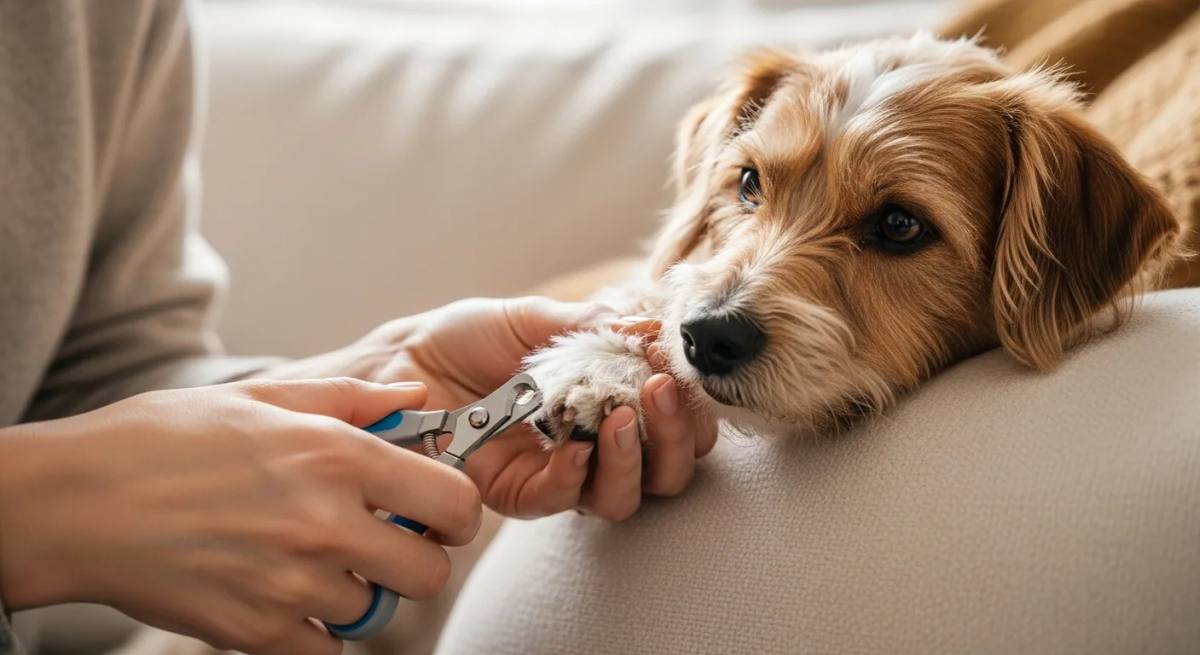
Look at nail length, walking comfort and dewclaws, which can be overlooked. Clicking is a reason to check, not a precise cutting measurement. The quick contains nerves and blood vessels and is harder to identify in dark nails. Ask a vet nurse or groomer to demonstrate on your dog before doing it yourself; do not rely on a “dark dot” description to decide how far to cut. Arrange professional help if you are unsure or your dog resists. A broken nail, nail growing into skin or bleeding that does not settle needs veterinary advice.
Ears
Look for a change from your dog’s usual ears: redness, swelling, discharge, odour, scratching or head-shaking. A painful ear needs assessment before cleaning. Not all healthy ears require routine cleaner, and excessive cleaning can irritate them. Ask your vet whether cleaning is needed and which product and frequency suit this dog. Never insert cotton buds or improvised tools into the canal, and do not use human ear drops or a home mixture.
Teeth
Aim for daily brushing with pet toothpaste once your dog is comfortable with the process. Introduce lip handling and the brush gradually. Do not force brushing over painful or inflamed gums; arrange a vet assessment. Home brushing reduces plaque but does not replace examination, dental X-rays or professional treatment when needed. A salon toothbrushing add-on is not a dental clean under anaesthesia, and neither chews nor fresh-smelling breath prove that the mouth is healthy.
Paws and pavements
Check between the toes and around the pads for cuts, lodged material, redness or tangled hair. Do not dig into a wound or cut close to hidden skin. Ask for help trimming awkward paw hair. Hot ground can burn paws: choose cooler conditions and surfaces, and abandon the route if the ground is uncomfortable to touch. A hand test is a warning check, not proof that a long walk is safe; air temperature, effort and the individual dog still matter.
Eyes and tear stains
Use a clean damp cloth gently on surrounding fur if needed, without putting grooming products into the eye. Do not use scissors close to the eye on a moving dog. Persistent tearing deserves discussion with the vet, while redness, squinting, new cloudiness or keeping an eye closed needs prompt assessment. A tear-stain remover cannot establish whether there is an eye problem.
What to leave to a groomer
Professional help is useful for close trimming, tight mats, unfamiliar dryers and handling that you cannot keep comfortable. Explain pain, previous reactions and any prescribed products before booking. Ask what will happen if your dog needs a break or the groom cannot be completed. Browse groomers across Singapore or read our local coat-care guide. A grooming appointment should not delay treatment for a new medical problem.
Frequently asked questions
Should I clean healthy ears every week?
Not necessarily. Check for changes, but ask your vet whether cleaner is needed; over-cleaning can irritate the ear.
Does home toothbrushing replace a professional dental procedure?
No. Aim for daily brushing, but veterinary examination and professional treatment may still be necessary.
How do I know how far to cut a dark nail?
Ask for a demonstration on your dog. Do not use a vague colour rule as a substitute for learning safe technique.
Is a paw-temperature hand test a guarantee of a safe walk?
No. An uncomfortable surface is a reason to avoid it, but a comfortable hand test does not rule out overheating during exercise.
Sources and editorial review
VCA: individual coat and bathing needs; Cornell: ear cleaning and irritation; AAHA: daily dental care and professional treatment; AKC: double-coat grooming; VCA: nail-trim safety; RSPCA: hot-ground and heat risks. Editorial source review: 12 September 2026.
More from The Block
-
 Dog supplements in Singapore: what helps and what to skip Most healthy dogs on a complete diet need no supplements. A few have real evidence; many are marketing. How to tell them apart, and why to ask your vet first.
-
 Flying with your dog from Singapore: cabin, cargo and relocation (2026) Start with the operating airline and exact route. A pet may travel in the cabin, as checked baggage or through a cargo arrangement depending on the carrier and journey. Confirm acceptance before buying equipment or treating your own flight booking as a pet booking.
-
 Raw feeding for dogs in Singapore: a safe, honest guide Raw feeding is not proven to be healthier than an appropriate balanced cooked diet. CDC advises against raw pet food because of risks to animals and people. Nutritional formulation, cold storage and careful cleaning do not remove every infection hazard. A complete cooked diet is a practical starting point for discussing your dog's needs with your vet.
-
 Choosing a dog for an HDB flat: eligibility, adoption and everyday care A dog can become a much-loved part of flat life. Start by checking eligibility for your actual home, then choose for the individual dog’s needs and the daily care you can offer. A small body or a seller’s assurance is not proof of HDB approval.