

8 min read
Last updated First published 11 July 2026
Build a training plan around useful progress in everyday Singapore settings, rather than a promise that every dog will master the same skills in the same number of weeks.
How long does it take to train a dog?
There is no reliable week-by-week promise that applies to every dog. A dog responding in the kitchen has not necessarily learned to respond beside a busy road. The old timetable on this page also contradicted its own FAQ, giving different completion dates for the same skills. Use observable progress instead.
A useful plan begins with what would make your shared day easier: coming away from the front door, walking without pulling you towards traffic, settling while you prepare dinner, or returning when called in a secure setting. Choose a manageable priority, agree the cue within the household and practise at a level where your dog can succeed.
A progression you can use without a deadline
This is an example planning structure, not a guarantee of results or a clinical protocol. A trainer can adjust it for your dog's history and needs.
- Attention and name response: start in a quiet room. Look for your dog choosing to orient towards you, rather than repeatedly calling over growing distractions.
- Useful position or hand target: choose a behaviour that helps in daily life. A comfortable standing position may be more suitable than insisting on a sit or down if movement appears difficult; discuss discomfort with your vet.
- A brief wait: begin in an easy setting. Increase difficulty in small steps rather than adding a longer wait, a greater distance and a new distraction together.
- Walking together: practise on an uncomplicated stretch before expecting the same response near food stalls, dogs or traffic. Keep safety and access for other people ahead of completing an exercise.
- Recall: rehearse in a secure setting with appropriate physical management. A good response at home is not evidence that an off-leash trial near a road will be safe.
- Settling: include an opportunity to rest. A day filled with commands is not the same as a dog feeling comfortable in the household.
Keep a short record: the cue, location, distraction and what actually happened. “Returned across the living room” is clearer than “recall trained”. When an exercise goes poorly, make the next attempt easier instead of assuming the dog needs a firmer correction.
Which methods should I use?
AVSAB's humane training statement recommends reward-based methods and rejects the necessity of aversive methods. It also distinguishes ordinary skills from fear, anxiety and aggression, which may require a broader professional treatment plan. Do not interpret a failed cue as proof of dominance or a need for painful equipment.
Ask a prospective trainer what they would do when your dog refuses, becomes frightened or reacts to another dog. The answer is more useful than a badge or slogan. Request a demonstration, discuss the equipment, and agree how progress will be recorded and reviewed. See the Singapore training hub and trainer directory as starting points, then check the provider directly.
Why can progress stall?
Review the setting before changing the dog. Has the location become busier? Are different family members using different cues? Did the session run on after the dog needed a break? Is the expected movement uncomfortable? Record the change so the trainer or vet has something specific to assess.
Do not explain every regression away as adolescence. A sudden loss of a familiar skill, reluctance to move, or a marked behaviour change warrants a veterinary conversation. If progress is persistently difficult, seek help with the task and environment rather than adding punishment. Learning history and health matter as well as age.
Adapting practice to Singapore homes and outings
Use your actual routine to choose the next setting. If the difficult moment is the lift opening, practise an easier version nearby at a quiet time. If it is a delivery at the door, plan a comfortable place for the dog while someone else receives it. These are household planning examples, not an invitation to use neighbours as unsuspecting training participants.
Keep shared corridors, entrances and paths clear. Maintain appropriate leash control and leave space for people who do not want to meet your dog. You can pause an exercise to let others pass. A busy void deck is not automatically a better classroom than a quiet room.
Outdoor practice should fit the weather and your dog's condition. A short session or an early start does not guarantee protection from heat illness. Move indoors, shorten or abandon the plan when necessary; use the heat-safety guide when planning outings. Training does not need to be completed outdoors just because it was on the calendar.
What should I pay for, and what should I ask?
Obtain a current written quote. The previous group, private and residential price ranges on this page were not supported by current provider quotations. Compare assessment, session length, group size, travel charges, homework review and follow-up. Ask what happens if your dog is too distressed to participate or needs veterinary input.
For a residential programme, ask who handles the dog, what equipment and methods are permitted, how welfare concerns are reported, and how skills will transfer back to you at home. A promise of a finished dog after a fixed stay deserves scrutiny. You need a practical handover and ongoing support, not just a demonstration by the trainer.
Bring your notes and a clear goal to the first session. For example: “We need help passing dogs on our route without distress” gives more direction than “make the dog obedient”. Agree how you will recognise improvement and when to reassess the plan.
Frequently asked questions
- Will my puppy be trained in six weeks?
- No fixed course length guarantees that. Track the skill, setting and distractions your puppy can manage, then build gradually.
- Should I wait until my puppy is older to start?
- Ask your vet about suitable early activities and use gentle, reward-based practice. The puppy socialisation guide explains how health precautions and early learning fit together.
- Does a successful indoor recall mean my dog can go off leash?
- No. A response in one setting does not establish reliability elsewhere. Use secure settings and appropriate physical management.
- Is a sudden setback just adolescence?
- Do not assume so. Discuss sudden changes, discomfort or loss of familiar abilities with your vet.
- What if we cannot practise outside?
- Work on a manageable household skill indoors, or take a break. Weather and your dog's comfort take priority over the plan.
- How do I compare training prices?
- Compare current itemised quotes, methods, group size, session duration and follow-up. A fixed completion promise is not a substitute for a plan that fits your dog.
For younger dogs, read the puppy socialisation guide. Editorial source review: 12 September 2026.
More training guides
-
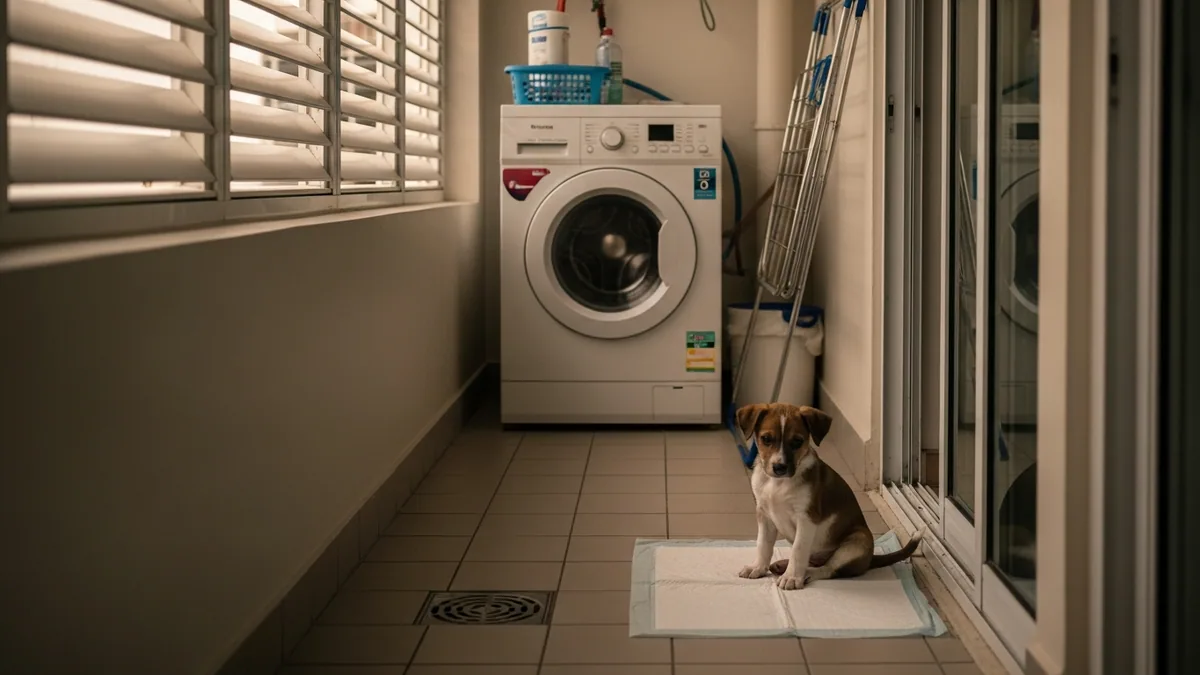 Toilet training the apartment way No garden, no driveway, just a tiled floor and a lift that takes two minutes to arrive. Here is how to toilet train a puppy in a Singapore flat without losing your mind.
-
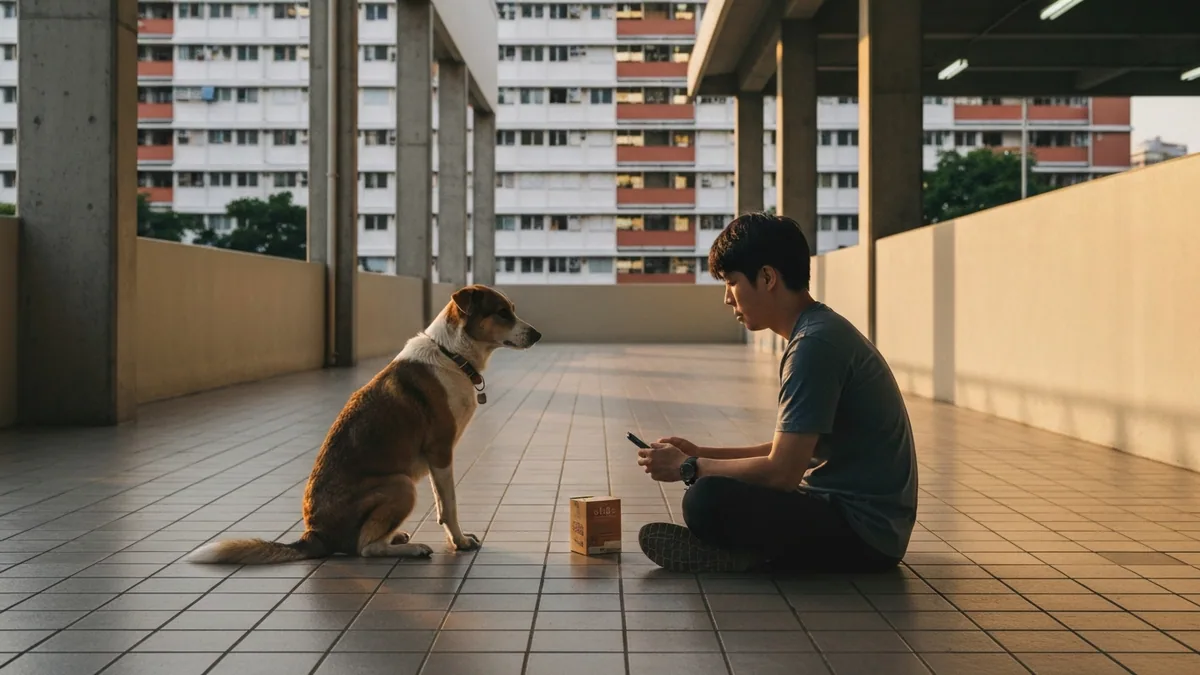 Clicker basics A clicker is a timing tool, nothing more and nothing less. Learn to use it well in a small Singapore flat and you will have the clearest, most efficient communication method available for teaching your dog almost anything.
-
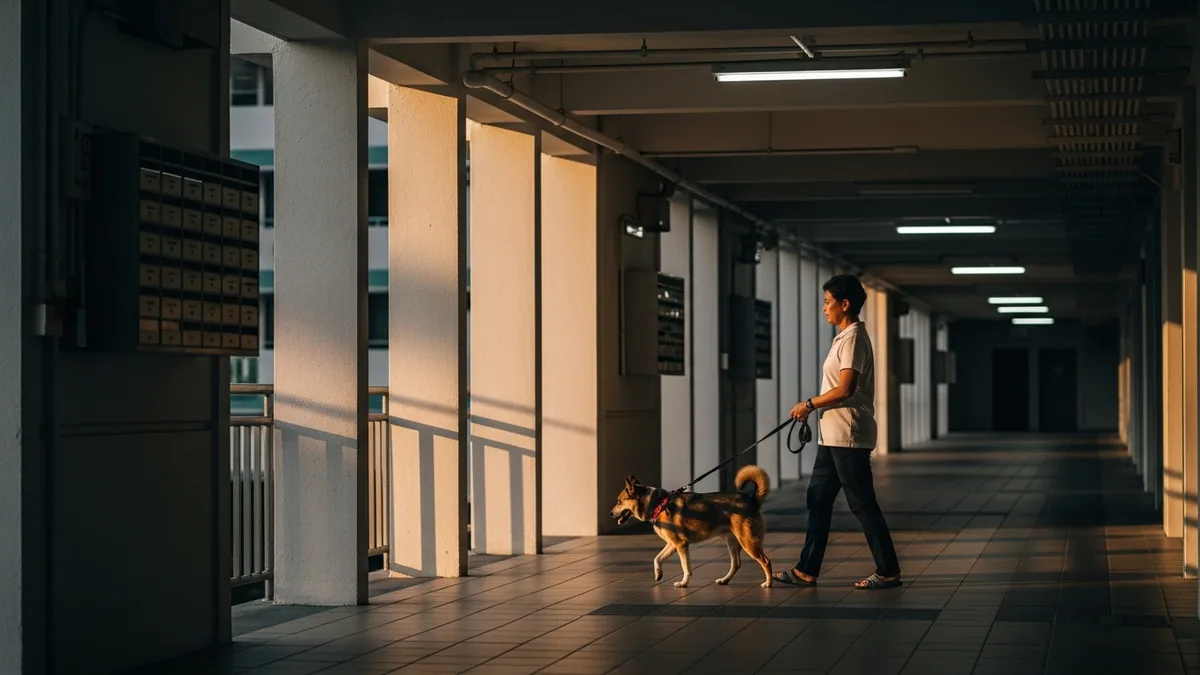 Loose-leash walking in Singapore’s shared spaces Start with room, reward a slack lead and make the task easier when your dog struggles. Lift lobbies, narrow pavements and crossings need practical choices, not a perfect heel or a fixed timetable.
-
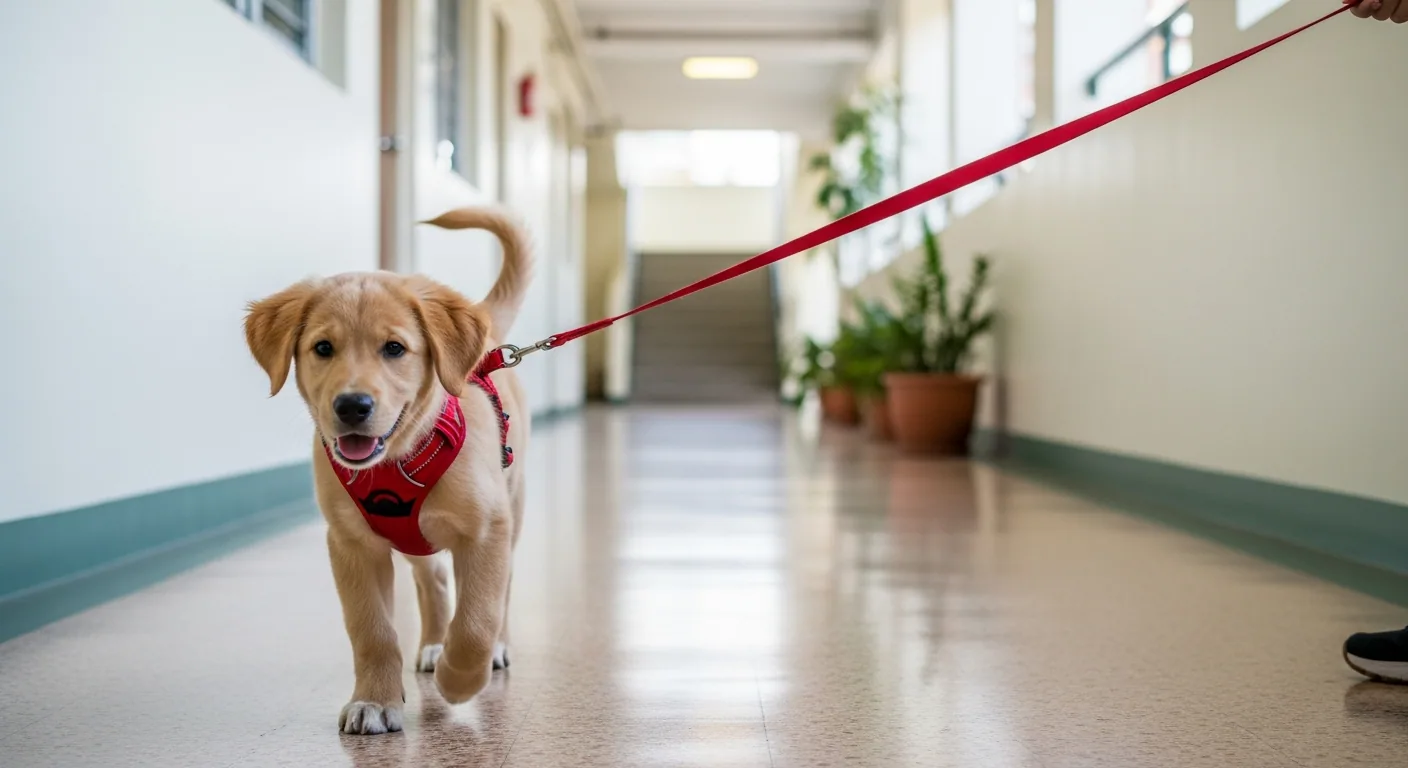 Leash Training a New Dog or Puppy in Singapore Getting a brand-new dog or puppy happy on a leash is a gentle, gradual job, not a one-session fix. Start indoors, reward the position you want, and let your dog set the pace through HDB corridors, lifts and the Singapore heat. This starter guide covers collar and harness choice, first steps, and how to handle pulling and lunging kindly.