
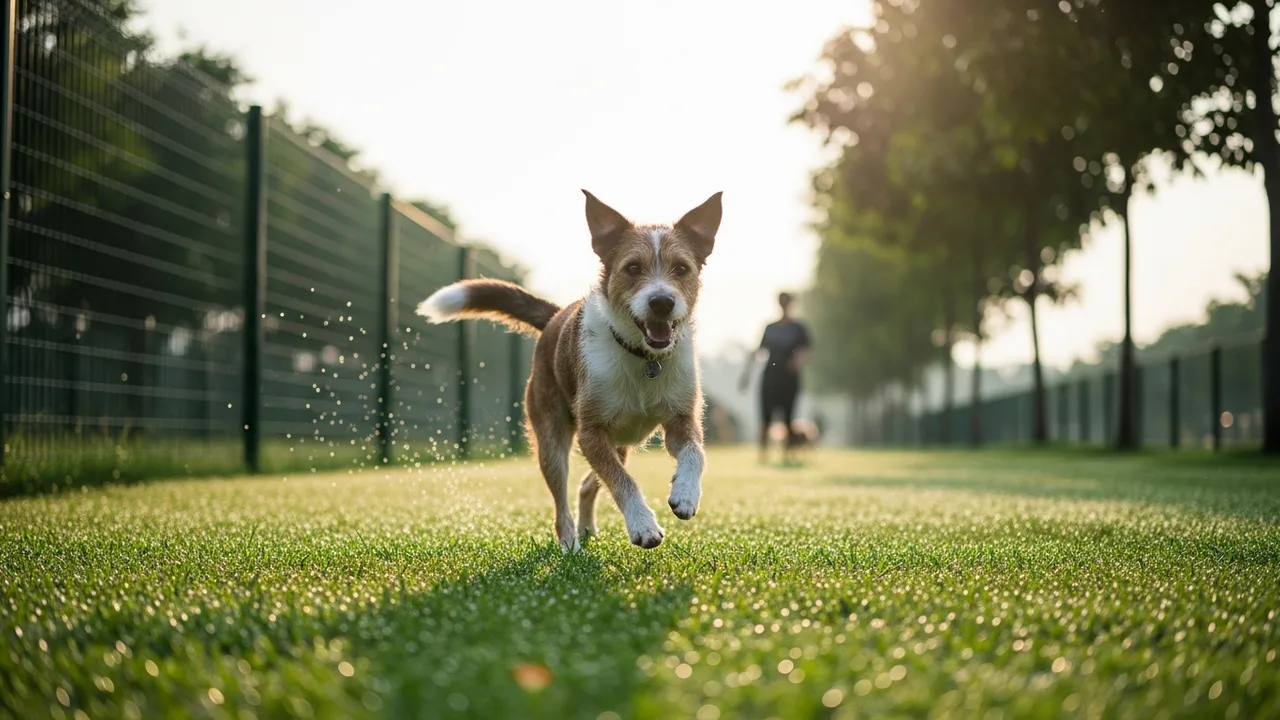

A dog that gets to use its body and its nose is calmer, fitter and easier to live with, and Singapore offers more ways to do that than most owners realise. This hub is the map: it walks through the activities that genuinely run here, how to read whether your dog is built for a given sport, what the heat and the island’s venues actually allow, roughly what each pursuit asks of your time, and where the communities are. It stays honest about the sports that have no local scene yet, because a wasted Saturday driving to a class that does not exist helps nobody.
What dog activities actually exist in Singapore
Start with an honest inventory, because the gap between what looks possible online and what genuinely runs here trips up a lot of owners. The activities with a real local footing are the training sports, chiefly agility, obedience and rally, run both by the Singapore Kennel Club and by a number of private trainers; canicross and social dog running, which is informal but active; organised playdates through breed and neighbourhood groups; and water activities, from dog-friendly beaches to dedicated swim and hydrotherapy pools. These are the pursuits you can realistically build a routine around.
Two sports need a caveat. Flyball, the relay-racing team sport, has never had a standing club here in the way agility has, and appears only occasionally, running as a single team through one training school rather than as a league; our flyball guide is honest about that. Dock diving, where a dog sprints down a dock and leaps for distance into water, has no established Singapore club at the time of writing, and our dock diving guide would rather say so than send you looking for one. The point of naming this plainly is simple: pick from the sports that exist, and you will actually get out and do them.
What your dog’s fitness and temperament dictate
The right activity is the one that fits the dog in front of you, not the one that looks best on a highlight reel. Two things decide it: the body and the brain. On the body, a structurally sound dog with good joints and stamina can take the impact of agility jumps or the sustained effort of canicross, whereas a flat-faced (brachycephalic) breed such as a pug or French bulldog cannot cool itself well and should never do high-intensity sport in this climate. Dogs with hip or elbow problems, and any dog carrying extra weight, are far better suited to swimming, which builds fitness without loading the joints. If in doubt, a vet check before you start is the cheapest insurance you will ever buy.
Temperament and drive
On the brain, drive and sociability matter as much as fitness. A high-energy working breed that needs a job will light up at agility or a good hard run; a steady, food-motivated dog of almost any shape will enjoy obedience and rally; and a shy, anxious or reactive dog is usually better served by quiet one-to-one work and small, carefully screened playdates than by being thrown into a busy group. There is no failure in that. Matching the activity to the dog’s temperament is how you end up with a dog that loves the sport rather than one that tolerates it. Puppies are their own case: socialise and train them early, but hold off on jumping and hard running until the growth plates close, roughly 12 to 18 months and later for large breeds.
What Singapore’s climate and venues allow
The single biggest constraint on dog activity here is not space or rules, it is heat. Singapore sits almost on the equator, with daytime temperatures around 31 degrees and humidity that regularly tops 80 per cent, and a dog sheds heat far less efficiently than a person. That makes heatstroke a real and fast-moving danger during exertion, and veterinary guidance such as Cornell’s canine heat-safety advice is explicit that strenuous activity should be avoided in the hottest, most humid parts of the day. It is the reason experienced local owners treat the clock as their most important piece of kit.
The practical rule is to do anything strenuous in the cool hours, before roughly 9am or after 7pm, keep sessions shorter than a temperate-climate guide would suggest, carry water, and stop at the first sign of heavy panting, a lolling tongue or a dog that lags behind. Our heatstroke first aid guide covers the warning signs and the cooling protocol vets recommend.
Venues are the other shaping factor, and here the news is better than you might expect. Off-leash freedom is legal only inside a designated, fenced dog run, as the AVS dog-runs guidance sets out; everywhere else in public your dog must be leashed, a rule the Animal & Veterinary Service sets out clearly, with fines of up to S$5,000 for letting a dog off-lead where it should not be. Within that frame, though, the island is well supplied: our directory holds 31 fenced dog runs, dozens of parks and trails for on-lead exercise, and coastal spots where dogs are welcome. The constraint is timing and leashing, not a shortage of places to go.
What each activity asks of your time and budget
Activities differ less in money than in commitment, and it helps to know which kind you are signing up for. At the low-commitment end sit playdates, beach trips and casual park visits: these cost little beyond transport and a bag of treats, and you can do them on any free morning. Canicross asks for a modest one-off outlay on the right kit, a well-fitted harness for the dog, a waist belt for you and a bungee line between the two, after which the runs themselves are free. Swim sessions at a dog pool are pay-per-visit and add up if they become a habit, but they are gentle and worth it for a dog that cannot take land impact.
At the higher-commitment end are the structured training sports, agility, obedience and rally, where you are paying for an instructor’s time across a course of weeks and, if you catch the bug, for entry to trials. This is the bigger investment of both time and money, and it rewards consistency: a weekly class only works if you practise the foundations between sessions. We deliberately do not quote specific class fees on this site, because they differ between providers and change over time, and a stale number is worse than no number. The honest step is to contact the club or trainer directly for current pricing before you commit.
How to start: build the foundation first
Whatever sport you fancy, the on-ramp is the same, and it is not the sport itself. It is a dog you can control off the lead. Reliable recall, a solid "wait" or "stay", and a dependable "leave it" are the foundation every activity is built on, and most clubs will expect a baseline of that before they let your dog work loose around other dogs. Building it is not glamorous, but it is the difference between a session you enjoy and one you spend chasing your dog across a field. Our dog training in Singapore guide walks through how to build that base with positive-reinforcement methods, and the trainer directory lists instructors who run classes.
With the basics in place, the sensible sequence is to try before you buy in. Go to a taster or beginner session rather than committing to a full course sight unseen, watch how your dog responds, and be led by what the dog enjoys. A single good playdate or one calm visit to a quiet dog run tells you more about your dog’s appetite for group activity than any amount of reading. From there, our sub-guides take each activity in turn, from the low-key social ones to the structured sports, so you can go as deep as you and your dog want to.
Where the communities are: your entry points
Most owners get into dog sport through people rather than through a website, and Singapore’s dog community is friendlier and more accessible than it looks from the outside. The gentlest entry point is a playdate, arranged through a breed or neighbourhood group, which lets your dog socialise and lets you meet owners who are already doing more; our playdate guide covers how to organise and screen one well. From there, the fenced dog runs are where regulars gather and word of local activity spreads, so a few visits with good park etiquette will plug you into the scene faster than anything online.
For the structured sports, the route in is a class. The Singapore Kennel Club is the national body for pedigree dog sport and a starting point for agility, obedience and rally, and a growing number of private trainers run their own beginner courses. Approach two or three, ask to observe a session, and pick the one whose approach and atmosphere suit you and your dog. The community rewards showing up: turn up, be a considerate handler, clean up after your dog, and you will find the doors to Singapore’s dog-sport world open more easily than you expected.
The activity guides
- Doggy playdates in Singapore How to organise one, screen the other dogs and owners, and choose a venue that sets everyone up to get along.
- Dog park etiquette The unwritten rules, the red flags to read early, when to leave, and what to bring to a fenced run.
- Dog agility in Singapore What agility is, where beginners can take a class, and the path from foundation work to a sanctioned trial.
- Flyball in Singapore What flyball is, how active it currently is here, and how to gauge whether your dog would suit it.
- Canicross and running with your dog The gear, the routes, and the heat management that makes running with a dog viable on this island.
- Water activities with your dog Dog-friendly beaches, swim and hydrotherapy pools, and how to keep a swim session safe.
- Dock diving in Singapore What dock diving is, whether a local scene exists yet, and how to give your dog the thrill of the jump another way.