Banana and peanut-butter toy filling
A small optional filling for an appropriate food toy. It is not a guaranteed quiet half hour, a cooling treatment or a puppy meal.
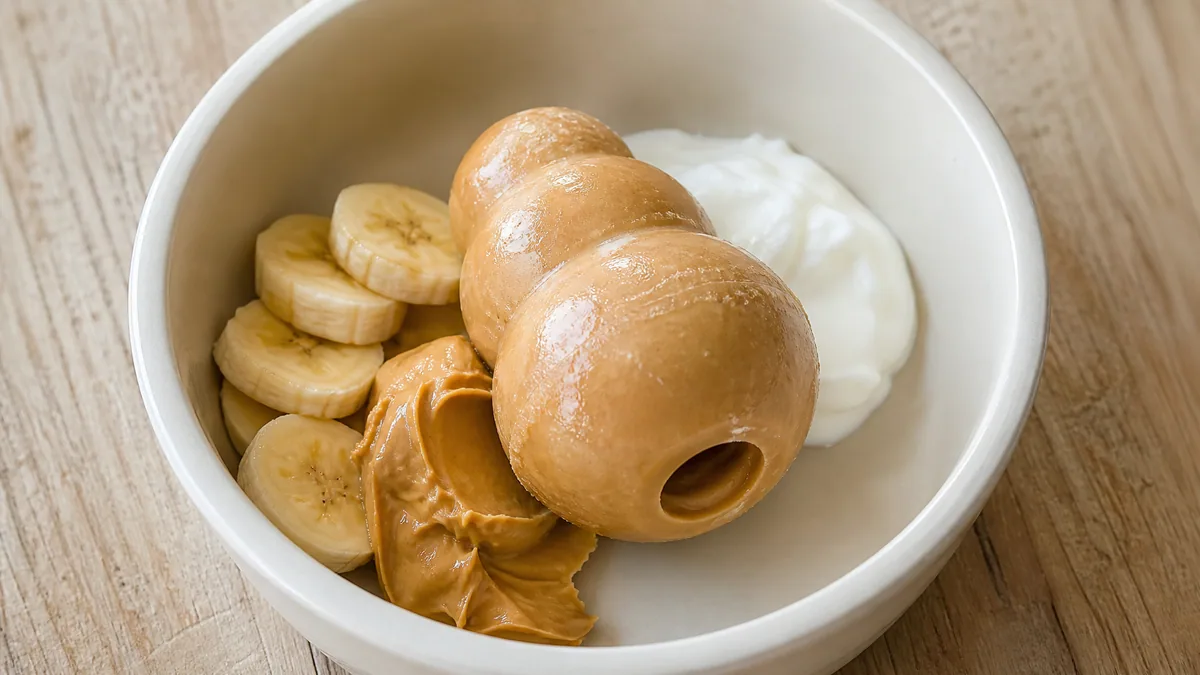
Ingredients
- 1 ripe banana
- 2 tbsp xylitol-free peanut butter
- 2 tbsp plain yoghurt
Method
- Read both the peanut butter and yoghurt labels. Use plain products without xylitol; if the ingredients are unclear, do not use them.
- Mash the banana and mix with the peanut butter and yoghurt. This makes a batch, not a single-dog serving.
- Use only a small amount within the individual treat allowance in a correctly sized, undamaged food toy. Follow the toy manufacturer’s filling and use instructions.
- If freezing, follow the toy maker’s guidance. Supervise use and offer an appropriate texture for your dog. Do not assume a whole filled toy is a suitable portion.
Before I make this
Tick what you have arranged. Save to my account to return later; this is your record, not a professional assessment.
Save to your account to keep progress across devices. Sign in if prompted. Existing browser progress is imported only when you save.
Sign in to save · My saved progress
A small extra, not a complete meal
These recipes have not been formulated as complete diets, clinical recovery diets or weight-loss plans. WSAVA advises keeping treats below 10% of daily calories, with the veterinary team helping choose the type and amount. A prescribed diet, medical condition or sensitivity may rule out a recipe.
Calories and standard serving yields have not been calculated for these recipes. The ingredient list makes a batch, not one dog’s portion. Do not use an unmeasured “cup”, “bite” or filled toy as a calorie allowance. Ask the clinic how extras fit your dog’s plan, or use a suitable labelled treat when you need a known calorie amount.
Prepare, portion and put away
- Check every ingredient and label. Do not add seasonings, sauces or substitutions without checking suitability.
- Use the method and a food thermometer where appropriate. FoodSafety.gov cooking temperatures guide kitchen handling, not nutritional suitability for a dog.
- Cool the portion before offering it. Choose a manageable size and texture and supervise eating or toy use.
- SFA advises storing cooled cooked food in clean, covered containers in the refrigerator or freezer. Keep the fridge at 4°C or below and freezer at -18°C or below. Separate raw and ready-to-eat ingredients.
- Make a small batch, label the preparation date and set aside unused portions before serving. These recipes have no tested shelf-life; do not assume homemade moist treats keep for a week in a tin. Do not return food your dog has licked to the batch.
Editorial source review: 12 September 2026. Sources support these handling and feeding principles; they do not certify or endorse the individual recipes. Recipes are not kitchen-tested or veterinary-formulated.