A harness should help you enjoy a walk together, not become something your dog dreads putting on. Start with your dog's shape, comfort and behaviour. A popular design or attractive photograph cannot tell you whether the actual fit is right.
What to check
- Individual fit Body shape and movement matter more than a design label
- Size chart Use the measurements for this exact model
- Check regularly Look for rubbing, loose straps and damaged fastenings
- Training A clip position does not teach loose-lead walking
Collar or harness: decide what each is for
A collar can carry an identification tag; a walking harness attaches the lead around the body. These serve different purposes. Keep microchip registration and contact details current as well: a tag or harness is not a substitute for registration. Ask your vet about equipment if your dog has a neck, breathing, skin or mobility problem.
Think about the actual outing. A neighbourhood walk, travel in a vehicle and support for a dog with reduced mobility have different requirements. Do not assume a walking harness is a tested car restraint or a lifting aid. Check the product's intended use and its evidence before relying on either claim.
A shape is a starting point, not a guarantee
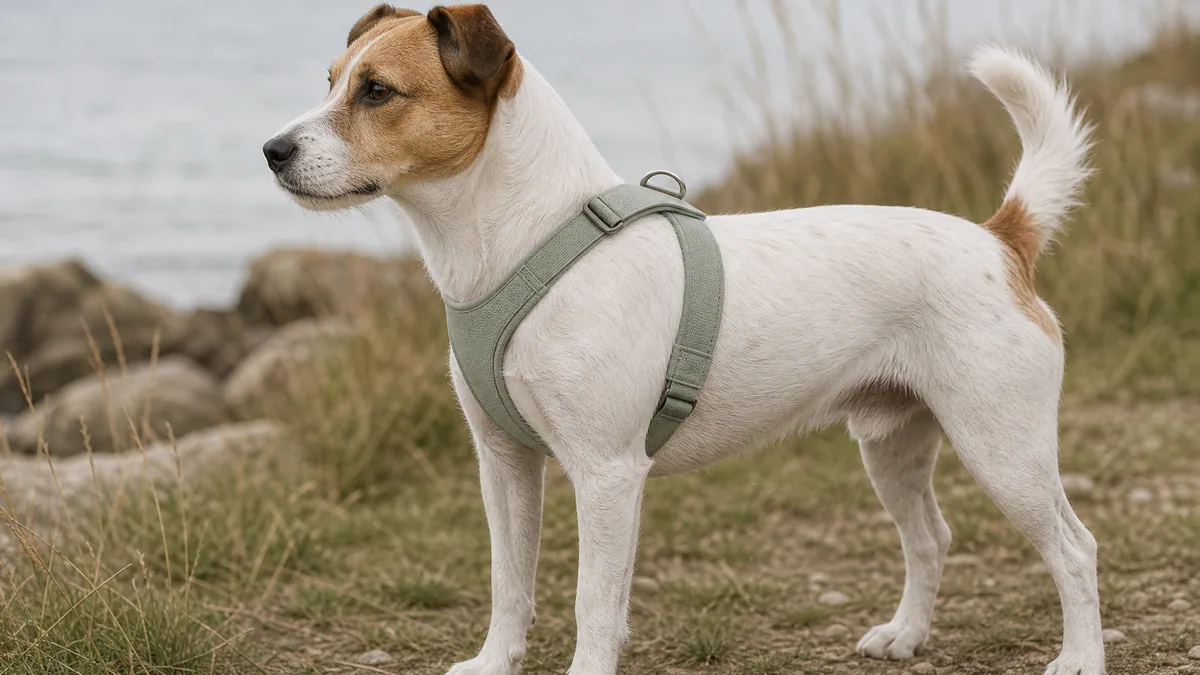
Y-front, chest-strap and step-in describe designs, not universal rankings. Research on harness design and canine movement supports assessing the individual dog and fitting, rather than assuming one style is best for all. A label such as non-restrictive does not establish that movement will be unaffected.
Ask to try the harness in a calm setting. Watch where the straps sit and whether they shift as the dog walks, turns, sits and lies down. Do not force a worried dog through repeated fittings. If the dog freezes, struggles, appears uncomfortable or moves differently, pause and seek help before committing to the purchase.
Use the maker's instructions, then check the dog
Measure the points specified for the exact model. These may include chest girth, neck and body length; size names vary between brands. Ask about the adjustment range and returns policy, particularly for a growing puppy or a dog whose measurements fall between sizes. Record the model and selected size so replacing it later does not become guesswork.
The familiar two-finger check is only a rough check. Hand size, coat and strap position vary. Follow the product's fitting instructions, inspect for rubbing or pressure and check that fastenings are fully secured. An apparently comfortable fit still needs an escape-risk assessment in a safe place. Do not test this by frightening or pulling the dog near traffic.
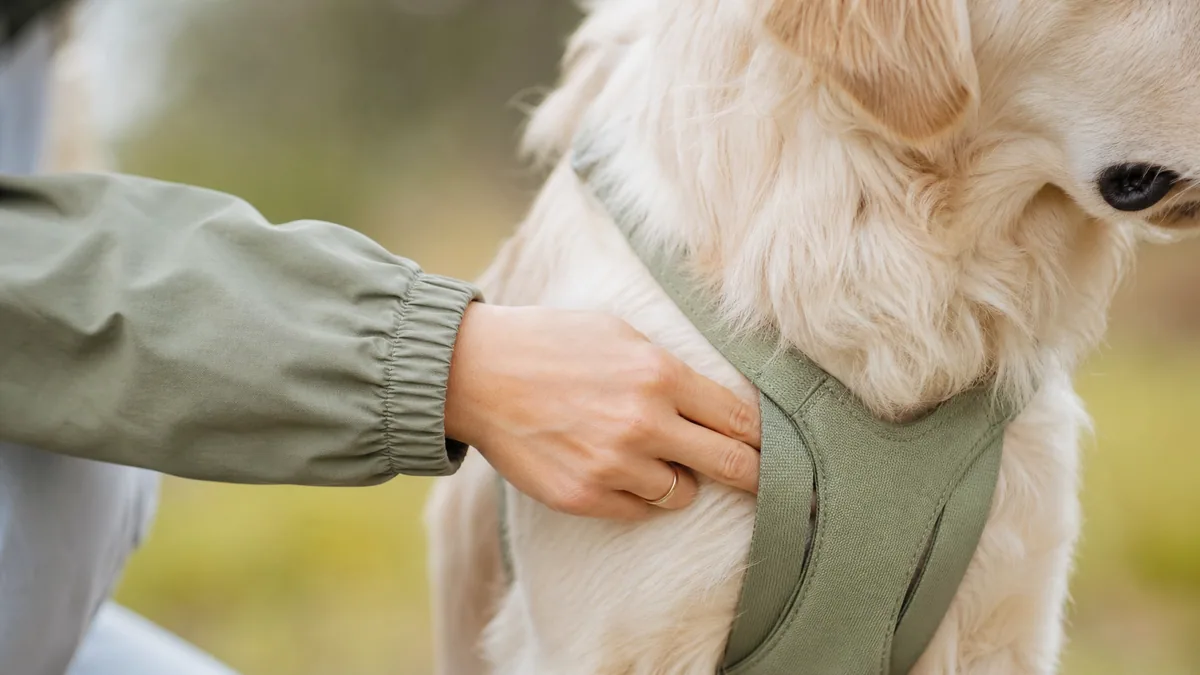
Recheck after adjustment, washing, weight change and growth. Look for damaged stitching, worn buckles and straps that have slipped. If the dog has previously backed out of equipment, get individual fitting and handling advice rather than assuming a tighter setting solves the problem.
Treat pulling as a training question too
A front or back attachment changes how the lead acts on the harness. It does not by itself teach the dog what to do. Ask a qualified reward-based trainer to help select and use equipment when pulling or lunging makes walks difficult. Do not choose a device because it promises to stop behaviour through pain or intimidation.
Use the training guide to prepare questions about loose-lead walking, distance from triggers and manageable practice. If handling suddenly becomes difficult or the dog dislikes touch, consider whether veterinary assessment is needed. A new piece of equipment should not hide a new health concern.
Care for the equipment between Singapore walks
Compare drying, cleaning and adjustment with your routine. Follow the manufacturer's washing instructions and let wet equipment dry fully. Inspect the skin under contact points and stop using a harness that causes rubbing. Persistent redness, sores or discomfort needs veterinary advice. No fabric label guarantees protection from heat or skin problems.
Check the full purchase cost, including any extra lead or replacement parts you actually need. A higher price is not proof of better fit. Keep the receipt and instructions, and photograph the correct strap settings as a reminder for family members or a walker. Everyone handling the dog should know how the harness fastens and when it should be removed.