

5 min read
Last updated First published 11 July 2026
Choose help for the problem your dog actually has. Ask how the trainer uses rewards, what they do when a dog is frightened or makes a mistake, and how you can stop a session. Check the individual’s current credential and any required AVS accreditation. For sudden behaviour changes, fear, aggression or distress when alone, involve your vet and a suitably qualified behaviour professional.
Match the professional to the need
Puppy and everyday-manners classes teach skills and coach the household. A sport instructor should have relevant experience in the particular activity. Fear, aggression and separation-related distress require individual assessment, appropriate behaviour expertise and veterinary involvement. A general obedience class is not a substitute for that assessment.
Tell the professional what happens, where it happens, what comes before it and what you have already tried. Describe observable behaviour rather than labelling the dog stubborn or dominant. Do not provoke a reaction to make a demonstration video. Keep people and animals safely separated where needed while arranging help.
Check the individual and the scope of the credential
The AVS register names accredited individuals and their underlying certifications. Match the person who will teach you, not only the business name. AVS says the underlying certification must remain valid. Its list distinguishes knowledge-assessed training, skills-assessed training and behaviour-consulting credentials. These are different forms of evidence, not interchangeable titles.
Ask for the exact credential, issuer, current directory entry and experience with comparable cases. Membership of a professional association, completing a course and holding an assessed certification are different things. None alone guarantees that every technique used in your session is appropriate. A non-veterinary trainer or behaviour consultant cannot replace your vet’s medical assessment or prescribing role.
Do not describe Singapore dog training simply as unregulated. AVS explains when obedience training is required, including specified dogs, dogs assessed by AVS as aggressive or potentially dangerous, and Project ADORE adoptions. ADORE trainers can also deliver the scheme’s training. Confirm the applicable trainer, certificate and submission requirements with AVS or the adopting organisation.
Ask to see how the dog is treated
AVSAB’s current guidance recommends reward-based methods and rejects aversive methods. Its 2025 clarification says it does not endorse particular trainer organisations. A logo, directory label or credential should not be described as an AVSAB endorsement.
- Ask what happens after a mistake, refusal, growl or attempt to move away. Look for an explanation of rewards, easier tasks, space and breaks.
- Ask whether shock, prong or choke collars, leash jerks, intimidation or physical punishment will be used. Do not accept an unexplained “correction”.
- Ask to observe a suitable session or see representative unedited handling. Another client’s privacy may limit observation, so ask what alternative evidence is available.
- Agree that you can stop a session. Stop if handling frightens or hurts your dog; ask for a safer approach or another provider.
- Be cautious about guaranteed results, fixed cure dates or pressure to pay before the method and terms are clear.
SPCA’s 2025 Cruelty and Welfare Report describes rough handling in 16 of its 35 physical-abuse cases (pages 12 to 13). Those are reported cases across animals, not a prevalence estimate for Singapore dogs or trainers. The useful lesson is to question harmful handling even when it is described as discipline.
Compare written proposals, not headline prices
Use our dated published-price sample to see how package scope changes the comparison. It is a small convenience sample, not a typical-market range or a ranking. Ask for the total including assessment, session length and count, tax, travel, venue charges, equipment, follow-up and cancellation terms. A package may not cover every session your dog needs.
For board-and-train, also check the daily care routine, overnight supervision, housing, rest, equipment, veterinary arrangements, access to updates, handling methods and the handover plan for your household. Do not assume staying with a trainer makes learning transfer automatically to home.
Questions to take to the first conversation
- Who will work with my dog, and where can I check their qualification?
- What methods and equipment will you use, including when the dog struggles?
- How will you tell whether the dog needs a break or veterinary assessment?
- How will you teach everyone who cares for the dog, including helpers?
- What does the written price include, and what may cost extra?
- How will we review progress and change the plan if it is not helping?
- When would you refer us to someone else?
Record the answers in the adoption and home-preparation worksheet. Directory entries can help you find candidates, but ratings and method labels are starting points to check, not proof of a personal visit or clinical endorsement.
Build a shortlist
Browse the trainer directory, then compare the written answers to the questions above. Use the dated price records for their stated services and verify each candidate’s current methods and credential directly.
Sources and editorial review
Source review: 23 September 2026. AVS dog training; AVS trainer register; AVSAB position statements, including the 2026 trainer-selection handout; SPCA 2025 welfare report. This source review is not a named veterinary review.
Frequently asked questions
- Does AVS accreditation guarantee results?
- No. Check the individual on the current AVS register, the relevant credential and the methods proposed for your dog. Accreditation does not promise a particular outcome.
- Is association membership the same as certification?
- No. Ask whether the claim means membership, course completion or an assessed credential, and verify it with the issuing organisation.
- When should I involve a vet?
- Arrange veterinary assessment for sudden behaviour changes, suspected pain, fear, aggression or distress. Your vet can help identify medical factors and refer you for suitable behaviour support.
- What should a training quote include?
- Ask for the full programme scope, assessment, session count and duration, tax, travel, equipment, follow-up and cancellation terms. Confirm which extra sessions may be charged separately.
More training guides
-
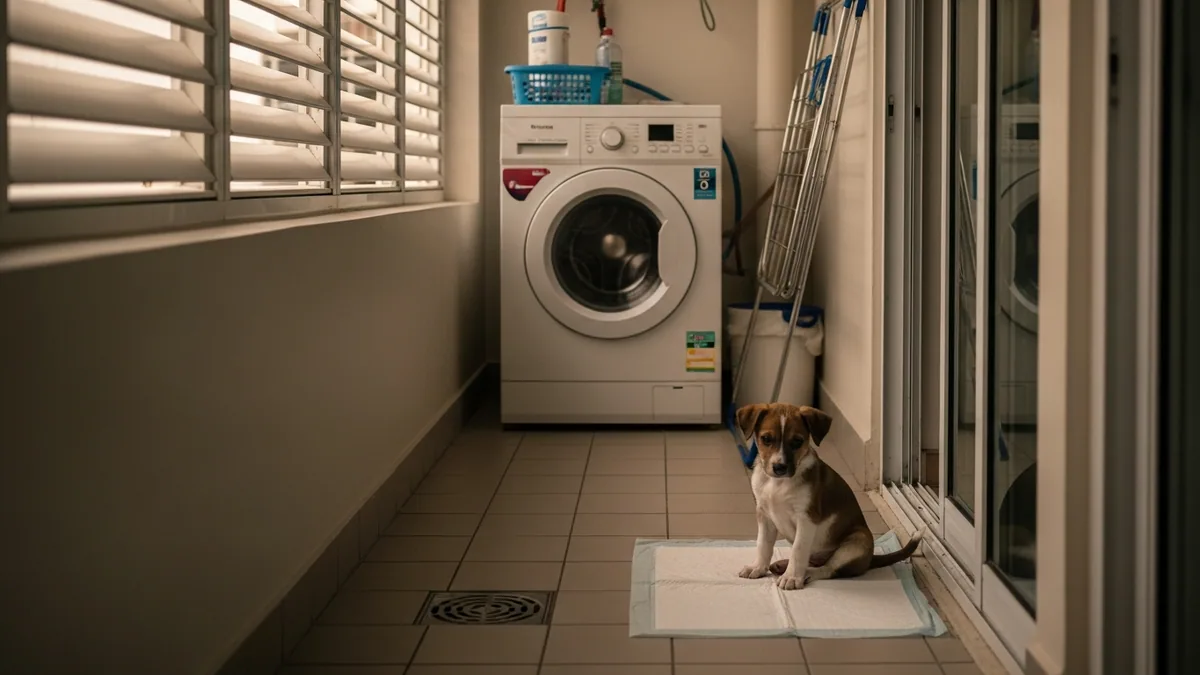 Toilet training the apartment way No garden, no driveway, just a tiled floor and a lift that takes two minutes to arrive. Here is how to toilet train a puppy in a Singapore flat without losing your mind.
-
 Clicker basics A clicker is a timing tool, nothing more and nothing less. Learn to use it well in a small Singapore flat and you will have the clearest, most efficient communication method available for teaching your dog almost anything.
-
 Loose-leash walking in Singapore’s shared spaces Start with room, reward a slack lead and make the task easier when your dog struggles. Lift lobbies, narrow pavements and crossings need practical choices, not a perfect heel or a fixed timetable.
-
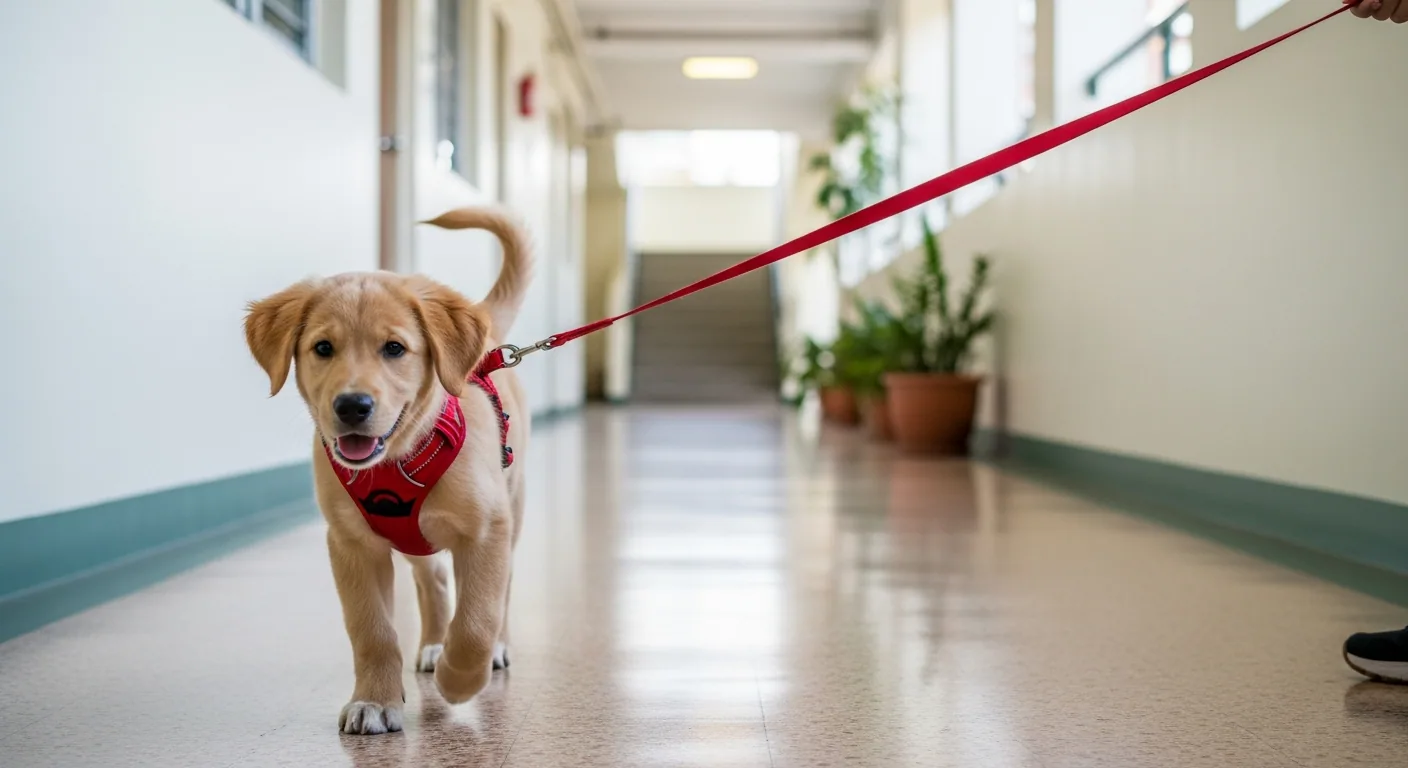 Leash Training a New Dog or Puppy in Singapore Getting a brand-new dog or puppy happy on a leash is a gentle, gradual job, not a one-session fix. Start indoors, reward the position you want, and let your dog set the pace through HDB corridors, lifts and the Singapore heat. This starter guide covers collar and harness choice, first steps, and how to handle pulling and lunging kindly.