

4 min read
Last updated
Choose a puppy class by how it handles your puppy, coaches your household and manages health, space and breaks. Ask six practical questions before comparing the full written price.
Choose the learning environment before the package
A useful puppy class teaches you how to help your puppy feel comfortable and practise everyday skills. It doesn't need to turn every puppy into a playmate. Start by asking how the instructor handles a puppy who hides, pulls away or needs a break. Then compare the venue, entry requirements, household coaching and full written price.
Picture the journey from your Singapore home: a shared lift, transport to the venue, waiting at the entrance and the trip home. Ask where you can wait away from other dogs, whether there are rest breaks, and what happens if heat, heavy rain or a crowded entrance makes the visit too much. These are questions to check with the actual provider, not features every class offers.
Six questions for a puppy-class enquiry
- Who teaches us? Get the name of the person who'll run your sessions. Check any claimed credential with its issuer and, where relevant, the current AVS trainer register. A business logo or association membership isn't the same as the instructor's assessed qualification.
- What happens when a puppy struggles? Ask for a concrete example: hiding behind a chair, refusing to approach, or pulling towards another puppy. Look for space, easier tasks and breaks. Ask whether lead jerks, intimidation, shock, prong or choke equipment will be used. AVSAB recommends reward-based methods; it doesn't endorse individual training organisations.
- How is the group managed? Ask how puppies are grouped, how much space each household has, how staff supervise, whether greetings are optional and how a puppy can opt out. Ask to observe a suitable session, or request representative handling footage with other clients' permission.
- What are the entry and hygiene rules? Ask about the health and vaccination records requested, cleaning of surfaces, shared equipment, illness exclusions and missed-class arrangements. Take those requirements to your own vet to decide whether this setting suits your puppy. A fixed age or injection count isn't individual clearance.
- Will the household learn? Ask who can attend, whether a helper or co-carer can join, what you'll practise at home and how to ask for help between sessions. Include your actual lift, corridor and toilet arrangements in the conversation.
- What's the complete commitment? Request a dated quote: assessment, session count and length, tax, venue or travel charges, equipment, follow-up, cancellations and any separately charged sessions. Don't compare a package price with someone else's single-session price.
Group, private or residential: what changes?
- Group puppy class
- Consider it for everyday foundations when your puppy can participate comfortably. Ask whether quiet observation without greeting is possible. A group should be manageable for the individual puppy; more contact isn't automatically better socialisation.
- Private coaching
- Consider it when you need help adapting skills to your home, when travel or group participation is difficult, or when carers need coaching together. For fear, aggression or distress, start with the individual professional-support pathway below rather than assuming private obedience is treatment.
- Board-and-train
- This means staying away from home, not simply a more intensive class. Ask about daily care, overnight supervision, rest, handling, veterinary arrangements, updates and how your household will learn afterwards. Don't choose it as a guaranteed reset or a substitute for assessing a welfare concern. You can leave it off your shortlist.
Socialisation isn't compulsory play
AVSAB's puppy-socialisation statement supports safe early experiences without overwhelming fear or avoidance, and discusses class hygiene. It isn't a Singapore class-entry certificate or a timetable for your individual puppy. Agree suitable opportunities with your vet and provider; a busy dog run is a different environment.
For your first conversation, write down one everyday goal, one concern and the conditions that would make you pause. For example: learning to settle beside you, needing space around the lift, or wanting permission to step out. These are prompts for a real conversation, not a test your puppy has to pass.
When a class isn't the next step
For sudden behaviour changes, suspected pain, aggression, marked fear or difficulty being alone, speak to your vet and use the professional-support decision pathway. AVS distinguishes training from behaviour support. A general class or practice planner doesn't diagnose or treat distress.
Keep home arrangements manageable with the first-month companion. The separate trainer-selection guide goes deeper into credentials and written proposals. This page compares learning formats and puppy-class questions; it doesn't rank providers or claim current availability.
Sources and review status
Sources checked 28 October 2026 by UrbanDogOwner Editorial. This is general editorial guidance, not a named veterinary or behaviour-professional review. A source citation is not an endorsement of Udo or any listed provider.
Start with a quiet moment together →A small idea to try, with progress kept in your Pack.
More training guides
-
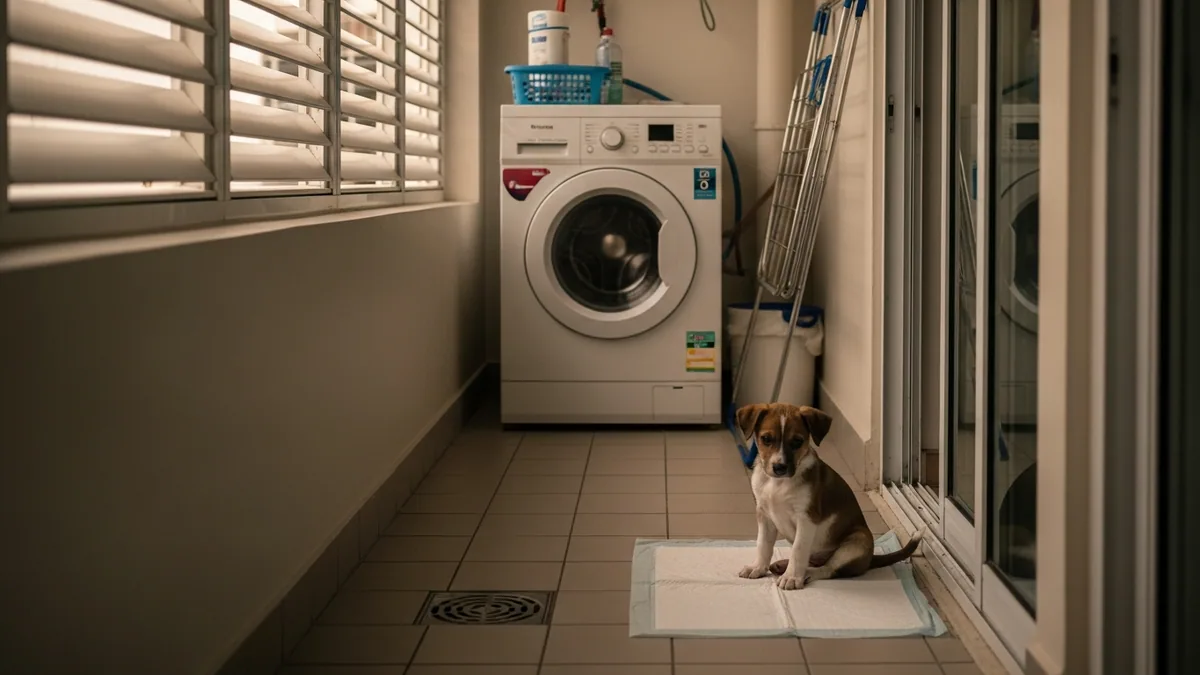 Toilet training the apartment way No garden, no driveway, just a tiled floor and a lift that takes two minutes to arrive. Here is how to toilet train a puppy in a Singapore flat without losing your mind.
-
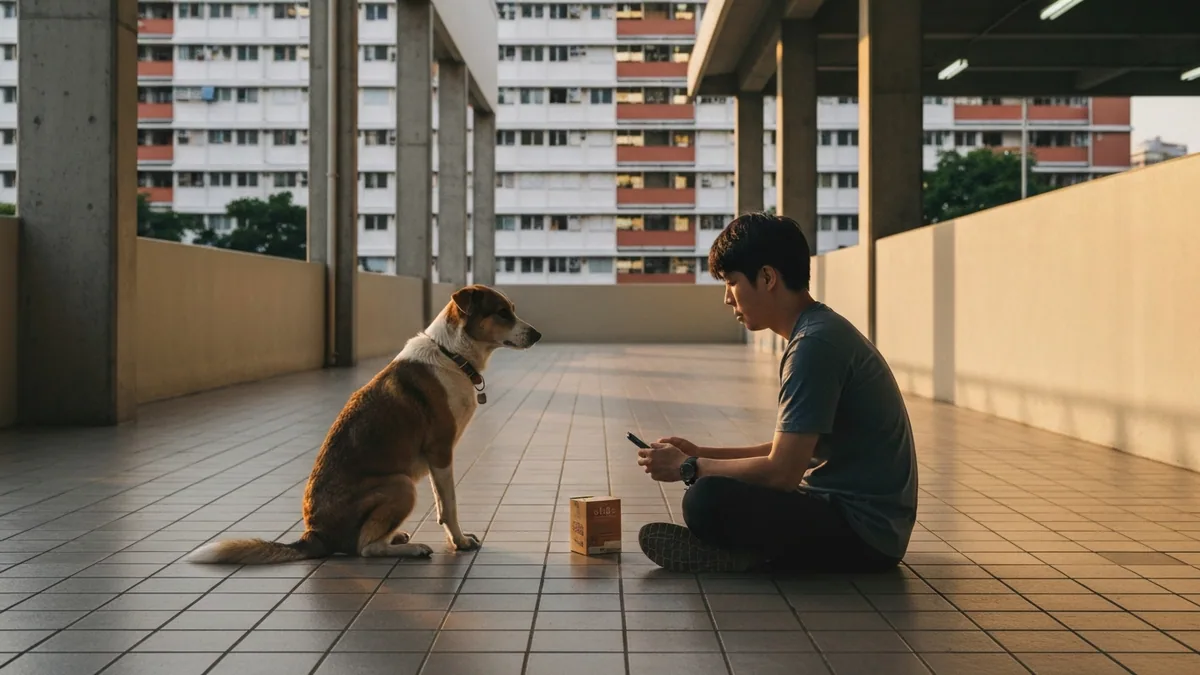 Clicker basics A clicker is a timing tool, nothing more and nothing less. Learn to use it well in a small Singapore flat and you will have the clearest, most efficient communication method available for teaching your dog almost anything.
-
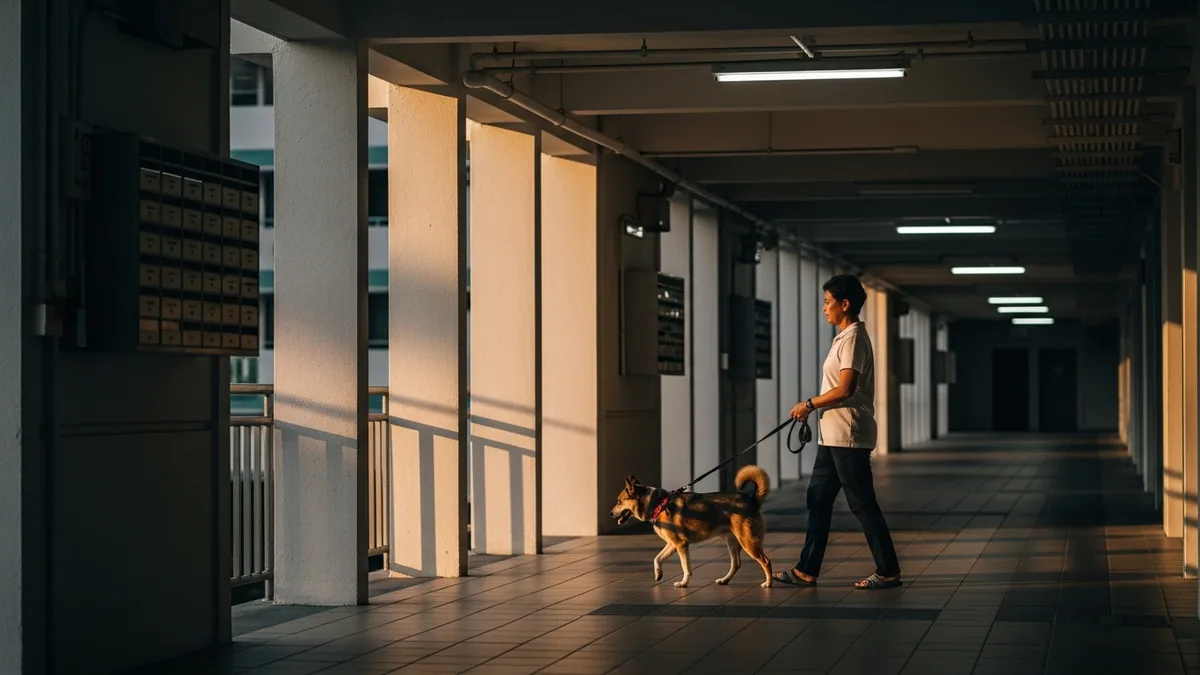 Loose-leash walking in Singapore’s shared spaces Start with room, reward a slack lead and make the task easier when your dog struggles. Lift lobbies, narrow pavements and crossings need practical choices, not a perfect heel or a fixed timetable.
-
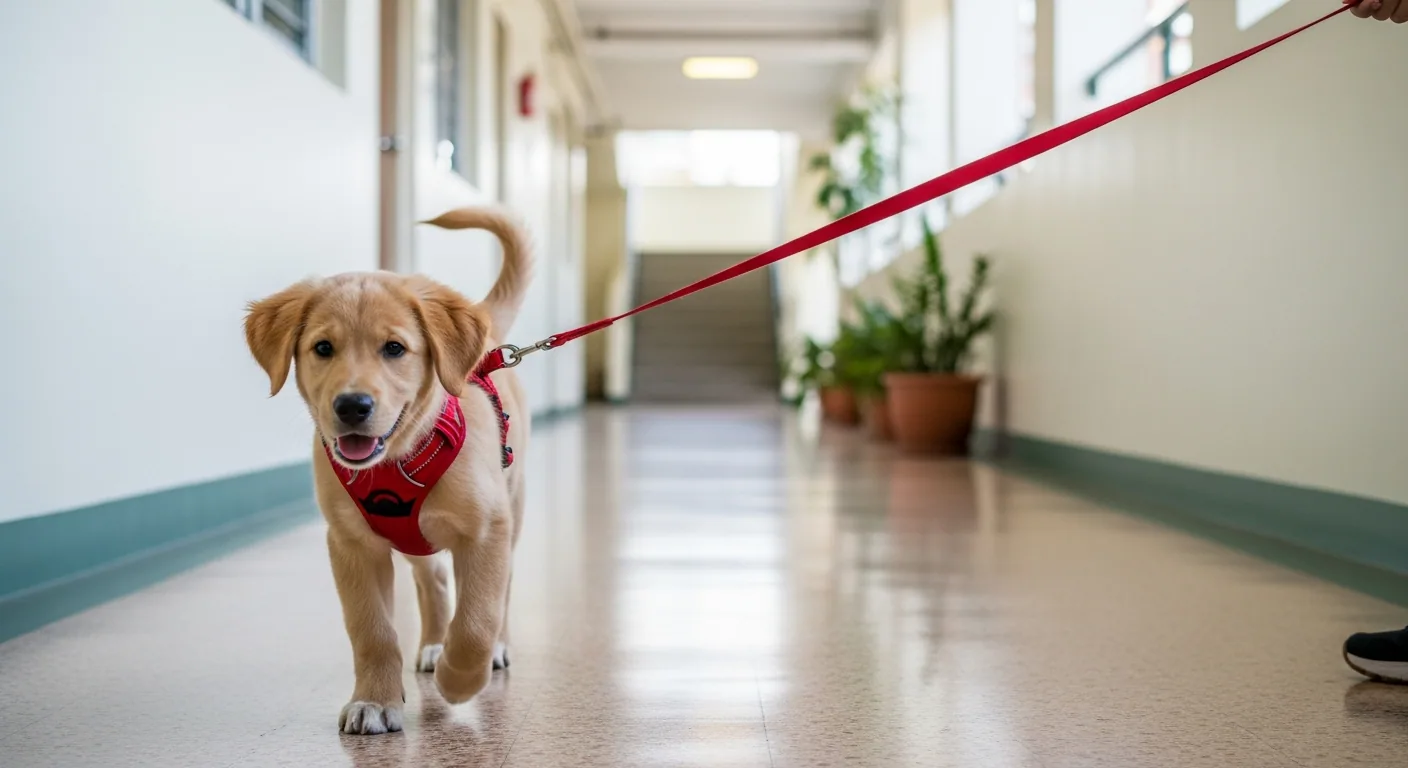 Leash Training a New Dog or Puppy in Singapore Getting a brand-new dog or puppy happy on a leash is a gentle, gradual job, not a one-session fix. Start indoors, reward the position you want, and let your dog set the pace through HDB corridors, lifts and the Singapore heat. This starter guide covers collar and harness choice, first steps, and how to handle pulling and lunging kindly.