


The short answer is no. The Border Collie is not on the HDB approved breed list, so it cannot be kept in an HDB flat. This guide explains the rule, why the breed sits outside it, and the realistic options for owners set on one.
6 min read
Is the Border Collie HDB approved?
No. The Border Collie is not on the HDB list of approved dog breeds, which means it cannot be kept in an HDB flat. HDB allows one dog per flat and only from its approved list, as set out on the HDB keeping pets page. The approved list runs to 62 breeds and leans towards smaller companion dogs, and the Border Collie is neither small nor a companion breed by design.
This is worth stating plainly, because the Border Collie is a popular and much admired dog, and it is easy to assume that good behaviour or careful training might make the difference. It does not. The rule is tied to the breed, not to the individual dog or its owner, so an exceptionally calm, well-schooled Border Collie is still not permitted. If you live in an HDB flat, the breed is not a legal option, however well you would care for it.
Why the breed is not on the list
The Border Collie is a medium to large herding dog bred to work sheep across open country for hours at a stretch. That heritage gives it two qualities that sit awkwardly with flat living: size and drive. It needs a great deal of physical exercise and, just as important, mental work. In Singapore's heat and humidity, its dense double coat adds a further complication, since the long, vigorous exercise the breed craves is harder to deliver safely outside the cooler early mornings and evenings.
The bigger issue is the mind. A Border Collie is widely regarded as one of the most intelligent breeds, and intelligence without a job becomes a problem. Under-stimulated, it tends to invent its own work: patrolling, herding whatever moves, barking at sounds through thin walls, or chewing through a home out of sheer frustration. In a small flat with close neighbours, those outlets are rarely welcome, and the dog is miserable for want of purpose. This is not a training failure waiting to happen, it is a genuine mismatch between what the animal was built for and what a flat can offer.
The approved list reflects that reality. Breeds on it are, broadly, dogs that cope with apartment living, lift-sharing and shared corridors without strain. Smaller companion breeds fit that setting; a working herder does not, which is why you will not find it there. You can compare the approved profiles on our breeds pages and see the full roster on our HDB-approved breeds list.
What the breed actually needs day to day
It helps to be concrete about the commitment. A working-line Border Collie in its prime wants a couple of hours of real activity a day, and not just a plod around the block. It needs to run, to problem-solve, and to be given tasks: recall drills, scent games, agility, herding-style work. Owners who meet that bar tend to have space, time and often a garden or open land nearby. Strip those away and replace them with a flat, a lift and a short evening walk, and you have a dog whose needs are structurally unmet. No breed thrives in a home that cannot meet its baseline, and this breed's baseline is high.
Compare that with why small companion breeds fill the approved list. A dog bred for closeness to people, rather than for a day's work in a field, is content with shorter walks, indoor play and the company of its household. It does not deteriorate when the exercise is measured in a brisk half hour rather than half a day. That is the whole logic of the small-breed slant: the setting suits the dog, and the dog suits the neighbours. The Border Collie sits at the opposite end of that spectrum.
What happens if you keep one anyway
Some owners are tempted to keep an unapproved dog quietly and hope it goes unnoticed. It is a poor bet, and the dog carries the cost. Enforcement is usually triggered by a neighbour's complaint, and an active, vocal Border Collie in a flat gives neighbours plenty to complain about. Where an unapproved dog is found in an HDB flat, HDB can require the owner to rehome it. Being told to give up a dog you have raised is a genuinely distressing outcome, and it is entirely avoidable. Far better to get the housing question right before you commit to the breed.
What your options are
If your heart is set on a Border Collie, the honest path is to match your housing to the dog rather than the other way round. The breed can be kept in private housing that allows it: a landed home gives the space it wants, and some condominiums permit larger dogs, though pet rules are set by each development's management corporation and vary widely, so check the specific condo's policy in writing before committing. Moving home for a dog is a real decision with real costs, so weigh it properly rather than assuming it will work out.
If moving is not on the cards, the kinder choice is to pick a dog that suits the home you have. Plenty of approved breeds are bright, active and rewarding to train, so an energetic owner need not settle for a lapdog. A busy terrier or a miniature poodle can soak up training and games without needing acres to run. Our guide to the wider HDB dog rules walks through the approved-list concept and the one-dog limit, and the HDB checker lets you test a breed in seconds before you fall for it.
Licensing still applies
Wherever you end up living, every dog in Singapore must be licensed with AVS, and microchipping is part of responsible ownership. The licence is mandatory and renewable, and a sterilised dog attracts a lower fee. The requirements are on the AVS licensing requirements page. If you are choosing between homes, it is also worth reading the AVS limits of ownership, which set out how many dogs you may keep by housing type. A local vet can handle the licence, microchip and sterilisation together.
More HDB guides
-
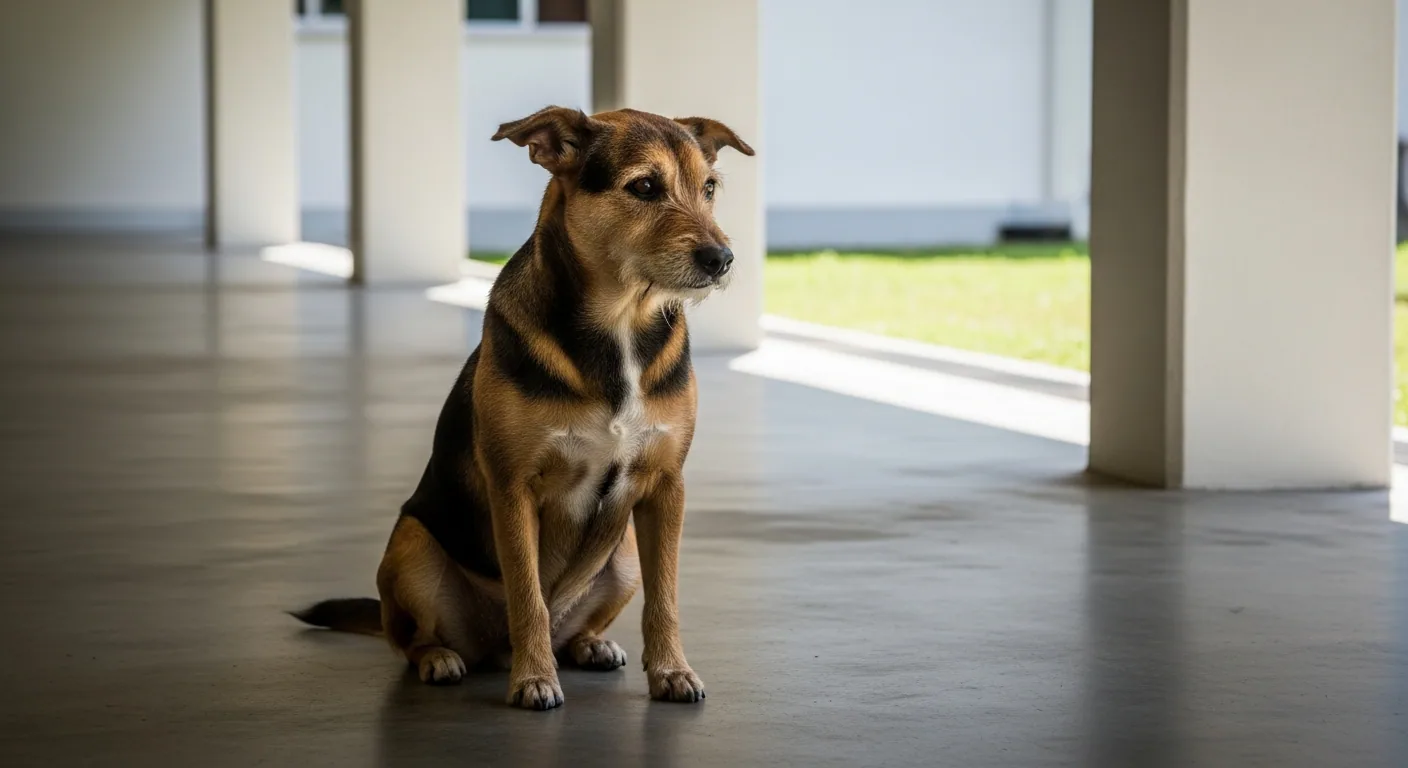 HDB-approved cross-breeds and Project ADORE Local mixed-breed dogs, the Singapore Specials, are not on the standard HDB breed list, but Project ADORE lets many of them live in HDB flats under set conditions. This guide explains how the scheme works and who qualifies.
-
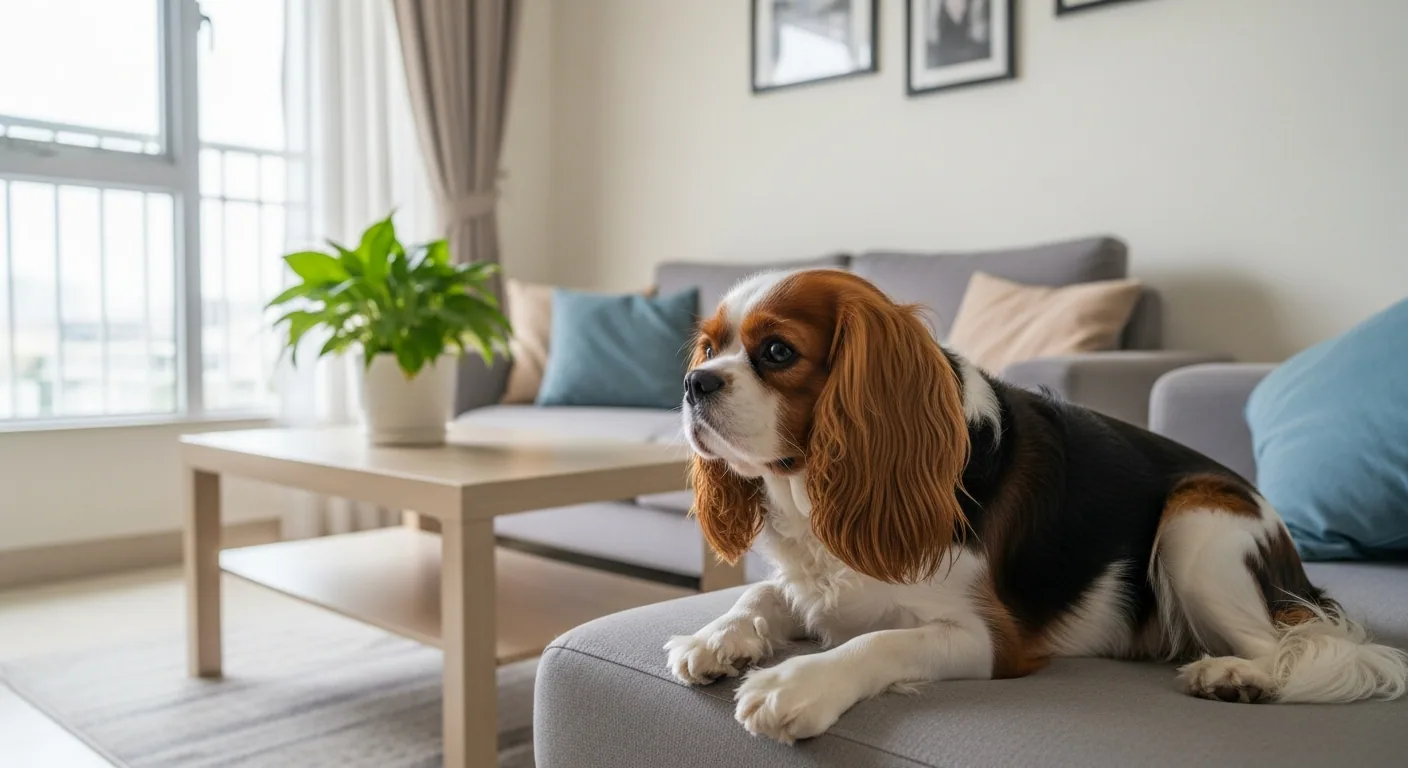 Quieter HDB-approved dog breeds in Singapore For thin walls and close neighbours, a naturally quieter dog helps. This guide lists genuinely lower-barking breeds from the HDB approved list, while being honest that no dog is silent and training matters more than breed.
-
 Is a Shiba Inu HDB approved in Singapore? No, the Shiba Inu is not on the HDB approved breed list, so it cannot be kept in an HDB flat. This guide explains the rule and points to an approved spitz, the Japanese Spitz, for owners who love the fluffy fox-like look.
-
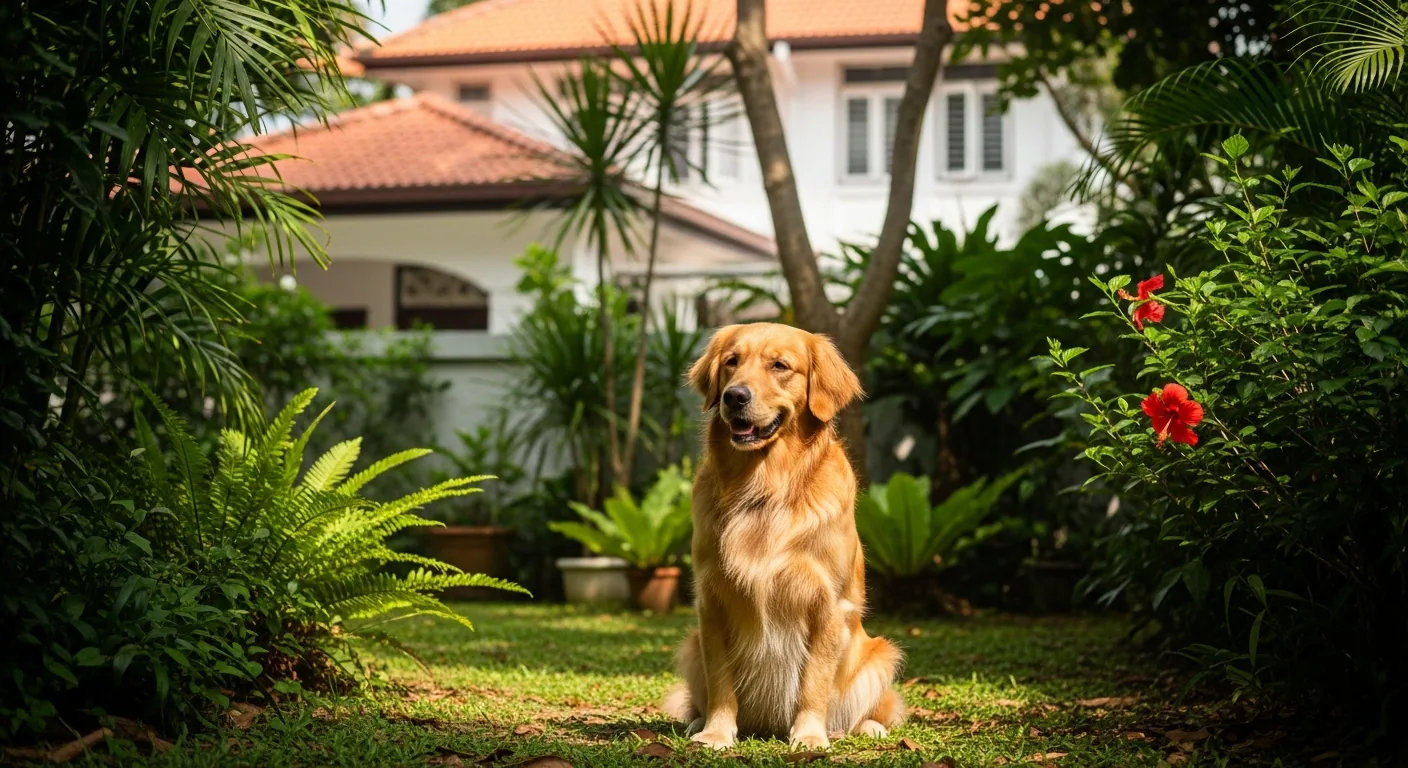 Are Golden Retrievers allowed in HDB flats? No. The Golden Retriever is a large breed and is not on the HDB approved list, so it cannot be kept in an HDB flat. This guide explains the rule, the reason, and the housing that does suit the breed.